
Your vehicle’s braking system relies entirely on hydraulic pressure to bring tons of metal to a safe stop. At the heart of this system is brake fluid, a specialized liquid engineered to transfer the force of your foot on the pedal directly to the brake calipers. When maintaining your vehicle in the Philippines—where stop-and-go city traffic in Metro Manila and steep, winding mountain passes place extreme demands on your brakes—using the correct fluid specification is a matter of basic safety. To determine whether your car requires DOT3 or DOT4 brake fluid, you must look for manufacturer-specific indicators on your vehicle or in its official documentation. Choosing the wrong fluid can compromise your stopping power, damage critical hydraulic components, and put you and your passengers at risk.
Why the Correct Brake Fluid Specification Matters (DOT3 vs DOT4)
To understand why using the exact manufacturer specification is a safety-critical requirement rather than a minor preference, you must understand how brake fluids operate under extreme thermal conditions. The primary technical difference between DOT3 and DOT4 brake fluids lies in their dry and wet boiling points. Under heavy or prolonged braking, the friction between your brake pads and rotors generates intense heat, which is transferred directly into the brake calipers and the fluid inside them. According to international standards like FMVSS No. 116, DOT3 fluid must meet a minimum dry boiling point of 205°C and a wet boiling point of 140°C. DOT4 fluid, which contains additional borate esters to handle higher thermal loads, must meet a minimum dry boiling point of 230°C and a wet boiling point of 155°C.
The distinction between dry and wet boiling points is vital because glycol-based brake fluids are highly hygroscopic. This means they naturally and actively absorb moisture from the surrounding atmosphere over time. In a tropical country like the Philippines, where relative humidity levels routinely exceed 80 percent, this moisture absorption occurs at an accelerated rate. Water enters the brake system through microscopic pores in the rubber hoses, seals, and even through the reservoir cap when it is opened.
Products mentioned in this guide
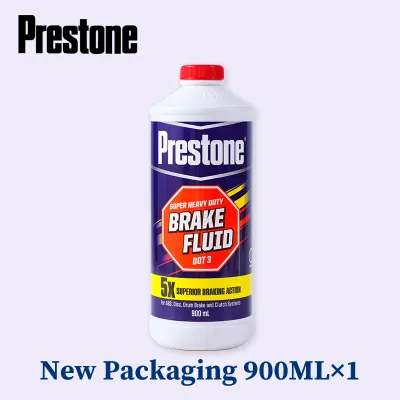
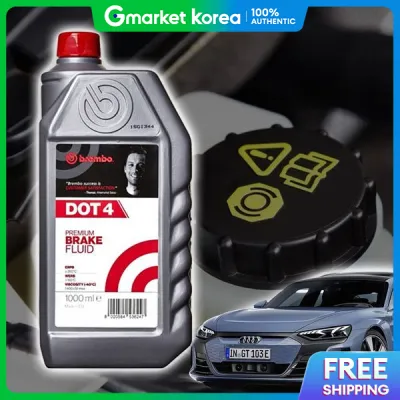
Prices are valid at publication and may change. Please refer to the product page for the latest price.
As moisture accumulates in the system, the boiling point of the fluid drops significantly toward its wet boiling point rating. If the fluid’s temperature exceeds its degraded boiling point during heavy braking—such as when descending a steep road or navigating dense, stop-and-go traffic under the afternoon sun—the water within the fluid will boil and turn into steam. Because gas is highly compressible, whereas liquid is not, pressing your brake pedal will simply compress the steam bubbles instead of pushing the brake pads against the rotors. This dangerous phenomenon is known as vapor lock, and it manifests as a sudden “spongy” pedal or a complete loss of braking force, commonly referred to as brake fade.
Because brake fluid is a critical safety component, guessing which specification your vehicle requires is never acceptable. Modern braking systems, especially those equipped with complex Anti-lock Braking Systems (ABS) and Electronic Stability Control (ESC), are precisely calibrated for the viscosity and thermal properties of a specific fluid type. Using an incorrect fluid can lead to premature component wear, seal failure, or unexpected system malfunctions under emergency braking conditions.
How to Find Your Exact Brake Fluid Requirement
Locating the precise brake fluid specification for your vehicle does not require specialized tools, but it does require following a systematic verification process using authoritative sources.

Your first and most reliable source of truth is the vehicle owner’s manual. Navigate to the index at the back of the manual and look for sections labeled “Specifications,” “Capacities,” “Maintenance,” or “Fluids and Lubricants.” This section contains the exact fluid requirements determined by the automotive engineers who designed your vehicle, organized by model, engine type, and production year. Keep this manual safe, as it remains the ultimate authority for any fluid changes.
If the owner’s manual is not readily accessible, you can perform a direct physical inspection under the hood. Ensure your vehicle is parked on a level surface, the engine is completely turned off, and the engine bay has fully cooled down to prevent accidental burns. Open the hood and locate the brake fluid reservoir, which is typically a translucent plastic container mounted high on the driver’s side firewall, close to the brake pedal assembly.
Examine the reservoir cap closely. Manufacturers almost always mold the required fluid specification directly into the plastic cap or print it on a durable, high-contrast label affixed to the top. You will typically see clear warnings such as “Use Only DOT 3 Fluid” or “Warning: Clean Filler Cap Before Removing. Use Only DOT 4 Fluid from a Sealed Container.” Before attempting to read or clean the cap, use a clean microfiber cloth to gently wipe away any accumulated road grime or dust from around the reservoir. This prevents dirt from falling into the fluid if you ever need to open the cap.
Be extremely careful when handling brake fluid around your vehicle’s engine bay. Brake fluid is highly corrosive to automotive paint, plastics, and rubber seals not specifically designed for it. If you accidentally spill any fluid on your car’s painted surfaces, wash it off immediately with copious amounts of water and soap to prevent permanent paint damage.
In addition to the reservoir cap, some vehicle manufacturers place under-hood decals or emission control stickers on the underside of the hood, on the radiator core support, or on the strut towers. These stickers often list critical fluid capacities and specifications, including the recommended brake fluid type.
If you find that your reservoir cap has been replaced with a generic aftermarket part, or if the printed labels have faded, cracked, or become completely illegible over years of exposure to engine heat, do not guess the specification. Using the wrong fluid based on a hunch can compromise your braking safety. Instead, contact your local authorized car dealership’s service department or a certified mechanic. Provide them with your vehicle’s unique 17-digit Vehicle Identification Number (VIN), which can be found on your registration documents or on a metal plate visible through the lower driver’s side windshield. The service department can use this database to retrieve the exact factory build specifications for your car. If you cannot confirm the correct DOT rating through these steps, stop the process immediately and consult a qualified professional.
Mixing and Upgrading: What You Need to Know Before Changing Fluids
When it comes to brake fluid maintenance, there are several common misconceptions regarding fluid compatibility, mixing, and upgrading that can lead to dangerous decisions if not properly understood.
First, you must understand the severe risks of mixing different brake fluid formulations. While DOT3 and DOT4 are both glycol-based fluids and are technically compatible in terms of basic chemistry, mixing them is not recommended. Adding DOT3 fluid to a system that requires DOT4 immediately dilutes the mixture, lowering the overall boiling point of your brake system to a level closer to DOT3. This compromises the high-temperature safety margin engineered into your vehicle. Furthermore, you must never mix glycol-based fluids (DOT3, DOT4, or DOT5.1) with silicone-based fluids, which are designated as DOT5. Glycol and silicone do not mix; they will separate in your brake lines, forming a thick, jelly-like sludge that will clog the narrow passages of your ABS modulator, destroy the internal rubber seals, and cause complete, catastrophic brake failure.
If your vehicle’s manual specifies DOT3, you might consider upgrading to DOT4 to take advantage of its higher dry and wet boiling points, especially if you frequently tow heavy loads, drive in hilly regions, or operate in high-temperature environments. However, this upgrade is not as simple as pouring DOT4 on top of your existing fluid. To safely upgrade, you must perform a complete brake system flush. This process involves purging every drop of the old DOT3 fluid and accumulated moisture from the master cylinder, lines, and calipers before refilling the system with fresh DOT4. Before proceeding, check your vehicle manufacturer’s warranty terms and service bulletins; some older vehicle brake systems utilize specific rubber seals that may not be fully compatible with the specific additive packages found in certain DOT4 fluids.
Conversely, you must absolutely avoid downgrading your brake fluid. If your vehicle specifies DOT4, never use DOT3. The brake calipers and rotors on DOT4-specified vehicles are designed to operate at higher temperatures. Using DOT3 fluid in these systems introduces an immediate risk of vapor lock and brake fade under normal driving conditions, representing a major safety hazard.
The safest action path is to always default to the exact factory specification listed in your owner’s manual. If you feel your driving habits or vehicle modifications warrant a higher-performance fluid, consult a certified brake specialist who can evaluate your system’s compatibility and perform a professional flush.
Matching Your Specification with Petron Brake Fluid Products
Once you have successfully diagnosed your vehicle’s exact brake fluid requirement, you must select a high-quality product that matches this specification and verify its safety credentials before introducing it to your vehicle’s hydraulic system.
When selecting a product, such as a petron brake fluid, your first step is to carefully read the front and back labels of the container. Do not rely on the color of the bottle or generic marketing terms. Look for the explicit, bold designation of either “DOT 3” or “DOT 4” on the primary display panel to ensure it matches your vehicle’s requirement.
Next, look for recognized international safety and performance standards printed on the back label. Reputable brake fluids must meet strict regulatory baselines to ensure they perform reliably under extreme conditions. Verify that the packaging explicitly references standards such as FMVSS No. 116 (Federal Motor Vehicle Safety Standard), ISO 4925, or SAE J1703 (for DOT3 formulations) and SAE J1704 (for DOT4 formulations). These certifications prove that the fluid has been lab-tested for thermal stability, viscosity at low temperatures, and compatibility with standard brake system rubber seals.
Before purchasing or opening the container, conduct a thorough physical inspection of the packaging. The plastic bottle must be free of dents, punctures, or signs of stress. Most importantly, verify that the foil safety seal beneath the plastic cap is completely intact and has not been punctured or peeled back. Because brake fluid is highly hygroscopic, even brief exposure to humid ambient air can allow moisture to contaminate the fluid inside the bottle. A broken seal means the fluid has already begun degrading, lowering its boiling point before it ever reaches your vehicle’s lines. For this reason, never purchase or use brake fluid from a container that has been previously opened or stored with a loose cap.
To guarantee product integrity and avoid counterfeit or poorly stored fluids, always purchase your brake fluid from authorized service stations, official brand stores, or reputable automotive retail partners in the Philippines. Properly stored brake fluid has a limited shelf life; buying from high-volume, reputable retailers ensures you receive fresh stock that has not spent years sitting on a humid shelf.
Diagnostic Signs Your Brake Fluid Needs Replacement
Identifying the correct fluid specification is only the first step; you must also be able to recognize the physical and operational symptoms that indicate your existing brake fluid has degraded and requires a complete replacement.
A simple visual inspection through the translucent side of the brake fluid reservoir can provide immediate clues about the fluid’s condition. Fresh, clean brake fluid is typically clear to a very light amber color. Over time, as the fluid absorbs moisture and is exposed to high operating temperatures, it undergoes oxidation and collects microscopic wear debris from the rubber seals and internal metal components of the brake system. This causes the fluid to darken. If your brake fluid appears dark brown, black, cloudy, or contains visible floating particles, it is highly contaminated and has lost its protective anti-corrosive properties, meaning it requires an urgent flush.
You must also pay close attention to performance signals while driving. If you notice that your brake pedal feels unusually soft or spongy when pressed, or if you must push the pedal closer to the floorboard than usual to achieve stopping power, moisture contamination has likely lowered the boiling point of the fluid, leading to localized vapor lock. Other critical warning signs include an increased stopping distance, a pulling sensation to one side when braking, or the illumination of the brake warning light on your dashboard.
However, you should not rely solely on visual checks or physical symptoms. Brake fluid can absorb a dangerous amount of moisture—exceeding the critical 3 percent threshold—while still appearing relatively clean. Therefore, you must follow the time and mileage intervals specified in your vehicle’s scheduled maintenance guide. As a general rule of thumb, most manufacturers recommend a complete brake system flush every two years or every 20,000 to 40,000 kilometers, regardless of how often the vehicle is driven.
If you suspect your fluid is compromised, the best next step is to have a professional technician test the fluid using a digital moisture analyzer or a refractometer. If the test reveals a moisture content of 3 percent or higher, schedule a complete professional brake fluid flush to restore your vehicle’s stopping power and protect your hydraulic components from internal corrosion.
Frequently Asked Questions (FAQ)
What happens if I use the wrong DOT brake fluid?
If you mistakenly use DOT3 fluid in a vehicle designed specifically for DOT4, you lower the thermal threshold of your braking system. Under heavy braking, this can cause the fluid to boil prematurely, resulting in vapor lock, a spongy pedal, and a dangerous loss of stopping power. Additionally, using an incorrect specification or mixing incompatible fluids can cause chemical reactions that degrade internal rubber seals and ABS components, leading to fluid leaks and expensive hydraulic system damage. If you realize the wrong fluid has been added to your reservoir, do not drive the vehicle; have it towed to a professional service center for an immediate, complete system flush.
Does the color of the brake fluid indicate its DOT rating?
No, color is not a reliable indicator of a brake fluid’s DOT rating. Both DOT3 and DOT4 fluids are formulated to be clear to light amber when fresh. While some highly specialized or racing fluids may occasionally contain distinct dyes for identification or leak detection, these are exceptions rather than standard industry practices. The only safe, accurate, and manufacturer-approved way to identify a brake fluid’s DOT rating is to read the official technical specifications and labels printed directly on the product’s packaging.
Community discussion
Share your experience or ask a question. Comments are reviewed before publication.