
Finding the correct replacement shift knob requires knowing your vehicle’s exact thread dimensions. If you are shopping for a new shifter knob for manual car upgrades, guessing the size often leads to loose parts, stripped threads, or a knob that simply will not screw onto the lever. To avoid these issues, you must identify three key specifications: thread diameter, thread pitch, and the direction or gender of the threads.
In the tropical climate of the Philippines, high cabin temperatures and humidity can cause aftermarket plastic components to expand, contract, or degrade rapidly. This environmental factor makes a precise, direct-metal thread connection even more critical for long-term durability. A loose or poorly fitted shift knob is not just an aesthetic annoyance; it is a safety hazard that can compromise your control over the vehicle during critical gear changes.
Why Thread Specifications Matter for a Shifter Knob for Manual Car
Manual transmissions rely on a direct mechanical link between your hand and the gearbox. Every time you shift gears, you apply lateral and vertical force to the shift lever. A high-quality shifter knob for manual car gearboxes must be securely anchored to withstand these repeated physical stresses over years of daily driving.
Products mentioned in this guide
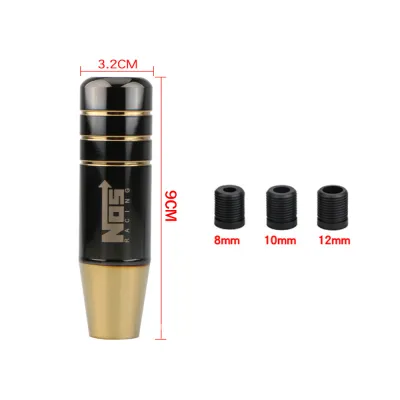
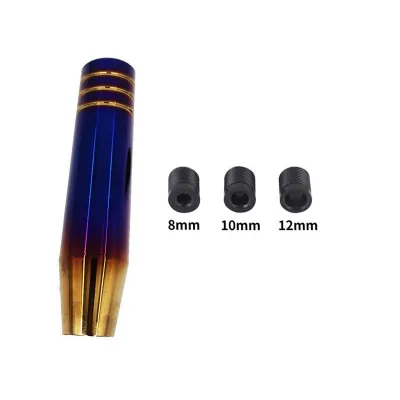
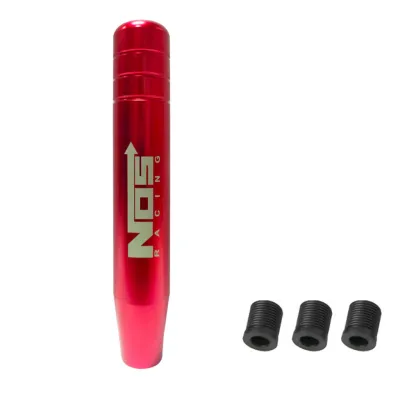

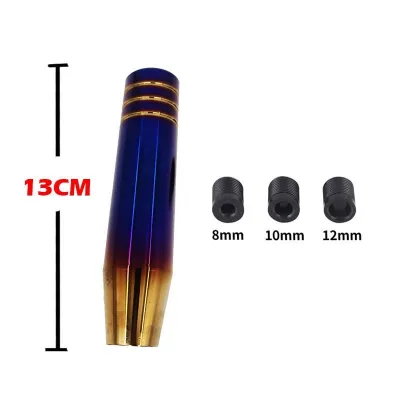


Prices are valid at publication and may change. Please refer to the product page for the latest price.
If you attempt to force a knob with incorrect threads onto your shift lever, you risk cross-threading the shaft. Cross-threading permanently flattens or strips the delicate metal ridges on the lever, which can require a costly replacement of the entire shifter assembly. Furthermore, a loose knob can suddenly spin or detach in your hand during a critical downshift, momentarily leaving you without gear control in busy traffic. Prioritizing a direct-fit connection ensures your vehicle remains safe and responsive.
The Key Thread Specifications You Must Match
Before browsing online marketplaces or visiting a local auto supply shop, you must understand how thread measurements are structured. Threaded fasteners are defined by standardized dimensions that ensure a perfect mechanical lock. Knowing these terms helps you filter out incompatible aftermarket products instantly.

Thread Diameter and Pitch
Thread diameter refers to the maximum width across the outer edges of the threaded shaft, usually measured in millimeters for metric vehicles. Thread pitch is the distance from the peak of one thread to the peak of the next. For metric threads, this is expressed in millimeters, while imperial threads use threads per inch (TPI).
For example, a common Japanese manual transmission specification is M10 x 1.25, where “M10” indicates a 10 mm outer diameter and “1.25” represents a 1.25 mm distance between each thread peak. Another common size is M12 x 1.25, often found on other makes. These are illustrative examples only; you must verify your specific vehicle’s requirements. Confusing a fine thread pitch (like 1.25 mm) with a coarse thread pitch (like 1.5 mm) will ruin the threads if forced.
Internal vs. External Threading
You must also determine whether your vehicle uses internal or external threading. Most manual cars feature external threads, meaning the shift lever itself is a solid, threaded metal rod onto which the shift knob screws. This is the standard configuration for the vast majority of passenger cars.
Conversely, some vehicles utilize internal threading, where the shift lever is a hollow sleeve with female threads inside, requiring a shift knob that features a protruding threaded stud. Visually inspecting your shifter shaft after removing the stock knob will immediately reveal which configuration your car uses. This distinction determines whether you need to measure the outer diameter of the lever or the inner diameter of the knob.
Step-by-Step: How to Measure or Find Your Shifter Thread
While looking up specifications online is a helpful starting point, physically measuring your shifter is the only way to guarantee a perfect fit. This is especially true if you drive a pre-owned vehicle, as a previous owner might have installed an aftermarket short-shifter with non-standard threads. Always verify your vehicle’s specific documentation before making any modifications.
Method 1: Using a Thread Pitch Gauge and Calipers
To obtain the most precise physical measurements, you should use digital calipers and a thread pitch gauge. Begin by unscrewing your original shift knob to expose the bare threads of the shifter shaft. Use a clean cloth to wipe away any residual grease, dirt, or debris from the metal threads.
Clamp the jaws of your digital calipers gently around the widest part of the threaded section to read the outer diameter. A reading of approximately 9.8 mm to 10 mm indicates a standard M10 thread size. Next, take a metric thread pitch gauge and press the teeth of the various leaves against the threads of the shaft. When you find the leaf that seats perfectly into the grooves with no visible gaps, read the measurement stamped on that leaf (such as 1.25 or 1.50) to identify your pitch. Do not rely on standard plastic rulers or tape measures, as the tiny visual difference between these pitches cannot be reliably distinguished by the naked eye.
Method 2: Checking OEM Documentation and Enthusiast Forums
If you do not own precision measuring tools, you can find your thread specifications through official vehicle resources. Start by consulting your car’s factory service manual, which contains detailed engineering specifications for every fastener on the vehicle. This is the safest way to verify dimensions without risking damage to the components.
Alternatively, you can contact the parts department of your local brand dealership in the Philippines. By providing them with your Vehicle Identification Number (VIN), the parts specialist can look up the exact OEM specifications for your shifter assembly. Additionally, model-specific enthusiast forums and car clubs are excellent resources. Owners of similar car generations often compile verified databases of common thread sizes. Always cross-reference information from multiple forum threads to ensure accuracy before making a purchase.
Method 3: The Hardware Store Match Test
A highly practical and low-cost method is to perform a test match at a local hardware store. After carefully removing your stock shift knob, bring it with you to the store’s fastener aisle. This method is highly reliable because it relies on physical verification using standardized hardware.
Locate the bins containing standard metric bolts and gently attempt to thread a selection of test bolts into the bottom of your shift knob by hand. Never force a test bolt if you encounter any resistance. The correct bolt will spin in smoothly and effortlessly with zero binding or excessive play. Once you find a perfect match, check the label on the bolt’s bin to identify its diameter and pitch. This simple test gives you the exact specifications you need to shop for your new aftermarket knob.
What to Do If the Threads Do Not Match Perfectly
If you purchase an aftermarket shifter knob for manual car setups and discover the threads do not match your lever, you may be tempted to use a universal thread adapter. These adapters are typically metal or plastic sleeves that thread onto your shifter shaft to convert its size to match the knob’s internal threads. They are widely available in budget-friendly price bands, typically ranging from ₱150 to ₱500.
While adapters can resolve compatibility issues in a pinch, they carry distinct mechanical drawbacks. Thread adapters add height to your shifter, which alters the leverage point and increases the physical effort required to change gears. Plastic or rubber adapters are highly susceptible to stripping, cracking, or loosening under the high cabin temperatures typical of the Philippines. For a secure, durable, and safe installation, prioritizing a direct-fit shift knob that matches your vehicle’s native thread specifications is always the best approach.
Frequently Asked Questions (FAQ)
Can I use a universal shift knob on my manual car?
Universal shift knobs are widely available, but they are generally not recommended for manual transmissions. These knobs typically rely on generic rubber or plastic inserts and small metal set screws to clamp onto the shifter shaft. Because manual shifting requires substantial lateral force, these set screws frequently back out or tear through the soft inserts over time. This can cause the knob to spin, wobble, or pull off completely during gear shifts, posing a severe safety risk. A direct-thread knob is always the safer choice.
Do I need to remove the old shift knob to check the thread?
Yes, you must physically remove the old shift knob to accurately measure the thread diameter and pitch or to perform a hardware store match test. To remove most manual shift knobs, turn the knob counter-clockwise. However, you should always check your vehicle’s owner’s manual first. Some manufacturers use hidden set screws, press-fit designs, or collar rings that must be released first to prevent damaging the shift lever or the surrounding console trim. If you are unsure of the removal process, consult a qualified automotive professional to avoid costly interior damage.
Community discussion
Share your experience or ask a question. Comments are reviewed before publication.