
Riding a motorcycle in the Philippines offers unmatched freedom, but the tropical climate presents a severe logistical challenge for safety gear. Navigating the congested streets of Metro Manila or cruising along the open highways of Luzon under a relentless 34°C sun requires gear that prevents heat exhaustion while offering robust protection. The primary dilemma for riders is finding a balance: standard textile or heavy leather jackets trap sweat and restrict airflow, leading to rapid dehydration and fatigue, while riding in a simple t-shirt leaves the skin completely vulnerable to severe road rash in an accident. Choosing a specialized Komine riding jacket designed for summer and tropical conditions solves this issue by integrating high-airflow mesh with impact-resistant armor.
To make an informed decision, riders must understand how heat impacts cognitive function on the road. When your core body temperature rises, reaction times slow down, and decision-making becomes impaired. This makes physical comfort a direct safety factor, not just a matter of convenience. A proper tropical riding jacket must facilitate continuous evaporative cooling by allowing wind to pass directly through the fabric, carrying away body heat and sweat. Simultaneously, the jacket must hold protective armor securely over your shoulders, elbows, chest, and back. Striking this balance requires looking past aesthetic appeal and evaluating the technical construction of the gear.
The Tropical Riding Challenge: Heat, Humidity, and Safety
The dual threat of tropical riding in the Philippines involves managing extreme heat alongside the persistent risk of road rash or impact injuries. High temperatures combined with intense humidity create an environment where the body struggles to cool itself naturally through sweat evaporation. When you wear non-breathable gear, heat becomes trapped against your body, accelerating sweat accumulation and leading to rapid dehydration, physical exhaustion, and a dangerous loss of concentration.
Products mentioned in this guide
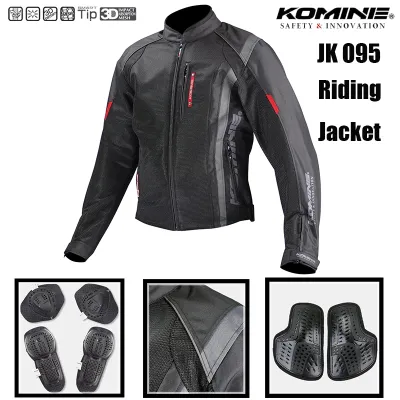
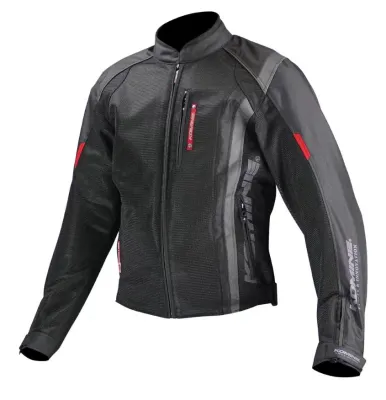
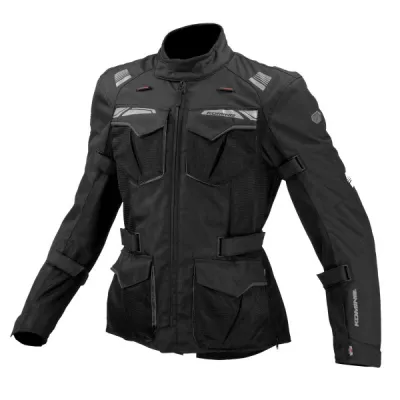
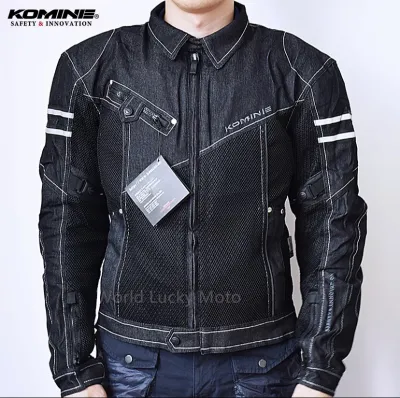
Prices are valid at publication and may change. Please refer to the product page for the latest price.
Standard textile or heavy leather jackets fail in this environment because they are designed to retain heat and block wind. In a tropical climate, wearing these heavy materials can quickly lead to heat exhaustion, making even a short commute feel unbearable. Consequently, many riders make the dangerous compromise of riding without protective gear, exposing themselves to catastrophic injuries. The core decision framework for any rider in the Philippines must prioritize maximum airflow through specialized mesh construction without compromising the structural integrity of critical impact zones.
Verifying Breathability and Protection: What to Look For
When searching for a Komine riding jacket for men sale, it is easy to get distracted by promotional prices and styling. However, verifying the physical features, labels, and structural elements of the jacket is essential to ensure it performs under both the intense sun and in the event of a slide. You can verify these specifications by reading the product descriptions, checking the physical internal tags, and inspecting the garment’s construction.

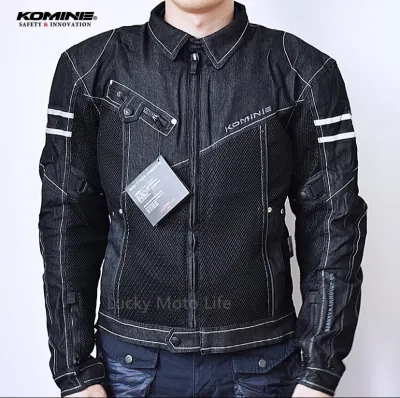
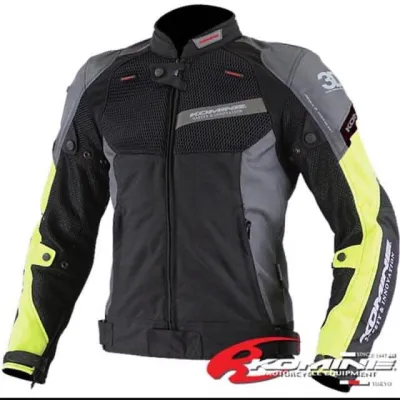
A premium tropical jacket relies on a combination of open-weave mesh and high-denier textile reinforcements. The mesh sections must be strategically positioned to capture oncoming air, while the solid textile panels are reserved for areas highly susceptible to abrasion, such as the outer arms and shoulders. Furthermore, the interior lining plays a critical role in overall comfort. Look for jackets equipped with a 3D mesh lining. This specialized, textured material creates a physical gap between your skin and the outer shell of the jacket. By maintaining this small air pocket, the jacket prevents the fabric from clinging to your body when wet with sweat, allowing air to circulate around your torso even when you are stationary in heavy traffic. Moisture-wicking inner linings are also highly beneficial, as they draw sweat away from the skin to accelerate evaporation, keeping you dry and preventing chafing during long hours in the saddle.
Ventilation and Mesh Construction
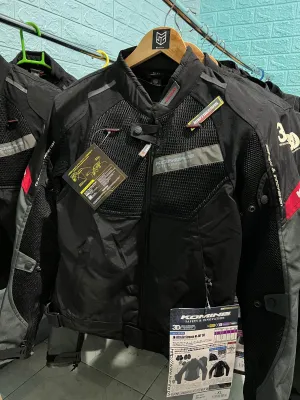
To maximize airflow in hot climates, look closely at the distribution of the mesh panels. A well-designed summer jacket features large, open-weave 3D mesh panels across high-wind areas, specifically the chest, the inner and outer forearms, and the upper back. This layout creates a straight path for air to enter the front of the jacket, absorb body heat, and exit through the rear exhaust vents.
When evaluating a jacket, inspect the quality of the mesh itself. The mesh should not feel like flimsy netting; instead, it must be a tightly woven, high-tensile polyester or nylon that feels stiff and structurally sound. This structural integrity ensures the mesh can resist tearing and friction during a slide. Additionally, check for adjustable ventilation zippers or expansion panels. Some models include zippered vents along the arms or sides, allowing you to fine-tune the airflow depending on whether you are crawling through stop-and-go city traffic or cruising at higher speeds on the expressway.
Armor and Abrasion Resistance
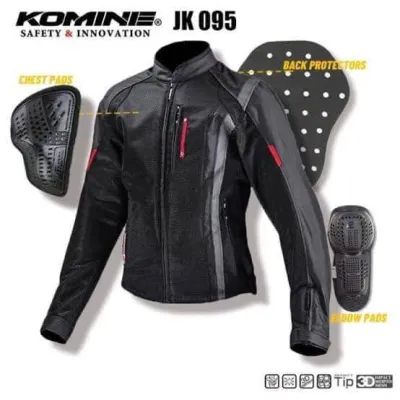
While breathability keeps you comfortable, armor and abrasion resistance keep you safe. Never sacrifice protective elements for the sake of a lighter jacket. When inspecting a Komine jacket, verify that it includes CE-certified armor at the critical impact zones: the shoulders, elbows, and chest. Komine is highly regarded for supplying hard chest protectors and CE-approved protectors as standard features in many of their models, but you must verify the specific level of protection on the product’s internal labels.
CE Level 1 armor provides standard impact protection suitable for daily commuting, while CE Level 2 armor offers higher impact absorption, which is highly recommended for highway speeds. It is important to note that back protectors in some entry-level summer jackets are lightweight foam inserts; you should verify whether a CE-certified back protector is included or if you need to purchase one separately to upgrade your safety. Additionally, look for reinforced abrasion-resistant panels made of high-denier polyester (such as 600D or higher) on the elbows and shoulders. These panels must be stitched securely to the mesh zones with heavy-duty, double- or triple-stitched seams to prevent the jacket from bursting open upon contact with the asphalt. Check the jacket’s overall CE garment rating (such as Class A or AA) on the internal label to confirm its compliance with recognized international safety standards.
Identifying the Right Komine Summer and Mesh Series
Komine offers a diverse range of riding gear, making it essential to identify the specific series designed for tropical climates. When browsing options, look for product lines explicitly designated as “Summer” or “Mesh” series, or those featuring cooling technologies like “Coolmax” or titanium-mesh hybrids. These models are engineered from the ground up to handle high temperatures, utilizing lightweight chassis designs that do not compromise on structural safety.
Avoid purchasing “4-season” or heavy touring jackets that feature permanent, non-removable thermal or waterproof liners. Even with all the exterior ventilation zippers open, these integrated layers act as a greenhouse, trapping your body heat and sweat inside the jacket and quickly leading to heat exhaustion in the Philippine humidity. If a jacket features a removable waterproof liner, ensure that the liner can be completely zipped out and stored separately, leaving only the highly breathable mesh outer shell for your daily rides.
Finding the correct fit is another critical factor in balancing safety and airflow. A jacket that is too loose is a safety hazard; in a crash, the wind can catch the excess fabric, causing the armor to shift away from your elbows and shoulders, leaving you unprotected. Furthermore, loose fabric will flap violently at high speeds, causing fatigue. Conversely, a jacket that is too tight will restrict your range of motion, compress the 3D mesh lining, and trap sweat against your skin, neutralizing the cooling effects. When shopping, always consult the brand’s official sizing chart for men. Komine jackets typically follow Japanese sizing, which tends to run one to two sizes smaller than Western or standard Asian sizing. Measure your chest, waist, sleeve length, and height while wearing your typical riding base layers to ensure an accurate match.
Smart Shopping: Finding Authentic Komine Jackets on Sale
Finding a genuine Komine riding jacket for men sale requires caution, as the popularity of the brand has led to a market flooded with counterfeit products. These fake jackets often look identical to the authentic models in photos, but they utilize cheap, non-protective mesh fabrics and imitation foam armor that will disintegrate or fail completely during an impact. To protect yourself, always purchase from authorized local dealers, official brand stores on major e-commerce platforms, or reputable physical motorcycle gear shops in the Philippines.
When evaluating a sale or discount, verify the authenticity of the jacket using several physical indicators. Genuine Komine jackets feature a distinct holographic security tag sewn into the interior lining. This hologram shifts colors and displays official branding when viewed from different angles. Additionally, inspect the quality of the stitching, the weight of the armor, and the branding on the zippers (which often feature high-quality YKK hardware). If the price of a jacket seems too good to be true—such as a premium armored jacket selling for a fraction of its standard retail price—it is highly likely a counterfeit.
When buying online, pay close attention to the seller’s return and exchange policies. Because Japanese sizing can be tricky, you must have the option to exchange the jacket for a different size if the fit is incorrect. Once your jacket arrives, try it on with your typical riding shirt, sit on your motorcycle in your natural riding position, and verify that the elbow armor rests precisely over your joints and the shoulder armor covers your shoulders comfortably without shifting.
Caring for Mesh and Armor in High Humidity
The combination of sweat, road grime, and high humidity in the Philippines can accelerate the degradation of your riding gear if it is not maintained correctly. Sweat contains salts and acids that can weaken polyester fibers, clog the pores of breathable mesh, and cause persistent, unpleasant odors. Over time, moisture can also corrode metal zippers, degrade reflective piping, and cause the internal armor to become brittle or moldy.
To prolong the life of your jacket, establish a routine care schedule. After every ride, do not stuff your jacket into a closed top box or closet. Instead, hang it immediately on a wide, heavy-duty hanger in a cool, dry, and well-ventilated room to allow the sweat to evaporate completely. When the jacket requires washing, always refer first to the manufacturer’s care label sewn inside the garment. If the instructions permit washing, remove all protective armor plates—including the chest, shoulder, elbow, and back protectors—before cleaning. Hand wash the textile shell in cool water using a mild, non-biological detergent. Avoid using fabric softeners or bleach, as these chemicals can clog the mesh pores and damage the technical coatings on the fabric. Rinse the jacket thoroughly to remove all soap residue, and hang it to drip dry in the shade. Never tumble dry the jacket or expose it to direct, intense sunlight for extended periods, as UV radiation can degrade the synthetic fibers and fade the high-visibility reflective elements. Inspect the armor inserts for any cracks or signs of wear before reinserting them into their respective pockets.
Frequently Asked Questions (FAQ)
Do I need a waterproof liner for riding in the Philippines?
While sudden tropical downpours are a regular occurrence in the Philippines, a permanent waterproof liner inside your jacket is highly impractical for daily riding. These liners block all incoming airflow, causing you to overheat rapidly in hot weather. Instead, choose a fully ventilated mesh jacket for maximum cooling during dry conditions, and carry a lightweight, packable rain suit in your backpack or under-seat storage. You can quickly wear this rain suit over your mesh jacket when it rains, keeping you dry without sacrificing daily comfort.
Is a mesh jacket safe enough for highway riding?
Yes, a high-quality mesh jacket is safe for highway riding, provided it features robust construction and certified protection. Ensure the jacket uses high-denier textile reinforcements (such as 600D polyester) on the shoulders and elbows, which are the primary slide zones. Additionally, verify that the jacket is equipped with CE-certified armor and has a recognized CE garment safety rating. For sustained high-speed highway touring, check the jacket’s specific safety class to ensure it meets the appropriate abrasion resistance and impact absorption standards for your speed.
Community discussion
Share your experience or ask a question. Comments are reviewed before publication.