
A reliable fast car charger with a built-in voltmeter serves a dual purpose: keeping your devices powered and monitoring your vehicle’s battery health. However, marketing labels often highlight inflated wattage numbers or vague display features. To choose the right model, you must look beyond flashy packaging and understand how charging protocols, power distribution, and voltage measurement accuracy work together in a high-temperature, high-humidity automotive environment.
Decoding Fast Charging Protocols and Wattage Ratings
Modern mobile devices rely on distinct fast-charging standards. Power Delivery (PD) is the prevailing standard for newer smartphones, tablets, and USB-C laptops, offering dynamic voltage negotiation to deliver high power safely. Quick Charge (QC), on the other hand, is widely used by many Android devices and older accessories. When selecting a charger, verify which protocol your specific devices support to ensure compatibility and optimal charging speeds.
Be cautious of how manufacturers advertise total wattage. A charger labeled as “95W” often represents the combined maximum output of all ports combined, rather than what a single port can deliver. For instance, a dual-port charger might split its power into 65W on one port and 30W on another. Always check the detailed specifications on the product label or manual to confirm the maximum per-port output matches your device’s requirements.
Products mentioned in this guide
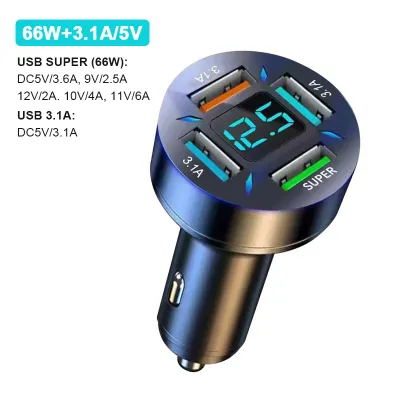
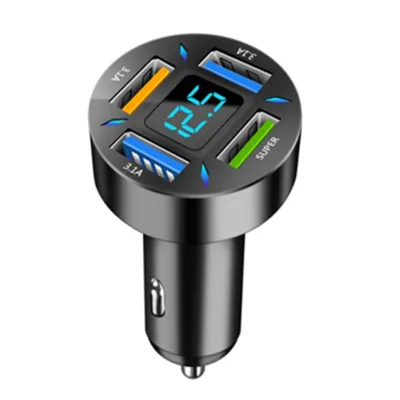
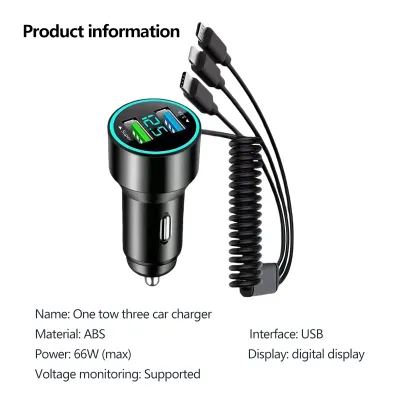
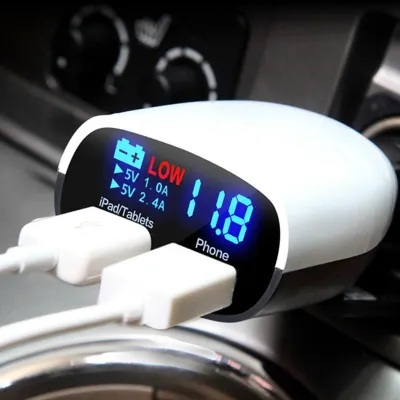
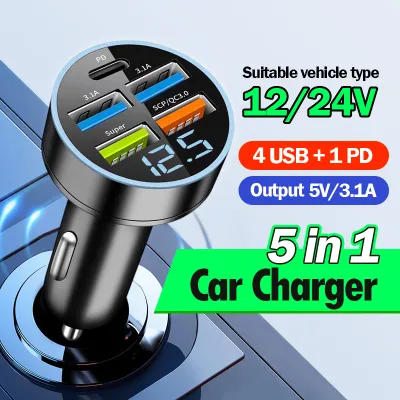
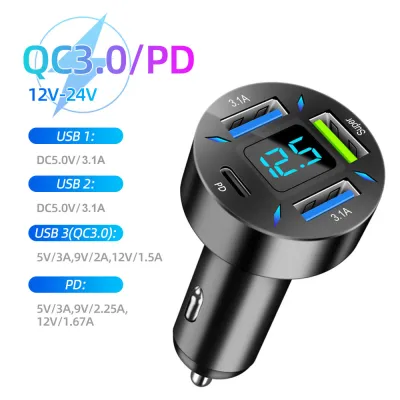
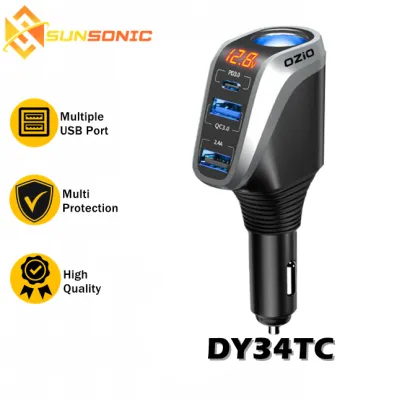
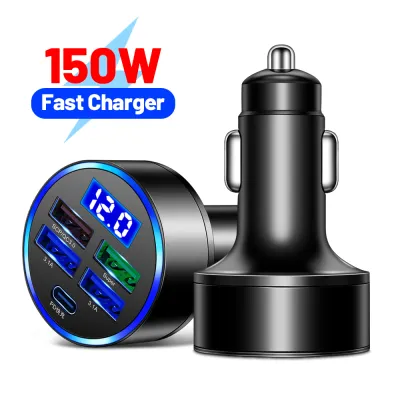
Prices are valid at publication and may change. Please refer to the product page for the latest price.
Buying a charger with a wattage rating far exceeding your device’s maximum input capacity is an unnecessary expense. If your smartphone only supports a maximum input of 25W, plugging it into a 100W port will not make it charge any faster, as the device’s internal charging circuitry limits the power intake. Check your device manufacturer’s specifications first, then match the charger’s individual port output to that limit.
Evaluating Voltmeter Accuracy and Display Readability
The primary purpose of an integrated car voltmeter is to provide a quick diagnostic check of your vehicle’s electrical system. Before you start the engine, the display shows the resting battery voltage, which helps you gauge if the battery is holding a healthy charge. Once the engine is running, the reading shifts to reflect the alternator’s output, allowing you to observe whether the charging system is functioning correctly under load.

To ensure these readings are actually useful, look for the manufacturer’s stated accuracy margin on the product packaging or technical manual. High-quality units typically specify an accuracy tolerance, such as ±0.1V or ±0.2V. Avoid products that make vague promises of precision without listing a specific numerical tolerance, as highly inaccurate readings can lead to false alarms or a false sense of security regarding your battery’s health.
Display readability is another critical factor, especially under the intense sunlight common in tropical climates like the Philippines. Look for bright LED displays with high-contrast colors that remain visible during midday drives. Conversely, for night driving, a display that is too bright can cause distracting glare inside the cabin; some advanced models feature automatic dimming or use softer, low-glare lighting to maintain comfort in the dark.
Verifying Safety Protections and Physical Build Quality
Because car chargers handle significant electrical currents, robust safety features are essential to protect both your vehicle and your connected devices. Before purchasing, verify that the product packaging or user documentation explicitly lists built-in protection mechanisms. These must include over-current protection, over-voltage protection, over-temperature safeguards, and short-circuit protection to prevent electrical hazards during sudden power surges.
The physical design of the charger directly impacts its performance and safety on bumpy roads. Inspect the tension and build of the metal side contacts and the positive tip spring. Strong, high-tension contacts ensure the charger remains securely seated in the 12V accessory socket, preventing temporary power interruptions or dangerous sparks caused by vibrations during daily commutes.
Thermal management is equally vital, particularly when fast-charging multiple devices in warm climates. Chargers housed in aluminum alloy or flame-retardant polycarbonate tend to dissipate heat much more effectively than those made of cheap, standard plastics. Efficient heat dissipation prevents the internal components from overheating, which helps maintain stable charging speeds and extends the overall lifespan of the accessory.
Matching Charger Specs to Your Devices and Vehicle
Selecting the right charger requires analyzing your daily driving habits and passenger needs. A solo commuter who only needs to top up a single smartphone might opt for a compact, dual-port charger with one fast-charging port and one standard port. In contrast, families or ride-sharing drivers who frequently power multiple high-drain devices simultaneously will benefit from a multi-port charger that offers dedicated fast-charging protocols on every port.
Consider whether you truly need high-wattage Power Delivery. If you plan to charge a USB-C laptop or a large tablet while on the road, a high-output PD port (typically 45W to 65W or more) is necessary to supply sufficient power. However, if your primary goal is simply to keep standard smartphones charged, a more modest fast-charging setup will suffice, saving you money and reducing heat generation inside the vehicle.
Before plugging in any high-draw charger, consult your vehicle’s owner manual to verify the maximum amperage or wattage rating of the 12V accessory outlet. Most passenger vehicles equip these sockets with a 10-ampere or 15-ampere fuse, which limits the total power you can safely draw. Exceeding this limit by connecting multiple high-wattage devices simultaneously can blow the vehicle’s fuse, disabling the outlet until the fuse is replaced.
Frequently Asked Questions (FAQ)
Will a fast car charger drain my car battery when the engine is off?
Whether a charger drains your battery depends entirely on how your vehicle’s 12V accessory socket is wired. In some vehicles, the socket loses power the moment you turn off the ignition or lock the doors. In other vehicles, the socket remains constantly powered. If your socket stays active, a charger with an active LED display or voltmeter will continue to draw a small amount of current, which can eventually drain the battery if the vehicle is left parked for several days. Consult your vehicle’s manual or observe if the charger’s display stays lit after turning off the engine.
Does the voltmeter work accurately on both 12V and 24V vehicle systems?
Most modern car chargers with integrated voltmeters are designed to operate across a wide input voltage range, typically from 12V to 24V. This makes them compatible with standard passenger cars as well as larger vehicles like trucks and SUVs. However, you must verify the input voltage specifications printed on the charger’s body or packaging before use. Connecting a charger rated only for 12V systems into a 24V utility vehicle can damage the charger’s internal circuitry and pose a safety risk.
Community discussion
Share your experience or ask a question. Comments are reviewed before publication.