
Choosing the right keyless ignition system for your motorcycle requires balancing daily convenience with electrical compatibility, security, and weather resilience. In tropical climates where heavy downpours and high humidity are common, a keyless system must do more than just start your engine with a button press—it must withstand harsh environmental conditions and integrate seamlessly with your bike’s existing electrical architecture. To make an informed decision, you must evaluate the underlying technology, verify your motorcycle’s electrical limits, and establish a reliable backup plan for when batteries inevitably fail.
By understanding the specific requirements of your motorcycle and the limitations of aftermarket electronics, you can avoid costly installation errors and ensure your bike remains secure and reliable on the road. This guide breaks down the essential factors to consider when selecting and installing a keyless ignition system.
Understand the Main Types of Keyless Ignition Technologies
Aftermarket keyless ignition systems rely on different wireless communication methods to authenticate the rider and enable the motorcycle’s electrical system. The three primary technologies available are proximity-based Radio Frequency Identification (RFID) fobs, remote-control button systems, and smartphone-connected Bluetooth modules. Each method offers a distinct balance of convenience, security, and power consumption.
Products mentioned in this guide
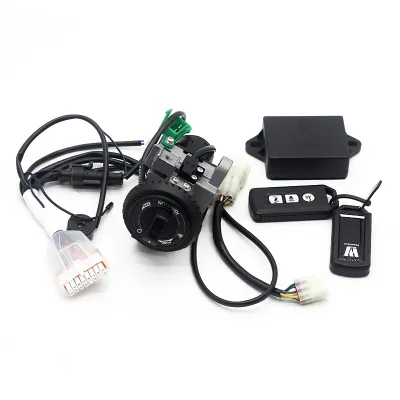
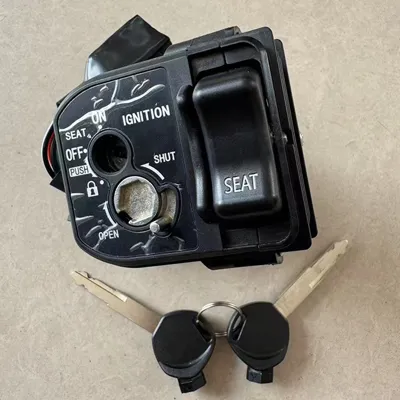
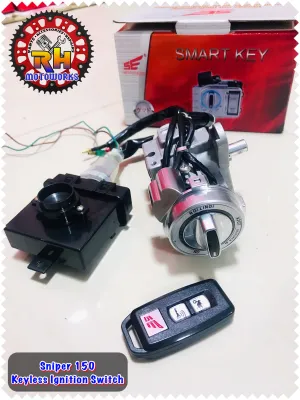

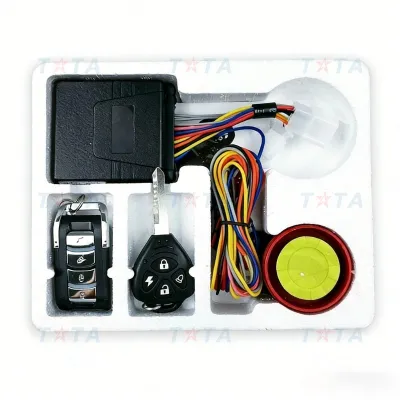
Prices are valid at publication and may change. Please refer to the product page for the latest price.
Proximity-based RFID systems, often referred to as Passive Keyless Entry (PKE), are the most common and user-friendly option. These systems use a transponder fob carried in your pocket that automatically communicates with a receiver installed on the motorcycle. As you approach the bike, the system detects the unique signal, unlocks the ignition, and allows you to start the engine via a push-button. When you walk away, the system automatically arms itself. The primary trade-off is a constant, low-level power draw as the receiver continuously listens for the fob’s signal.
Remote-control button systems require you to actively press a button on a key fob to arm or disarm the ignition. While this lacks the seamless hands-free convenience of PKE, it is highly reliable and significantly reduces battery drain on both the fob and the motorcycle. Because the fob only transmits a signal when pressed, the risk of accidental activation or signal interception is minimized.
Smartphone-connected Bluetooth modules turn your mobile phone into the key. Through a dedicated application, the motorcycle detects your phone’s Bluetooth signature as you approach. This technology often includes advanced features like GPS tracking, ride sharing, and system diagnostics. However, relying on a smartphone introduces potential points of failure, such as phone battery depletion, software compatibility issues after operating system updates, and occasional pairing delays.
Most aftermarket manufacturers focus on RFID and remote-control systems because they operate independently of external software platforms. When choosing a technology, consider how much parasitic battery draw your motorcycle can handle and whether you prefer a completely hands-free experience or the tactile security of a button-press remote.
Verify Motorcycle Compatibility and Electrical Limits
Before purchasing any keyless ignition system, you must verify that the kit is compatible with your motorcycle’s specific electrical system and physical layout. Ignition systems are not universally compatible, and forcing an incompatible system onto your bike can lead to severe electrical failures.

Start by cross-referencing the manufacturer’s fitment list with your motorcycle’s exact make, model, and production year. Even within the same model line, manufacturers often update wiring harnesses, connector shapes, and ECU protocols between model years. A kit designed for a older model may not plug into a newer version without extensive modification.
Next, consult your motorcycle’s owner’s manual to check the battery capacity and stator output. Keyless ignition systems draw a small amount of standby current (parasitic draw) to keep the wireless receiver active while the bike is parked. If your motorcycle has a small battery, such as those found on underbone motorcycles or light scooters, a high standby current can drain the battery within a few days of storage. Ensure the system’s standby current is low enough to prevent premature battery depletion.
Additionally, determine if your motorcycle features a factory-installed immobilizer system. Many modern motorcycles use a transponder chip embedded in the physical key. If your bike has this feature, a standard keyless kit will not work unless you install an immobilizer bypass module. This module typically requires placing a programmed factory key inside a hidden receiver box on the bike to satisfy the ECU’s security check, which may compromise the vehicle’s overall security.
Modifying your motorcycle’s ignition system directly impacts its safety and operational integrity. Incorrect wiring can cause engine stalling while riding, electrical fires, or permanent damage to the Engine Control Unit (ECU). Always consult your vehicle’s official wiring diagram and prioritize professional installation if you are unfamiliar with automotive electronics.
Evaluate Security Protections and Weather Durability
An aftermarket keyless ignition system must protect your motorcycle from theft while surviving the harsh environmental conditions of tropical climates. Evaluating the security features and build quality of a system is critical to ensuring long-term reliability.
Look for systems that feature built-in engine immobilizers. A robust system should disable multiple critical circuits, such as the starter motor, fuel pump, and ignition coil, when armed. This ensures that even if a thief physically bypasses the ignition switch, the engine cannot be started. Some advanced systems also integrate with the motorcycle’s factory steering lock, though this often requires a specialized mechanical actuator.
Signal security is another vital consideration. Cheap keyless systems often use fixed-frequency signals that are vulnerable to relay attacks, where thieves use signal boosters to clone your key fob’s code from a distance. To prevent this, choose a system that utilizes rolling code technology or advanced encryption standards (AES). Rolling codes change the wireless key code every time the system is used, making signal cloning virtually impossible.
Weather durability is non-negotiable for motorcycles operated in tropical regions. Heavy monsoon rains, high humidity, and road grime can quickly penetrate poorly sealed electronics, causing short circuits and corrosion. Check the Ingress Protection (IP) ratings of both the main control unit and the key fobs. The main unit should carry at least an IP67 rating, meaning it is completely dust-tight and can withstand temporary immersion in water. Key fobs should also feature robust rubber gaskets and sealed buttons to prevent water intrusion during heavy downpours.
Plan for Battery Failures and Emergency Overrides
One of the most common failure points of keyless ignition systems is a dead battery—either in the key fob or the motorcycle itself. Without a physical key to turn, you must have a reliable, pre-planned method to bypass the system and start your motorcycle in an emergency.
When evaluating keyless kits, look for those that offer multiple emergency override options. Some systems include a physical backup key that can manually unlock the seat or steering lock, allowing access to a hidden mechanical switch. Others utilize Near Field Communication (NFC) emergency cards. These passive cards do not require a battery; you simply hold the card against a designated spot on the motorcycle to temporarily disarm the system and start the engine.
Another common override method is a manual PIN code. This allows you to enter a pre-set sequence of button presses using the motorcycle’s starter button or a dedicated hidden switch to bypass the keyless system. Ensure the system you choose has a clear, straightforward override procedure that you can easily memorize.
Additionally, check if the system provides low-battery warnings. The key fob should flash a specific LED pattern or emit a warning sound when its battery is low. Some systems also display a low-battery indicator on the motorcycle’s dashboard or trigger a unique sequence of beeps when you turn on the ignition, giving you ample warning to replace the fob battery before you get stranded.
Choose Between Plug-and-Play Kits and Professional Installation
How a keyless ignition system is installed plays a major role in its long-term reliability. You must decide between a model-specific plug-and-play kit and a universal kit, and determine whether you have the skills to perform the installation yourself.
Plug-and-play kits are designed for specific motorcycle models and include wiring harnesses that match the factory connectors. This eliminates the need to cut, splice, or solder any factory wires. Plug-and-play installations are highly reliable, minimize the risk of wiring errors, and make it easy to revert the motorcycle back to its stock configuration if needed.
Universal kits, on the other hand, require you to manually identify, cut, and splice into your motorcycle’s main wiring loom. This process is highly complex and carries a high risk of error. Poorly insulated splices can corrode over time, leading to intermittent electrical failures, short circuits, or even damage to the motorcycle’s ECU.
Because of the safety risks associated with modifying the main wiring loom, hiring a certified motorcycle electrician is strongly recommended for universal installations. A professional installer will ensure all connections are properly soldered, insulated with heat-shrink tubing, and routed away from high-heat areas like the engine block and exhaust. Professional installation also helps preserve your motorcycle’s electrical warranty, as dealerships are less likely to dispute claims if the work was performed by a qualified technician.
Build Your Shortlist Using a Comparison Matrix
To finalize your decision, create a structured comparison matrix of the systems you are considering. This allows you to weigh the features, compatibility, and costs of each option side-by-side to find the best fit for your motorcycle and budget.
| Feature | RFID / PKE Systems | Remote-Control Systems | Bluetooth Systems |
|---|---|---|---|
| Convenience | High (Hands-free) | Moderate (Manual press) | High (Phone-based) |
| Battery Drain | Moderate to High | Very Low | Moderate |
| Security Level | High (with rolling codes) | High | Moderate to High |
| Emergency Backup | NFC Card / PIN Code | Physical Key / PIN Code | Backup Fob / PIN Code |
| Installation | Plug-and-Play / Universal | Plug-and-Play / Universal | Universal |
When establishing your budget, account for both the hardware cost and potential installation fees. In the local market, basic universal keyless kits typically range from ₱1,500 to ₱3,500, while premium, model-specific plug-and-play systems can cost between ₱5,000 and ₱10,000. Professional installation by a certified motorcycle electrician generally adds an additional ₱1,000 to ₱3,000, depending on the complexity of your motorcycle’s fairings and electrical system.
Eliminate any options that lack verifiable IP ratings, clear emergency override instructions, or proper support for your motorcycle’s specific electrical requirements. Investing in a high-quality, well-documented system will save you from electrical headaches and ensure your motorcycle remains secure and reliable.
Frequently Asked Questions (FAQ)
Will installing an aftermarket keyless system void my motorcycle's warranty?
Installing an aftermarket keyless ignition system can void your motorcycle’s electrical warranty, especially if the installation requires cutting, splicing, or modifying the factory wiring harness. Dealerships often deny warranty claims for electrical failures if they find unauthorized modifications to the wiring loom. To minimize this risk, look for model-specific plug-and-play kits that do not require cutting factory wires, and consult your dealership or review your warranty booklet before proceeding with the installation.
What happens if the keyless fob battery dies while I am riding?
If the keyless fob battery dies while you are riding, the engine will continue to run. For safety reasons, almost all keyless ignition systems are designed so that losing the fob’s signal will not immediately shut off the engine, as a sudden loss of power at high speeds could cause a serious accident. However, once you turn off the ignition manually, you will not be able to restart the engine until you replace the fob battery or use the system’s emergency override procedure. Always check your specific product manual to verify its exact signal-loss protocols and warning indicators.
Community discussion
Share your experience or ask a question. Comments are reviewed before publication.