
Riding a motorcycle in the Philippines during the wet season means facing sudden, torrential downpours that can soak you to the bone in seconds. A standard umbrella or a cheap, thin poncho won’t cut it when you are cruising at highway speeds against wind-driven rain. To stay dry and safe, you need a dedicated motorcycle raincoat designed to withstand high-velocity water impact, maintain your mobility, and keep you visible in low-visibility tropical storms.
Choosing the right gear requires looking past basic water-resistance claims and evaluating specific materials, construction techniques, and fit adjustments. The right choice prevents water from pooling in your lap, leaking through the seams, or ballooning at high speeds. By understanding how to evaluate these technical features, you can invest in a rain suit that keeps you comfortable and focused on the road ahead.
Decode Material Labels and Waterproof Specifications
When browsing for a motorcycle raincoat, you will encounter various terms like “water-resistant,” “water-repellent,” and “waterproof.” Water-resistant fabrics can only withstand light drizzle for a short duration, while water-repellent materials feature a surface coating that causes water to bead up and roll off. For active riding in heavy downpours, you must look for garments explicitly labeled as waterproof, which indicates the fabric itself can resist water penetration under pressure.
Products mentioned in this guide
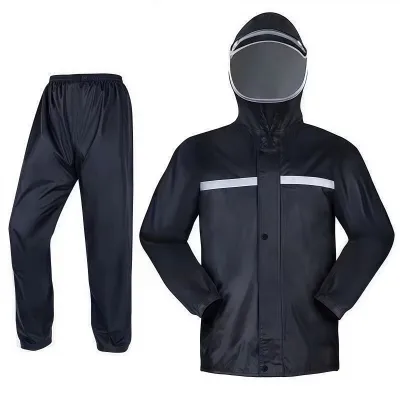
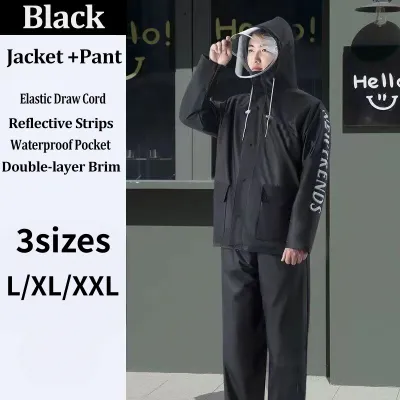
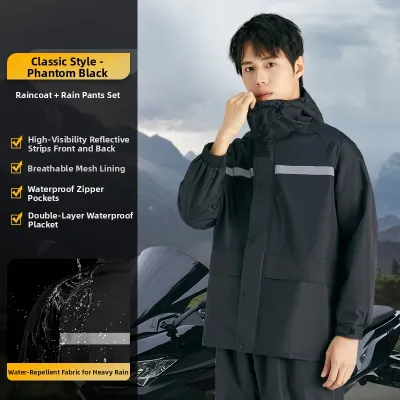
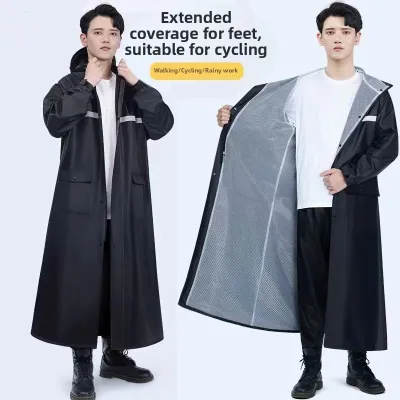

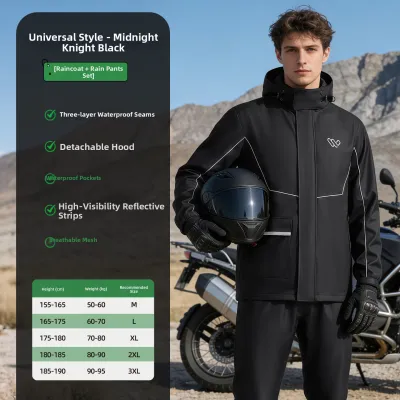
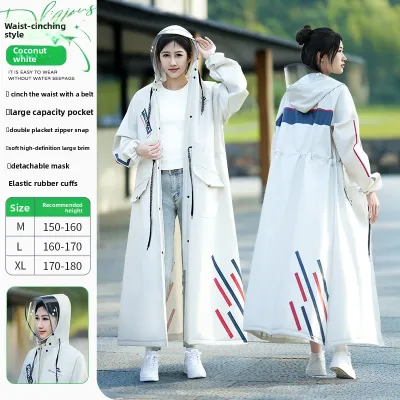
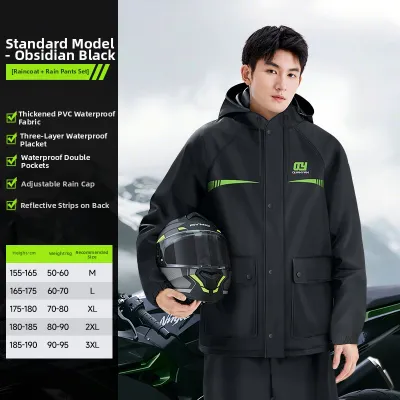
Prices are valid at publication and may change. Please refer to the product page for the latest price.
To measure this resistance, manufacturers use a hydrostatic head rating, expressed in millimeters. This rating represents the height of a water column that the fabric can support before moisture begins to seep through. For motorcycle riding, where wind pressure forces rain against the fabric at high speeds, look for a rating of at least 10,000 mm. If you frequently ride on highways during heavy storms, aiming for 15,000 mm or higher provides a more reliable barrier against wind-driven water.
Fabric construction plays a massive role in durability and comfort. Coated fabrics, typically nylon or polyester treated with a polyurethane layer on the inside, are lightweight, affordable, and highly packable. However, they can wear down over time with frequent folding. Laminated membranes bond a waterproof, breathable layer directly to the outer fabric, offering excellent durability and moisture management, though they generally come at a higher price point. Heavy-duty PVC or rubberized materials are completely impervious to water and highly durable, but they are heavy, stiff, and entirely non-breathable.
In a hot and humid tropical climate, breathability is a critical trade-off to consider. A completely sealed, non-breathable PVC suit traps your body heat and sweat, leaving you just as wet on the inside as you would be from the rain. While breathable laminated membranes allow sweat vapor to escape, their efficiency drops significantly in high-ambient humidity. To balance these factors, look for raincoats that incorporate physical ventilation features, such as covered mesh vents on the back or underarms, which allow hot air to escape without letting rain inside.
Check the Fit and Coverage for Your Riding Posture
Casual rainwear is cut for walking, but motorcycle gear must accommodate an active riding posture. When you sit on your motorcycle, your arms stretch forward to reach the handlebars, and your knees bend to rest on the footpegs. This movement pulls the fabric tight, which can expose your wrists and ankles to the elements if the raincoat is too short.

When trying on a raincoat, mimic your riding position to check the sleeve and inseam lengths. The sleeves should extend fully to your wrists, ideally overlapping with your riding gloves to prevent water from blowing up your arms. Similarly, the pant legs must be long enough to cover your ankles completely when your knees are bent, preventing water from dripping down into your riding boots.
Another common failure point is the gap between the jacket and the pants. A jacket that is too short will ride up your back when you lean forward, allowing water to pool at your waist and seep into your pants. To prevent this, choose a jacket with an extended back hem, often called a drop tail, or opt for a two-piece suit where the pants sit high on the waist, supported by suspenders or a secure elastic band.
Adjustability is essential for preventing the raincoat from ballooning at high speeds. Loose fabric catches the wind, creating drag and causing the material to flap violently, which can distract you and fatigue your muscles over long rides. Look for adjustment features such as velcro straps on the biceps, waist cinches, and ankle tabs. These allow you to customize the fit over your standard riding gear, securing excess fabric and creating a tight seal against wind and water.
Inspect Seams, Zippers, and Wind Flap Constructions
Even the most advanced waterproof fabric will fail if water can penetrate the construction points. Needle holes created during the stitching process are prime entry points for moisture. High-quality motorcycle raincoats address this by applying waterproof seam tape to the inside of every stitch line, sealing the holes completely. When inspecting a raincoat, turn it inside out to verify that the seam tape is wide, flat, and securely adhered without any lifting or bubbling at the edges.
Zippers are another major vulnerability under the pressure of highway-speed rain. Standard zippers will let water pass through their teeth almost instantly. To combat this, look for raincoats equipped with water-resistant zippers or, more reliably, a double storm flap system. A storm flap is a wide strip of waterproof fabric that folds over the zipper and secures with velcro or snap buttons, creating a physical gutter that channels water away from the opening.
Your neck is a frequent entry point for water running down from the bottom of your helmet. A good motorcycle raincoat features a high collar that extends up to the base of your helmet. Look for collars with adjustable drawcords or velcro tabs that allow you to seal the opening against your neck. A soft inner lining, such as fleece or microfiber, prevents the stiff waterproof fabric from chafing your skin during long rides.
Additionally, pay attention to the wrist closures. Elastic cuffs alone are rarely sufficient to block wind-driven rain at high speeds. The most effective designs combine elastic inner cuffs with adjustable velcro outer tabs, allowing you to seal the sleeve tightly over or under your glove gauntlets depending on your preference and the intensity of the downpour.
Verify Visibility and Safety Features for Wet Traffic
Heavy tropical downpours drastically reduce visibility for all road users, making safety and conspicuity top priorities. When choosing a raincoat, look past aesthetic preferences and prioritize features that make you stand out to other motorists in low-light, high-spray conditions.
High-visibility colors are highly effective for daytime riding in heavy rain. Neon yellow, bright orange, and high-conspicuity green stand out against the gray, dark background of a storm. If you prefer a darker base color like black or grey for daily wear, ensure the garment features generous retroreflective panels or strips across the back, chest, and sleeves to catch the headlights of surrounding vehicles at night.
Ensure that the placement of these reflective elements remains visible when you are in your typical riding position. For example, if you frequently ride with a backpack, choose a raincoat with reflective strips on the sleeves and lower hem, or use a high-visibility, waterproof backpack cover to avoid blocking the jacket’s built-in reflective safety features.
Finally, verify that the raincoat does not restrict your physical safety movements. The collar and shoulder construction must allow you to turn your head freely to perform shoulder checks and monitor your blind spots. A hood can be useful when you take your helmet off, but while riding, it must fold away securely or detach completely so it does not catch the wind, block your peripheral vision, or interfere with your helmet’s fit.
Execute a Pre-Purchase Inspection and Care Plan
Before finalizing your purchase, whether at a local motorcycle accessory shop or through an online marketplace, use a structured checklist to evaluate the gear. If you are shopping online, review the sizing chart carefully, as motorcycle rainwear is designed to be worn over your existing protective gear, meaning you may need to size up from your casual clothing size.
Once the raincoat arrives or while you are in the store, perform a physical inspection of the key components:
- Pull gently on the seams to ensure the stitching is tight and the inner seam tape does not pull away.
- Test all zippers, velcro closures, and snap buttons multiple times to ensure they operate smoothly without catching on the fabric.
- Try the suit on over your typical riding jacket and pants to confirm you have full range of motion in your arms and legs.
- Sit on your motorcycle, or mimic the riding position, to verify that the sleeves and pant legs do not pull back excessively.
Familiarize yourself with the seller’s return and exchange policies before removing any tags or taking the gear out for a ride. If the fit feels restrictive or if you notice any gaps in coverage during your dry run, exchange it for a different size or cut to ensure reliable protection on the road.
Proper maintenance is essential for preserving the waterproof integrity of your raincoat over time. Avoid machine washing your rain gear with standard household detergents, as these can strip away the durable water repellent coating and damage the inner seam tape. Instead, hand wash the garment using cool water and a mild, tech-wash soap designed for waterproof fabrics. Hang the suit to drip dry in a shaded, well-ventilated area, and never store it wet or crumpled inside a hot under-seat compartment, as trapped moisture and heat will cause the waterproof coatings to peel and degrade.

Community discussion
Share your experience or ask a question. Comments are reviewed before publication.