
Finding a reliable half-face helmet in the Philippines requires balancing daily comfort in tropical weather with strict adherence to road safety laws. To ride legally and safely, your helmet must carry either a Philippine Standard (PS) mark or an Import Commodity Clearance (ICC) sticker, both issued by the Bureau of Philippine Standards (BPS). Choosing the right helmet across different price ranges is not about compromising on safety, as every certified helmet meets the same baseline impact standards. Instead, your budget dictates the quality of materials, ventilation efficiency, weight distribution, and long-term comfort of the gear.
Understanding PSB and ICC Certification Standards
The Philippine government mandates specific safety certifications for all motorcycle helmets to ensure they can withstand significant impact forces during an accident. The Bureau of Philippine Standards (BPS) administers two primary marks: the Philippine Standard (PS) Quality and Safety Mark for locally manufactured helmets, and the Import Commodity Clearance (ICC) sticker for imported headgear. These certifications prove that a specific helmet model has undergone rigorous laboratory testing, including shock absorption, penetration resistance, and chin strap retention tests.
To identify a genuine certification mark, you must look closely at the sticker affixed to the back of the helmet shell. Genuine ICC and PS stickers feature holographic elements that shift color when tilted under direct light, along with a unique, clearly printed serial number. The printing must be sharp and free of smudges, and the sticker itself should be tamper-evident, meaning it will tear or self-destruct if anyone attempts to peel it off and transfer it to an uncertified helmet.
Products mentioned in this guide
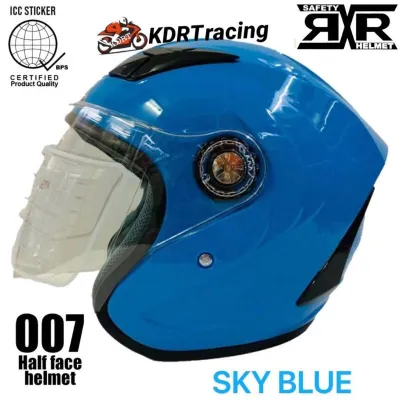
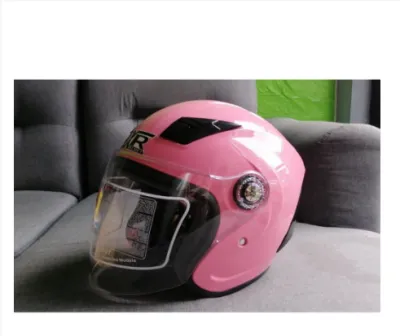
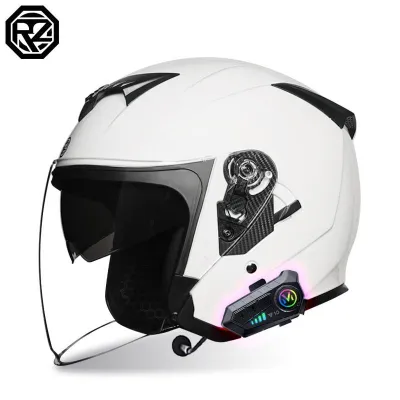
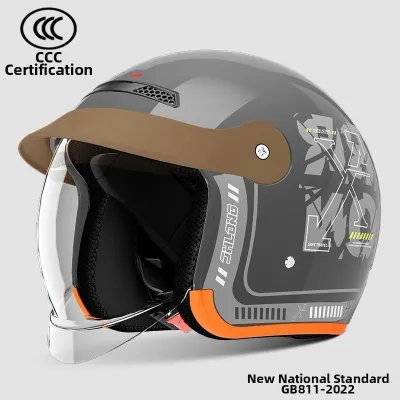
Prices are valid at publication and may change. Please refer to the product page for the latest price.
Riding with an uncertified helmet, or using a bicycle or construction helmet on a motorcycle, carries severe legal and financial consequences under Republic Act No. 10054, also known as the Motorcycle Helmet Act of 2009. Traffic enforcers from the Land Transportation Office (LTO) and local government units actively apprehend riders wearing non-compliant headgear. First-time offenses carry substantial fines, while subsequent violations can lead to higher penalties and the confiscation of your driver’s license. More importantly, uncertified helmets lack the energy-absorbing EPS liners necessary to prevent traumatic brain injuries during a collision.
What to Expect Across Different Price Tiers
When shopping for a certified half-face helmet, understanding how price correlates with features helps you set realistic expectations. Every certified helmet, regardless of cost, provides the baseline impact protection required by law. However, as you move up the pricing ladder, manufacturers utilize more advanced materials and manufacturing processes that directly impact your daily riding experience.

Lower-priced options generally rely on heavier materials and simpler manufacturing techniques, which can result in a bulkier profile and basic interior padding. As your budget increases, you gain access to lighter shell composites, highly breathable and moisture-wicking fabrics, advanced ventilation channels, and integrated convenience features like dual-visor systems. Prioritizing these functional upgrades over purely aesthetic additions, such as elaborate graphic designs or non-functional aerodynamic fins, ensures you get the great value and comfort for your money.
Budget and Entry-Level Options
Budget-friendly half-face helmets are designed to offer essential protection at an accessible price point, making them highly popular for short daily commutes and low-speed urban riding. In this entry-level tier, the outer shell is almost exclusively constructed from Acrylonitrile Butadiene Styrene (ABS) plastic. While ABS is highly impact-resistant and durable, it requires a thicker shell to achieve the necessary strength, which generally makes these helmets heavier than their premium counterparts.
The interior of a budget helmet features a standard single-density Expanded Polystyrene (EPS) foam liner to absorb impact energy. The comfort padding is usually basic, with limited moisture-wicking capabilities, and may not be fully removable for washing. This is an important consideration in the hot and humid Philippine climate, where sweat and oil can quickly accumulate inside the helmet.
Visor mechanisms in this category are typically straightforward, utilizing simple friction pivots that may wear down over time. These helmets often feature a single clear visor with basic scratch resistance but lack advanced optical clarity or integrated sun shields. Ventilation is also basic, often consisting of a few simple intake and exhaust ports that provide limited airflow during slow-moving traffic.
Mid-Range Choices
Stepping up to the mid-range segment introduces significant improvements in daily comfort, material quality, and overall convenience. Helmets in this tier often utilize advanced thermoplastic resins or lightweight polycarbonate blends for the outer shell. These materials allow manufacturers to design thinner, more aerodynamic shells that reduce overall weight without sacrificing structural integrity, thereby minimizing neck fatigue during longer rides.
One of the most valuable upgrades in mid-range helmets is the quality of the interior lining. Manufacturers typically use multi-density EPS liners for more progressive impact absorption. The comfort padding is usually made from hypoallergenic, moisture-wicking fabrics that actively draw sweat away from your skin. Crucially for riders in tropical regions, these liners are almost always fully removable and washable, allowing you to maintain hygiene and eliminate odors easily.
Visor technology also receives a major upgrade in this segment. Many mid-range half-face helmets feature a dual-visor system, which includes a primary outer shield and a drop-down inner sun visor to protect your eyes from intense tropical glare. The visors often come with improved optical clarity, anti-scratch coatings, and better rubber gaskets that seal tightly against the helmet shell to prevent rainwater from seeping inside during sudden afternoon downpours.
Premium and High-End Selections
Premium half-face helmets represent the pinnacle of riding gear engineering, focusing on maximum weight reduction, advanced aerodynamics, and excellent long-term comfort. The outer shells of these high-end models are constructed from advanced composite fibers, such as fiberglass, aramid, or pure carbon fiber. These materials offer exceptional strength-to-weight ratios, resulting in an incredibly lightweight helmet that feels almost weightless on your head during extended journeys.
Aerodynamic profiling is a key focus in premium design. These helmets undergo extensive wind-tunnel testing to minimize drag, lift, and wind buffeting, which significantly reduces neck strain when riding at highway speeds. The ventilation systems are highly sophisticated, featuring multi-channel EPS liners that actively pull cool air across your scalp and expel hot, humid air through rear exhaust vents, keeping you cool even in heavy traffic.
High-end selections also prioritize premium convenience and safety features. You will find high-quality quick-release micrometric buckles or traditional double-D ring retention systems made from robust metals. The interior liners use premium, ultra-soft fabrics with antibacterial treatments that retain their shape and cushioning properties even after years of use. Additionally, these helmets often feature dedicated speaker pockets and cable routing channels designed to seamlessly accommodate Bluetooth communication systems without compromising fit or safety.
Essential Fit and Comfort Checks Before Buying
No matter how advanced or expensive a helmet is, it cannot protect you properly if it does not fit your head correctly. To find the right size, start by measuring your head circumference. Wrap a flexible measuring tape horizontally around your head, about one inch above your eyebrows and directly over your ears. Compare this measurement in centimeters to the manufacturer’s specific sizing chart, as sizing can vary significantly between different brands and models.
In addition to size, you must consider your head shape. Most riders fall into one of three categories: round oval, intermediate oval, or long oval. A helmet designed for a round head shape will cause painful pressure points on the forehead of a rider with a long oval head, while a long oval helmet will feel loose on the sides of a round head.
When trying on a helmet, perform the following physical checks to ensure a secure and safe fit:
- Snugness Check: The helmet should slide onto your head with some resistance and feel snug all the way around. It should grip your cheeks gently, similar to a light squeeze, without causing pain or biting.
- Roll-Off Test: Fasten the chin strap securely so that no more than two fingers can fit between the strap and your throat. Grasp the rear base of the helmet and try to pull it forward off your head. If the helmet rolls off or shifts significantly, it is too large or the strap is too loose.
- Pressure Point Check: Wear the helmet inside the physical store for at least ten to fifteen minutes. If you feel any localized pain, hot spots, or red marks on your forehead, temples, or the back of your head, the helmet shape or size is incorrect for you.
- Movement Check: Hold the helmet firmly with both hands and try to rotate your head inside it. Your skin and cheeks should move with the helmet. If the helmet rotates freely without moving your skin, it is too large.
- Visor and Eyewear Clearance: Open and close the visor to ensure it does not contact your nose or face. If you wear prescription glasses or riding sunglasses, slide them on to verify that the helmet's interior padding accommodates the frames comfortably without pressing them into your temples.
How to Verify Authenticity and Avoid Counterfeits
The market for motorcycle gear in the Philippines contains numerous counterfeit products that mimic the appearance of popular certified brands but offer zero real-world protection. Purchasing a fake helmet puts your life at serious risk, as these counterfeits are often made from cheap, brittle plastics that shatter upon impact. Verifying the authenticity of both the helmet and its safety markings is a critical step before making a purchase.
Begin by closely inspecting the physical quality of the ICC or PS certification sticker. Legitimate stickers are printed with high-precision equipment; the text should be clearly legible, and the holographic patterns must shift smoothly when viewed from different angles. Counterfeit stickers often have blurry text, dull colors, or a static metallic look that does not change under light. Furthermore, you can verify the unique serial number printed on the sticker by cross-referencing it with official databases or verification systems provided by the Department of Trade and Industry (DTI) when available.
Next, examine the overall build quality of the helmet itself. Genuine certified helmets exhibit high manufacturing standards, including clean paint finishes, securely glued rubber trim, smooth visor operation, and robust stitching on the chin straps and interior liners. Look for manufacturer labels sewn into the comfort padding that list the brand name, model designation, manufacturing date, and size. Legitimate helmets will also feature clear safety warnings and user manuals in the box.
To completely eliminate the risk of buying a counterfeit, always purchase your helmet from authorized physical dealers, official brand stores, or reputable retail chains. Avoid buying helmets from unverified sellers on online marketplaces or informal roadside stalls, even if the prices seem highly attractive. A genuine, certified helmet is an investment in your personal safety, and buying from authorized sources ensures you receive a product that has been legally imported, properly tested, and approved for road use.
Frequently Asked Questions (FAQ)
Can I legally use a half-face helmet without a visor on Philippine roads?
Under Land Transportation Office (LTO) guidelines and general road safety regulations, riders must maintain adequate eye protection while operating a motorcycle. If your certified half-face helmet does not have a built-in visor, or if you choose to ride with the visor fully raised, you are legally required to wear shatterproof riding glasses, goggles, or a protective face shield. Riding without any eye protection exposes you to severe physical risks, such as high-speed wind blast, airborne dust, insects, and road debris that can cause sudden temporary blindness or permanent eye damage. This distraction can easily lead to a loss of vehicle control and serious accidents. Traffic enforcers can also cite you for reckless driving or operating a vehicle without proper safety equipment if you fail to protect your eyes.
How often should I replace my certified half-face helmet?
As a general rule, helmet manufacturers recommend replacing your helmet every three to five years of regular use, or seven years from the date of manufacture, whichever comes first. Over time, the protective materials inside the helmet naturally degrade. The Expanded Polystyrene (EPS) liner, which is responsible for absorbing impact energy, gradually hardens and loses its elasticity due to exposure to sweat, hair oils, cosmetics, extreme tropical heat, and humidity.
Crucially, you must replace your helmet immediately after any significant impact, drop, or accident, even if there is no visible damage on the outer shell. The EPS liner is designed for single-use impact absorption; once it compresses to cushion a blow, it cannot expand back or absorb another impact in that same area. Additionally, you should inspect your helmet regularly and replace it if you observe signs of wear such as crumbling foam, frayed chin straps, a malfunctioning buckle, or a loose visor mechanism that cannot be tightened.
Community discussion
Share your experience or ask a question. Comments are reviewed before publication.