
Riding a motorcycle in the Philippines during the rainy season requires preparation, resilience, and the right gear. With the sudden onset of the afternoon monsoon rains (habagat) and tropical depressions, a reliable waterproof motorcycle kapote (raincoat) is an essential investment for every commuter. A high-quality raincoat does more than just keep your clothes dry; it preserves your body temperature, prevents shivering, and ensures you can focus entirely on navigating slippery roads and unpredictable traffic.
Selecting the right rain gear involves balancing waterproofing capability, comfort in tropical humidity, and road safety. Cheap, thin plastics often rip during the first heavy downpour or trap body heat so intensely that you end up soaked in sweat anyway. By understanding the key design elements, material specifications, and safety features of dedicated motorcycle rainwear, you can make an informed decision that keeps you dry and safe throughout the wettest months of the year.
Key Features to Look for in a Waterproof Motorcycle Kapote
When evaluating motorcycle rain gear, the primary goal is to identify design elements that prevent water from forcing its way through seams, closures, and openings under the pressure of riding speeds. Standard raincoats often fail on a motorcycle because the wind pushes water through tiny needle holes in the stitching or down the collar. To ensure full protection during a heavy downpour, you must look closely at how the garment is constructed.
Products mentioned in this guide
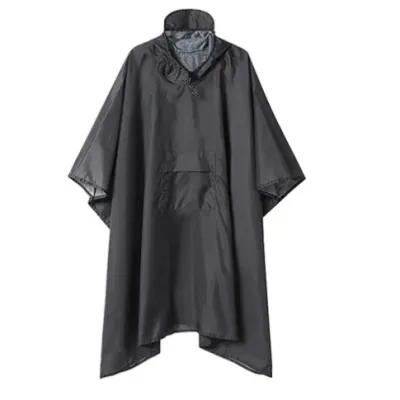
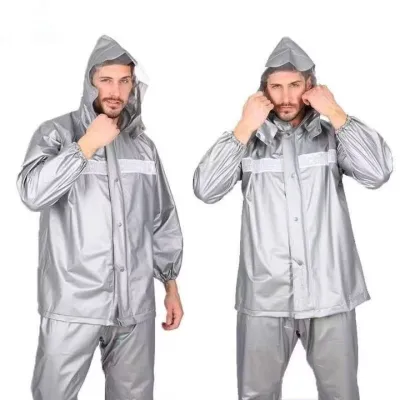
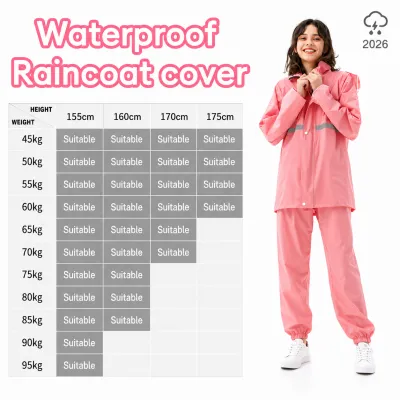
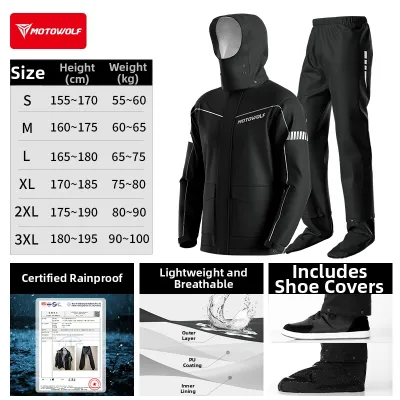
Prices are valid at publication and may change. Please refer to the product page for the latest price.
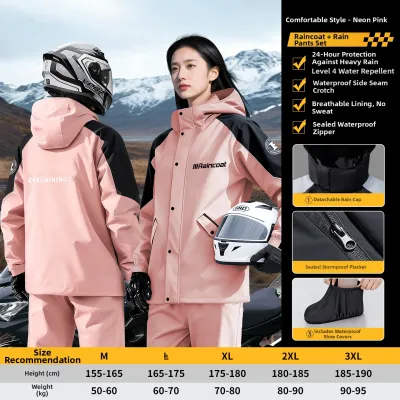
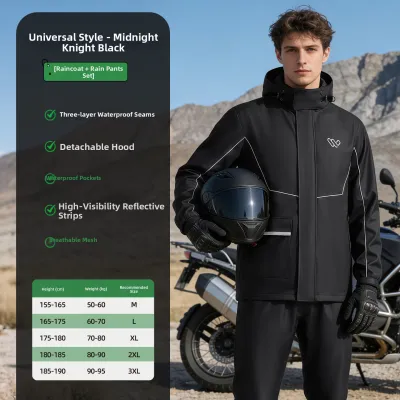
First, inspect the seams of the kapote. High-quality motorcycle rain gear features heat-sealed or taped seams on the interior. This process applies a waterproof tape over the stitched areas, sealing the needle holes completely. Without taped seams, water will eventually seep through the shoulders, underarms, and crotch areas during prolonged exposure to rain.
Second, examine the zipper and closure systems. A standard zipper is not waterproof and will allow water to penetrate directly to your chest. Look for raincoats that feature a double storm flap system. This design uses a wide strip of waterproof fabric that folds over the zipper and secures with velcro or heavy-duty snaps, creating a physical barrier that channels water away from the opening.
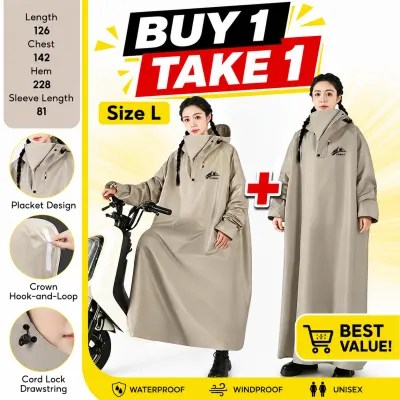
Third, pay close attention to the cuffs, collar, and hood design. Adjustable cuffs with elastic bands or velcro straps allow you to seal the sleeves tightly around your wrists or over your riding gloves, preventing wind and rain from traveling up your arms. A high collar that extends up to the chin is crucial for blocking water from dripping down your neck from the bottom of your helmet. If the kapote includes a hood, it should be thin enough to fit comfortably under your helmet without restricting your head movement or blocking your peripheral vision. Some riders prefer hoods that can be rolled up and tucked into the collar when not in use.
Finally, consider the overall length and coverage of the gear while in a seated riding position. When you sit on your motorcycle, your knees bend, which naturally pulls the fabric of your pants or poncho upward. Ensure the rain gear has adequate length to cover your lower legs and protect your footwear from road spray and pooling water on the footboards or footpegs.
Poncho vs. Two-Piece Rain Suit: Which Style Fits Your Commute?
Motorcycle riders generally choose between two primary styles of rain gear: the traditional single-piece poncho (often referred to locally as a motorcycle kapote) and the structured two-piece rain suit consisting of a separate jacket and pants. Each style has distinct advantages and trade-offs depending on your daily commute distance, typical riding speeds, and how quickly you need to deploy the gear when a sudden storm hits.

The motorcycle poncho is highly popular for short-distance city commutes and scooter riders. Its primary advantage is speed and ease of use. When a sudden downpour begins, you can quickly pull a poncho over your head and regular clothing without needing to take off your shoes. Many motorcycle-specific ponchos feature an extended front panel designed to drape over the front handlebars and headlight, protecting your hands, lap, and any small cargo or grocery bags placed in the front step-through area or basket. However, because ponchos are loose and open at the bottom, they are prone to flapping violently in the wind at speeds above 40 km/h. This flapping not only creates drag but can also destabilize your balance and allow road spray to wet your lower legs and back.
In contrast, a two-piece rain suit offers a snug, aerodynamic fit that is far better suited for longer commutes, highway riding, and manual motorcycles. Because the jacket and pants are separate, they hug the body closely, eliminating wind resistance and fabric flapping. This style provides targeted, 360-degree protection, ensuring that no water splashes up from the road into your pants. The main drawback of a two-piece suit is the preparation time. Putting on rain pants, especially over bulky riding shoes or boots on the side of a busy, wet road, can be awkward and time-consuming.
To decide which style fits your daily routine, consider your typical riding environment. If your daily route consists of low-speed, stop-and-go city traffic on a scooter where quick deployment is essential, a high-quality, heavy-duty poncho may be the most practical choice. If your commute involves traversing open highways, elevated expressways, or riding at higher speeds for extended periods, a two-piece rain suit is highly recommended to ensure stability, wind resistance, and complete dryness.
Evaluating Waterproof Claims and Material Durability
Navigating the marketing terms used by manufacturers can be challenging. To find a durable kapote that will last for multiple rainy seasons, you must learn to verify material specifications and inspect the physical build quality rather than relying solely on product descriptions.
Start by checking the product labels or specifications for the exact material composition. The most common materials used in motorcycle rain gear are Polyvinyl Chloride (PVC), polyester with a Polyurethane (PU) coating, and nylon. PVC is highly durable, completely waterproof, and relatively inexpensive, making it a common choice for heavy-duty gear. However, PVC is stiff, heavy, and completely non-breathable, which can make riding in hot, humid tropical weather uncomfortable. Polyester or nylon fabrics coated with a PU membrane offer a lighter, more flexible, and slightly more breathable alternative. These materials allow for better freedom of movement while still providing excellent water resistance, though they may require more careful maintenance to preserve the coating.
It is also important to understand the difference between water-resistant and fully waterproof gear. Water-resistant fabrics are treated with a Durable Water Repellent (DWR) coating that causes water to bead up and roll off the surface. While this is sufficient for light drizzles, a heavy tropical downpour will eventually saturate the fabric and force water through. Fully waterproof gear relies on an impermeable material barrier combined with sealed construction techniques to withstand sustained water pressure.
When purchasing rain gear from physical stores or online marketplaces, inspect the physical build quality closely. Look for reinforced stitching at high-stress points, such as the underarms, crotch, and pocket corners. Check that the snaps are made of heavy-duty plastic or rust-resistant brass, as cheap metal snaps will quickly corrode in the humid Philippine climate. Zippers should be thick, smooth-gliding, and made of durable plastic rather than thin metal teeth that can easily jam or break when pulled in a hurry.
Safety and Visibility Features for Wet Weather Riding
Safety should always be your top priority when riding in wet weather. Rain significantly reduces road traction, increases braking distances, and drastically lowers visibility for all motorists. The rain gear you choose must actively work to make you more visible to other drivers while ensuring it does not interfere with your ability to control your motorcycle.
High visibility is crucial during heavy downpours and nighttime rides when road markings become obscured and windshields fog up. Opt for a kapote in bright, high-visibility colors such as neon yellow, vibrant green, or bright orange. Additionally, ensure the gear features wide, high-quality reflective strips across the back, chest, and sleeves. These reflective elements catch the headlights of surrounding vehicles, making your presence known from a distance.
Beyond visibility, the physical fit of your rain gear directly impacts your operational safety. The kapote must not restrict your physical movements in any way. You must be able to turn your head fully to check your blind spots and side mirrors without the hood or collar pulling tightly against your helmet. The sleeves should not be so tight that they restrict your arm movement or prevent you from quickly reaching your handlebar controls, brake levers, or horn.
Furthermore, loose fabric poses a severe safety hazard on a motorcycle. A loose, flapping poncho or oversized jacket can catch on passing vehicles, roadside obstacles, or even your own motorcycle’s moving parts, such as the chain, sprocket, or rear wheel. Always ensure that any excess fabric is securely fastened, tucked in, or cinched using the built-in drawcords or velcro straps. Before setting off, verify that the bottom of your rain gear does not drape over or block your motorcycle’s headlight, turn signals, or tail light.
Cleaning and Storing Your Rain Gear to Prevent Damage
Proper maintenance is essential to extend the lifespan of your waterproof kapote and prevent the buildup of unpleasant odors, mold, and mildew. Because the Philippine climate is highly humid, storing damp rain gear in a closed space will quickly ruin the material and degrade the waterproof coatings.
After every wet ride, never fold your rain gear and stuff it directly into your under-seat compartment (U-box) or backpack. The heat from the engine combined with trapped moisture creates an ideal environment for mold to grow, which can permanently damage the fabric and cause a strong, sour odor. Instead, hang the kapote on a wide plastic hanger in a well-ventilated, shaded indoor area to air-dry completely before storing it. Avoid hanging it in direct sunlight, as prolonged exposure to ultraviolet (UV) rays can dry out PVC, crack PU coatings, and fade high-visibility colors.
When the gear becomes dirty from road grime, mud, or oil splashes, follow the manufacturer’s care instructions carefully. Avoid using washing machines, spin dryers, or harsh chemical detergents, as the mechanical agitation and strong chemicals can strip away waterproof coatings and delaminate sealed seams. Instead, hand wash the gear gently in a basin of cool water using a mild, neutral soap. Use a soft microfiber cloth or a soft-bristled brush to gently wipe away dirt from the surface. Never scrub the interior taped seams, as this can cause the sealing tape to peel away.
When storing your dry rain gear for an extended period, avoid folding it too tightly or placing heavy objects on top of it. Sharp, tight creases can weaken the waterproof membrane over time, leading to cracks and leaks along the fold lines. Instead, roll the gear loosely and store it in a cool, dry closet or a dedicated breathable storage bag.
Frequently Asked Questions (FAQ)
Can I use a standard pedestrian rain poncho for motorcycle riding?
No, using a standard pedestrian rain poncho for motorcycle riding is highly discouraged due to significant safety and functional risks. Pedestrian ponchos are typically made of very thin, lightweight plastic that is not designed to withstand the wind pressure experienced while riding. At speed, these ponchos will flap violently, which can distract you, block your vision, or even pull on your neck. More importantly, the loose, billowing fabric of a pedestrian poncho can easily get caught in your motorcycle’s spinning rear wheel, chain, or hot exhaust pipe, potentially causing a severe accident. Standard ponchos also lack the reinforced seating areas, secure fasteners, and high-visibility elements necessary for safe road use.
How do I know if my waterproof kapote needs to be replaced?
You can determine if your waterproof kapote needs to be replaced by performing a simple visual and tactile inspection. Look closely at the interior of the gear; if you notice the inner lining peeling, flaking, or showing white powdery residue, the waterproof polyurethane coating is degrading. Inspect the seams to see if the heat-sealed tape is lifting, bubbling, or coming loose, as this will allow water to leak through the stitching. Additionally, if the fabric feels unusually stiff, brittle, or cracked, or if you consistently experience dampness on your clothes after riding through a moderate rain, the material has lost its waterproof integrity and should be replaced to ensure your safety and comfort on the road.

Community discussion
Share your experience or ask a question. Comments are reviewed before publication.