
Selecting the right anti-dragging set for your Honda Click 125 is one of the most effective ways to restore smooth acceleration and eliminate the frustrating low-speed vibration known locally as “panginginig.” This common issue occurs when the dry centrifugal clutch system slips or engages unevenly against the clutch bell, particularly during stop-and-go commuting in hot, humid conditions. To make an informed decision, you must evaluate three core dimensions: the metallurgical quality of the aftermarket components, precise model compatibility across different Honda Click generations, and whether your riding habits require a complete transmission overhaul or a targeted component upgrade.
By understanding how these mechanical factors interact with your scooter’s Continuously Variable Transmission (CVT), you can avoid costly purchasing mistakes and ensure a safer, more reliable ride. Drivetrain modifications directly impact your vehicle’s safety and road legality, meaning that every purchasing decision must be guided by verified technical specifications rather than marketing promises. This guide breaks down the essential selection criteria, material differences, and installation boundaries to help you choose the ideal setup for your daily commute.
Understanding Anti-Dragging Sets for the Click 125
To understand why an anti-dragging set is necessary, you must first examine the mechanics of the Honda Click 125’s rear CVT assembly. The rear pulley houses a centrifugal clutch assembly consisting of weighted clutch shoes lined with friction material, tension springs, and a center torque spring, all spinning inside a metal clutch bell. At idle, the clutch springs keep the shoes retracted; as you twist the throttle and engine RPM rises, centrifugal force flings the shoes outward to grip the inner wall of the clutch bell, transferring rotational power to the rear wheel.
Products mentioned in this guide
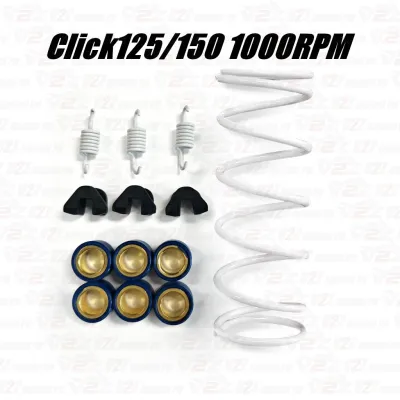
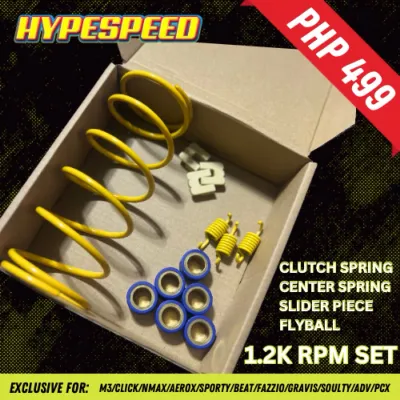
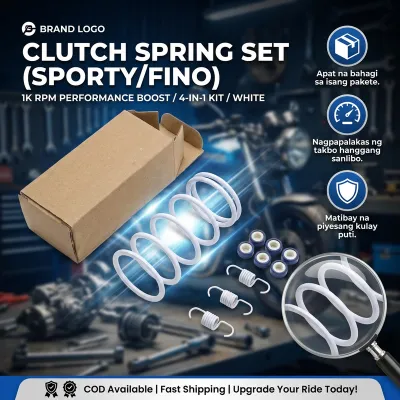
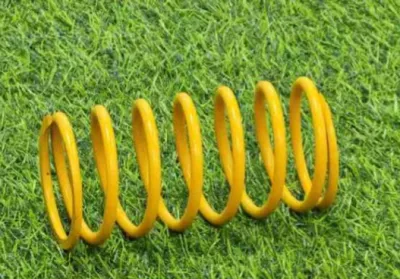
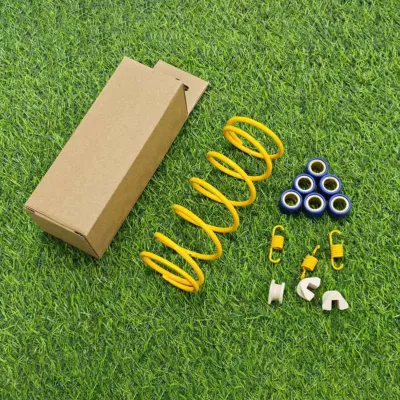
Prices are valid at publication and may change. Please refer to the product page for the latest price.
Over time, stop-and-go traffic, high ambient temperatures, and accumulated belt dust create a harsh environment inside the CVT casing. The friction linings on the clutch shoes can glaze over, becoming smooth and glassy, while the inner surface of the clutch bell can develop uneven wear or heat spots. When these components fail to make clean, immediate contact, they slip and grab repeatedly in rapid succession. This stick-slip phenomenon is what produces the dragging sensation, power loss, and severe shuddering felt throughout the chassis during initial acceleration.
An aftermarket anti-dragging set is specifically engineered to resolve this issue by optimizing the engagement dynamics between the shoes and the bell. These sets typically feature clutch bells with textured, grooved, or sandblasted inner walls designed to bite into the clutch shoes more effectively and sweep away accumulated dust. Additionally, they often include upgraded clutch shoes with high-friction compounds and recalibrated tension springs that delay engagement slightly, allowing the engine to reach a more efficient RPM range before locking the drive system. While these modifications aim to deliver a smoother ride, their long-term success depends heavily on regular CVT cleaning, proper belt tension, and overall transmission maintenance.
Evaluating Material Quality, Compatibility, and Fitment
When shopping for aftermarket CVT parts in the Philippines, you will encounter a wide array of options ranging from budget-friendly replacements to premium performance kits. Navigating these choices requires a systematic evaluation of material composition, manufacturing standards, and precise dimensional fitment to ensure you do not compromise your scooter’s reliability.

Assessing Material Quality and Durability
The durability of an anti-dragging set depends almost entirely on the metallurgy of the clutch bell and the chemical composition of the clutch shoe linings. Standard OEM clutch bells are typically made of cast iron, which is cost-effective but prone to heat retention and warping under heavy thermal loads. Premium aftermarket clutch bells are often CNC-machined from forged carbon steel or high-tensile alloys, which offer superior structural integrity, tighter tolerances, and better heat dissipation. Look for bells that feature cooling fins, outer grooves, or drilled holes, as these design elements actively pull heat away from the friction surface and prevent thermal distortion.
For the clutch shoes, the friction lining material determines how quickly and smoothly the clutch engages. Organic friction compounds are quiet and offer smooth engagement, but they wear out faster and are highly susceptible to glazing under high heat. Carbon-fiber or copper-sintered friction linings are excellent alternatives for riders facing heavy daily traffic, as they maintain a stable friction coefficient at elevated temperatures and resist glazing. When reviewing product specifications, verify that the manufacturer documents their quality control standards, such as ISO certifications, and look for visible signs of precision manufacturing, such as clean chamfers on the shoe linings and a perfectly balanced clutch bell weight distribution to prevent high-speed vibrations.
Verifying Model Compatibility and Year Variants
The Honda Click 125 has undergone several design iterations since its introduction, commonly categorized by riders as Version 1 (V1), Version 2 (V2 or “Game Changer”), and the more recent Version 3 (V3). While these generations share the same fundamental liquid-cooled 125cc eSP engine architecture, subtle revisions in the CVT casing, pulley offsets, and shaft dimensions can prevent a mismatched part from fitting correctly. For instance, the spline count on the driveshaft, the overall depth of the clutch bell mounting boss, and the physical width of the clutch shoes can vary between model years.
To prevent installation failures, never rely on generic product titles that claim universal fitment for all 125cc scooters. You must cross-reference your scooter’s exact chassis code, engine number, or original equipment manufacturer (OEM) part numbers—such as 22100-KZR-600 or 22100-K35-V01—with the aftermarket manufacturer’s compatibility database. A clutch bell designed for a Honda Click 150 may physically slide onto a Click 125 shaft, but the heavier weight of the 150cc bell or different spring rates can degrade the performance of the smaller 125cc engine by altering the CVT’s shift characteristics. Always confirm with the seller or manufacturer that the specific kit is rated for your exact model year before completing your purchase.
Comparing Full Kits vs. Partial Upgrades
Riders must decide whether to invest in a complete, pre-matched anti-dragging kit or to replace individual components as they wear out. This decision should be guided by the current physical condition of your CVT, your budget, and your specific performance expectations.
| Configuration Type | Primary Benefit | Installation Complexity | Ideal Rider Profile |
|---|---|---|---|
| Full Clutch and Bell Kit | Harmonized spring rates and friction surfaces; eliminates mismatched wear patterns. | High (requires complete disassembly of the rear pulley and torque drive). | Commuters experiencing severe, long-term shudder who want a reliable, plug-and-play solution. |
| Clutch Bell Upgrade Only | Improved heat dissipation and dust clearance; cost-effective if stock shoes are still in good condition. | Medium (requires removing only the outer clutch bell nut). | Budget-conscious riders with relatively new stock shoes experiencing minor glazing or slippage. |
| Clutch Shoe & Spring Upgrade | Restores friction grip and allows fine-tuning of the initial engagement RPM. | High (requires compressing the high-tension center spring to access the shoes). | Riders looking to customize throttle response and initial bite without replacing a perfectly functional bell. |
A full kit is generally recommended if your scooter has accumulated over 15,000 to 20,000 kilometers on the stock transmission, as the shoes and bell wear together over time. Installing new carbon shoes into an old, warped, or grooved cast iron bell will accelerate shoe wear and lead to premature failure. Conversely, if your scooter is relatively new and you are only experiencing minor shuddering during morning warm-ups, a partial upgrade—such as swapping out the stock clutch springs for slightly stiffer aftermarket options—may resolve the issue at a fraction of the cost.
Installation Requirements and Safety Boundaries
Working on a motorcycle’s transmission system carries inherent safety risks that must not be overlooked. The CVT operates under extreme rotational speeds and high spring tensions; consequently, improper installation of an anti-dragging set can lead to catastrophic mechanical failure, drivetrain lockup, or severe personal injury while riding. Before attempting any disassembly, you must consult your official Honda Click 125 service manual to understand the exact assembly sequence and safety precautions.
Professional installation by a qualified motorcycle mechanic is strongly recommended for all drivetrain modifications. The rear clutch assembly is held together by a large clutch center nut under significant tension from the heavy compression spring (torque spring). Disassembling this unit without a dedicated clutch spring compressor tool can cause the spring to release violently, throwing heavy metal parts with dangerous force. Furthermore, securing the clutch bell and pulley faces requires specialized holding tools, such as a Y-tool or universal holder; using improvised tools like screwdrivers or chisels to lock the pulleys can easily crack the aluminum faces, bend the shafts, or strip the threads.
Precision torque application is critical during reassembly. The clutch bell nut must be tightened to the exact torque specification defined by the manufacturer—typically around 49 N·m (Newton-meters) for the rear axle nut, though you must verify the precise value for your specific model year. Under-tightening this nut can cause the clutch bell to wobble or spin loose during operation, destroying the splines on the drive shaft and potentially locking the rear wheel at high speed. Over-tightening, on the other hand, can strip the threads or crush the internal bearings. Finally, be aware that installing aftermarket transmission components may void your local dealership warranty, so always weigh this trade-off before proceeding with modifications.
Pre-Purchase Checklist and Sourcing Guidelines
To ensure you receive a genuine, high-quality product that performs safely on the road, follow this structured checklist before finalizing your purchase on online marketplaces or at local motorcycle shops:
- Verify Seller Authorization: Only purchase from official flagship stores, authorized local distributors, or highly rated motorcycle specialty shops. Avoid unbranded listings with generic titles and no clear manufacturer origin.
- Check for Authenticity Markers: Reputable brands package their anti-dragging sets with holographic security stickers, unique serial numbers, or scratch-off QR codes that link directly to the manufacturer's verification website.
- Inspect Machining and Finish: Upon receiving the product, inspect the metal surfaces. Genuine parts feature clean, precise CNC machining lines, uniform paint or powder coating, and laser-engraved branding. Reject parts with rough edges, casting bubbles, or uneven friction linings.
- Confirm Return and Warranty Policies: Ensure the seller offers a clear return window and a warranty against manufacturing defects, as drivetrain parts are subjected to intense physical stress and must be free of structural flaws out of the box.
- Read Localized Customer Feedback: Look for reviews from other Honda Click 125 owners in the Philippines. Pay close attention to comments detailing real-world fitment accuracy, mileage durability, and whether the kit successfully resolved the "panginginig" shudder under local weather conditions.
Frequently Asked Questions (FAQ)
Will an anti-dragging set improve my Click 125's top speed?
An anti-dragging set will not increase your scooter’s maximum top speed. Top speed is fundamentally limited by your engine’s horsepower, the rev limiter, the gear ratios in the final reduction gearbox, and the physical diameters of the front and rear CVT pulleys. The primary purpose of an anti-dragging set is to optimize low-to-mid-range acceleration by ensuring immediate, slip-free clutch engagement. While it improves throttle response, eliminates starting shudder, and ensures that all engine power is efficiently transferred to the rear wheel without friction loss, it does not alter the overall gear ratios required to achieve a higher top speed.
Can I install the anti-dragging set myself at home?
While performing basic maintenance like changing the engine oil or cleaning the air filter is highly feasible for DIY enthusiasts, installing a clutch and bell set requires specialized tools and mechanical expertise. Safe installation requires a dedicated pulley holder, a clutch spring compressor, and a calibrated torque wrench to ensure the fasteners are tightened to exact factory specifications. Attempting the installation with standard hand tools increases the risk of stripping the driveshaft threads, damaging the aluminum pulley faces, or causing personal injury due to the high-tension torque spring. For safety and optimal performance, it is highly recommended to have the components installed by a professional motorcycle technician.
Community discussion
Share your experience or ask a question. Comments are reviewed before publication.