
Finding an affordable motorcycle helmet that fits a tight budget while still offering reliable protection is a top priority for many riders. In the Philippines, where daily commutes involve navigating dense traffic and unpredictable tropical weather, a full-face helmet is essential for shielding your face and head from debris, wind, and potential impacts. While AXK offers several highly accessible options, your primary focus must always be on verifying safety certifications and physical build quality rather than relying solely on low prices or stylish graphics.
This guide will walk you through the essential steps to evaluate an AXK full-face helmet under ₱2,000. By understanding how to verify safety marks, assess materials, ensure a proper fit, and find authentic online sellers, you can make a well-informed decision that keeps you safe on the road.
Setting the ₱2,000 Budget and Safety Baseline
Setting a budget of ₱2,000 places you squarely in the entry-level segment of the motorcycle gear market. In this price range, manufacturers must balance production costs with safety requirements, meaning you will need to prioritize core protective features over premium aesthetic additions or advanced technological integrations.
Products mentioned in this guide
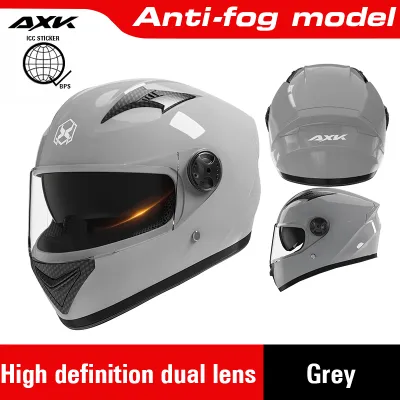
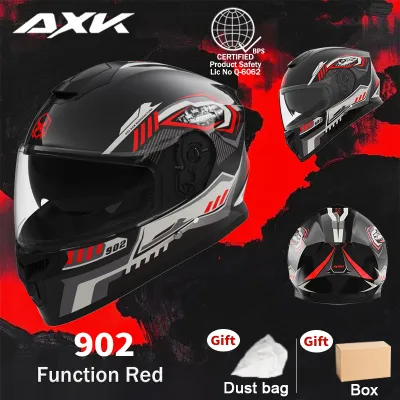
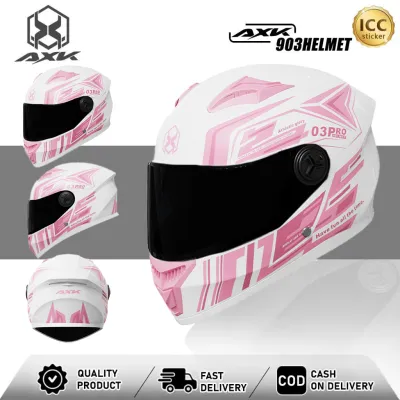
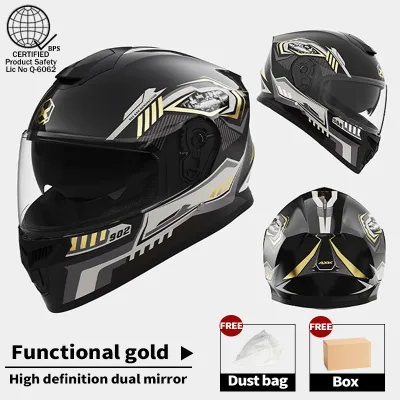
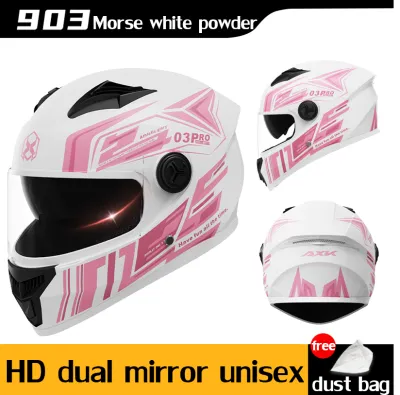
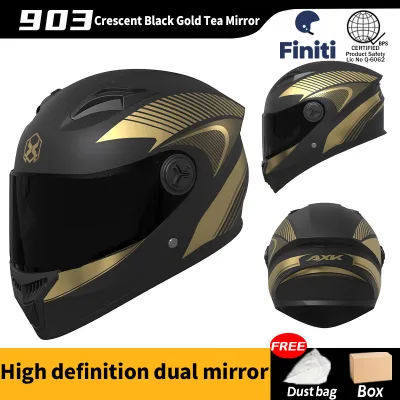
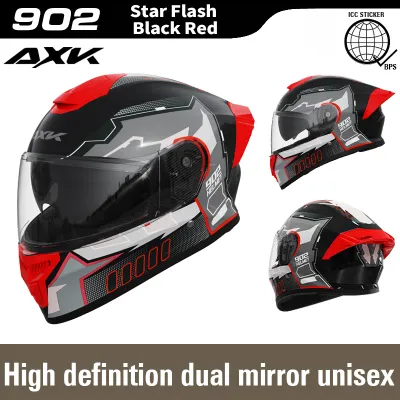
Prices are valid at publication and may change. Please refer to the product page for the latest price.
A low price should never be an excuse to compromise on safety. A helmet’s primary function is to absorb and distribute impact energy during an accident, protecting your brain and skull from severe injury. Extra graphics, tinted visors, or bundled accessories are useless if the helmet shell fails to hold up under pressure.
To navigate this budget segment successfully, you must follow a clear decision path. Start by verifying the legitimacy of the safety certifications, then inspect the physical build quality, confirm the exact fit for your head shape, and finally calculate the total checkout cost including shipping fees before making your purchase.
Verifying Safety Certifications and Authenticity
In the Philippines, all protective helmets used on public roads must comply with local safety standards. For imported helmets like those from AXK, look for the Import Commodity Clearance (ICC) sticker, while locally manufactured or officially distributed options should carry the Philippine Standard (PS) mark.

These safety stickers are typically affixed to the rear of the helmet shell or the inner lining. Do not rely solely on product photos provided in online listings, as these can easily be edited or copied from other products. When your helmet arrives, physically inspect the sticker to ensure it has holographic security elements and a unique, clear serial number.
In addition to local markings, check for international safety standards such as DOT (Department of Transportation, United States) or ECE (Economic Commission for Europe) compliance. These certifications indicate that the helmet design has undergone rigorous impact, penetration, and retention system testing in professional laboratories.
To verify these claims, ask the seller for official brand documentation or check the manufacturer’s official product catalog. If a seller cannot provide physical proof of certification or if the safety stickers look poorly printed and easily peelable, treat it as a major warning sign and avoid using the helmet on public roads.
Assessing Build Quality and Feature Trade-Offs
At the sub-₱2,000 price point, most full-face helmets utilize Acrylonitrile Butadiene Styrene (ABS) or similar thermoplastic materials for the outer shell. ABS plastic offers a practical balance of impact resistance, durability, and lightweight performance for daily commuting, provided it is molded correctly.
When inspecting the helmet, look closely at the outer shell for any manufacturing defects. Check for visible cracks, uneven paint finishes, or soft spots that yield when you apply firm pressure. The shell must feel rigid and structurally sound across its entire surface.
The visor system is another critical area to evaluate, especially when riding through sudden tropical downpours or bright sunlight. Test the optical clarity by looking through the visor to ensure there is no distortion that could impair your vision. The quick-release or ratchet mechanism should operate smoothly, allowing you to raise and lower the shield without sticking.
Inside the helmet, the Expanded Polystyrene (EPS) foam liner serves as the primary shock absorber. Press your fingers against the EPS liner beneath the fabric padding to confirm it is dense, firm, and securely bonded to the outer shell without any gaps or loose sections.
Given the high humidity and heat in the Philippines, look for a helmet with removable and washable interior comfort liners. Sweat, oil, and dust accumulate rapidly during daily rides, and being able to wash the cheek pads and crown liner is essential for maintaining hygiene and preventing unpleasant odors.
Be prepared to accept certain trade-offs at this budget level. You will likely miss out on premium features such as Pinlock-ready visors for advanced anti-fog inserts, complex multi-channel ventilation systems, integrated dual-visor sun shields, or dedicated cutouts for Bluetooth communication systems. Focus on ensuring the core structural components are solid and reliable.
Ensuring Proper Sizing, Fit, and Comfort
A certified helmet cannot protect you effectively if it does not fit your head correctly. An oversized helmet can easily shift or fly off during an impact, while an excessively tight helmet will cause painful pressure points, headaches, and distraction during long rides in heavy traffic.
To find your correct size, use a soft measuring tape to measure your head circumference. Wrap the tape horizontally around your head, about 2.5 centimeters above your eyebrows and just above your ears. Take the measurement in centimeters and compare it directly to the specific AXK size chart provided by the seller.
When trying on the helmet, it should feel snug but comfortable. The cheek pads should press firmly against your cheeks without causing pain, and there should be no gaps between your forehead and the comfort liner. The helmet should feel secure across the entire crown of your head.
Perform a simple rotation test with the chin strap securely fastened. Try to gently rotate the helmet from side to side and nod it up and down; your skin and scalp should move with the helmet. If the helmet slides freely over your head or rotates independently, it is too large and will not provide adequate protection.
If you regularly wear prescription glasses or sunglasses while riding, make sure to slide them on while wearing the helmet. Ensure the temple arms fit comfortably into the eyeport channels without pinching your temples or bending the frames of your eyewear.
Finding Authentic Sellers on E-Commerce Platforms
Online marketplaces are convenient but require caution, as they host numerous third-party sellers offering varying levels of product authenticity. To avoid counterfeit or substandard helmets, prioritize purchasing from official brand stores, authorized flagship stores, or highly rated local motorcycle gear retailers.
Be highly suspicious of listings with prices that fall significantly below the standard market rate. If a typical AXK full-face helmet retails between ₱1,500 and ₱1,800, a listing offering the same model for ₱800 is a major red flag. Counterfeit helmets often use cheap, brittle plastics that offer virtually no protection in a crash.
Examine the product listings in detail before making a decision. Authentic listings generally feature high-resolution photos of the actual product, including clear close-ups of the safety certification stickers, the interior lining, and the packaging. Avoid listings that rely solely on generic, heavily edited stock images.
Read through customer reviews and pay close attention to uploaded photos and videos from buyers who have already received the product. Look for feedback regarding the presence of the physical ICC sticker, the quality of the packaging, and whether the helmet arrived in pristine, unused condition.
Managing Hidden Costs and the Final Checkout
When working with a strict ₱2,000 budget, you must account for additional expenses that can easily push your total bill over the limit. Shipping fees for bulky, lightweight items like full-face helmets can be surprisingly high, particularly if you reside outside major metropolitan areas.
Look for platform shipping vouchers, shop coupons, or promotional discounts to help offset these delivery costs. Always review the final checkout screen to confirm that the total price, including shipping and any handling fees, remains comfortably within your ₱2,000 budget.
Review the seller’s return and exchange policy before finalizing your order. Because you cannot physically try on the helmet before purchasing online, you need to ensure the seller allows hassle-free returns or exchanges in case the sizing is incorrect or the item arrives with transit damage.
Before clicking the place order button, run through this quick checklist:
- Seller Reputation: Is the seller a verified flagship store or a highly rated local dealer?
- Certification Proof: Does the listing show physical evidence of a valid ICC or international safety mark?
- Size Verification: Have you measured your head circumference and matched it to the manufacturer's size chart?
- Total Cost: Is the final checkout price, including shipping fees, under ₱2,000?
Frequently Asked Questions (FAQ)
Are AXK helmets under ₱2,000 safe for daily commuting?
Yes, provided they carry a genuine, verifiable safety certification such as an ICC sticker or ECE mark, and fit your head perfectly. Safety is determined by rigorous testing standards rather than price alone. Always inspect the helmet for any manufacturing defects, loose straps, or visor issues before your daily ride.
Can I replace the visor on a budget AXK full-face helmet?
Visor replacement depends entirely on the specific model’s design and parts availability. You should check with the official AXK store or authorized sellers to see if they offer replacement visors for your exact model. Avoid using generic, unbranded visors, as they may not latch securely or could compromise your visibility and safety.
What should I do if the helmet feels too tight after a few rides?
New helmets naturally have a break-in period where the interior foam and fabric liners compress and mold to the shape of your face. This process usually takes a few rides. However, if the tightness causes sharp pain, headaches, or leaves deep red marks on your forehead, the helmet is likely too small, and you should exchange it for a larger size.
Community discussion
Share your experience or ask a question. Comments are reviewed before publication.