
Commuting on an electric bicycle in the Philippines means navigating a highly unpredictable tropical climate. On any given day, a rider might face intense, direct sunlight in the morning, followed by a sudden, heavy downpour in the afternoon. To stay dry and shielded from the sun, many commuters turn to aftermarket e-bike canopies. While these accessories offer a practical shield against the elements, choosing the right one requires a careful balance of structural design, material durability, and safety considerations. A poorly chosen canopy can compromise your vehicle’s stability, reduce your visibility, or even void your e-bike’s warranty. Understanding how to evaluate, install, and maintain these covers is essential for a safe and comfortable daily commute.
E-Bike Canopy Designs: Matching Structure to Your Commute
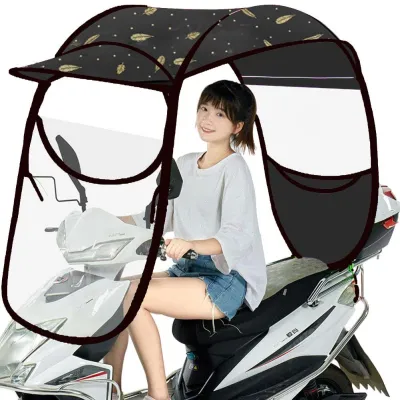
When exploring the market for an ebike canopy, you will primarily encounter two structural designs: full-enclosure cabin styles and open-front, roof-only designs. Full-enclosure cabins feature front windshields, side panels, and a rear cover, offering maximum protection from wind-driven rain and road spray. However, this comprehensive coverage comes with a significant trade-off in aerodynamic drag. The large surface area of a fully enclosed cabin acts like a sail, catching crosswinds and requiring more effort from both the rider and the electric motor to maintain forward momentum.
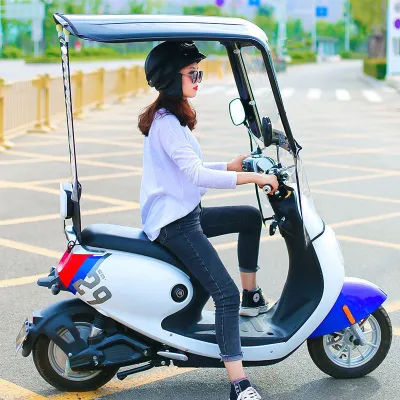
In contrast, open-front, roof-only designs—often resembling a mounted umbrella or a curved overhead canopy—provide excellent overhead shade from the midday sun and shelter from vertical rainfall. Because they lack solid side panels, they allow air to flow through freely, which greatly reduces aerodynamic drag and improves stability in breezy conditions. The compromise here is lateral protection; during heavy, angled downpours, water can still blow in from the sides, potentially wetting your arms, legs, and cargo.
Products mentioned in this guide
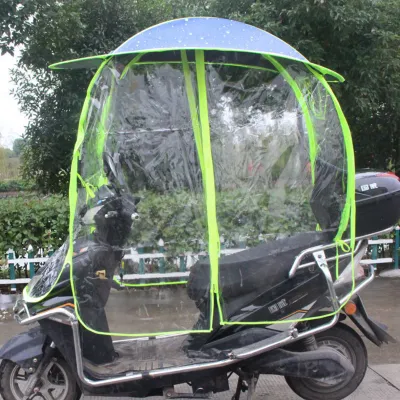
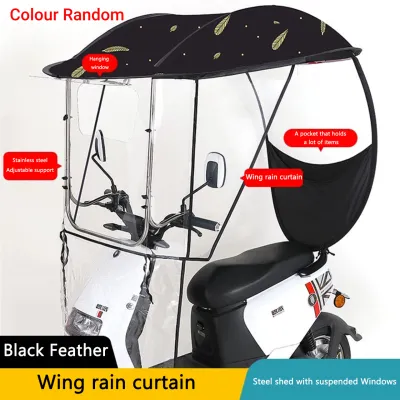
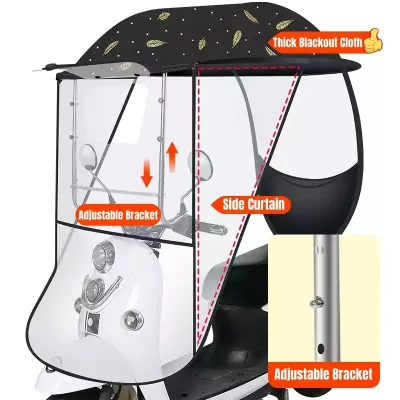
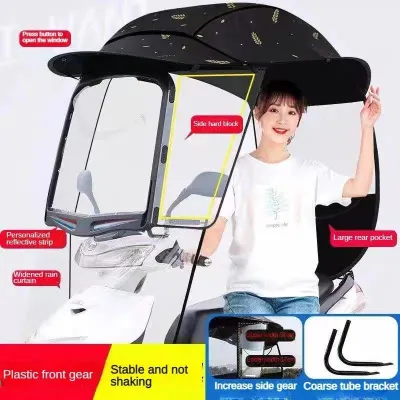
![🔥🔥🔥[HOT] 2026 Upgrade Bold Motorcycle Awning Electric Car Canopy Rainproof and Windproof UV Sunscreen awning](https://img.lazcdn.com/g/p/20dcc093a67d233c2571457e22953949.png_400x400q80.png_.webp)
Prices are valid at publication and may change. Please refer to the product page for the latest price.
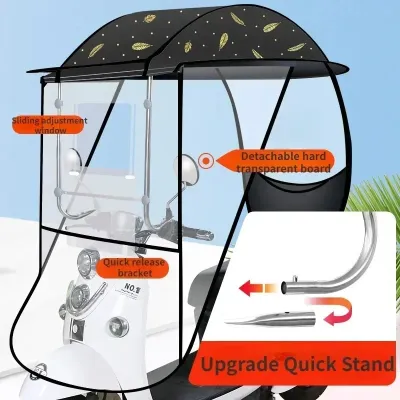
For commuters who face highly variable weather or have limited parking space, foldable or detachable canopy frames offer a highly versatile solution. These systems allow you to quickly collapse or remove the canopy when the weather clears or when you need to park in tight, crowded spaces typical of urban transit hubs. Detachable models usually rely on quick-release brackets, making it easy to transition between an open-air ride and a fully covered setup depending on the daily forecast.
It is also crucial to evaluate how the canopy’s shape interacts with your riding posture and any cargo configurations. If your e-bike features a rear-mounted child seat, a delivery box, or a passenger saddle, the canopy frame must extend far enough back to cover these areas without obstructing the passenger’s head clearance. Additionally, the front support bars must be positioned so they do not interfere with your knees while pedaling or restrict your arm movement when making sharp turns.
Evaluating Weather Protection: Materials and Coverage Dimensions
To ensure your canopy provides reliable protection over many seasons, you must look beyond generic product descriptions and carefully evaluate material specifications. Do not assume that a fabric labeled “waterproof” will withstand a heavy tropical downpour. Instead, check the manufacturer’s labels for specific ratings, such as Oxford fabric denier (e.g., 150D or 210D) and polyurethane (PU) waterproof coatings. A higher denier indicates a thicker, more tear-resistant weave, while a robust PU coating helps prevent water from seeping through the seams during prolonged exposure.

Sun protection is equally vital during hot dry-season commutes. Look for materials that explicitly state a Ultraviolet Protection Factor (UPF) rating, such as UPF 50+, which blocks a significant portion of harmful UV radiation. Clear plastic sections, often used for windshields or side windows, should be checked for ultraviolet stabilizers to prevent the material from yellowing, cracking, or becoming brittle under constant exposure to intense sunlight.
The physical dimensions of the canopy must be measured against your e-bike to ensure adequate coverage. The roof should extend slightly wider than your shoulders to protect your torso from lateral rain, and the front section should shield your legs without blocking your hands. Crucially, the canopy must leave the steering mechanism, brake levers, and dashboard display completely unobstructed. If a canopy design forces you to alter your natural grip or limits the rotation of your handlebars, it is not safe for road use.
Given the high humidity and frequent rainfall in coastal and tropical regions of the Philippines, rust resistance is a critical factor for the canopy’s frame. Steel frames that lack proper treatment will quickly corrode, leading to structural weakness and staining on the fabric. Prioritize frames constructed from anodized aluminum or stainless steel. If you choose a steel frame, verify that it has a thick, durable powder-coated finish, and pay close attention to the joint connections and folding hinges, as these are the areas most vulnerable to moisture accumulation and rust.
Verifying Mounting Compatibility and Installation Requirements
Before purchasing an ebike canopy, you must verify how it attaches to your specific vehicle. Common mounting systems rely on existing structural points on the e-bike, such as the rear cargo rack, the seat post, the handlebar stem, or the front basket mounts. Because e-bike frame geometries vary widely—ranging from step-through utility models to compact folding bikes—a canopy kit that fits one model perfectly may be completely incompatible with another. Carefully measure the diameter of your seat post and handlebar tubes to ensure the mounting clamps will fit securely.
Adding an aftermarket accessory also requires you to consult your e-bike’s user manual regarding weight limits and warranty terms. A canopy, along with its mounting hardware, adds dead weight to the vehicle. If your e-bike is already carrying a heavy rider or cargo, adding a canopy might exceed the manufacturer’s maximum payload capacity. Furthermore, some manufacturers explicitly state that installing unapproved structural modifications or aftermarket accessories will void the vehicle’s warranty, particularly if the accessory alters the frame’s stress points.
When installing the canopy, always follow the manufacturer’s step-by-step instructions and use the provided hardware. Ensure all bolts are tightened to the recommended torque specifications to prevent them from vibrating loose during rides on uneven roads. If the installation process requires you to drill holes into the e-bike’s frame, weld custom brackets, or modify any part of the original structure, you must stop immediately. Modifying the frame can compromise its structural integrity, leading to sudden failure while riding. In such cases, consult a qualified professional mechanic or the e-bike manufacturer to find a compatible, non-destructive mounting solution.
Managing Safety, Visibility, and Local Riding Regulations
Operating an e-bike with an installed canopy introduces unique handling dynamics that every rider must prepare for. The added weight, positioned high above the wheels, raises the vehicle’s center of gravity. This change makes the e-bike more prone to tipping during sharp turns and can slightly increase your braking distance. You must adjust your riding style by taking corners at lower speeds and initiating braking earlier than you would on an un-canopied bike.
Wind vulnerability is another major safety concern. A sudden gust of wind or the draft created by a passing large vehicle, such as a bus or a truck, can exert significant lateral force on the canopy. This “sail effect” can push your e-bike off its line, requiring firm steering input to maintain control. If you regularly commute on open roads or bridges where crosswinds are common, a low-profile or highly aerodynamic canopy design is essential for maintaining stability.
Visibility can be severely compromised during adverse weather conditions. Raindrops clinging to a clear plastic windshield, combined with interior fogging caused by high humidity, can obscure your view of the road ahead. Ensure that the windshield material is highly transparent and can be easily wiped down or rolled up if visibility drops. Additionally, verify that the canopy structure does not block your e-bike’s stock headlight, turn signals, or rear tail light. If any safety lights are obstructed, you must install supplementary, battery-powered LED lights on the outermost points of the canopy to ensure you remain visible to other motorists at night or during heavy downpours.
Finally, you must remain compliant with local traffic regulations in the Philippines. The Land Transportation Office (LTO) and individual local government units (LGUs) enforce specific rules regarding the dimensions and modifications of light electric vehicles. Some municipalities have strict limits on the maximum width and height of e-bikes operating on public roads to prevent obstruction and safety hazards. Before installing a canopy, check the local ordinances in your commuting area to ensure your modified e-bike remains fully compliant and road-legal.
Routine Maintenance and Storage for Long-Term Durability
To keep your ebike canopy in safe, working condition, establish a routine of regular visual inspections. At least once a week, check the mounting brackets and connection points for any signs of loosening, metal fatigue, or hairline cracks. Inspect the fabric for small tears or fraying seams, especially around high-stress areas where the material stretches over the frame. Addressing minor wear early—such as tightening a loose bolt or patching a small tear—can prevent a sudden structural failure while you are on the road.
When cleaning the canopy, always refer to the manufacturer’s care instructions. As a general rule, wash the fabric and plastic panels using a soft cloth, mild soap, and lukewarm water. Avoid using harsh chemical solvents, bleach, or abrasive scrubbing pads, as these can strip away the waterproof polyurethane coatings and UV-protective layers. For clear plastic windshields, use a clean microfiber cloth to prevent scratching, which can permanently impair your visibility during night rides.
Proper storage is vital for extending the lifespan of your canopy, particularly during the off-season or periods of extended non-use. If you park your e-bike outdoors, the constant exposure to sun and rain will accelerate the degradation of both the fabric and the frame. Whenever possible, park in a shaded, covered area, or detach the canopy and store it indoors. During the typhoon season, when high winds and severe weather are expected, always remove the canopy entirely to protect both the accessory and your e-bike from wind damage.
Frequently Asked Questions (FAQ)
Will adding a canopy drain my e-bike battery faster?
Yes, adding a canopy will generally cause your e-bike battery to drain slightly faster, though the exact impact depends on your riding speed and wind conditions. The canopy increases both the overall weight of the vehicle and its aerodynamic drag, forcing the electric motor to work harder to maintain your target speed. This increased workload draws more current from the battery, which can reduce your overall riding range per charge. To mitigate this effect, you can monitor your real-world battery consumption, ride at slightly lower speeds to reduce wind resistance, and increase your pedaling effort using a lower pedal-assist level when navigating flat terrain.
Can I use an e-bike canopy during strong typhoons?
No, you should never use an e-bike canopy during strong typhoons or severe weather warnings. These canopies are designed to handle typical daily rain and sun, but they cannot withstand the high-velocity winds associated with tropical storms. In typhoon conditions, the canopy will act as a large sail, making it extremely difficult to steer and highly likely that a gust of wind will tip the e-bike over, risking severe injury. If a typhoon or heavy storm warning is active, detach the canopy from your e-bike, secure the vehicle in a safe, indoor location, and avoid riding altogether until the weather clears.
Community discussion
Share your experience or ask a question. Comments are reviewed before publication.