
Upgrading the floor matting on your Honda Click V4 is a highly practical modification for your daily commute. The footboard of a scooter is a high-traffic zone that constantly bears the brunt of dirty shoes, rainwater, road dust, and friction. In a tropical climate like the Philippines, where sudden afternoon downpours can instantly turn a clean street into a muddy path, having the right floor protection is essential. A well-chosen mat preserves the pristine look of your scooter’s plastic bodywork and plays a vital role in maintaining rider safety by providing a stable, non-slip surface for your feet.
Selecting the perfect matting involves evaluating several critical factors beyond aesthetics. You must consider how well the accessory conforms to the specific contours of the Honda Click V4, the durability of the materials under local weather conditions, and the level of coverage that fits your daily maintenance routine. Making an uninformed purchase can lead to poorly fitting mats that slide around, trap moisture, or even interfere with your scooter’s controls. This guide breaks down everything you need to inspect before buying, ensuring you choose a floor mat that offers both maximum protection and uncompromised safety.
Why Exact Fit Matters for the Honda Click V4 Footboard
The Honda Click V4 features a distinct, modern design with specific footboard dimensions and angular contours that set it apart from previous generations. Many riders make the mistake of purchasing universal mats or accessories designed for older models like the V2 or V3, assuming that scooter floorboards are generally identical. However, even minor discrepancies in shape can cause a mat to sit unevenly, creating raised edges that can easily catch on your shoes when mounting or dismounting the vehicle.
Products mentioned in this guide
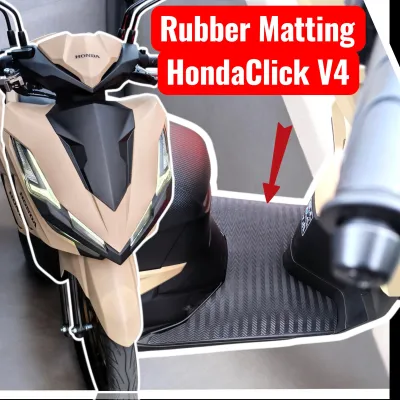
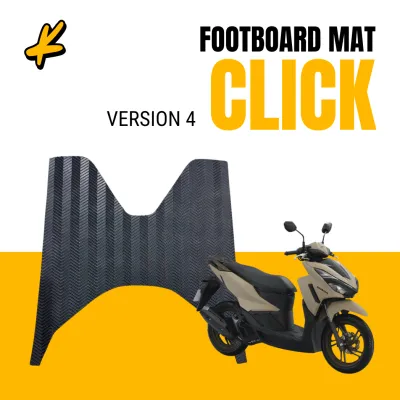
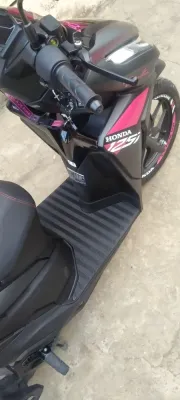
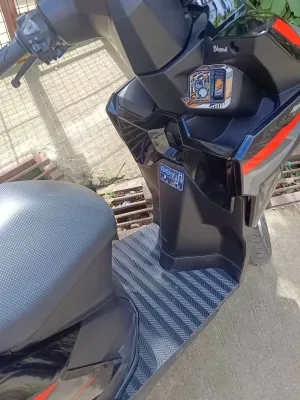
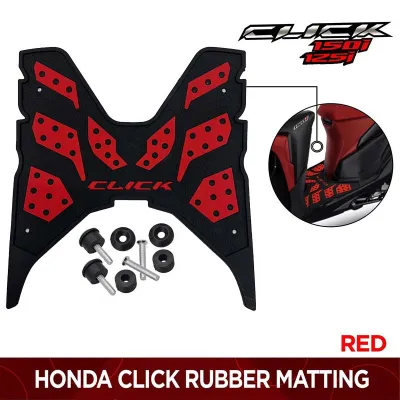
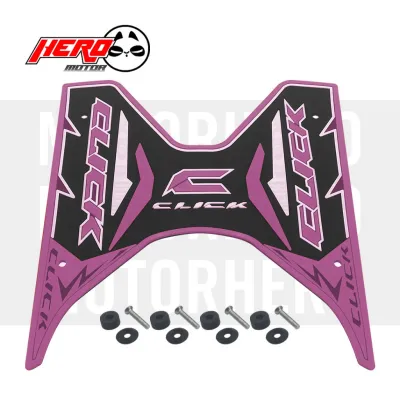
Prices are valid at publication and may change. Please refer to the product page for the latest price.
A precise, model-specific fit is crucial to prevent the matting from shifting during your ride. When a mat does not align perfectly with the factory contours, it tends to slide forward or backward under the pressure of your feet. This movement can be highly distracting and dangerous, especially when you need to quickly adjust your stance or plant your feet firmly on the ground during sudden stops. Furthermore, a poorly fitted mat can bunch up near the front shield, reducing the available legroom and altering your riding ergonomics.
Another critical aspect of fit is ensuring the matting does not interfere with the scooter’s mechanical components. The area around the center stand pivot, the side kickstand mount, and the under-seat storage latch must remain completely clear. If the matting is too thick or extends beyond the designated footboard boundaries, it can obstruct the smooth deployment of the kickstands or prevent the seat from latching securely. Always verify that the product is explicitly labeled for the Honda Click V4 to ensure all cutouts align perfectly with these essential features.
Choosing the Right Matting Material for Your Riding Conditions
The material of your scooter matting directly dictates how well it performs under different weather conditions and how much effort is required to keep it clean. In the Philippines, where riders face intense summer heat, high humidity, and heavy monsoon rains, choosing a material that can withstand these environmental extremes is vital for long-term durability.

Rubber and heavy-duty synthetic polymers are highly popular choices for daily commuters due to their ruggedness and resilience. These materials are excellent at resisting wear from tough shoe soles and do not degrade easily when exposed to constant sunlight or moisture. They are also incredibly easy to clean, requiring only a quick wipe with a damp cloth or a rinse with water to remove mud and dust. However, you should not assume that all rubber mats are inherently slip-resistant. It is essential to check the product specifications or labels for explicit anti-slip claims, as some lower-grade synthetic rubbers can become surprisingly slick when wet.
Wire-coil mats, often referred to as “spaghetti” mats, offer a unique structural design that is highly effective at trapping dirt, sand, and water. The coiled synthetic fibers act as a mesh that pulls debris away from the surface, keeping your footwear clean and dry even after stepping through puddles. This makes them an outstanding option for the wet season, as water drains through the coils rather than pooling under your feet. The primary trade-off with wire-coil matting is the maintenance effort. Because they trap dirt so effectively within their fibrous structure, they cannot simply be wiped clean; you must remove them regularly to shake out the debris or use a hose to flush out the embedded grime.
Synthetic leather or PVC mats provide a sleek, premium aesthetic that can elevate the overall look of your Honda Click V4. These mats often feature stylish stitching patterns and a smooth finish that complements the scooter’s modern lines. They are exceptionally easy to clean, as liquids and dirt sit on the surface and can be wiped away in seconds. However, their smooth texture means they can lose grip when wet, posing a potential safety hazard during heavy downpours. If you prefer the look of synthetic leather, closely inspect the surface texture for embossed patterns that aid grip, and verify the manufacturer’s safety guidelines regarding wet-weather traction.
Deciding on Coverage Area: Full Protection vs. Minimalist Designs
When selecting matting, you must decide how much of the Honda Click V4’s footboard you want to cover. The coverage area affects not only the level of protection provided to the scooter’s original plastics but also the ease of daily maintenance and the overall weight of the accessory.
Full-coverage mats are designed to span edge-to-edge, covering the entire flat surface of the footboard as well as the angled front sections where riders often rest their feet during longer journeys. This design offers maximum protection against scratches, scuffs, and color fading caused by constant shoe friction and UV exposure. By shielding the entire plastic floorboard, full-coverage mats help preserve the resale value of your scooter. However, these mats are naturally heavier and bulkier, making them more cumbersome to remove, wash, and reinstall during your weekly cleaning routine.
Partial or center-only mats offer a more minimalist approach, focusing protection solely on the primary flat zones where your feet spend the majority of the time. These mats are lightweight, highly flexible, and incredibly easy to pop off for a quick rinse. They maintain the sleek, original lines of the scooter by leaving the outer edges of the plastic floorboard exposed. The downside is that the uncovered areas remain vulnerable to scuffs from your shoes, especially when mounting the scooter or riding in tight traffic where you frequently put your feet down.
To address localized wear, many high-quality mats incorporate reinforced heel pads. The area directly beneath the rider’s heels experiences the highest concentration of friction and pressure, often leading to premature wear in standard mats. A reinforced heel guard—typically made of a thicker rubber compound or a metal plate integrated into the mat—prevents the material from wearing through in this high-stress zone. Whether you choose a full-coverage or minimalist design, looking for a model with a reinforced heel area is a smart way to ensure long-term durability.
Key Safety and Convenience Features to Inspect
Beyond the basic material and fit, several secondary design features can make a significant difference in the safety and convenience of your daily rides. Paying attention to these details before making a purchase will help you avoid common pitfalls associated with low-quality aftermarket accessories.
The most critical safety feature to verify is the presence of an effective anti-slip backing. The underside of the mat must have a high-friction texture to keep it firmly anchored to the scooter’s plastic floorboard. Look for mats that feature rubberized spikes, deep textured patterns, or specialized non-slip coatings on the back. If a mat relies solely on a smooth plastic backing, it is highly likely to slide around under your feet, creating a dangerous distraction while navigating busy city streets.
Edge binding and stitching quality are also major indicators of a mat’s lifespan and safety. High-quality mats feature reinforced borders with heavy-duty stitching or molded rubber edges that prevent the material from fraying or curling over time. If the edges of a mat begin to curl upward due to heat exposure or wear, they can easily catch on the hem of your pants or the sole of your shoe when you stop, potentially causing you to lose balance and tip the scooter over.
You must also strike a balance between thickness and flexibility. While a thicker, cushioned mat might seem comfortable, it must remain flexible enough to conform perfectly to the structural ridges of the Honda Click V4’s footboard. A mat that is too stiff will not sit flush, creating air pockets underneath that can cause the mat to shift or lift at the corners. Opt for materials that offer a reasonable thickness for durability while retaining the pliability needed to hug the scooter’s bodywork.
Lastly, consider the ease of removal for routine maintenance. In a tropical environment, moisture and fine dust can easily find their way underneath any floor mat, regardless of how well it fits. If left unattended, this trapped moisture can cause unpleasant odors or slowly degrade the underlying plastic and metal fasteners. Choose a matting system that can be easily lifted and reinstalled without requiring complex tools, allowing you to clean the footboard area quickly during your regular wash days.
Verifying Compatibility and Installing Your New Matting
Before finalizing your purchase on any online marketplace or at a local motorcycle accessory shop, it is vital to double-check that the product is explicitly designed for the Honda Click V4. Avoid listings that use vague terms like “compatible with most scooters” or “fits Click series” without specifying the exact model generation. Read customer reviews, inspect product photos, and ask the seller directly to confirm that the matting matches the precise dimensions and screw hole configurations of the V4.
Once your new matting arrives, perform a thorough test fit before securing it permanently. Place the mat on the floorboard without applying any adhesives or tightening any screws. Sit on the scooter in your normal riding position and move your feet around to ensure the mat does not slide or bunch up. Deploy both the side kickstand and the center stand to verify that the matting does not obstruct their movement. Check that the under-seat storage latch operates smoothly and that there is no interference with any other structural components of the scooter.
It is important to establish a clear safety boundary when it comes to installation. Most high-quality aftermarket mats are designed to be non-destructive, utilizing existing factory screw holes or high-friction backings to stay in place. If the mat you purchased requires you to drill new holes into the scooter’s frame, trim the material extensively with a utility knife, or alter the original floorboard structure in any way, stop immediately. Modifying the structural components of your scooter can compromise its safety and void your warranty. In such cases, consult your scooter’s official manual or seek the assistance of a qualified professional mechanic to ensure a safe and proper installation.
Frequently Asked Questions (FAQ)
Can I use a Honda Click V3 mat on the V4 model?
While the Honda Click V3 and V4 share a similar design language, their footboard dimensions, contours, and mounting points are not identical. Attempting to use a V3 mat on a V4 model often results in a poor fit, with loose edges, misaligned screw holes, or gaps where dirt can accumulate. This improper fit can cause the mat to slide or curl, creating a safety hazard while riding. It is highly recommended to purchase matting specifically molded for the Honda Click V4 to ensure complete coverage and secure placement. If you already have a V3 mat, physically test it on the V4 footboard to check for any control interference or loose areas before deciding to use it.
How do I clean and maintain wire-coil scooter mats?
Maintaining wire-coil (spaghetti) mats requires a regular cleaning routine to prevent dirt and moisture from building up within the fibers. Start by removing the mat from the scooter and shaking it vigorously to dislodge loose sand, dust, and dry debris. For deeper cleaning, rinse the mat thoroughly with a garden hose, using a mild detergent and a soft-bristled brush to scrub away stubborn mud or grime. Avoid using harsh chemical solvents or bleach, as these can degrade the synthetic fibers. After washing, the most critical step is to allow the mat to dry completely in a shaded, well-ventilated area before reinstalling it. Placing a damp mat back onto the scooter can trap moisture against the plastic floorboard, leading to unpleasant odors and potential damage to the underlying components.
Community discussion
Share your experience or ask a question. Comments are reviewed before publication.