
To choose the right heavy-duty car ramps, you must match the ramp’s rated capacity to your vehicle’s Gross Vehicle Weight Rating (GVWR) or heaviest axle weight, ensuring a generous safety margin. You also need to verify that the ramp’s physical dimensions—such as width, length, and approach angle—align with your tire width and ground clearance. Selecting the wrong specifications can lead to structural failure, vehicle damage, or severe personal injury.
In the Philippines, where high humidity, intense tropical heat, and heavy seasonal rains can affect both garage equipment and road surfaces, choosing robust and reliable maintenance tools is essential. Whether you are performing routine oil changes, inspecting the undercarriage, or working on suspension components, understanding how to read ramp specifications ensures your DIY garage work remains safe and efficient.
Decoding Weight Capacity and Vehicle Weight Ratings
Before purchasing any heavy-duty car ramps, you must understand how your vehicle’s weight is calculated and distributed. Many car owners confuse curb weight with Gross Vehicle Weight Rating (GVWR). Curb weight refers to the weight of the vehicle with a full tank of fuel and all necessary fluids, but without any passengers or cargo. In contrast, the GVWR is the maximum operating weight of the vehicle as specified by the manufacturer, including the vehicle chassis, body, engine, fluids, passengers, and cargo.
Products mentioned in this guide
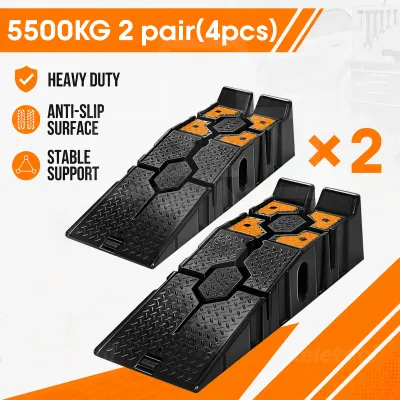
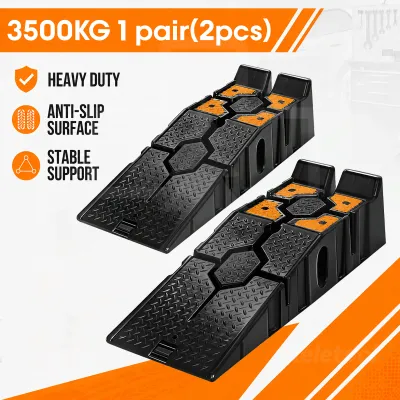



Prices are valid at publication and may change. Please refer to the product page for the latest price.
To find these exact figures, locate the safety compliance certification label on your vehicle’s driver-side door jamb or consult your owner’s manual. This label lists the GVWR as well as the Gross Axle Weight Rating (GAWR) for both the front and rear axles. Because the engine and transmission are typically located at the front of most passenger vehicles, the front axle usually bears a significantly higher percentage of the total vehicle weight.
When shopping for heavy-duty car ramps, pay close attention to how manufacturers label their weight capacities. Some brands list the capacity “per pair” (for example, a rating of 10,000 pounds or approximately 4,500 kilograms for two ramps combined), while others list the capacity “per ramp.” Always read the product packaging, labels, and documentation carefully to verify this distinction. Never assume a rating applies to a single ramp unless it is explicitly stated.
To ensure a safe working environment, establish a strict safety margin. Select ramps with a rated capacity that comfortably exceeds the heaviest axle weight of your vehicle, rather than just the total curb weight. For instance, if your vehicle’s front axle weight rating is close to the limit of a set of ramps, upgrade to a higher capacity class to account for dynamic load shifts and to prevent structural overloading.
Evaluating Material and Structural Design Specs
Heavy-duty car ramps are generally manufactured from steel, aluminum, or high-density structural polymers. Each material has distinct physical characteristics, but you should never assume a ramp’s load capacity based solely on its material type. Instead, always verify the certified load limits printed on the manufacturer’s label or specification sheet.

Beyond the raw material, specific structural design features dictate a ramp’s stability and durability under heavy loads. Look for ramps that feature integrated wheel chocks or high stop-plates at the end of the incline to prevent you from accidentally driving off the front of the ramp. A textured traction surface is also critical, as it prevents tires from slipping or spinning while climbing the incline, especially in humid or damp tropical conditions.
The internal structure of the ramp plays a vital role in load distribution. High-quality polymer ramps utilize dense, reinforced internal ribbing grids to support weight without bending or collapsing. Additionally, a wide base footprint is essential; a wider base distributes the vehicle’s weight over a larger surface area, reducing the risk of the ramp tipping sideways or sinking into softer asphalt during hot afternoons.
Finally, always check the maximum recommended tire width and diameter specified by the ramp manufacturer. Using a tire that is wider than the ramp’s platform can cause the tire tread to overhang the edges. This uneven support concentrates the load on the unsupported outer edges of the ramp, which can lead to sudden structural failure or cause the tire to slip off the side.
Matching Ramp Dimensions to Your Vehicle and Tires
A ramp’s physical dimensions must align perfectly with your vehicle’s geometry to ensure safe operation. For low-clearance, sporty, or lowered vehicles, the primary concern is the approach angle. If the ramp’s incline is too steep, the front bumper or lower body panels will scrape against the ramp before the tires can make contact with the slope. In these cases, you must look for low-profile ramps with a gentle approach angle and extended length.
Conversely, if you drive a large SUV, a lifted pickup truck, or a modified utility vehicle, you must focus on tread width and tire diameter limits. Heavy-duty trucks often feature wider aftermarket tires that require a wider ramp platform. Ensure the ramp’s width comfortably accommodates your entire tire tread with room to spare on both sides.
Modified or heavily loaded vehicles often suffer from uneven weight distribution. If you have installed heavy aftermarket steel bumpers, winches, or roof racks, or if your utility vehicle is loaded with tools, the center of gravity shifts. This shift alters the actual weight resting on each axle, making it even more critical to cross-reference your vehicle’s modified weight with the ramp’s rated capacity before attempting to lift it.
Before purchasing any ramp, take physical measurements of your vehicle’s tire width, front overhang, and ground clearance. Cross-reference these measurements with the detailed dimension schematics provided by the ramp manufacturer to guarantee a compatible and safe fit.
Essential Safety Checks and Operational Boundaries
Operating car ramps safely requires strict adherence to pre-use inspections and operational limits. Before every single use, perform a thorough visual inspection of both ramps. Look for hairline cracks, stress fractures, structural deformation, deep gouges, or signs of UV degradation, such as fading or brittleness in polymer materials. If you detect any of these warning signs, do not use the ramps.
Ramps must only be deployed on level, solid, and paved surfaces, such as cured concrete. Never attempt to use car ramps on soft ground, grass, gravel, or sloped driveways. Unstable or uneven surfaces can cause the ramps to sink, tilt, slide forward, or collapse under the weight of the vehicle as you attempt to drive onto them.
Never rely solely on car ramps to secure a vehicle. Once the vehicle is positioned on the flat top platform of the ramps, immediately engage the parking brake and place the transmission in park (for automatics) or in gear (for manuals). You must always place heavy-duty wheel chocks tightly behind the tires remaining on the ground to prevent any rolling or shifting.
Establish clear stop conditions for your maintenance work. If you observe any movement, slipping, or unusual creaking sounds while driving onto the ramps, stop immediately, back down safely, and re-evaluate the setup. If the ramp’s usage instructions are unclear, or if they conflict with your vehicle’s manual, do not proceed; consult the manufacturer or a qualified automotive professional to ensure your safety.
Frequently Asked Questions (FAQ)
Can I use heavy-duty polymer ramps for long-term vehicle storage?
You should always check the specific product manual for the manufacturer’s long-term load-bearing guidelines. Unless the manufacturer explicitly states that the ramps are rated for extended storage, leaving a vehicle on them for weeks or months is not recommended. Continuous static load can cause structural polymers to undergo material creep, leading to gradual deformation and potential failure, while also causing flat spots to develop on your tires.
How do I determine the correct approach angle for a lowered vehicle?
To determine if a ramp’s incline is safe for your lowered vehicle, measure the front overhang (the distance from the front edge of the front tire to the furthest forward point of the front bumper) and the ground clearance at that bumper edge. You can then calculate the maximum approach angle your vehicle can clear. Compare these measurements against the ramp’s listed approach angle and overall length to ensure the bumper will not scrape before the tires climb the ramp.
Community discussion
Share your experience or ask a question. Comments are reviewed before publication.