
To achieve reliable stopping power and long-lasting durability on your Rusi Passion, selecting the right brake shoes requires a careful look at material specifications, manufacturing quality, and precise physical fitment. In the Philippines, where daily riding involves navigating congested city streets, sudden tropical downpours, and high-humidity environments, your motorcycle’s braking system is your primary line of defense. While many riders search for a single “best” brand, the performance of any brake shoe depends heavily on how well its friction material matches your typical riding conditions and how accurately it fits your specific wheel hub. By focusing on verifiable technical attributes rather than marketing slogans, you can ensure your motorcycle stops safely and predictably every time.
Understanding Brake Shoe Specifications for the Rusi Passion
Before purchasing replacement brake shoes for your Rusi Passion, you must identify the exact physical and technical requirements of your motorcycle’s drum brake assembly. Drum brakes operate on a mechanical principle where a cam rotates to push the curved brake shoes outward against the inner wall of a spinning metal drum. For this system to work efficiently, the outer curvature of the brake shoe must match the inner diameter of the drum perfectly. Even a minor discrepancy of a single millimeter can prevent the shoe from making full contact, leading to a spongy lever feel, uneven wear, and significantly reduced stopping power.
To find these exact specifications, start by consulting your Rusi Passion owner’s manual. The manual typically lists the original equipment manufacturer (OEM) part numbers and the standard dimensions of the brake drum assembly. Because motorcycle manufacturers sometimes update components or source parts from different suppliers during a model’s production run, it is highly recommended to physically inspect the existing brake shoes before buying replacements. Take note of the shoe’s overall diameter, width, and the configuration of the retaining springs. Checking the specific brake drum setup of your exact Rusi Passion variant ensures that you do not accidentally purchase a part designed for a different model year or engine displacement.
Products mentioned in this guide
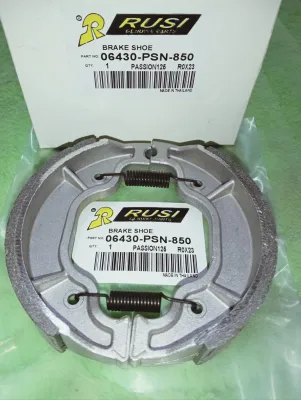
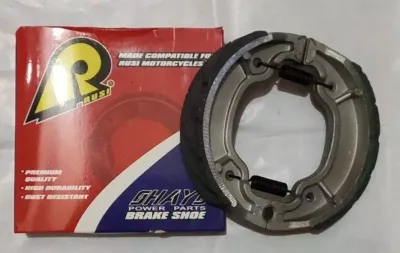
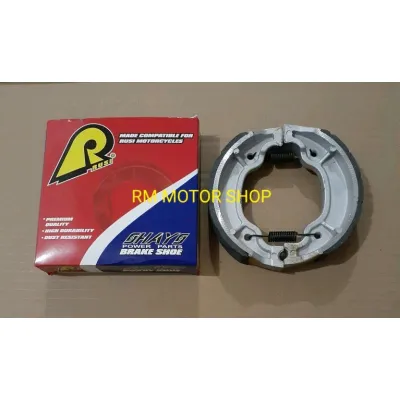
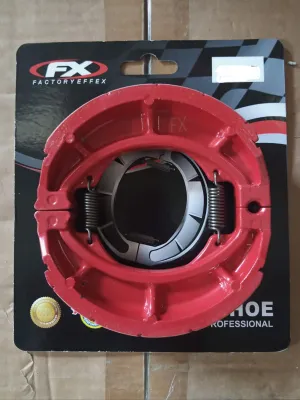
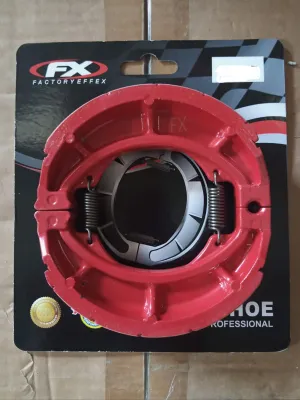
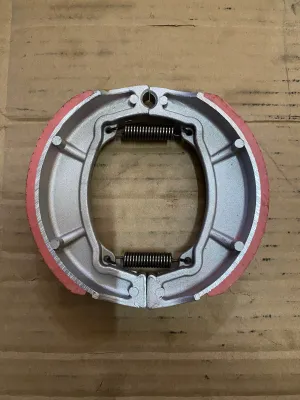
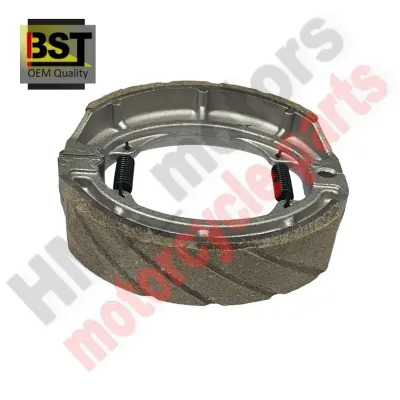
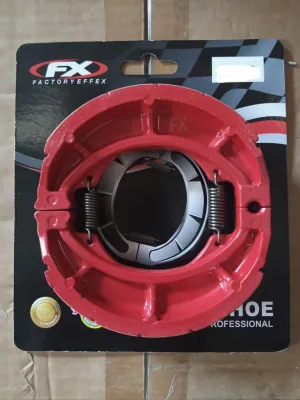
Prices are valid at publication and may change. Please refer to the product page for the latest price.
Additionally, you must verify the recommended friction material type specified by the manufacturer. The hardness of the brake shoe’s friction lining must be compatible with the metal alloy used in your motorcycle’s brake drum. If you install aftermarket brake shoes with an excessively hard friction compound, they may cause rapid, premature wear to the inner wall of the drum itself. Replacing a worn-out brake drum or an entire wheel hub is far more expensive and labor-intensive than replacing a set of brake shoes, making it crucial to choose a material that balances stopping power with drum preservation.
Key Factors That Determine Stopping Power and Longevity
The performance and lifespan of your Rusi Passion brake shoes are primarily determined by the composition of their friction material. The two most common types available in the aftermarket are organic and semi-metallic compounds, each offering distinct advantages and trade-offs. Organic brake shoes are manufactured using a blend of natural fibers, rubber, and high-temperature resins. These shoes are known for providing a smooth, quiet, and progressive initial bite, making them highly comfortable for casual city commuting. Because organic materials are relatively soft, they cause minimal wear on the brake drum. However, their softer nature means they wear down more quickly, especially when subjected to frequent stop-and-go traffic or heavy loads.

In contrast, semi-metallic brake shoes incorporate fine metallic fibers, such as copper, steel, or iron, into the friction mixture. This metallic reinforcement significantly enhances the shoe’s durability and heat resistance. Semi-metallic compounds excel at maintaining consistent stopping power even as temperatures rise within the enclosed drum assembly during prolonged braking. This makes them an excellent choice for riders who frequently carry passengers, transport heavy cargo, or navigate hilly terrain. The primary trade-offs of semi-metallic shoes are a slightly firmer lever feel, a higher potential for squealing noises when wet, and a faster rate of wear on the inner surface of the brake drum.
Beyond material composition, the overall manufacturing quality plays a vital role in safety and longevity. High-quality brake shoes feature a robust bonding process where the friction block is fused to the aluminum alloy shoe base under extreme heat and pressure. Inferior manufacturing can result in weak bonding, raising the catastrophic risk of the friction lining delaminating or shearing off the metal backing during a sudden, hard braking event. When evaluating options, look for shoes with clean, uniform bonding lines and no visible gaps between the lining and the metal base.
Heat dissipation is another critical factor to consider. Because drum brakes are completely enclosed within the wheel hub, they naturally retain heat much longer than open disc brake systems. Under continuous or heavy use, this trapped heat can cause the resins in the friction material to vaporize, creating a microscopic layer of gas between the shoe and the drum. This phenomenon, known as brake fade, temporarily reduces your stopping power. High-quality brake shoes are formulated to resist fade by utilizing advanced binders that remain stable at elevated temperatures, ensuring reliable performance when you need it most.
How to Evaluate and Compare Available Brands
When shopping for replacement brake shoes at local motorcycle parts shops or online marketplaces, you can use a practical evaluation checklist to compare different brands and avoid counterfeit or low-quality products. Begin by thoroughly inspecting the product packaging. Reputable manufacturers package their brake shoes in sturdy, well-printed boxes that clearly display the brand name, part number, compatible motorcycle models, manufacturing date, and batch code. Look for visible safety certifications or quality management standards, such as ISO markings, which indicate that the manufacturer adheres to internationally recognized quality control protocols.
Next, perform a close physical inspection of the brake shoes themselves. The friction material should have a completely uniform thickness across the entire curved surface, with no chips, cracks, or uneven edges. The metal backing plate, typically made of cast aluminum, should be free of casting defects, sharp burrs, or signs of corrosion. Check the pivot points and the anchor pin holes to ensure they are cleanly machined and free of obstructions, as any roughness in these areas can cause the brake shoes to stick or bind inside the drum.
It is also wise to evaluate the warranty terms and return policies offered by the seller or manufacturer. While brake shoes are considered wear-and-tear items and rarely carry long-term performance warranties, reputable brands and authorized distributors often provide a guarantee against manufacturing defects, such as lining separation or incorrect dimensions. Buying from sellers who offer a clear return or exchange policy gives you peace of mind in case you discover a fitment issue during installation.
To make an informed decision, you can create a simple comparison matrix to track shortlisted options. Note down the brand name, the friction material type (organic or semi-metallic), any verified safety certifications, the warranty or return window, and the price in Philippine Pesos (₱). Generally, budget-friendly organic brake shoes may range from ₱150 to ₱300, offering a cost-effective solution for light daily commuting. Premium semi-metallic options typically cost between ₱350 and ₱600, providing superior heat resistance and longevity that justify the higher initial investment for heavy-duty or long-distance riders.
Installation, Break-In, and Safety Boundaries
Because your motorcycle’s brakes are a critical safety system, proper installation and maintenance are just as important as choosing a high-quality part. If you do not have the necessary tools, mechanical experience, or a copy of the Rusi Passion service manual, it is highly recommended to have your new brake shoes installed by a qualified professional mechanic at a reputable service center. Incorrect installation can lead to uneven braking, premature wear, or sudden mechanical failure on the road.
If you choose to perform a DIY installation, safety must remain your top priority. Start by thoroughly cleaning the entire brake drum assembly. Over time, worn friction material creates a fine, dark dust that accumulates inside the drum hub. Use a dedicated brake cleaner spray to wash away this dust, grease, and road grime; never use compressed air to blow the dust away, as inhaling brake dust can be hazardous to your health. Inspect the inner metal wall of the brake drum for deep grooves, scoring, or signs of warping. If the drum surface is heavily damaged, installing new brake shoes will not restore your stopping power, and the drum itself must be machined or replaced.
Once the new brake shoes are installed, you must perform a proper bedding-in, or break-in, procedure. New brake shoes do not perfectly match the microscopic contours of the brake drum right out of the box. To bed them in, ride your motorcycle at a moderate speed in a safe, low-traffic area and apply the brakes gently and progressively to slow down. Repeat this process 15 to 20 times, avoiding sudden, hard stops that can overheat and “glaze” the new friction material. Glazing occurs when excessive heat crystallizes the surface of the shoe, turning it smooth and glassy, which permanently reduces its braking efficiency.
Finally, always be aware of clear stop conditions that indicate your braking system requires immediate professional attention. If you notice an unusually spongy or soft feel at the brake lever or pedal, hear persistent squealing, grinding, or scraping noises, or feel the motorcycle pulling or vibrating when braking, stop riding immediately. These symptoms suggest that the shoes may be misaligned, the return springs may be damaged, or the friction material is not making proper contact, requiring a thorough inspection by a qualified mechanic before you return to the road.
Frequently Asked Questions (FAQ)
How often should I replace the brake shoes on my Rusi Passion?
There is no fixed mileage interval for replacing brake shoes, as wear rates depend heavily on your riding style, payload, and environmental conditions. Instead, you should rely on regular physical inspections. Most drum brake assemblies feature an external wear indicator pointer on the brake panel arm; if the pointer aligns with the wear limit mark when the brake is fully applied, the shoes must be replaced. Additionally, you can measure the thickness of the friction lining directly; if the material has worn down to less than 1.5 millimeters, or if you experience a noticeable loss of stopping power and hear scraping noises, it is time for an immediate replacement.
Can I use brake shoes from a different motorcycle model if they fit?
You should avoid using brake shoes designed for other motorcycle models, even if they appear to fit inside your Rusi Passion’s wheel hub. While some aftermarket parts are marketed as universal or compatible across multiple brands, subtle differences in the shoe’s width, curvature, spring attachment points, and friction coefficient can compromise your safety. A mismatched brake shoe can cause uneven contact, leading to localized overheating, rapid drum wear, or a sudden brake lockup. To ensure reliable stopping power and protect your wheel hub from damage, always stick to OEM parts or aftermarket equivalents that are explicitly verified for the Rusi Passion.
Community discussion
Share your experience or ask a question. Comments are reviewed before publication.