
Selecting a 4K dashcam for your vehicle in the Philippines requires balancing high-resolution video capture with extreme environmental resilience. With intense tropical heat, unpredictable road conditions, and dense urban traffic, a standard camera often falls short. To secure reliable, court-admissible footage, you must evaluate hardware durability, power configurations, and storage capabilities tailored to local driving realities.
Investing in a high-resolution camera is only the first step. The true value of a 4K sensor lies in its ability to capture fine details under challenging conditions, such as reading a license plate through a rain-slicked windshield or identifying a fast-moving motorcycle in low light. Understanding how local driving scenarios impact camera performance will help you select a device that delivers when you need it most.
Essential Features for Philippine Driving Scenarios
Navigating dense urban corridors like EDSA, C5, or Commonwealth Avenue presents unique challenges for any vehicle camera. Stop-and-go traffic requires a wide field of view (FOV) to capture adjacent lanes, sidewalks, and the tight spaces where motorcycles frequently filter through. A lens with a field of view between 130 and 170 degrees provides adequate coverage without creating a distorted fisheye effect that makes distance estimation difficult.
Products mentioned in this guide

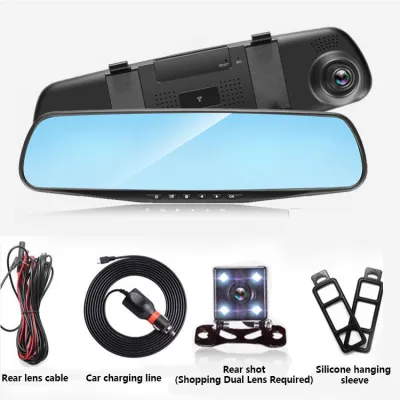

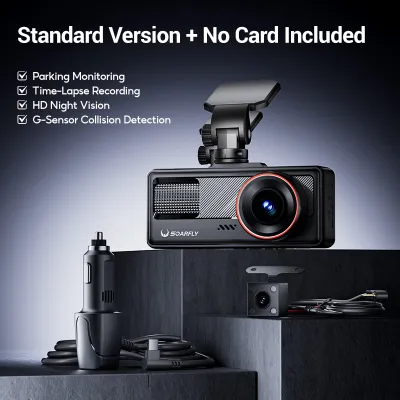
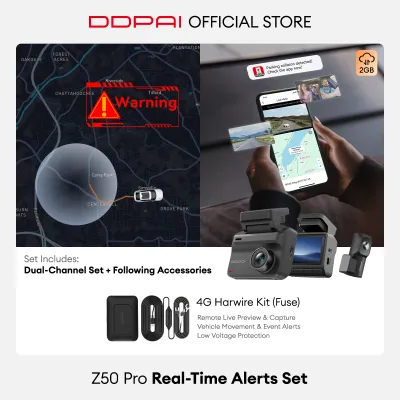
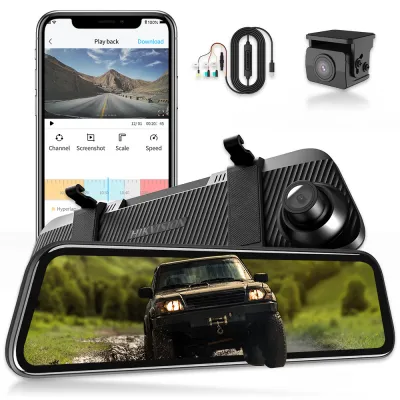
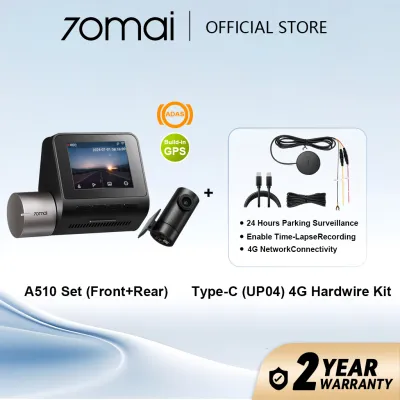

Prices are valid at publication and may change. Please refer to the product page for the latest price.
Heavy headlight exposure in congested night traffic can easily blind inferior camera sensors, turning license plates into illegible white glares. To combat this, look for lenses equipped with anti-glare coatings or compatibility with circular polarizing filters. These optical additions help minimize reflections from your own dashboard and reduce the glare from oncoming high beams, preserving critical details in high-contrast environments.
When transitioning to provincial highways such as NLEX, SLEX, or national roads, vehicle speeds increase significantly. High speeds introduce motion blur, which can render license plates unreadable in recorded footage. Prioritizing a camera that supports high frame rates, such as 60 frames per second at 2K or optimized high-bitrate 4K at 30fps, ensures smoother playback and clearer freeze-frames of fast-moving objects.
Provincial travel also exposes your vehicle to rough roads, potholes, and sudden elevation changes. Without proper stabilization, the resulting vibrations can degrade video quality and trigger false incident locks on your storage card. Electronic image stabilization and a rigid, low-profile physical mount are essential features to keep your footage steady and usable during long highway journeys.
Unlit provincial highways and dark barangay roads demand exceptional low-light performance. Standard camera sensors often produce grainy, dark footage in these environments, rendering the 4K resolution useless. Verify that the dashcam utilizes a large image sensor paired with a wide physical aperture of f/1.6 or f/1.8 to maximize light intake. Dedicated night-vision processing algorithms further enhance contrast, allowing the camera to resolve details beyond the reach of your headlights.
Hardware and Durability Checks for Tropical Climates
The Philippine climate poses a severe threat to windshield-mounted electronics. Direct sunlight and high ambient humidity can cause cabin temperatures in a parked car to exceed 60°C within minutes. Standard consumer electronics are not built to withstand this level of thermal stress, making specialized hardware design a necessity for automotive safety.

When evaluating a dashcam’s internal power storage, always prioritize supercapacitors over traditional lithium-ion batteries. Lithium-ion batteries are highly susceptible to swelling, leaking, and thermal runaway when exposed to extreme heat over long periods. Supercapacitors do not store energy to run the camera for long durations; instead, they provide just enough power to safely save the current recording and shut down when the vehicle is turned off. This design significantly reduces fire risks and extends the operational lifespan of the device in tropical climates.
Mounting and placement also play a critical role in thermal management and safety. Before installing any device, consult your vehicle’s owner’s manual to identify the exact deployment zones for front and side-curtain airbags. Mounting a camera or routing its cables within these zones can prevent proper airbag deployment or turn the camera into a dangerous projectile during a collision.
To minimize direct solar exposure, position the dashcam high on the windshield, ideally behind or adjacent to the rearview mirror. This placement utilizes the shaded portion of the windshield’s ceramic dot matrix to block direct sunlight while keeping the driver’s line of sight completely unobstructed. Ensure the mount uses high-grade, heat-resistant adhesive tape rather than a suction cup, as suction cups frequently lose adhesion and fall off when subjected to intense windshield heat.
Reliable thermal management requires built-in hardware protections. Look for dashcams designed with physical ventilation grilles or aluminum housings that act as passive heat sinks to draw warmth away from the image processor. Additionally, verify in the manufacturer’s technical specifications that the device features an automatic high-temperature shutdown mechanism, which safely powers off the camera before internal components suffer permanent heat damage.
Power, Wiring, and Parking Surveillance Options
Choosing how to power your dashcam depends on whether you require protection only while driving or also when the vehicle is parked. Standard plug-and-play installation utilizes the vehicle’s 12V cigarette lighter adapter. While this method is simple and avoids modifying the vehicle’s electrical system, it only provides power when the ignition is turned on, leaving your car unprotected while parked.
For comprehensive 24/7 parking surveillance, you must install a dedicated hardwire kit that connects the dashcam directly to the vehicle’s fuse box. This setup allows the camera to draw power from the car battery even when the engine is off, enabling features like motion detection, time-lapse recording, and impact-triggered recording. However, continuous power draw carries the risk of draining your vehicle’s battery, leaving you stranded.
To prevent battery depletion, verify that your chosen hardwire kit features an adjustable low-voltage cutoff switch. This safety device monitors the vehicle’s battery voltage and automatically cuts power to the dashcam if the voltage drops below a safe threshold, such as 11.8V or 12V. Some advanced hardwire kits also include timer-based cutoffs, allowing you to limit parking mode operation to a specific number of hours.
Modifying your vehicle’s electrical system carries inherent safety risks and can potentially void your manufacturer’s warranty. Before proceeding with a hardwire installation, carefully review your vehicle’s warranty terms regarding aftermarket accessories. It is highly recommended to have the hardwire kit installed by a certified automotive electrician who can identify the correct constant-power and ignition-switched fuses using a professional circuit tester, ensuring all wiring is properly fused and insulated.
Storage, Loop Recording, and Data Management
Capturing video in true 4K resolution generates an immense volume of data, placing extreme demands on your storage media. Standard microSD cards designed for smartphones or cameras are not built for the continuous, high-bitrate write cycles required by a 4K dashcam. Using an incompatible card will lead to frequent write errors, corrupted files, and premature card failure.
Always select microSD cards explicitly labeled as High Endurance or PRO Endurance. These cards utilize specialized NAND flash memory designed to withstand thousands of write-and-erase cycles under wide temperature ranges. Check your dashcam’s user manual to verify the maximum supported storage capacity—typically 128GB, 256GB, or 512GB—and ensure the card meets the minimum speed class requirements, which is usually UHS Speed Class 3 (U3) or Video Speed Class 30 (V30) for stable 4K recording.
A single hour of dual-channel recording (4K front and 1080p rear) can easily consume up to 30GB of storage space. Dashcams manage this limited space through loop recording, a process that automatically overwrites the oldest unprotected video files when the card reaches capacity. To maintain file system integrity and prevent write errors, establish a routine to format your microSD card at least once a month using the dashcam’s built-in formatting tool.
To prevent critical footage from being overwritten during loop recording, dashcams utilize an internal G-sensor to detect sudden impacts or hard braking. When triggered, the camera automatically locks the current video segment into a protected folder. However, the uneven asphalt, deep potholes, and high speed bumps common on Philippine roads can easily trigger these sensors if the sensitivity is set too high.
If your G-sensor is overly sensitive, your storage card will quickly fill up with locked, un-overwritable files, leaving no room for normal loop recording. To avoid this, access your dashcam’s settings menu and adjust the G-sensor sensitivity to a lower setting. Periodically check the storage card on a computer to ensure that normal loop recording is functioning correctly and that the card is not cluttered with false-alarm locked files.
Building Your 4K Dashcam Shortlist
To select the ideal 4K dashcam configuration, you must evaluate your daily commuting habits, parking environments, and budget. Rather than searching for a single universal solution, use a conditional decision framework to match your specific driving profile with the appropriate hardware setup.
If you are a daily city commuter who primarily drives during daylight hours and parks in secure, monitored office or residential garages, a front-only 4K dashcam is often the most practical choice. This configuration provides maximum forward-facing video clarity to document lane-splitting incidents and intersection disputes without the added complexity of rear wiring. Ensure the unit utilizes a supercapacitor for heat resistance, and rely on a simple plug-and-play cigarette lighter power source if parking surveillance is not a priority.
For drivers who frequently undertake long provincial road trips, travel at night, or park in unsecured public spaces, a comprehensive dual-channel setup is highly recommended. This configuration pairs a front-facing 4K camera with a rear-facing 1080p or 2K camera to provide complete coverage of rear-end collisions and tailgating incidents. Pair this system with a hardwire kit to enable parking mode, and ensure the camera features built-in GPS to log your exact speed and coordinates along unfamiliar provincial routes.
Professional drivers, ride-hailing operators, and fleet managers require a specialized multi-channel configuration. This setup typically includes a front-facing 4K camera, a cabin-facing infrared camera to document passenger interactions in low light, and a rear-facing camera. To maximize security, look for systems that offer cloud connectivity, which allows for real-time video backups, GPS tracking, and instant impact notifications. Keep in mind that cloud features require a dedicated mobile Wi-Fi hotspot or an active SIM card with a stable local data plan, representing a higher long-term operating cost.
Frequently Asked Questions (FAQ)
Is 4K resolution legally required or significantly better than 1080p for local accidents?
There is no legal requirement in the Philippines specifying that dashcam footage must be recorded in 4K resolution to be admissible in court or during insurance claims. However, 4K resolution offers a significant practical advantage over standard 1080p because it provides four times the pixel density. This increased detail allows you to zoom in on distant license plates, street signs, and facial features during post-incident analysis without the image pixelating. While a 1080p camera may only show a blurry shape in the distance, a high-quality 4K sensor can resolve the specific alphanumeric characters needed to identify a hit-and-run vehicle.
Can dashcam footage be used as official evidence in Philippine traffic disputes?
Yes, dashcam footage is widely accepted as official evidence by the Metropolitan Manila Development Authority (MMDA), the Land Transportation Office (LTO), local government traffic bureaus, and insurance providers. To ensure your footage is legally admissible and carries weight in a dispute, the video files must be continuous, unedited, and free from any digital tampering. The footage should clearly display accurate date and time stamps, and having GPS coordinates embedded in the video file further strengthens its validity. In the event of a serious incident, immediately secure the original microSD card, avoid formatting or overwriting any files, and provide a direct, unedited copy of the relevant video segment to the investigating authorities.
Community discussion
Share your experience or ask a question. Comments are reviewed before publication.