
Choosing the right aftermarket exhaust muffler for your motorcycle requires balancing physical compatibility, local road regulations, engine performance, and material durability. A successful upgrade does not simply focus on finding the loudest option or the most aggressive design. Instead, it involves verifying that the component fits your specific motorcycle model, matches your riding environment, and maintains the proper air-fuel ratio to prevent engine damage. By evaluating these factors systematically, you can achieve a deeper exhaust note and weight savings without compromising your motorcycle’s reliability or legal compliance.
Verify Fitment and Compatibility Before Buying
Before purchasing any aftermarket exhaust muffler, you must verify that the component physically and mechanically matches your specific motorcycle model, engine displacement, and production year. Never assume a muffler will fit simply because it is labeled as a universal part or designed for a similar engine size. Even minor variations in frame design, footpeg placement, or swingarm clearance can prevent a secure installation or cause dangerous interference with moving parts.
Start by checking the physical dimensions of your existing exhaust system, focusing on the header pipe outer diameter and the slip-on joint inner diameter. If you are opting for a slip-on muffler, the inlet must match the outlet of your stock mid-pipe exactly, or you must use a verified, leak-free adapter sleeve. For full exhaust systems, the header flange must align perfectly with the engine exhaust port studs, and the bend of the pipes must clear the frame, oil filter, and radiator.
Products mentioned in this guide
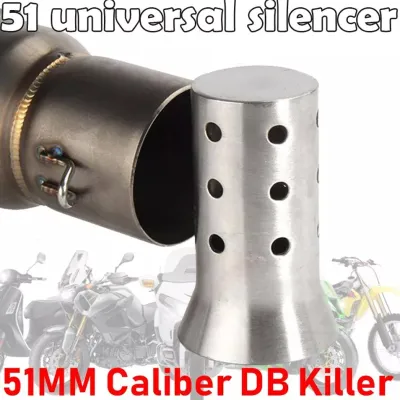
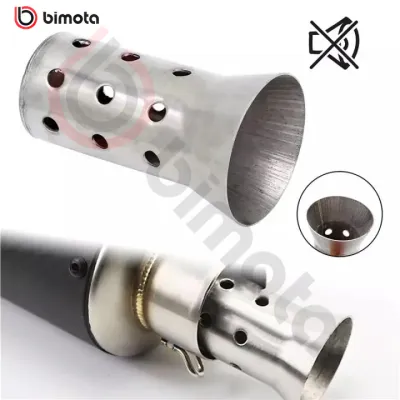
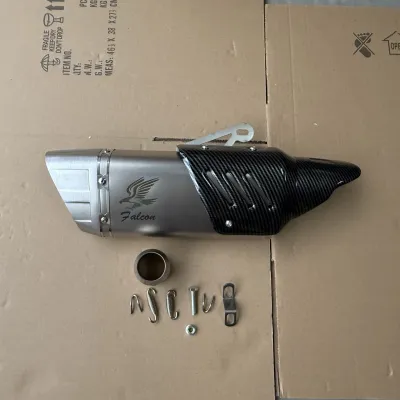
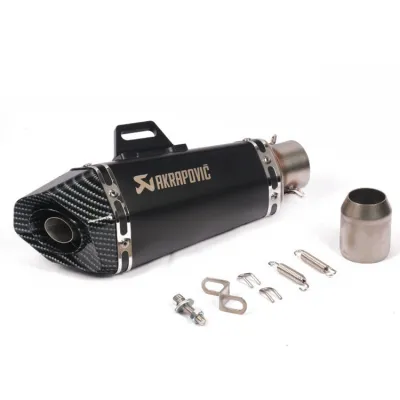
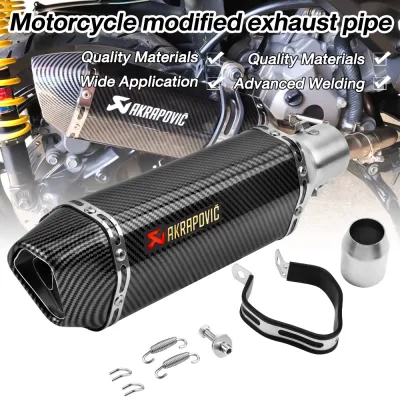
Prices are valid at publication and may change. Please refer to the product page for the latest price.
You must also distinguish between a slip-on muffler and a full exhaust system to understand the scope of your modification. A slip-on muffler replaces only the rear silencer portion of your exhaust, leaving the factory header pipes and catalytic converter intact. This is generally a straightforward, reversible modification that focuses on sound and weight reduction. A full exhaust system replaces everything from the engine exhaust port to the tailpipe, which significantly alters exhaust gas flow and requires more extensive installation steps.
Physical clearance is another critical safety factor that requires careful inspection of your motorcycle’s layout. Ensure the new muffler does not come into contact with rear brake calipers, the swingarm during full suspension compression, or the center stand when retracted. Additionally, verify that the heat radiating from the muffler body will not melt nearby plastic fairings, passenger footpegs, or aftermarket saddlebags. Always consult your motorcycle’s original workshop manual and the exhaust manufacturer’s detailed fitment schematics before making a purchase.
Understand Street Legality and Noise Regulations in the Philippines
Riding with an aftermarket exhaust muffler in the Philippines requires strict adherence to local traffic laws and environmental regulations to avoid heavy fines, roadside disputes, or vehicle impounding. The Land Transportation Office (LTO) and local government units enforce specific guidelines regarding modified exhausts, primarily focusing on noise levels and emissions. Under current regulations, exhaust systems must not exceed established decibel limits, which are typically measured at a specific distance and angle from the exhaust outlet at a designated engine speed.

To remain compliant during roadside inspections and annual registration renewals, you should look for mufflers that feature a removable baffle, commonly known as a DB-killer. This insert restricts exhaust gas flow slightly at the exit, significantly reducing the high-frequency bark and overall volume of the exhaust. Keeping the DB-killer installed during daily commutes through residential areas and major highways is a practical way to respect your community while staying within legal noise thresholds.
Beyond noise control, you must consider the environmental and emissions impact of your modification. Modern motorcycles are equipped with catalytic converters to reduce harmful exhaust emissions, and removing these components can violate local clean air regulations. If you are installing a full exhaust system, verify whether the aftermarket system includes a high-flow catalytic converter or if it is designed strictly for closed-course track use. Look for clear compliance markings or certifications on the product packaging to ensure the system is rated for street use.
Keep in mind that local law enforcement officers and LTO inspectors have the authority to test your vehicle’s noise output using calibrated decibel meters. Using an excessively loud, unbaffled exhaust pipe not only invites legal penalties but also contributes to noise pollution in highly populated urban areas. Prioritizing a compliant, baffled system ensures you can enjoy your ride without the constant worry of being flagged down at a checkpoint.
Evaluate Performance Goals and Engine Tuning Needs
Modifying your motorcycle’s exhaust system directly alters how the engine breathes, which has a profound impact on performance and reliability. When you replace a restrictive stock muffler with a high-flow aftermarket alternative, you reduce backpressure and increase the velocity of exiting exhaust gases. While this allows the engine to expel waste gases more quickly, it also increases the volume of air moving through the combustion chamber, which can disrupt the delicate air-fuel ratio.
Without the restrictive stock exhaust, your engine will typically run lean, meaning there is too much air and not enough fuel in the combustion chamber. A lean-running engine operates at significantly higher temperatures, which can lead to spark plug fouling, exhaust valve warping, popping on deceleration, and eventual engine failure. To prevent these issues, you must assess whether your modification requires fuel management adjustments, such as installing an electronic control unit (ECU) fuel controller, remapping the factory ECU, or swapping jets in a carbureted engine.
The necessity of tuning depends largely on whether you install a slip-on muffler or a full exhaust system. A simple slip-on muffler usually retains the stock catalytic converter and header pipes, meaning the change in backpressure is minimal enough that the factory ECU can often compensate within its pre-programmed limits. However, installing a full exhaust system completely removes these restrictions, making a professional ECU remap or an aftermarket fuel controller absolutely necessary to restore safe air-fuel ratios and unlock actual performance gains.
Set realistic expectations for horsepower and torque improvements when planning your upgrade. A slip-on muffler on its own rarely produces noticeable power gains, as its primary benefits are weight reduction, aesthetic enhancement, and a more pronounced exhaust note. Significant horsepower and torque increases are only achieved with a full exhaust system that has been properly tuned on a dynamometer by a qualified technician, allowing the engine to take full advantage of the increased airflow.
Compare Muffler Materials and Build Quality
Aftermarket mufflers are constructed from a variety of metals and composites, each offering distinct characteristics regarding weight, durability, heat dissipation, and cost. Stainless steel is the most common material used in high-quality exhausts, valued for its exceptional structural strength, resistance to rust, and budget-friendly price point. While heavier than premium materials, stainless steel is highly resilient against road debris, vibrations, and the humid, tropical climate of the Philippines.
Aluminum is another popular choice, particularly for slip-on mufflers, as it offers a significant weight reduction compared to stock steel exhausts at an affordable price. However, aluminum is softer than stainless steel and can be more susceptible to denting or scratching during minor tips or off-road riding. It also requires regular cleaning to prevent oxidation and maintain its brushed or polished finish over years of exposure to rain and road grime.
For riders seeking maximum weight reduction and high-end aesthetics, carbon fiber and titanium represent the pinnacle of exhaust construction. Carbon fiber is incredibly lightweight and remains cool to the touch even after long rides, making it excellent for passenger comfort and preventing accidental burns. However, carbon fiber can degrade over time under extreme heat and pressure, requiring periodic repacking of the internal silencing material to prevent the outer sleeve from cracking. Titanium offers the ultimate combination of featherweight construction, extreme tensile strength, and high heat resistance, developing a distinct blue-purple patina over time, though it carries a premium price tag.
When evaluating any muffler, closely inspect the build quality, weld consistency, and structural reinforcements. Look for clean, uniform TIG welds along the joints, secure rivet placement on the end caps, and robust mounting brackets that can withstand constant engine vibrations. Poorly constructed mufflers with thin walls or weak welds are prone to cracking, exhaust leaks, and internal baffle failure, which can ruin your investment and damage your motorcycle.
Assess Sound Profile and Daily Rideability
The sound profile of an aftermarket exhaust is often the most subjective yet impactful factor in your purchasing decision. Different muffler designs, internal packing materials, and core diameters produce vastly different acoustic signatures. Some mufflers deliver a deep, low-frequency rumble that enhances the natural character of single-cylinder or twin-cylinder engines, while others produce a high-pitched, raspy scream reminiscent of track-focused multi-cylinder sportbikes.
While an aggressive exhaust note can be exciting during short weekend rides, you must consider the long-term impact of exhaust volume on your daily rideability and physical comfort. Prolonged exposure to loud, high-decibel exhaust noise can cause rider fatigue, headaches, and permanent hearing damage, even when wearing a high-quality helmet. If you use your motorcycle for daily commuting or long-distance touring, a moderately toned exhaust with a smooth, non-droning sound profile is far more practical than an unbaffled straight pipe.
To maintain versatility, look for aftermarket mufflers that offer adjustable sound configurations. Many reputable brands include interchangeable end caps, removable quiet inserts, or adjustable internal baffles that allow you to customize the sound output. This flexibility enables you to keep the exhaust quiet and neighbor-friendly during early morning departures from your residential subdivision, while still allowing you to open up the sound profile when riding in controlled track environments.
Plan Your Budget and Installation Requirements
Upgrading your motorcycle’s exhaust involves several costs beyond the initial purchase price of the muffler itself. When planning your budget, you must account for the base price of the exhaust component in ₱, along with potential shipping fees, customs duties, and local taxes if ordering from international suppliers. Additionally, factor in the cost of essential installation consumables, such as new copper exhaust port gaskets, high-temperature silicone sealant, and heavy-duty mounting springs.
You must also decide whether to attempt a do-it-yourself (DIY) installation or hire a professional mechanic. Installing a slip-on muffler is generally a straightforward task that can be completed with basic hand tools, provided you follow the manufacturer’s instructions and torque specifications carefully. However, installing a full exhaust system, performing ECU remapping, or fabricating custom mounting brackets requires specialized knowledge, diagnostic equipment, and tools.
Budgeting for professional installation and tuning services is highly recommended to ensure your motorcycle remains safe and reliable. A qualified mechanic can verify that the exhaust is mounted without tension, check for exhaust leaks at the joints, and perform a proper fuel-air mixture adjustment using a dynamometer or specialized diagnostic tools. Attempting to ride a heavily modified, untuned motorcycle to save on installation costs can lead to severe engine damage that far exceeds the price of professional service.
Frequently Asked Questions (FAQ)
Will a slip-on muffler significantly increase my motorcycle's horsepower?
A slip-on muffler alone will not provide a significant increase in your motorcycle’s horsepower. Because a slip-on only replaces the rear silencer while keeping the stock header pipes, catalytic converter, and engine tuning intact, the overall restriction in the exhaust system remains largely unchanged. The primary benefits of a slip-on muffler are weight reduction, an improved aesthetic appearance, and a deeper, more pronounced exhaust note. To achieve noticeable horsepower and torque gains, you must install a full exhaust system paired with a high-flow air filter and a professional ECU remap or fuel controller.
Can I install an aftermarket exhaust without voiding my manufacturer warranty?
Installing an aftermarket exhaust can potentially affect your motorcycle’s manufacturer warranty, depending on the dealership’s policies and the nature of any future warranty claims. Under standard warranty terms, a dealership cannot void your entire warranty simply because you installed an aftermarket part; however, they can deny coverage for specific failures if they can prove the aftermarket exhaust or lack of proper engine tuning directly caused the issue. For example, if your engine suffers from burnt valves or piston damage due to running excessively lean after an exhaust modification, the repair costs will likely not be covered. Always consult your local dealership and review your warranty documentation before performing any modifications.
Community discussion
Share your experience or ask a question. Comments are reviewed before publication.