
Choosing the right car clip pliers is a fundamental step in building a reliable automotive toolkit. Unlike standard household tools, these specialized pliers are engineered to safely navigate the delicate plastic fasteners, push-pins, and trim clips that hold modern vehicle interiors and engine bay shrouds together. By selecting a tool with the correct jaw geometry, robust material construction, and ergonomic design, you can perform routine maintenance, stereo upgrades, and panel removals without risking costly cosmetic damage to your vehicle.
Why Your Toolkit Needs Dedicated Car Clip Pliers
Standard hand tools like slip-joint or needle-nose pliers are poorly suited for automotive trim work because they apply force from the wrong angles. When you attempt to squeeze a plastic push-pin with standard pliers, the jaws compress the sides of the clip head rather than lifting it from underneath. This localized, crushing pressure frequently shears off the fragile plastic flange, leaving the shank permanently wedged inside the mounting hole and making removal significantly more difficult.
Using flathead screwdrivers or metal putty knives as makeshift pry bars introduces even greater risks. The hard, narrow edge of a screwdriver concentrates immense pressure on a tiny surface area of the surrounding plastic trim or painted metal panel. This leverage often results in unsightly gouges, cracked dashboard bezels, or scraped paint. In the humid climate of the Philippines, even minor paint scratches on metal panels can quickly expose the underlying steel to moisture, leading to rust formation over time.
Products mentioned in this guide
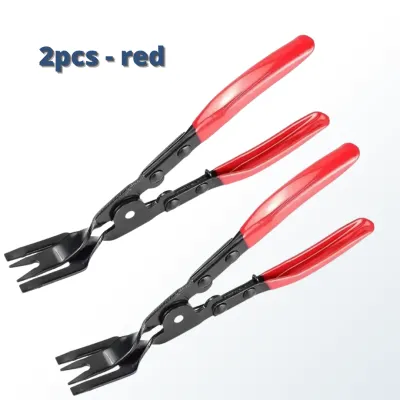
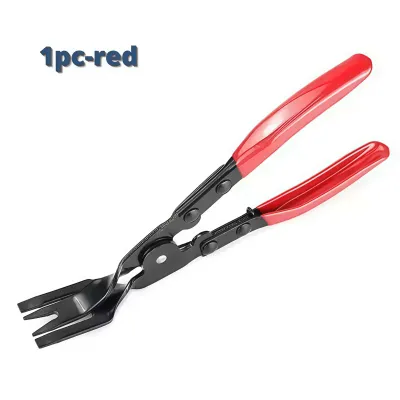
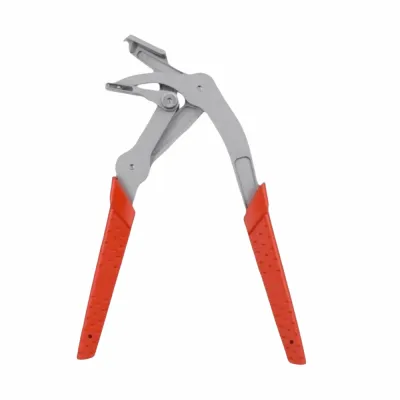
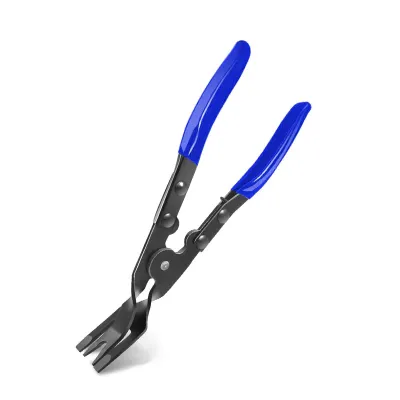
Prices are valid at publication and may change. Please refer to the product page for the latest price.
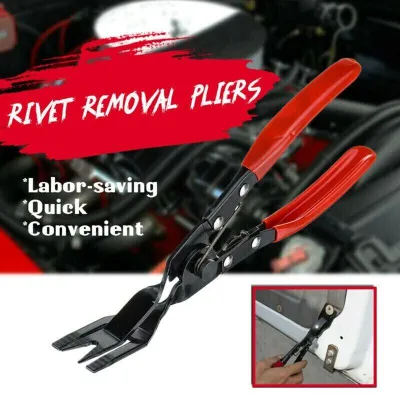
Dedicated car clip pliers solve these issues through their specialized flat, wedge-shaped fork design. This profile allows the jaws to slide smoothly beneath the fastener head, distributing the lifting force evenly across the flange. By lifting the pin straight up along its axis, the tool minimizes lateral stress on both the clip and the mounting panel, allowing for clean, damage-free extraction.
Ergonomics are another major advantage when working in the cramped confines of a vehicle. Reaching behind a door card, deep under the steering column, or inside a crowded engine bay requires a tool that can operate with minimal handle clearance. Clip pliers are engineered with specific pivot points and angled heads that allow you to apply maximum leverage even when your hand movement is restricted by surrounding components.
The time saved during routine maintenance tasks is substantial. Simple jobs like replacing a burnt-out headlight bulb, installing an aftermarket head unit, or routing dashcam wiring require the removal of multiple trim panels. With the correct tool in your kit, what could be a frustrating, hour-long struggle with stubborn, broken fasteners becomes a quick, systematic process that preserves the structural integrity of your vehicle’s interior panels.
Key Features to Evaluate When Buying Car Clip Pliers
Jaw design is the most critical factor to evaluate before making a purchase. Look for ultra-thin tips that can easily slip into the microscopic gap between a flush-mounted clip and the panel. If the tips are too thick, you will struggle to get under the fastener without scratching the surrounding material, defeating the purpose of using a specialized tool.

Serration and groove patterns on the inner jaw faces determine how securely the tool grips the clip shank. A well-designed tool will feature a curved recess or a stepped jaw profile that cradles the round pin of a push-retainer. This design prevents the fastener from slipping out of the tool’s grasp mid-pull, ensuring a smooth and controlled extraction.
Handle design directly impacts your comfort and control during prolonged use. Look for handles wrapped in non-slip, oil-resistant materials such as textured rubber or dual-density plastic. In hot, humid garage environments where hands easily become sweaty or greasy, a secure grip prevents accidental slips that could damage your vehicle’s interior or cause hand strain.
Tool weight and balance are equally important for reducing fatigue. While a heavy tool might feel durable, holding a heavy pair of pliers overhead while working under a dashboard can quickly tire your hands and wrists. Opt for a tool that balances robust construction with a manageable weight, allowing for precise control in awkward positions.
Do not rely on flashy product titles or vague marketing claims when assessing durability. Instead, inspect the manufacturer’s specifications for clear indicators of steel quality. Look for terms like Chrome Vanadium (Cr-V) or medium-carbon steel, and check if the jaws have been induction-hardened or heat-treated. These manufacturing processes ensure the tips will not bend, warp, or chip when prying stubborn fasteners.
The choice between spring-loaded and manual return mechanisms depends on your working style and workspace constraints. Spring-loaded pliers automatically open the jaws when you release grip pressure, which is highly convenient for rapid, repetitive tasks. However, manual return pliers offer more direct tactile feedback and can sometimes be easier to maneuver in extremely tight spaces where a spring might force the handles open prematurely.
Common Types of Clip Pliers and Their Best Use Cases
Standard straight-jaw clip pliers are the workhorses of any basic automotive toolkit. They feature a straight body with a flat, forked tip, making them ideal for easily accessible fasteners. You will use these most often for removing push-retainers on radiator shrouds, engine beauty covers, and trunk liners where you have a direct line of sight and ample physical clearance.
Angled or offset-jaw pliers are designed with a distinct bend in the neck, typically at a 30-degree, 45-degree, or 90-degree angle. This offset allows you to keep your hands clear of the panel surface while prying, providing excellent leverage in tight spots. They are indispensable for removing clips behind door panels, inside wheel wells, or along the firewall where a straight tool cannot fit.
Multi-purpose clip pliers offer added versatility by combining prying forks with cutting edges or interchangeable jaw attachments. Some designs feature integrated wire cutters or crimpers near the pivot point, allowing you to manage electrical wiring and trim removal with a single tool. While highly convenient, ensure the locking mechanism for any interchangeable parts is robust to prevent play during heavy use.
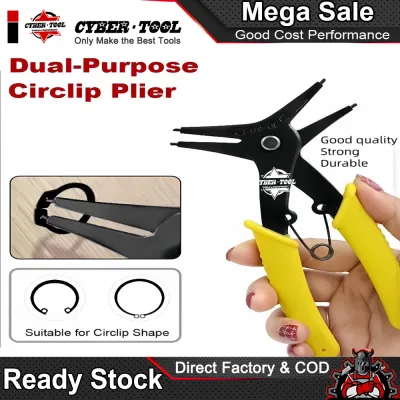
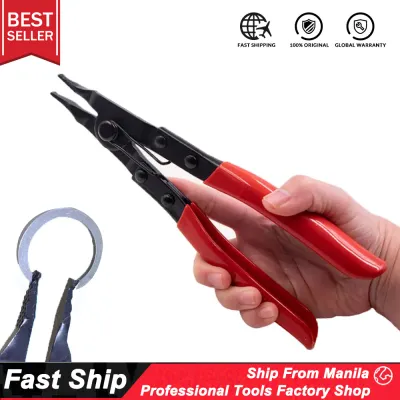
Specialized hose clip pliers are distinct from trim removal tools. These are engineered specifically for managing spring-tension hose clamps found on radiator hoses, vacuum lines, and fuel systems. They feature specialized swivel jaws with slots or cross-hatched grooves to securely grip the wire tabs of the clamp, preventing it from snapping open unexpectedly during cooling system maintenance.
How to Verify Quality and Avoid Poorly Made Tools
When purchasing tools from online marketplaces or local hardware stores, a physical inspection is your best defense against poor manufacturing. Immediately upon receiving the tool, check the alignment of the jaws. When closed, the tips should meet perfectly without any overlapping or gaps; misaligned jaws will slip off clips and damage panels.
Test the pivot joint for smoothness and stability. Open and close the pliers several times to ensure there is no binding, grinding, or excessive play. A loose pivot joint causes the jaws to twist under load, reducing your gripping power and increasing the risk of tool slippage.
Examine the product description and packaging carefully. Avoid listings that use vague phrases like “heavy-duty steel” without specifying the actual alloy or manufacturing standard. Reputable manufacturers will clearly state the steel grade, such as Cr-V, and detail any rust-resistant coatings like black oxide or chrome plating.
Read user reviews with a critical eye, focusing on long-term durability rather than initial impressions. Look for feedback regarding jaw chipping, pivot loosening, or spring failure after several uses. If multiple buyers report that the tips bent on their first attempt to remove a stubborn clip, it is a clear sign of poor heat treatment.
Verify the seller’s return policy and warranty terms before finalizing your purchase. Because manufacturing defects can sometimes escape initial inspection, buying from sellers who offer straightforward return windows or limited lifetime warranties provides essential peace of mind, especially when shopping on general e-commerce platforms.
Integrating Clip Pliers into Your Basic Car Maintenance Kit
To build a truly effective trim removal kit, pair your metal clip pliers with a set of non-marring plastic pry tools. While metal pliers are excellent for pulling the center pins of tough fasteners, plastic pry bars are safer for gently lifting the edges of delicate dashboard panels and door cards without scratching the paint or soft-touch plastics.
Before starting any disassembly project, consult your vehicle’s official service manual. This documentation identifies the exact location and type of fasteners securing each panel, preventing you from accidentally prying on a hidden screw or bracket. Always observe safety boundaries: if you are working near restraint systems like side-curtain airbags or sensitive electrical wiring, disconnect the battery and follow the manufacturer’s specific safety protocols.
Keep your workspace organized by using magnetic trays or compartmentalized storage bins to hold extracted clips and screws. Plastic automotive fasteners are notoriously easy to lose, and keeping them sorted by size and location during a teardown ensures a smooth, rattle-free reassembly process.
The tropical climate of the Philippines presents a unique challenge for hand tools. High humidity and salty coastal air accelerate rust formation on exposed steel. To protect your investment, establish a post-work maintenance routine: wipe down your clip pliers with a clean, dry cloth after every use, and apply a light coat of multi-purpose machine oil or rust-inhibitor spray before storing them in your toolbox.
Frequently Asked Questions (FAQ)
Can I use regular needle-nose pliers instead of dedicated car clip pliers?
While needle-nose pliers can grip some fasteners, they are not designed for prying. Their narrow, pointed jaws apply concentrated pressure to a small area, which often crushes or shears plastic clip heads. Additionally, they lack the flat, wedged profile needed to slide underneath flush-mounted fasteners, making panel damage highly likely.
How do I safely remove brittle, aged plastic clips without breaking them?
Plastic clips degrade over time due to engine heat and tropical UV exposure, making them highly brittle. To minimize breakage, avoid pulling them when the vehicle is cold. If possible, let the car sit in the sun for a short period or gently warm the panel with a hairdryer to make the plastic more pliable. Apply steady, vertical pressure with your clip pliers rather than sudden, jerking forces.
What should I do if a clip breaks during removal?
If a clip breaks, use your clip pliers or a small pick to carefully extract the remaining shank from the mounting hole to prevent rattles. Do not leave broken fragments inside the panel. You can easily source inexpensive replacement OEM-style plastic clips costing only a few pesos (₱) each from local auto supply shops or online marketplaces to keep on hand for these exact situations.
Community discussion
Share your experience or ask a question. Comments are reviewed before publication.