
Choosing the right clutch bell for your scooter or underbone motorcycle requires a systematic approach that prioritizes exact mechanical compatibility, matches your daily riding conditions, and ensures all mating transmission components are in optimal health. In the Philippines, where daily commutes often involve stop-and-go traffic, high ambient temperatures, and heavy humidity, selecting a component that manages heat effectively and engages smoothly is essential for a reliable ride. By verifying your vehicle’s original equipment manufacturer (OEM) specifications first, you can avoid costly drivetrain damage and maintain a safe, efficient ride.
Understand the Role of the Clutch Bell in Your Drivetrain
The clutch bell is a critical component of your motorcycle’s automatic or semi-automatic transmission system, serving as the outer drum that receives rotational force from the engine. When the engine reaches a specific rotational speed, centrifugal force pushes the internal clutch shoes outward until their friction linings grip the inner surface of the clutch bell. This engagement locks the shoes and the bell together, transferring power directly to the rear wheel to propel the vehicle forward.
In fully automatic scooters utilizing a Continuously Variable Transmission (CVT), the clutch bell operates within a dry rear pulley assembly, relying entirely on centrifugal force for engagement. Underbone motorcycles, which often feature semi-automatic or manual transmissions, may utilize a wet clutch system or a centrifugal primary clutch that operates in a different oil-bathed or dry configuration depending on the specific engine design. Understanding this distinction is vital because dry CVT systems are highly sensitive to dust and heat accumulation, whereas wet systems depend heavily on oil quality and friction modifiers.
Products mentioned in this guide
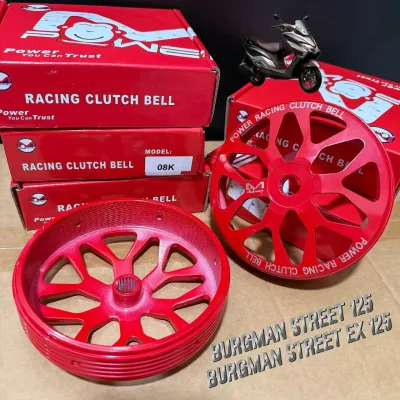
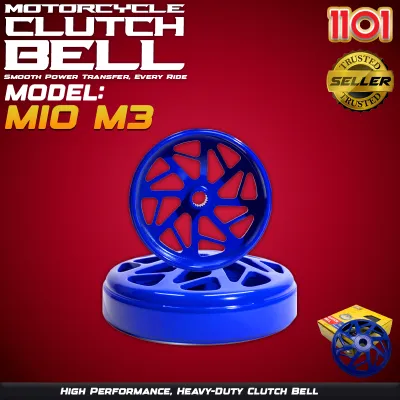
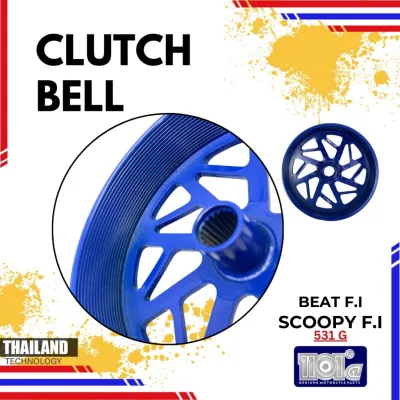
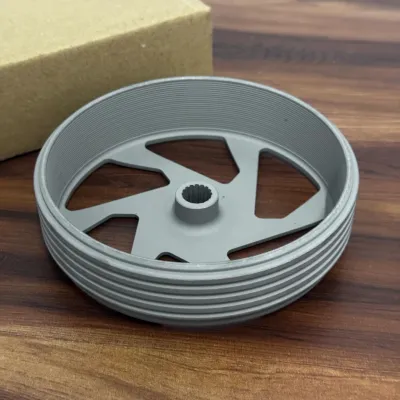


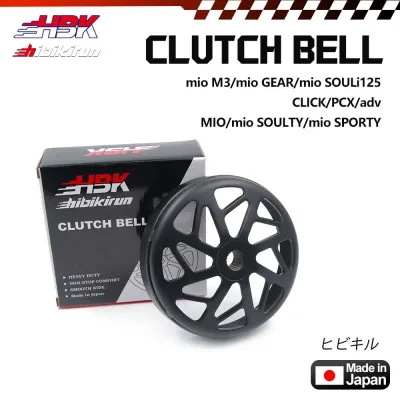
Prices are valid at publication and may change. Please refer to the product page for the latest price.
Over time, the constant friction and heat generated during engagement can degrade the clutch bell. Common symptoms of a worn, glazed, or warped clutch bell include a distinct shuddering or dragging sensation when accelerating from a complete stop, slipping under heavy load, and a noticeable loss of fuel efficiency. If you experience these issues on your daily commute, it is often an indication that the inner surface of the bell has lost its friction characteristics or has warped out of round.
Step 1: Verify Vehicle Compatibility and OEM Specifications
Before purchasing any replacement clutch bell, you must confirm the exact specifications of your vehicle’s original drivetrain. Drivetrain components are engineered to precise tolerances, meaning that even models within the same manufacturer lineup can feature different transmission dimensions. Refer to your vehicle’s owner’s manual or official service manual to locate the exact OEM part number, inner diameter, and spline count.

Relying solely on visual matching or generic online listings is a common mistake that can lead to severe mechanical failure. A clutch bell that appears identical to your original part may have a slightly different inner diameter, a different spline pattern on the shaft mount, or a different offset depth. Installing a mismatched bell can cause the component to rub against the transmission casing, strip the input shaft splines, or fail to engage the clutch shoes properly, resulting in immediate drivetrain damage.
If your motorcycle has undergone previous modifications, or if you do not have access to the original service documentation, do not guess the dimensions. Consult the vehicle manufacturer’s authorized service center or a qualified motorcycle mechanic who can measure the components using precision calipers. Verifying these physical dimensions beforehand ensures that the replacement part will seat securely on the shaft and align perfectly with the rest of the transmission assembly.
Step 2: Match the Clutch Bell to Your Riding Style and Needs
For the vast majority of riders who use their scooters or underbones for daily commuting, a standard OEM-style clutch bell is the most practical choice. These bells are designed to provide smooth, predictable low-speed engagement, which is ideal for navigating congested city streets. They are engineered to balance durability, fuel economy, and quiet operation under normal operating conditions without requiring frequent maintenance.
Performance-oriented clutch bells, which often feature specialized cooling fins, outer grooving, or sandblasted inner surfaces, are designed for specific high-demand scenarios. These include track racing, carrying heavy cargo over steep terrain, or supporting highly modified engines that generate significantly more power than stock configurations. If you choose a performance bell, keep in mind that it must be paired with supporting drivetrain modifications, such as upgraded clutch shoes and calibrated springs, to function as intended.
Installing an aggressive, high-stall performance clutch bell on an otherwise stock daily commuter is generally counterproductive. These components are designed to engage at much higher engine speeds (RPM), which can make low-speed maneuvering jerky and difficult to control in heavy traffic. Furthermore, the aggressive friction characteristics can accelerate wear on your clutch shoes, generate excessive heat during prolonged idling, and ultimately reduce the overall lifespan of your transmission.
Step 3: Evaluate Material, Weight, and Build Quality
When evaluating different clutch bells on the market, carefully read the product labels, specifications sheets, and manufacturer documentation. High-quality clutch bells are typically manufactured from high-tensile steel alloys or specialized cast iron that can withstand extreme thermal stress without deforming. Avoid products that lack clear material specifications or those from unverified brands that do not provide detailed manufacturing standards.
The weight of the clutch bell directly affects the rotational mass of your drivetrain. A heavier bell provides more rotational inertia, which can contribute to smoother cruising speeds and better momentum on flat roads. Conversely, a lighter bell reduces rotational inertia, theoretically allowing the engine to rev up more quickly. However, you should verify any performance claims against independent technical data, as a lighter bell may also retain heat longer if it lacks sufficient surface area or material mass to dissipate thermal energy.
Before installing any new clutch bell, perform a thorough visual inspection of the component. Look for high-precision machining marks, clean spline cuts, and the presence of balance marks or small weights welded to the exterior, which indicate that the bell has been dynamically balanced at the factory. The internal surface where the clutch shoes make contact should be perfectly uniform, free of burrs, scratches, or uneven plating that could compromise friction engagement.
Step 4: Inspect the Clutch Shoes and Springs Before Installation
A new clutch bell cannot perform correctly if it is paired with worn or damaged mating components. Before installing the new bell, inspect the internal clutch assembly thoroughly. Check the thickness of the clutch shoe friction linings against the service limits specified in your manual. Look for signs of glazing—a shiny, vitrified surface caused by excessive heat—as well as uneven wear patterns or contamination from engine oil or gear grease. If cleaning is necessary, use only label-authorized clutch or brake cleaners to avoid damaging the friction material.
The clutch springs dictate the exact engine speed at which the clutch shoes expand to engage the bell. Inspect these springs for signs of stretching, rust, or loss of tension. If the springs have weakened over time, they may allow the clutch to engage too early, causing the engine to bog down during acceleration. Ensure that the spring tension matches the manufacturer’s specifications for your specific riding application.
If your inspection reveals that the clutch shoes are worn down near their wear indicators, or if the springs show signs of fatigue, do not proceed with installing the new clutch bell alone. Installing a new bell over worn or glazed shoes will quickly ruin the new contact surface, leading to premature failure of both components. Always replace the clutch shoes and springs as a set if they are worn beyond their recommended service limits.
Installation Safety and When to Seek Professional Help
Working on your motorcycle’s transmission requires strict adherence to safety protocols to prevent personal injury and component damage. Always ensure the engine is completely cool before starting work, and secure the motorcycle on a stable center stand on flat ground. Use the correct specialized tools, such as a dedicated clutch holding tool to prevent the assembly from spinning, rather than attempting to jam the gears with makeshift screwdrivers or pry bars.
One of the most critical steps in the installation process is securing the clutch bell retaining nut. You must use a calibrated torque wrench to tighten this nut to the exact torque specification provided in your vehicle’s service manual. Under-tightening the nut can cause the clutch bell to back off during operation, leading to catastrophic drivetrain failure, while over-tightening can strip the shaft threads or damage the underlying bearings.
If you encounter stripped threads on the input shaft, find that you lack the necessary specialized tools, or feel uncertain about the correct reassembly sequence, stop immediately. Attempting to force components together or guessing torque values can result in a highly dangerous mechanical failure while riding. In these situations, transport your vehicle or components to a qualified professional mechanic who has the expertise and precision tools required to complete the job safely.
Frequently Asked Questions (FAQ)
Can I use a clutch bell from a different motorcycle model if it physically fits?
No, you should not use a clutch bell from a different model simply because it physically slides onto the shaft. Even if the inner diameter and spline count match, different models are engineered with specific dynamic balances, weight distributions, and heat dissipation capacities tailored to their respective engine outputs. Using an unverified part can lead to severe vibration, premature wear of the transmission bearings, or sudden failure under load. Always stick to parts explicitly verified by the manufacturer for your exact make, model, and production year.
How do I know if my clutch bell is warped or out of round?
A warped clutch bell typically manifests as a rhythmic shuddering or vibrating sensation when you accelerate from a standstill. You may also notice uneven, localized wear patterns on your clutch shoes, where only certain sections of the lining are making contact with the bell. To confirm warping with certainty, the bell must be mounted on a lathe or a dedicated jig and measured using a dial indicator to check if the runout exceeds the manufacturer’s maximum allowable limit.
Will a lighter clutch bell improve my scooter's acceleration?
A lighter clutch bell reduces the rotational mass of the transmission, which theoretically allows the engine to reach its powerband slightly faster. However, any noticeable improvement in acceleration depends heavily on the overall tuning of your entire transmission system, including the variator weights, torque spring, and clutch shoe weight. Simply swapping the bell without calibrating these supporting components rarely yields a significant performance gain and may even reduce top-speed stability due to the loss of rotational inertia.
Community discussion
Share your experience or ask a question. Comments are reviewed before publication.