
To choose the right clutch lining for your Honda Click 125, you must first identify your scooter’s specific generation (such as the V1, V2 Game Changer, or V3) to ensure exact dimensional compatibility, and then select a lining material—such as standard organic for smooth daily commuting or a carbon-composite blend for high-heat urban traffic—that matches your typical riding conditions and budget. Making an informed choice prevents common transmission issues like slipping, sluggish acceleration, and premature wear on your clutch bell.
Because the Honda Click 125 utilizes a dry Continuously Variable Transmission (CVT) system, the clutch lining operates under unique thermal and physical demands compared to manual motorcycles. Selecting the correct replacement involves evaluating your daily routes, understanding the trade-offs of different friction materials, and verifying exact physical dimensions before purchasing.
Signs Your Honda Click 125 Needs a Clutch Lining Replacement
Recognizing when your scooter’s clutch lining has degraded is the first step in maintaining optimal transmission performance. In the stop-and-go traffic of urban areas in the Philippines, the clutch constantly engages and disengages, leading to friction wear over time. The most common symptom of a worn clutch lining is clutch slippage, which manifests as the engine revving highly without a proportional increase in your scooter’s actual road speed.
Products mentioned in this guide
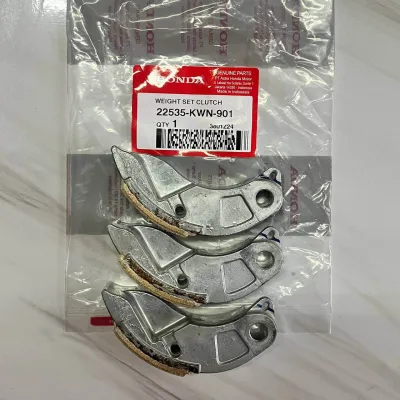
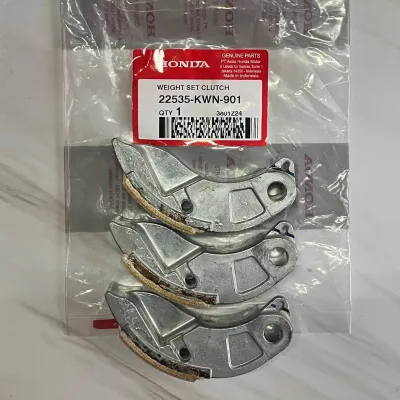
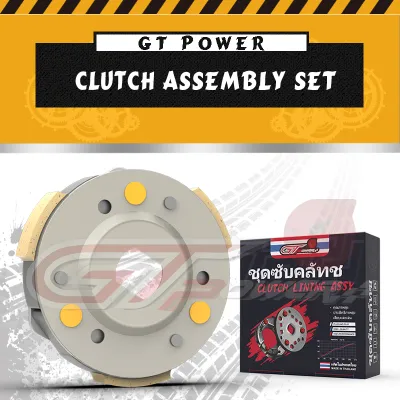
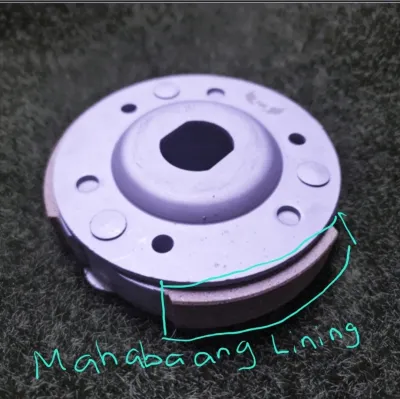
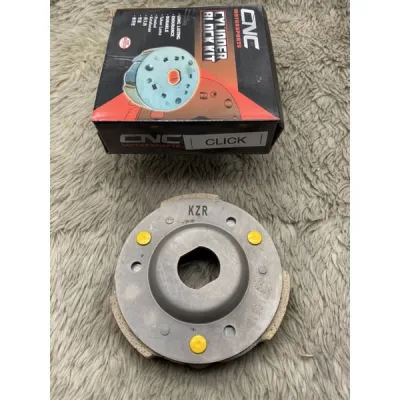
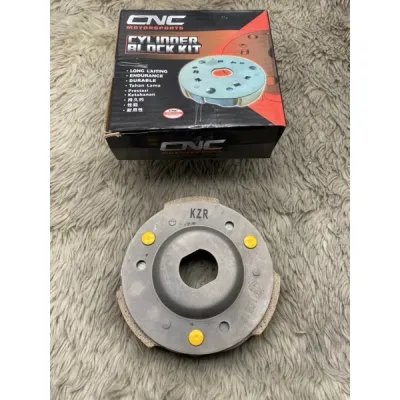
Prices are valid at publication and may change. Please refer to the product page for the latest price.
You may also experience a sluggish or shuddering sensation during take-offs, often referred to locally as dragging or “palyado” at low speeds. This dragging occurs when the clutch shoes fail to grip the inner surface of the clutch bell smoothly, causing a rapid, uneven slipping and gripping cycle. Additionally, a noticeable drop in your scooter’s top speed or a general lack of pulling power when climbing steep inclines, such as the roads of Antipolo or Tagaytay, can point directly to thinning friction material.
It is crucial to differentiate clutch lining wear from other common CVT issues to avoid spending money on unnecessary parts. For instance, a worn drive belt typically produces a squealing noise or causes a erratic power delivery, while degraded or flat-sided roller weights (flyballs) generally result in inconsistent acceleration ramps or rattling noises from the front pulley. If your belt and rollers are in good condition but you still experience slipping and low-speed vibration, the clutch assembly is the highly probable culprit.
To confirm your diagnosis, perform a basic visual inspection of the clutch assembly after removing the CVT cover. Examine the three centrifugal clutch shoes to check the thickness of the friction lining; if the material has worn down close to the metal shoe backing, replacement is urgent. You should also check for glazing—a shiny, vitrified surface on the lining caused by excessive heat—and inspect the inner surface of the clutch bell for deep scoring, grooves, or a dark blue discoloration that indicates severe overheating.
Key Specifications and Compatibility to Check
The Honda Click 125 has been released in several generations and variants over the years, including the initial Click 125i (V1), the Click 125i Game Changer (V2), and the latest V3 models. While these scooters share a similar engine platform, minor variations in the CVT components, pulley angles, and clutch assembly dimensions exist across different model years. Assuming that a part labeled generically for a “Honda Click” will fit your specific model can lead to costly compatibility issues.

Before finalizing any purchase, you must verify the exact physical specifications of the clutch lining or the complete clutch shoe assembly. Key dimensions to check include the outer diameter of the shoe assembly when closed, the thickness of the friction pads, and the mounting hole locations that interface with the clutch carrier plate. For a stock Honda Click 125, the standard clutch bell inner diameter is typically 125 mm, and the replacement lining must be designed to expand precisely within this boundary without binding or leaving excessive clearance.
To guarantee a perfect match, avoid relying solely on generic product titles on online marketplaces, which often group different scooter models together incorrectly. Instead, cross-reference the manufacturer’s part number with the official Honda parts catalog or your scooter’s owner’s manual. Alternatively, you can use a vernier caliper to physically measure the dimensions of your old, removed OEM clutch shoes to compare them directly with the seller’s technical specifications.
Additionally, inspect the supporting components of your clutch assembly during this process. The small clutch damper rubbers, which cushion the shoes as they retract, can harden or split, while the tension springs can lose their stiffness over time. If the steel backing plates of the clutch carrier are warped, or if the clutch bell itself is out-of-round, installing a brand-new clutch lining will not resolve your transmission issues and may lead to rapid, uneven wear on your new parts.
Comparing Clutch Lining Materials for Your Riding Style
When browsing replacement options, you will encounter various clutch lining materials, each designed to balance grip, heat tolerance, durability, and cost. Choosing the right material requires honest evaluation of your daily riding environment, load requirements, and personal preferences regarding transmission feel.
Organic and Standard OEM Materials
Organic clutch linings, which are standard on factory-assembled Honda Click 125 scooters, are composed of a blend of rubber, high-temperature resins, and organic fibers. These linings are engineered specifically for smooth, quiet engagement and predictable performance during standard daily commuting. Under normal city traffic conditions, organic linings provide excellent comfort because they slip slightly by design to ensure a gentle transition from a standstill to motion.
- Pros: Smooth and quiet engagement, minimal wear on the stock clutch bell, highly affordable price point.
- Cons: Susceptible to glazing under extreme heat, faster wear rates when subjected to heavy loads or continuous steep climbs.
- Price Range: Generally ranges from ₱300 to ₱700 for standard replacement sets.
Carbon-Composite and Kevlar Blends
Carbon-composite and Kevlar-infused clutch linings are popular aftermarket upgrades designed to handle higher temperatures without glazing. The inclusion of carbon or Kevlar fibers increases the thermal stability of the friction pad, allowing the clutch to maintain its gripping efficiency even during prolonged stop-and-go riding in high tropical temperatures.
- Pros: High resistance to heat glazing, reduced low-speed dragging, longer service life under demanding conditions.
- Cons: Slightly firmer engagement feel, requires a brief break-in period to achieve maximum grip.
- Price Range: Typically ranges from ₱800 to ₱1,800.
Copper-Infused and Sintered Metallic Materials
Sintered metallic or copper-infused linings are engineered for maximum friction and immediate power transfer. These heavy-duty options are often marketed for modified engines, delivery riders carrying heavy cargo, or performance-oriented setups where immediate bite is preferred over smooth modulation.
- Pros: Extremely high heat tolerance, virtually zero slippage once engaged, excellent durability under heavy loads.
- Cons: Aggressive engagement can cause a jerky feel at low speeds, significantly accelerated wear on standard OEM clutch bells, increased operational noise.
- Price Range: Usually ranges from ₱1,200 to ₱2,500.
For most daily commuters navigating Metro Manila or other urban centers, a standard organic lining or a mild carbon-composite upgrade offers the best balance of comfort, longevity, and component safety. Unless you frequently carry heavy cargo or have significantly modified your engine’s power output, aggressive sintered materials are generally unnecessary and may require you to replace your clutch bell prematurely due to accelerated wear.
OEM vs. Aftermarket: Making the Right Purchase Decision
Deciding between a Genuine Honda OEM clutch lining and a third-party aftermarket alternative involves weighing guaranteed compatibility against specialized performance characteristics. Genuine OEM parts provide absolute peace of mind because they are manufactured to Honda’s exact engineering tolerances and material specifications. When you buy an authentic OEM lining from an authorized Honda flagship dealer or a certified distributor, you are guaranteed a part that fits perfectly and restores your scooter to its original factory performance.
However, the market is flooded with counterfeit OEM parts packaged in convincing replica boxes. To protect your vehicle, be highly suspicious of OEM-labeled clutch linings sold at fraction of the standard retail price on general e-commerce platforms. Genuine parts should always be sourced from authorized physical dealerships or highly reputable online stores that provide clear proof of authenticity.
On the other hand, reputable aftermarket brands offer viable alternatives that sometimes address specific stock weaknesses, such as the common low-speed shuddering issue of the Click 125. Established aftermarket manufacturers design their clutch shoes with specialized friction patterns or grooved linings that help disperse heat and dust more efficiently than stock components. When choosing aftermarket brands, stick to well-documented names with positive track records among local scooter communities, and avoid unbranded, generic options that lack clear quality control standards.
If your scooter is completely stock and you prefer a smooth, quiet, and hassle-free ride, sticking with genuine OEM parts is the safest and most reliable path. If you are looking to resolve persistent dragging issues, ride in exceptionally hilly terrain, or use your scooter for commercial delivery services, a high-quality aftermarket carbon-composite clutch lining from a trusted brand can provide a beneficial performance upgrade.
Installation Safety and When to Seek Professional Help
Replacing the clutch lining of your Honda Click 125 requires opening the CVT casing, which exposes critical transmission components that operate under high spring tension and precise torque specifications. Before beginning any work, ensure your scooter is parked securely on its center stand on a level surface, the engine is completely cool, and you are working in a clean, dust-free environment.
While manual motorcycle wet clutches require pre-soaking the friction plates in engine oil before assembly, the Honda Click 125 utilizes a dry CVT centrifugal clutch system. For this dry setup, the clutch linings, clutch shoes, and the inner surface of the clutch bell must remain completely dry and free of any oil, grease, or cleaning solvents during preparation and installation. Any contamination from lubricants or grease on these friction surfaces will cause immediate, severe clutch slipping and can permanently ruin your brand-new lining.
Performing this replacement yourself requires several specialized tools to ensure safety and prevent component damage. You will need a CVT holder tool (such as a Y-tool or universal holder) to prevent the clutch bell from spinning while loosening the clutch housing nut, a clutch spring compressor tool to safely manage the high tension of the large center compression spring, and a calibrated torque wrench. Tightening the clutch housing nut and the outer clutch bell nut to the manufacturer’s exact torque specifications is critical; under-tightening can cause the assembly to spin loose while riding, while over-tightening can strip the threads of the input shaft or crack the clutch carrier.
If you do not own these specialized tools, lack a clean and secure workspace, or feel uncomfortable handling high-tension springs, you must stop and seek the assistance of a qualified motorcycle mechanic. Attempting to disassemble the clutch pulley using improvised tools, such as hammers or chisels, can cause severe personal injury if the spring decompresses suddenly, and can easily warp your transmission shaft. A professional mechanic can perform the replacement quickly, clean the entire CVT housing of accumulated belt dust, and ensure all fasteners are torqued safely to factory specifications.
Community discussion
Share your experience or ask a question. Comments are reviewed before publication.