
Selecting the correct clutch lining for your Suzuki Burgman requires matching the exact engine displacement, verifying physical dimensions, and choosing a friction material suited for tropical stop-and-go traffic. Because the Burgman lineup spans various engine sizes—such as the popular Burgman Street 125, the mid-range Burgman 200, and the maxi-scooter Burgman 400—there is no single universal clutch lining that fits every model. A mismatched or poorly manufactured lining can lead to severe transmission slippage, excessive heat buildup, and premature wear of your continuously variable transmission (CVT) components.
To make an informed purchase, you must prioritize verifying the original equipment manufacturer (OEM) specifications, checking the physical dimensions of the replacement lining, and inspecting the material quality. This guide outlines the essential steps to identify compatible parts, evaluate friction materials, and ensure a safe, reliable installation that keeps your scooter running smoothly on local roads.
Understand Your Burgman's Clutch System Requirements
Before browsing local parts shops or online marketplaces, you must identify the precise specifications of your scooter. The Suzuki Burgman family includes distinct generations and engine displacements, each utilizing a unique CVT configuration. For instance, the clutch assembly of a Burgman Street 125 is significantly smaller and designed for different load capacities than the assemblies found on the Burgman 200 or Burgman 400. Cross-generation incompatibility is common, so relying solely on the model name “Burgman” is highly risky.
Products mentioned in this guide
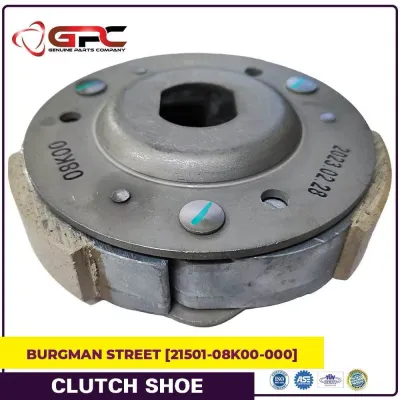
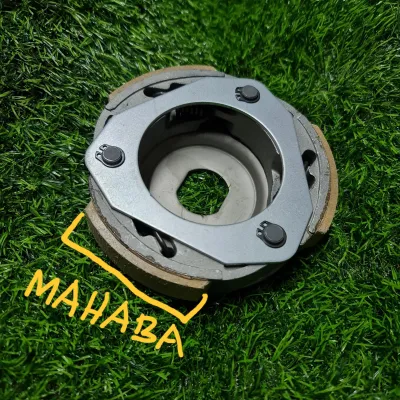
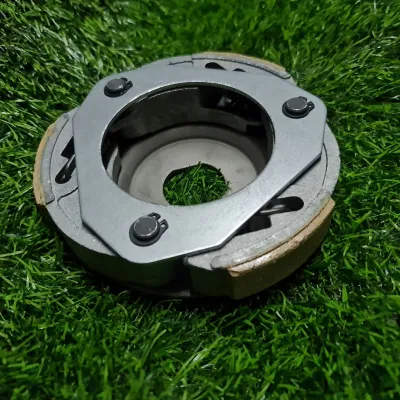
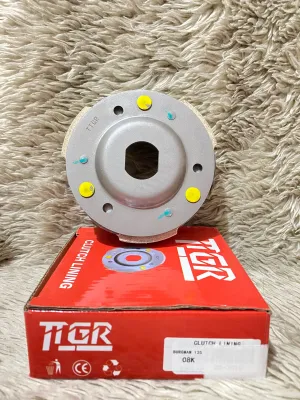
![Burgman 125 Clutch lining [Mahaba] Heavy duty lining](https://img.lazcdn.com/g/ff/kf/S28bcda992ed644e68ba8e147156a98f6t.jpg_400x400q80.jpg_.webp)
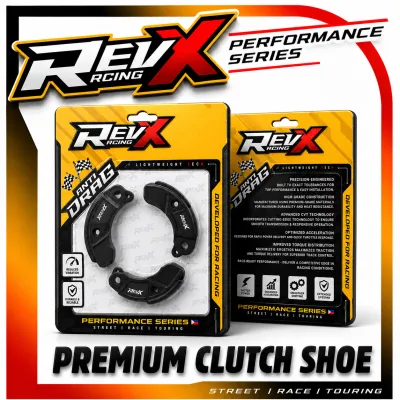
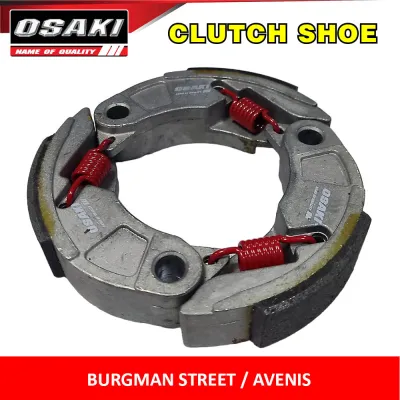
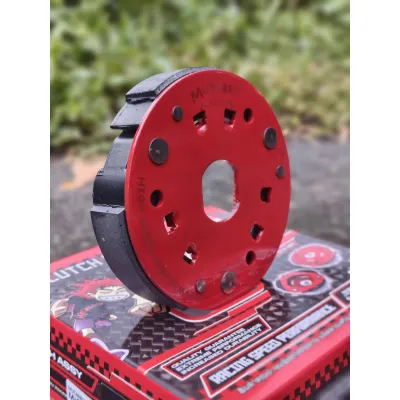
Prices are valid at publication and may change. Please refer to the product page for the latest price.
Your first step should always be consulting your owner’s manual or service guide to locate the exact OEM part number for your clutch shoe assembly. This unique alphanumeric code is the most reliable reference when cross-referencing aftermarket alternatives. If you do not have the manual, you can often find the part number stamped on the original clutch housing or by consulting an authorized dealer with your vehicle identification number (VIN).
It is also crucial to understand the physical anatomy of your scooter’s rear clutch assembly. The system consists of three main components: the clutch shoes, the friction lining bonded to those shoes, and the outer clutch bell. When you buy a replacement, you are typically purchasing either the complete clutch shoe assembly with the lining pre-applied, or just the individual shoes. The friction lining itself is the sacrificial material that presses against the inside of the clutch bell to transfer power from the engine to the rear wheel. Understanding these distinctions prevents you from purchasing incomplete or incorrect components.
Key Specifications to Check on Replacement Linings
When evaluating aftermarket clutch linings, physical dimensions must match your scooter’s requirements exactly. Even a millimeter of deviation can prevent the clutch from engaging smoothly or cause it to drag constantly against the bell. You must verify the outer diameter of the clutch shoe assembly when fully retracted, ensuring it aligns with the internal diameter of your specific clutch bell. Refer to your service manual for these precise limits, as using mismatched components can compromise your safety on the road.

Lining thickness is another critical specification that dictates both the lifespan of the part and its immediate compatibility. Replacement linings must meet the exact thickness standards specified by the manufacturer. If a lining is too thick, the clutch will remain in constant contact with the bell, leading to rapid overheating, glazing, and potential drivetrain damage. Conversely, a lining that is too thin will slip excessively, reducing acceleration and causing the engine to rev high without transferring power to the wheel.
Additionally, you must confirm that the friction material composition is explicitly rated for automatic scooter CVT systems. Scooter clutches operate under different physical principles than manual motorcycle clutches, which run in a wet oil bath. A Burgman utilizes a dry CVT system where the clutch shoes rely on dry friction and centrifugal force to engage. Installing a lining designed for wet clutches or manual transmissions will result in immediate failure, as those materials cannot withstand the dry, high-heat environment of a scooter’s clutch housing.
Evaluating Material Quality and Friction Characteristics
The choice of friction material directly impacts how your Burgman handles daily commutes, especially in the hot and humid climate of the Philippines. Standard organic compounds are the most common choice for daily city riding. They offer smooth, quiet engagement and are gentle on the clutch bell, making them ideal for typical stop-and-go traffic. However, organic linings may wear down faster under heavy loads or during prolonged uphill climbs.
For riders who frequently carry heavy cargo, travel with a pillion, or tackle steep terrain, semi-metallic or sintered lining options may be considered. These materials incorporate fine metallic fibers to improve heat dissipation and durability. While they offer stronger engagement and resist fading under high temperatures, they can also cause faster wear on the clutch bell and may produce more noise during initial acceleration. You must weigh these trade-offs based on your typical riding conditions and maintenance budget.
Regardless of the material type, you must carefully inspect the product packaging and the physical lining for quality indicators. Look for clear labeling regarding heat resistance and maximum operating temperature ratings. When inspecting the physical part, check for visual defects such as uneven bonding between the friction material and the metal shoe base. Any signs of edge chipping, air bubbles in the adhesive layer, or inconsistent surface texture are clear indicators of poor manufacturing and should be rejected immediately to prevent catastrophic failure while riding.
Where to Buy and How to Verify Authenticity
Finding a reliable source for your Burgman clutch lining is essential to avoid counterfeit parts, which are prevalent in the motorcycle aftermarket. Your safest option is always an authorized Suzuki dealership, where you can purchase genuine OEM replacements backed by manufacturer warranties. If you choose to explore aftermarket brands, seek out reputable local motorcycle parts shops that specialize in scooter transmissions and have a physical presence in your community.
If you prefer the convenience of online marketplaces, you must exercise extra caution. Limit your purchases to official brand stores or highly rated sellers with verified buyer feedback. Carefully read the reviews, paying close attention to comments from other Burgman owners who have successfully installed the specific part. Always confirm the seller’s return and exchange policies before finalizing your purchase, ensuring you can return the item if it does not match your scooter’s specifications upon arrival.
Once your package arrives, perform a thorough physical inspection before attempting installation. Genuine parts typically feature high-quality packaging with official holographic seals, clear and accurate part numbers, and secure, tamper-evident sealing. Compare the print quality on the box and labels with known genuine packaging; blurry text, misspelled words, or flimsy boxes are common warning signs of counterfeit goods. If you suspect the part is not authentic, do not install it on your vehicle.
Installation Considerations and When to Seek Professional Help
Replacing a clutch lining involves disassembling critical components of your scooter’s drivetrain, which carries inherent safety risks. Before beginning, you must gather the necessary specialized tools. Attempting this job with basic hand tools can damage the CVT components or lead to personal injury. You will need a proper clutch holder tool to secure the assembly safely and a calibrated torque wrench to tighten all fasteners to the exact specifications outlined in your service manual.
During the replacement process, you must inspect the surrounding CVT components rather than focusing solely on the clutch lining. Take the time to examine the clutch bell for signs of wear, the clutch springs for proper tension, and the variator rollers and belt for signs of degradation. Replacing a worn lining while leaving a damaged clutch bell or a worn belt in place will result in rapid wear of your new parts and suboptimal performance.
You must recognize your limits and know when to stop the procedure to seek professional assistance. If you encounter seized fasteners, notice deep cracks in the clutch housing, or find that your tools do not match the required torque specifications, do not force the assembly. A mistake in the transmission system can lead to rear-wheel lockup while riding, posing a severe safety hazard. Consulting a qualified motorcycle mechanic ensures the job is completed safely and according to factory standards.
Frequently Asked Questions (FAQ)
How can I tell if my current Burgman clutch lining is worn out?
You can identify a worn clutch lining through several distinct physical symptoms during daily operation. The most common sign is a noticeable slipping sensation or a shuddering vibration when accelerating from a complete stop. You might also hear unusual squealing, rattling, or metallic scraping noises coming from the rear CVT case as the clutch attempts to engage. Additionally, if you notice a sudden increase in engine RPM without a corresponding increase in your road speed, or if your fuel efficiency drops noticeably, it is time to open the CVT cover and measure the remaining lining thickness against the service limit.
Do I need to replace the clutch bell when changing the lining?
You do not always need to replace the clutch bell every time you install a new clutch lining, but a thorough inspection is mandatory. The clutch bell should only be replaced if it exhibits physical damage such as deep scoring grooves, a distorted or out-of-round shape, or a distinct blue discoloration, which indicates severe overheating. Use a caliper to measure the inner diameter of the bell and compare it to the maximum wear limit specified in your Burgman’s service manual. If the bell is within limits and free of deep grooves, you can typically reuse it after cleaning the inner surface according to the manufacturer’s instructions.
Community discussion
Share your experience or ask a question. Comments are reviewed before publication.