
A Continuously Variable Transmission (CVT) system is the heart of your automatic scooter or underbone motorcycle, translating engine power directly into smooth, twist-and-go acceleration. For owners of these vehicles in the Philippines, finding the exact compatible srf cvt set is not just a matter of performance—it is a critical safety and maintenance requirement. Because these lightweight, high-efficiency vehicles are designed with precise engine-to-transmission ratios, installing an incorrect or poorly matched CVT set can lead to rapid belt wear, severe engine strain, and sudden transmission failure on the road.
To understand why exact compatibility is non-negotiable, it helps to look at how a scooter’s CVT system operates. The transmission relies on a continuous loop of mechanical interactions between a drive belt, a front variator pulley, and a rear clutch pulley. As the engine spins faster, centrifugal force pushes the roller weights outward, forcing the front pulley halves closer together and pushing the belt to a wider diameter. At the same time, the rear pulley adjusts to maintain tension, smoothly changing the gear ratio without distinct gear shifts.
SRF motorcycle models are engineered with highly specific CVT tuning parameters that match their specific engine displacement and power output. This includes precise pulley face angles (often calibrated to the fraction of a degree), exact roller weight configurations, and strict belt length and width tolerances. If any of these parameters are off by even a millimeter or a single gram, the system cannot maintain proper belt tension or optimal engine RPMs.
Products mentioned in this guide
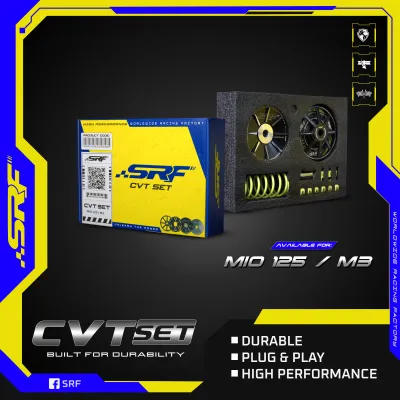
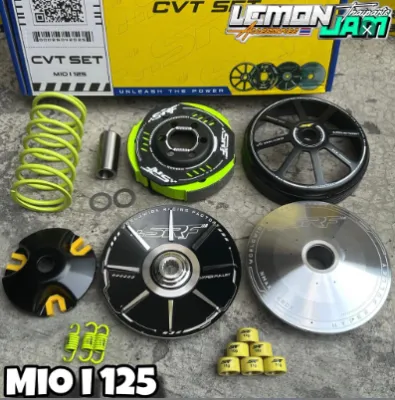
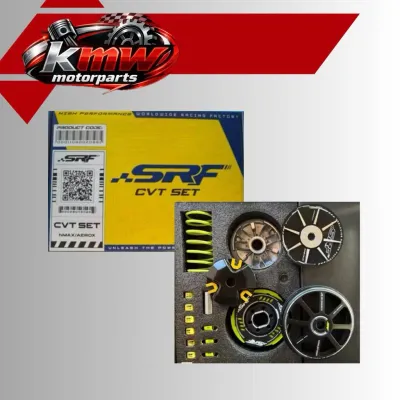
Prices are valid at publication and may change. Please refer to the product page for the latest price.
Installing an incompatible or generic CVT set introduces severe operational risks. A belt that is slightly too long or too narrow will slip against the pulley faces, generating extreme friction and heat that can cause the belt to snap under load. Conversely, a belt that is too short puts immense strain on the crankshaft and transmission bearings, potentially causing permanent engine damage. Mismatched roller weights or incorrect pulley angles will result in sluggish acceleration, poor fuel economy, and a frustrating loss of top-speed performance, particularly during demanding stop-and-go commutes in heavy metropolitan traffic.
Many riders mistakenly believe that CVT components are universal, assuming that any parts designed for a specific engine displacement will automatically fit their vehicle. This misconception often leads to costly repairs. A CVT set must be treated as a highly integrated, model-specific system where every sub-component is engineered to work in perfect harmony with the rest of the drivetrain.
Step-by-Step Guide to Identifying Your SRF CVT Specifications
Finding the correct specifications for your SRF motorcycle requires a systematic approach to prevent purchasing errors. The first and most reliable step is to locate the exact model name, manufacturing year, and engine displacement (cc) of your vehicle. This information is typically stamped on the metal chassis plate—often found under the seat bucket, near the fuel tank, or on the frame neck—and is also clearly printed on your official Land Transportation Office (LTO) Certificate of Registration (CR).
Once you have documented these vehicle details, the next step is to cross-reference the Original Equipment Manufacturer (OEM) part numbers. You can find these unique identifiers in your motorcycle’s owner’s manual or by consulting official dealer parts catalogs. If you do not have access to the physical manual, authorized SRF service centers in your local area can look up the precise part numbers using your motorcycle’s Vehicle Identification Number (VIN) or engine number. Matching the OEM part number is the single most effective way to guarantee compatibility before making a purchase.
If your documentation is missing or your motorcycle has been modified by a previous owner, you may need to physically measure the existing CVT components to confirm their dimensions. To do this safely, use a digital vernier caliper to measure the exact width and outer diameter of the roller weights, as well as the outer diameter of the variator pulley. For the drive belt, look for the printed specification numbers on the outer rib of the belt, which typically indicate the belt width, length, and face angle (for example, 19.5 x 743 x 28). If the markings have worn away, you can measure the outer circumference of the belt using a flexible measuring tape, though physical measurement of a worn belt may be slightly inaccurate due to stretching.
Given the wide variety of scooter models and model-year updates in the Philippine market, it is highly recommended to consult reputable, authorized motorcycle parts shops or official SRF dealers to verify fitment. This is particularly crucial if you ride an older or discontinued SRF model, as manufacturers occasionally update internal transmission specifications mid-production. Bringing your old, worn parts to the shop to perform a side-by-side physical comparison with the new CVT set remains one of the most reliable ways to verify that the mounting splines, shaft diameters, and overall dimensions match perfectly.
OEM vs. Aftermarket CVT Sets: Which Fits Your Riding Needs?
When shopping for a replacement srf cvt set, you will generally choose between Original Equipment Manufacturer (OEM) components and aftermarket performance kits. OEM CVT sets are produced by or directly authorized by the motorcycle manufacturer to meet the exact specifications of your vehicle when it rolled off the assembly line. These parts are engineered with a primary focus on reliability, smooth power delivery, and long-term durability. For daily commuters who rely on their SRF motorcycle for consistent, trouble-free transportation through city traffic, OEM sets are almost always the best choice as they restore factory-standard performance and guarantee perfect fitment without the need for additional tuning.

On the other hand, aftermarket or performance CVT sets are designed for riders who want to modify their motorcycle’s power delivery characteristics or accommodate specific riding conditions. These kits often feature lighter or heavier roller weights, modified variator ramp angles, and stiffer clutch springs. For example, if you frequently carry heavy payloads, ride with a pillion passenger, or regularly tackle steep mountain roads in provinces like Benguet or Rizal, an aftermarket set tuned for low-end torque can provide stronger hill-climbing acceleration. Conversely, riders seeking a higher top speed on open highways may opt for aftermarket variators designed to push the drive belt slightly higher up the pulley face.
Cost and local market availability also play a major role in this decision. In the Philippines, OEM parts are widely distributed through authorized dealership networks and reputable local shops, typically falling into a broad price band of ₱1,500 to ₱4,000 depending on the specific model. High-quality aftermarket performance sets from established, reputable brands can range from mid-tier prices to premium investments, often spanning ₱3,000 to ₱8,000+ depending on the materials used and the completeness of the kit.
While exploring your options, it is vital to avoid unbranded, excessively cheap, or counterfeit CVT components commonly found on unregulated online marketplaces. These low-cost imitations often bypass essential quality control checks and are manufactured using substandard alloys or weak rubber compounds. Installing a counterfeit drive belt or a poorly cast variator pulley can lead to catastrophic transmission failure at high speeds, potentially locking up the rear wheel, damaging the engine casing, and putting your safety at serious risk. Always prioritize safety and durability over a cheap price tag by purchasing from authorized distributors.
Essential CVT Components to Check Before Buying a Replacement Set
A complete CVT overhaul is not always necessary; sometimes, only specific components require replacement. Understanding the function and wear patterns of each part will help you decide whether to purchase a full, pre-packaged srf cvt set or individual replacement pieces.
Drive Belt The drive belt is the most critical wear item in the entire transmission system. It must be inspected regularly for signs of physical degradation, such as cracking along the teeth, fraying of the side cords, or a noticeable reduction in width. A worn belt that has lost its original width will sit lower in the front pulley, resulting in a loss of top-speed performance and poor acceleration. When buying a replacement, always verify that the belt’s material composition (such as aramid fiber reinforcement) and physical dimensions match your vehicle manufacturer’s exact specifications to prevent premature snapping.
Roller Weights Roller weights are small, cylindrical weights housed inside the front variator pulley that dictate how quickly the transmission shifts. Over time, the constant sliding action inside the variator ramps causes these rollers to develop flat spots, which prevents them from rolling smoothly. This wear directly disrupts the engine’s power band, causing inconsistent acceleration, sluggish performance, or a vibrating sensation during takeoff. When selecting replacement rollers, matching the manufacturer’s recommended weight (measured in grams) is crucial for maintaining factory-standard performance, though slight adjustments can be made if you are intentionally tuning for acceleration or top speed.
Clutch and Bell The clutch and bell assembly governs how the transmission engages and disengages when stopping and starting. You must inspect the clutch shoes for glazing—a smooth, shiny surface caused by excessive heat that leads to slipping and shuddering upon takeoff. The clutch bell should be checked for deep grooves, scoring, or discoloration (often turning blue from extreme heat), which indicates warping. Additionally, the small clutch springs must maintain proper tension; weakened springs will cause the clutch to engage too early at low RPMs, causing the engine to bog down.
Pulleys and Ramps (Variators) The pulleys and ramp plates, commonly referred to as the variator assembly, must have perfectly smooth, flat faces where they contact the drive belt. Inspect these aluminum faces for wear grooves or ridges carved by the belt over thousands of kilometers of riding. If grooves are present, a new belt will quickly wear down or slip, failing to transition smoothly across the pulley face. The ramp plate and its plastic slide pieces must also be checked for wear to ensure the variator moves freely along the crankshaft without binding.
Decision Framework When deciding between a full CVT kit and individual parts, consider the overall mileage and condition of your transmission. If multiple components show signs of moderate wear, purchasing a complete, matched CVT overhaul kit is often the most cost-effective and reliable solution, as it ensures all parts wear at the same rate and work in perfect harmony. If only the drive belt or the roller weights are worn while the pulleys and clutch remain in pristine condition, replacing those individual components is a perfectly acceptable and budget-friendly approach.
Installation Boundaries and Maintenance Tips for SRF CVT Systems
Performing maintenance or replacing components on your SRF motorcycle’s CVT system requires specialized tools and strict adherence to safety protocols. To complete this task safely, you will need a dedicated clutch holding tool or a variator holder to secure the pulleys, a high-quality socket set, and a calibrated torque wrench. While some mechanics use electric or pneumatic impact wrenches for quick disassembly, using an impact wrench for reassembly is highly discouraged, as it can easily strip the delicate threads on the crankshaft or over-tighten the nuts, leading to catastrophic engine damage.
It is critical to recognize the safety boundaries of DIY maintenance. Before starting any work, always consult your motorcycle’s original manufacturer service manual and the specific instructions provided with your replacement CVT set. If you encounter seized crankshaft nuts, damaged splines on the shaft, or stripped threads, immediately stop the procedure and consult a qualified professional mechanic. Attempting to force a damaged component can ruin the engine’s crankshaft, turning a simple CVT replacement into an incredibly expensive engine rebuild.
When installing the new CVT components, adhering to the manufacturer’s exact factory torque specifications is absolutely vital. Under-tightening the variator or clutch nut can cause the assembly to spin loose while riding, destroying the transmission casing and locking the rear wheel. Conversely, over-tightening can stretch the threads or crush the internal bearings. Always use a calibrated torque wrench to tighten all fasteners to the precise Newton-meter (Nm) values specified in your service manual.
Once the new CVT set is successfully installed, a proper break-in procedure is essential to ensure long-term durability. For the first 100 to 200 kilometers, avoid full-throttle acceleration, heavy payloads, and high-speed highway riding. This gentle break-in period allows the new drive belt to seat itself perfectly against the pulley faces and prevents glazing of the new clutch shoes.
To keep your CVT system performing optimally in the tropical, high-humidity environment of the Philippines, establish a routine maintenance schedule. Every 5,000 to 8,000 kilometers, remove the CVT cover to clean out accumulated belt dust and road debris using a dry brush or compressed air. Never use harsh chemical solvents or oil-based cleaners inside the CVT casing, as any grease or oil contamination on the pulley faces or belt will cause immediate slipping and ruin the transmission. Regularly inspect the CVT air filter—if equipped—and replace it promptly to prevent dirt and moisture from entering the housing.
Frequently Asked Questions (FAQ)
How often should I replace the CVT belt on my SRF motorcycle?
The replacement interval for your CVT belt depends heavily on your riding habits, payload, and local environmental conditions. As a general guideline, most manufacturers recommend replacing the drive belt every 15,000 to 20,000 kilometers. However, given the hot, humid climate and frequent stop-and-go traffic in the Philippines, you should visually inspect the belt for cracks, fraying, or a reduction in width every 5,000 to 8,000 kilometers. Always refer to your SRF owner’s manual for the official mileage threshold and replace the belt immediately if you observe any physical signs of wear, regardless of the current mileage.
Can I mix OEM and aftermarket parts inside the CVT system?
While it is physically possible to mix certain OEM and aftermarket components, doing so requires extreme caution and precise compatibility checks. You can safely swap out individual parts like roller weights or clutch springs for aftermarket equivalents, provided their physical dimensions match the OEM specifications perfectly. However, you should never mix mismatched variator halves, ramp plates, or incompatible clutch components from different brands, as this can disrupt the alignment of the belt and cause uneven wear. For the safest and most reliable power transfer, keeping the entire system uniform—either fully OEM or using a single, matched aftermarket kit—is highly recommended.
What are the signs that my CVT rollers are worn out?
Worn CVT rollers typically reveal themselves through distinct changes in your motorcycle’s performance. The most common symptom is sluggish or delayed acceleration, where the engine revs high but the vehicle takes longer to gain speed. You may also notice inconsistent engine RPMs at steady cruising speeds or a distinct vibrating sensation during takeoff. Physically, worn rollers will lose their perfectly round shape and develop flat spots or visible cracks on their outer plastic sleeves. If you experience any of these symptoms, remove the variator cover to inspect the rollers and replace them if they are no longer perfectly spherical.
Community discussion
Share your experience or ask a question. Comments are reviewed before publication.