
Choosing the right Daytona pulley set for your scooter requires matching the physical dimensions of your engine’s crankshaft with the specific pulley variant, then selecting a ramp profile that aligns with your daily riding conditions. Because continuously variable transmissions (CVTs) rely on precise mechanical tolerances, installing an incompatible pulley can lead to severe belt slippage, crankshaft damage, or poor engine performance. By verifying your scooter’s exact specifications and understanding how different roller weights and ramp angles alter your transmission’s behavior, you can achieve smoother acceleration through congested city streets or better top-end response on open highways.
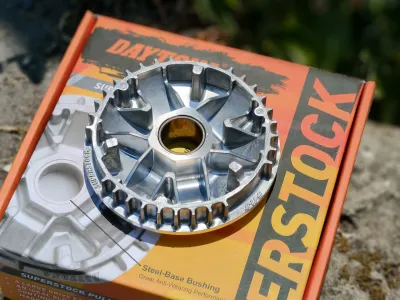
The front pulley, or variator, is the heart of your scooter’s automatic transmission system. It dynamically changes the gear ratio by using centrifugal force to push the drive belt outward as engine speed increases. In tropical climates like the Philippines, where high ambient temperatures, heavy humidity, and intense stop-and-go traffic put extra thermal stress on CVT components, upgrading to a high-quality pulley set can significantly improve rideability and prevent the transmission from bogging down under load.
However, a pulley set is not a universal upgrade. A variant that works perfectly on one scooter model may cause severe engine strain or fail to fit entirely on another, even if the engines share a similar displacement. To get the most out of your upgrade without compromising reliability, you must systematically verify compatibility, match the pulley’s design to your typical riding routes, and follow precise installation protocols.
Products mentioned in this guide
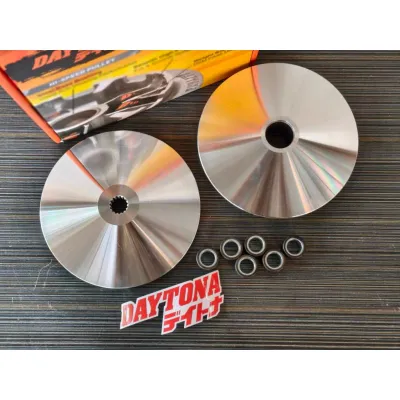
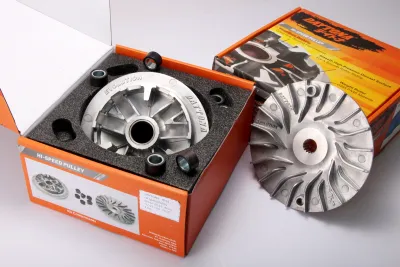
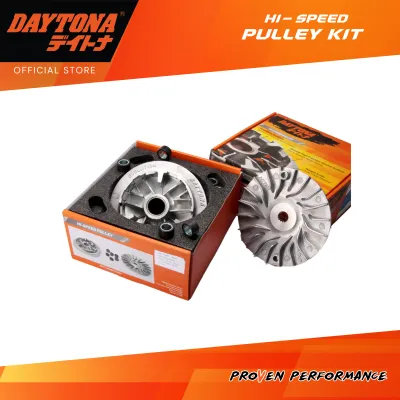
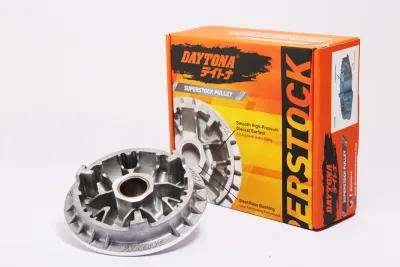
Prices are valid at publication and may change. Please refer to the product page for the latest price.
Verify Scooter Compatibility and Transmission Limits
Before purchasing any aftermarket transmission component, you must confirm that the pulley set is engineered specifically for your scooter’s make, model, production year, and engine displacement. Motorcycle manufacturers frequently update CVT dimensions even within the same model line, meaning a pulley designed for an older model year might not fit a newer release. Always consult the official Daytona application chart or product documentation rather than relying on general online forum recommendations or broad category listings on an online marketplace.
To ensure a precise physical match, you should compare the original equipment (OE) pulley specifications with those listed on the Daytona product packaging. Key measurements to verify include the pulley’s outer diameter, the slide boss outer and inner diameter, and the exact crankshaft spline count. The crankshaft splines must interlock perfectly with the fixed drive face of the pulley; even a fraction of a millimeter of variance in the boss diameter or a single digit difference in spline count will prevent the pulley from seating correctly, leading to severe wobble and potential crankshaft damage.
Under no circumstances should you attempt to force a mismatched pulley onto your scooter’s crankshaft. Modifying the splines with hand tools, filing down components, or using custom spacer shims to compensate for an incorrect boss diameter are critical safety hazards that can lead to catastrophic transmission failure while riding. If the physical dimensions do not align perfectly with your original equipment manufacturer (OEM) specifications, stop the installation immediately and return the component for the correct model variant.
Match the Pulley Profile to Your Riding Style
Your daily riding environment dictates the ideal pulley configuration for your scooter. For riders navigating the dense, stop-and-go traffic of urban areas, a daily commuting setup is highly recommended. Commuting-focused pulley profiles feature gradual ramp angles designed to deliver smooth, predictable low-speed acceleration, which helps maintain comfortable mid-range cruising and preserves fuel efficiency during long idling periods in tropical heat. This linear power delivery makes navigating tight spaces between vehicles safer and more manageable.

Conversely, if your daily route involves long stretches of open highway or steep, hilly terrain, a performance or touring-oriented pulley profile may be more suitable. These variants are engineered with aggressive ramp angles that facilitate higher RPM engagement, allowing the engine to reach its power band more quickly for rapid overtaking and sustained top-speed acceleration. This setup helps the scooter maintain momentum when climbing inclines or carrying heavier passenger loads over long distances.
However, choosing a performance-oriented pulley profile involves distinct trade-offs that you must carefully evaluate before upgrading. Aggressive ramp profiles often reduce low-speed smoothness, causing the scooter to shudder slightly during initial takeoff as the clutch engages at higher engine speeds. Additionally, running your engine at consistently higher RPMs can increase mechanical noise, accelerate wear on internal CVT components, and noticeably elevate your overall fuel consumption, requiring more frequent maintenance intervals.
Evaluate Key Component Specifications Before Buying
Understanding the physical design of the pulley helps you anticipate how it will alter your scooter’s power delivery. The ramp angles and roller track designs inside the variator directly control how quickly the roller weights slide outward under centrifugal force, which in turn dictates how fast the drive belt transitions up the pulley face. Smoother, longer tracks generally provide a linear acceleration curve, while steeper, shorter tracks force quicker gear-ratio transitions that can increase belt wear if not paired with the correct belt tension.
Roller weight selection is another critical variable that you must adjust based on your specific performance goals. Daytona pulley sets typically come with recommended roller weights, or require you to purchase them separately based on a target weight range. As a general rule, lighter roller weights require higher engine RPMs to push the pulley outward, resulting in quicker initial acceleration but potentially lower top-end speed. Conversely, heavier roller weights slide outward at lower RPMs, favoring fuel economy and top-speed cruising at the expense of off-the-line responsiveness.
When evaluating the durability of a pulley set, rely strictly on the manufacturer’s stated material properties, surface coating types, and recommended maintenance intervals. High-quality aluminum alloys and specialized low-friction coatings on the roller tracks help minimize wear from heat and dust, which is especially important in dusty, humid tropical environments. Avoid assuming superior longevity based solely on the brand name; instead, establish a strict inspection schedule to check for flat spots on the rollers and wear grooves on the pulley face every few thousand kilometers.
Installation Requirements and Safety Boundaries
Installing a new pulley set requires specific mechanical tools and a clear understanding of CVT safety boundaries to prevent costly damage to your engine. You must use a dedicated variator holding tool or a fly-wheel holder to secure the pulley face while loosening or tightening the crankshaft nut. Using improvised tools like screwdrivers or impact wrenches without a holder can easily chip the pulley fins or strip the crankshaft threads. A calibrated torque wrench is absolutely essential to tighten the crankshaft nut to the exact torque specification defined in your scooter’s official service manual.
Before placing the new Daytona pulley onto the crankshaft, take the time to thoroughly clean the entire CVT casing using an approved parts cleaner to remove accumulated belt dust, grease, and road grime. Inspect your existing drive belt for signs of wear, such as cracking along the teeth, frayed edges, or glazing on the contact surfaces. Installing a high-performance pulley set with a worn or out-of-specification drive belt increases the risk of belt slippage, which generates excessive heat and can lead to sudden belt breakage at high speeds.
If you encounter any difficulties during the disassembly process, such as a seized crankshaft nut, visible damage to the crankshaft splines, or if you do not have access to the manufacturer’s official torque specifications, stop immediately. Attempting to force components together or guessing torque values can result in the pulley coming loose during operation, which can destroy the engine casing and cause a sudden loss of control. In these situations, always consult a qualified motorcycle mechanic to complete the installation safely.
Frequently Asked Questions (FAQ)
Do I need to change the drive belt when installing a new pulley set?
While it is not always mandatory to replace the drive belt, you must thoroughly inspect its physical condition before installing your new pulley set. Measure the belt’s width with a caliper and compare it to the service limit specified in your scooter’s manual; a belt that has worn too thin will not ride high enough on the new pulley faces, severely limiting your top speed. If the belt shows any signs of cracking, dry rot, or glazing, or if the Daytona installation guide specifies a high-durability belt for your new setup, you should replace it to ensure optimal performance and safety.
Can I mix a Daytona pulley with my original clutch and torque drive?
Yes, you can generally use a Daytona front pulley set in combination with your scooter’s original rear clutch, clutch bell, and torque drive assembly. However, achieving a perfectly balanced transmission response often requires fine-tuning the rear components to match the new front pulley’s characteristics. If you experience belt slippage or a lag in acceleration when exiting turns, you may need to consult the manufacturer’s tuning guidelines to select a stiffer contra spring or adjust your clutch spring tension to match the faster shifting rate of the new front variator.
Community discussion
Share your experience or ask a question. Comments are reviewed before publication.