
Choosing the correct disclock for motorcycle protection depends on matching physical dimensions, material strength, and local environmental conditions to your specific bike. A disc lock serves as a highly portable, highly effective physical deterrent that clamps directly onto your brake rotor, preventing the wheels from turning. However, buying a lock without verifying its specifications can lead to a useless accessory that does not fit your rotor or, worse, causes severe damage to your braking system.
To find the right fit, you must prioritize measuring your brake rotor’s ventilation holes and thickness before making any purchase. A proper lock must feature a pin diameter that fits smoothly through these holes, a throat depth that clears the rotor’s outer edge, and a robust lock body material capable of resisting physical attacks. While these locks are highly effective at preventing roll-away or ride-off theft, they work best when integrated into a layered security system that includes chains, anchors, or tracking devices.
Match the Lock Type to Your Parking Environment
Selecting a disclock for motorcycle security requires analyzing where you park, how long your vehicle remains unattended, and the local threat level. Different environments demand different levels of security and active deterrence. By understanding the functional trade-offs between mechanical models and alarm-equipped units, you can choose a device that provides optimal protection without unnecessary complexity.
Products mentioned in this guide
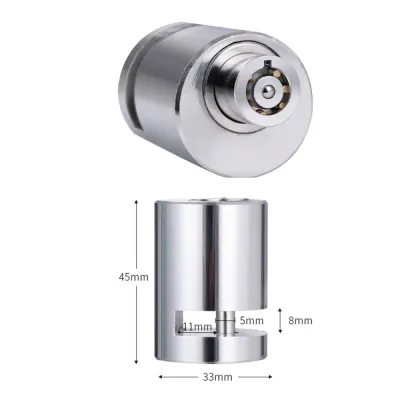
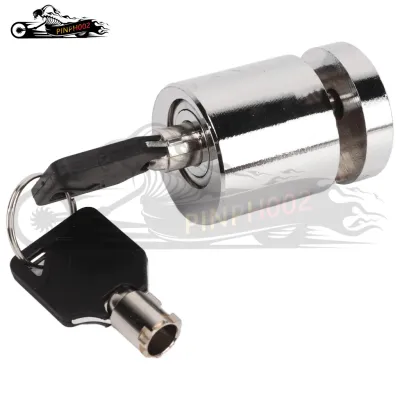
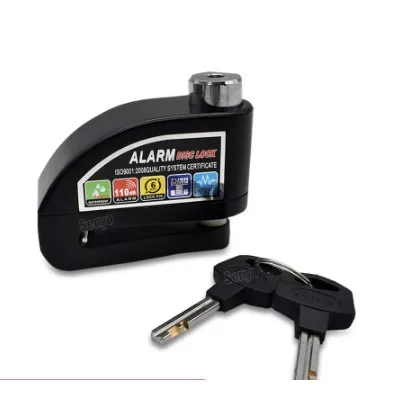
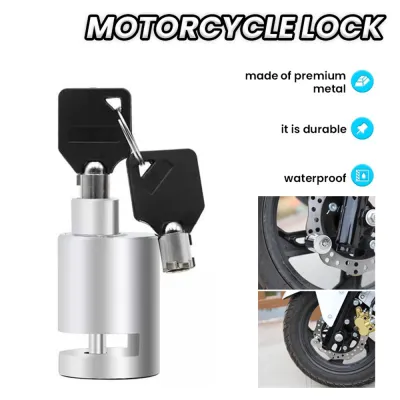
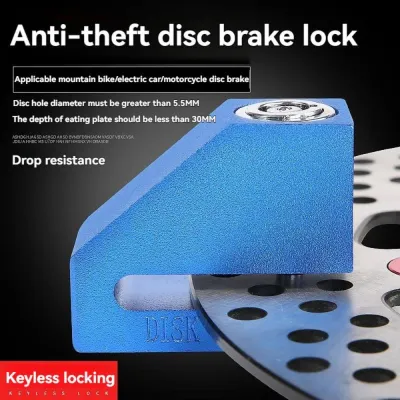
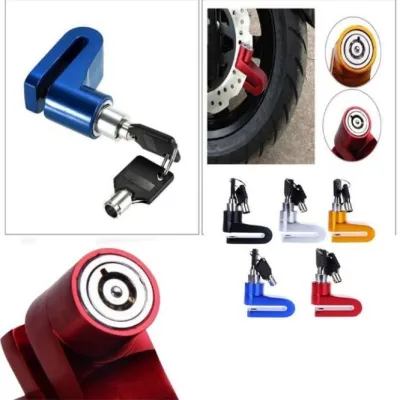
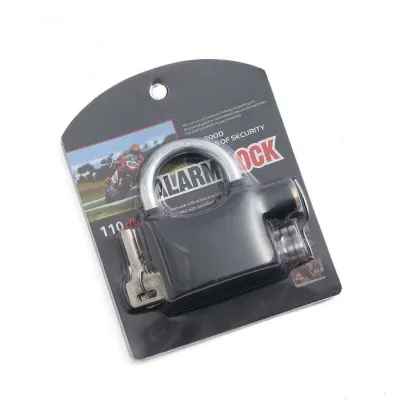
Prices are valid at publication and may change. Please refer to the product page for the latest price.
Standard Mechanical Disc Locks
Standard mechanical disc locks rely entirely on physical strength to secure your motorcycle. These devices are best suited for low-risk scenarios, such as brief daytime stops, secure office parking lots, or as a secondary lock paired with a heavy-duty chain. Because they lack electronic components, mechanical locks are exceptionally lightweight, compact, and easy to store in a small under-seat compartment or a jacket pocket.
The primary advantage of a mechanical lock is its absolute reliability. With no batteries to drain and no sensitive sensors to fail, these locks perform consistently regardless of extreme weather conditions or long periods of storage. However, their main limitation is their passive nature. While they physically prevent the wheel from rotating, they do not alert you or nearby bystanders if a thief attempts to pick the lock, cut through the rotor, or lift the entire motorcycle into the back of a utility vehicle.
Disc Locks with Built-In Alarms
For high-risk environments, overnight street parking, or long-term unattended storage, a disc lock with a built-in alarm offers an active layer of defense. These devices combine a physical steel barrier with an electronic movement and shock sensor. If a thief tampers with the lock, moves the handlebars, or uprights the motorcycle, the lock triggers a piercing siren—typically ranging from 110 to 120 decibels—designed to startle the intruder and draw immediate attention to the scene.
Operating an alarmed lock requires diligent maintenance and situational awareness. You must regularly inspect and replace the batteries to ensure the siren remains functional, especially before parking in high-risk zones. Additionally, high-quality models offer adjustable sensor sensitivity to prevent frustrating false alarms triggered by heavy tropical winds, passing trucks, or stray animals. Because these locks contain sensitive electronic circuit boards, ensuring the casing features high-grade water resistance is essential to prevent short circuits during heavy downpours.
Verify Fitment: Pin Diameter, Throat Depth, and Rotor Clearance
Before purchasing any lock, you must verify its physical compatibility with your motorcycle’s braking system. Never assume a lock will fit based solely on generic online compatibility lists or your motorcycle’s engine displacement. Brake rotors vary wildly across manufacturers, models, and production years, making precise physical measurements non-negotiable.

To ensure a perfect fit, focus on three critical dimensions:
- Pin Diameter: This is the thickness of the locking pin that slides through the ventilation holes or slots in your brake rotor. Common pin sizes range from 5mm to 14mm. The pin must be slightly smaller than the rotor's holes to slide in smoothly, but not so small that it allows excessive movement, which can give thieves leverage for prying tools.
- Throat Depth: This measurement represents the distance from the locking pin to the inner back wall of the lock body. It determines how far onto the brake disc the lock can slide. If the throat depth is too shallow, the pin will not line up with any of the ventilation holes on the rotor.
- Rotor Clearance and Gap Width: The slot or gap in the lock body must be wider than the overall thickness of your brake rotor. Most motorcycle rotors are between 4mm and 7mm thick. Ensure the lock's gap provides enough clearance to slide over the disc easily without scraping the rotor faces.
To obtain these measurements, avoid guessing or using a soft tape measure. Use a digital vernier caliper or a precise steel ruler to measure the diameter of your rotor’s cooling holes and the distance from the outer edge of the disc to the inner edge of those holes. Check your motorcycle manufacturer’s workshop manual for any specific clearances or limitations regarding aftermarket accessories attached to the braking assembly.
Attempting to force a lock that does not fit perfectly poses severe safety risks. Forcing an oversized pin into a small rotor hole can warp the brake disc, damage the delicate ABS sensor ring, or scratch the caliper assembly. A jammed lock can also become incredibly difficult to remove, potentially requiring professional extraction that can permanently ruin your front-end components.
Evaluate Build Quality and Weather Resistance
A disc lock is only as secure as the materials used to construct it. When evaluating build quality, prioritize materials that resist common physical attacks, such as freezing sprays, hammer blows, hacksaws, and bolt cutters. Hardened steel alloys and stainless steel are the industry standards for high-security locks, offering excellent tensile strength and resistance to cutting tools.
While hardened steel provides superior resistance against aggressive physical attacks, it requires high-quality surface treatments to survive harsh environmental conditions. In humid, tropical, or coastal regions, moisture and salt air can rapidly corrode unprotected steel, leading to internal rust that can seize the locking mechanism. Stainless steel offers natural corrosion resistance, making it an excellent choice for riders frequently exposed to heavy rain and coastal environments, though it can be slightly more expensive.
Beyond the lock body, pay close attention to the lock cylinder design. Cheap locks often use simple pin-tumbler cylinders that can be quickly picked or raked by experienced thieves. Look for disc-detainer or high-security tubular cylinders, which are notoriously difficult to pick and highly resistant to drilling attacks. A rotating drill guard over the keyway adds an extra layer of protection by spinning freely when a drill bit attempts to bite into the metal.
Weatherproofing is equally critical for long-term reliability. Ensure the lock features a spring-loaded or sliding keyway dust cover to prevent road grime, mud, and rainwater from entering the cylinder. For alarmed models, verify that the battery compartment and electronic components are completely sealed with high-quality rubber gaskets, and check for built-in drainage holes that allow water to escape the lock body rather than pooling inside the mechanism.
Prevent Accidents: Safety Habits and Daily Maintenance
One of the greatest risks associated with using a disc lock is not theft, but rider forgetfulness. Attempting to ride away with a disc lock still attached to your front or rear rotor can result in catastrophic damage. The lock will spin until it violently impacts the front forks, brake caliper, or fender, instantly locking the wheel, throwing the rider off the bike, and causing thousands of pesos in mechanical damage.
To eliminate this risk, establish strict safety habits and use highly visible reminders every time you secure your motorcycle:
- Use a Bright Reminder Cable: Always connect a brightly colored, coiled reminder cable from the disc lock directly to your handlebar grip or throttle. This provides an unavoidable visual cue when you sit on the bike.
- Place a Guard Over the Ignition: If your lock comes with a carrying pouch, place the empty pouch over your ignition key slot or handlebar grip while the lock is active.
- Position the Lock Strategicially: When mounting the lock on your front rotor, position it immediately ahead of the front fork or brake caliper. This minimizes the distance the wheel can roll before making contact, reducing the kinetic energy and potential damage if you accidentally attempt to move the bike.
Proper storage and maintenance will extend the life of your lock and ensure it functions reliably when you need it most. Store the lock in a dedicated frame mount or a secure under-seat compartment rather than letting it bounce around in a top box or backpack, which can damage the internal electronics of alarmed models.
Regularly lubricate the lock cylinder to prevent sticking and jamming. Use only lock-specific dry lubricants, such as high-quality graphite powder or specialized dry PTFE sprays. Never use heavy wet oils, grease, or multi-purpose penetrating sprays like standard WD-40 inside the keyway; these substances attract road dust, sand, and pocket lint, creating a thick paste that will eventually jam the internal discs or pins.
When applying any lubricant to your lock, you must prevent any overspray or runoff from contaminating your brake rotors or brake pads. Contaminating these surfaces with oil or grease drastically reduces friction, leading to severe brake fade or complete braking failure. If any lubricant accidentally contacts your braking components, clean the area immediately and thoroughly using an authorized brake cleaner and a clean, lint-free microfiber cloth.
Frequently Asked Questions (FAQ)
Can I use the same disc lock on the front and rear brake rotors?
You can only use the same disc lock on both rotors if their physical dimensions are identical, which is rarely the case. Front and rear brake rotors typically feature different thicknesses, ventilation hole diameters, and overall clearances. Front rotors are often larger and thinner to handle primary braking forces, while rear rotors tend to be thicker with different slot configurations. Always measure both the front and rear rotors individually before attempting to swap a single lock between them, as forcing a lock onto an incompatible rear rotor can damage your rear braking system.
Are disc locks enough to prevent motorcycle theft?
While a high-quality disc lock is an exceptional deterrent against roll-away theft, it is not a complete security solution on its own. Determined thieves can easily lift a locked motorcycle off the ground and carry it into the back of a waiting van or pickup truck in a matter of seconds. To achieve comprehensive security, especially in high-risk or overnight parking situations, you should pair your disc lock with a heavy-duty, cut-resistant chain anchored to a permanent, solid fixture like a concrete post or ground anchor. Additionally, installing a GPS tracker can help locate your motorcycle if thieves manage to bypass your physical barriers.
Community discussion
Share your experience or ask a question. Comments are reviewed before publication.