
Choosing the right aftermarket continuously variable transmission (CVT) components is one of the most effective ways to customize your scooter’s power delivery. Among the various options available, sliding roller weights and variators from specialized manufacturers like DR Pulley are popular upgrades for riders looking to optimize their drivetrain. Selecting the correct variant requires a systematic approach: you must first identify your scooter’s original equipment manufacturer (OEM) CVT specifications, assess your typical riding environment, verify exact physical compatibility with your engine crankshaft, and then calculate the appropriate weight adjustments relative to your stock setup.
In the Philippines, scooters serve as essential daily workhorses, often subjected to intense tropical heat, high humidity, and demanding stop-and-go traffic. These environmental factors place significant thermal and mechanical stress on the CVT system. Simply purchasing a generic upgrade kit without verifying compatibility can lead to poor performance, accelerated belt wear, or even severe engine damage. By understanding the mechanical relationship between the variator, the sliding rollers, and the drive belt, you can tailor your scooter’s acceleration and top-speed characteristics to match your specific daily needs while preserving the longevity of your machine.
Identify Your Scooter's CVT Specifications and Riding Needs
Before purchasing any aftermarket transmission components, you must establish a clear baseline by identifying your scooter’s factory CVT specifications. The continuously variable transmission relies on a delicate balance of centrifugal force, spring tension, and friction. To begin, consult your vehicle’s owner’s manual or official service guide to locate the original equipment manufacturer (OEM) variator dimensions, the outer diameter and width of the stock roller weights (usually measured in millimeters), and the exact factory weight specification (measured in grams).
Products mentioned in this guide
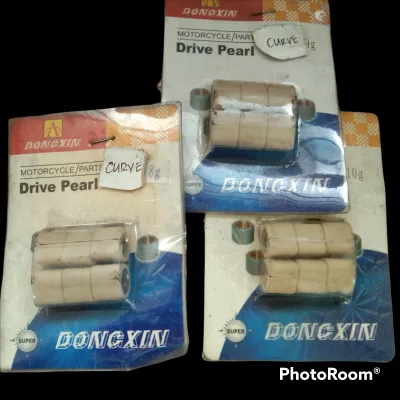
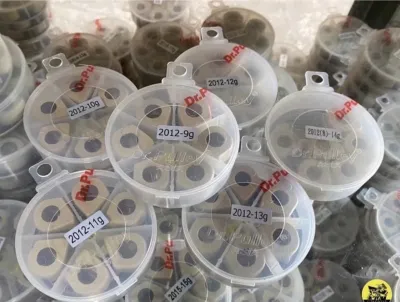
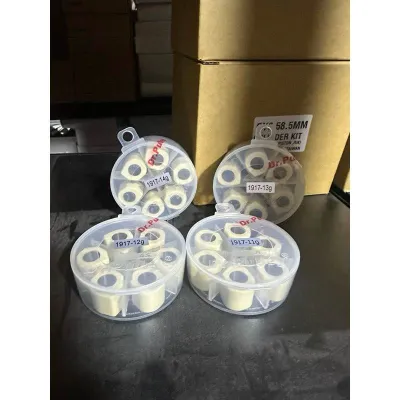
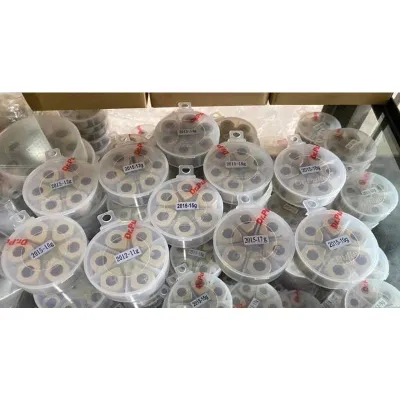
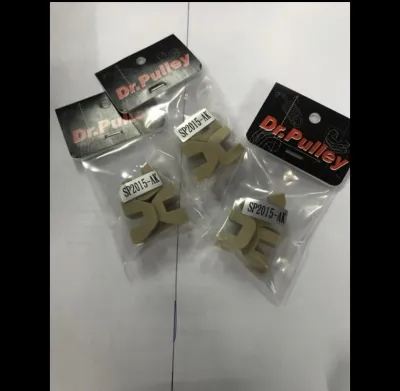
Prices are valid at publication and may change. Please refer to the product page for the latest price.
Once you have documented your scooter’s baseline specifications, evaluate your primary riding conditions and performance goals. Scooter riders in urban areas often face prolonged stop-and-go traffic, where quick low-end acceleration is highly desirable to safely navigate tight spaces and merge with fast-moving vehicles. Conversely, if your daily route involves carrying heavy cargo, riding with a pillion passenger, or climbing steep inclines—such as the mountain roads of Antipolo or the highlands of Benguet—your transmission needs to deliver sustained torque without bogging down. For riders who frequently travel along open highways, maintaining a relaxed cruising speed at a lower engine RPM is often the priority to improve fuel efficiency and reduce engine vibration.
It is crucial to recognize that changing your transmission components does not increase the engine’s total horsepower; instead, it alters the power delivery curve by changing when and how the variator shifts. Adjusting the roller weights shifts the engine’s operating RPM range during acceleration. A clear understanding of whether you prioritize immediate off-the-line acceleration or a higher top speed will guide your selection process. Because every modification involves a trade-off, defining your primary riding environment ensures you select a configuration that enhances your daily commute rather than making the scooter uncomfortable or inefficient to ride.
Verify DR Pulley Physical Compatibility
Physical compatibility is the most critical factor when selecting aftermarket CVT parts. You must never assume that a component will fit your scooter based solely on general categories, engine displacement, or visual similarities. To prevent costly compatibility errors, always cross-reference your scooter’s exact make, model, and year of manufacture with the official fitment charts and packaging labels provided by the component manufacturer.

When verifying compatibility, pay close attention to the critical physical dimensions of the variator and roller weights. The inner diameter of the variator boss must match your crankshaft’s outer diameter precisely to prevent play or wobble, which can rapidly destroy the crankshaft splines. Additionally, the ramp angles within the variator guide plate and the design of the sliding pieces must align perfectly with your scooter’s specific transmission case clearance. Sliding rollers, which feature a distinct non-cylindrical shape designed to maximize gear ratio range, require precise orientation within the variator channels. If the roller width or outer diameter deviates even slightly from the OEM specifications, the rollers can twist, bind, or flip inside the variator, causing severe belt misalignment and premature wear.
Forcing an incompatible pulley or incorrect roller size onto your scooter carries severe mechanical risks. A mismatched variator can cause the drive belt to ride too high or too low, leading to immediate belt slippage, excessive heat generation, or catastrophic belt failure at high speeds. In worst-case scenarios, an improperly seated variator can loosen during operation, stripping the crankshaft threads and requiring an expensive engine rebuild. If your exact scooter model and year are not explicitly listed on the product documentation, do not attempt installation; instead, contact the manufacturer or an authorized distributor to verify fitment.
Tune Roller Weights for Acceleration or Top Speed
Tuning your scooter’s performance relies on understanding the mechanical relationship between roller weight, centrifugal force, and engine RPM. Inside the variator, the roller weights are flung outward by centrifugal force as the engine spins faster, pushing the movable drive face inward and forcing the belt to ride higher, which effectively shifts the transmission into a higher gear. By altering the weight of these rollers, you change the engine speed at which this shifting process occurs.
Lighter roller weights require higher engine RPMs to generate the centrifugal force needed to push the variator face outward. Consequently, installing lighter rollers delays the upshift, keeping the engine in its higher RPM powerband longer. This results in significantly improved low-end torque, faster initial acceleration, and better hill-climbing capability, making it highly suitable for navigating steep inclines or heavy city traffic. However, because the engine remains at a higher RPM, this setup can reduce your top speed and increase fuel consumption during long-distance cruising.
Conversely, heavier roller weights generate greater centrifugal force at lower engine speeds, causing the variator to upshift earlier. This keeps the engine running at a lower, more relaxed RPM range, which is ideal for maintaining steady highway cruising speeds and maximizing fuel economy. The trade-off is a noticeable reduction in off-the-line acceleration and a tendency for the engine to struggle or bog down when climbing steep hills or carrying heavy loads.
To find the optimal balance for your riding style, use your scooter’s OEM factory roller weight as your baseline. Suspension and transmission specialists generally recommend making incremental adjustments, typically staying within 10% to 15% lighter or heavier than the stock weight. Avoid extreme weight deviations, as excessively light rollers can cause the clutch to engage at an uncomfortably high RPM or lead to belt slippage, while excessively heavy rollers can prevent the transmission from shifting properly, resulting in sluggish performance and poor overall drivability.
Safe Installation and Post-Upgrade Verification
Modifying your scooter’s transmission involves working with high-tension components and critical engine fasteners. Because improper assembly can compromise your safety on the road, it is essential to establish clear safety boundaries before beginning. Always refer to your scooter’s original manufacturer service manual for specific disassembly instructions, component clearances, and torque specifications. If you lack the proper tools or experience, have the components installed by a qualified motorcycle mechanic.
If you choose to perform the installation yourself, you must use the correct specialized tools. Never attempt to loosen or tighten the variator nut using makeshift tools, screwdrivers, or generic pliers, as this can easily chip the variator fins or bend the crankshaft. A proper CVT holding tool or flywheel holder is required to keep the assembly stationary while you use a calibrated torque wrench to secure the fasteners. Tightening the variator nut to the exact torque specification specified by your vehicle manufacturer is critical; under-tightening can cause the assembly to spin loose while riding, while over-tightening can strip the delicate crankshaft threads or crush the boss bushing.
Before reassembling the transmission, take the opportunity to inspect the surrounding components. Examine your drive belt thoroughly for any signs of cracking, fraying, glazing, or excessive wear, and replace it if it is near its service limit. Inspect the plastic slider pieces on the variator ramp plate for uneven wear or play, as worn sliders can prevent the variator from moving smoothly and cause erratic shifting.
Once the new pulley and rollers are installed and torqued to specification, conduct a thorough post-upgrade verification. After securing the cover, start the engine on its center stand and listen closely for any abnormal rattling, grinding, or whistling noises. Conduct your initial test ride in a safe, closed, and flat area away from traffic. Accelerate slowly to verify that the clutch engages smoothly, the transmission shifts without slipping, and the belt tracks properly. If you experience any unusual vibrations, slipping, or unexpected noises, stop riding immediately, turn off the engine, and consult a professional mechanic to diagnose the issue.
Frequently Asked Questions (FAQ)
Can I mix different roller weights in the same variator?
Mixing different roller weights in a single variator is highly discouraged and can lead to severe mechanical issues. While some riders attempt to mix weights—such as alternating three lighter rollers with three heavier rollers—to find a middle ground in performance, this practice creates uneven centrifugal forces within the variator. Because the heavier rollers slide outward faster and with more force than the lighter ones, they push against the ramp plate unevenly, causing the variator to tilt and bind on the boss. This uneven pressure leads to erratic shifting, rapid wear of the variator bushing, flat spots on the rollers, and can eventually damage the variator guide rails. To ensure smooth, balanced operation and protect your transmission, all rollers installed in your variator must be of the exact same weight, shape, and dimension.
How often should I inspect the DR Pulley and rollers?
You should inspect your aftermarket pulley and sliding rollers during your scooter’s routine CVT maintenance intervals, which typically occur every 5,000 to 8,000 kilometers, or whenever you perform a drive belt replacement. However, if you notice a sudden change in acceleration smoothness, a drop in top speed, or unusual vibrations coming from the transmission casing, you should open the CVT cover for an immediate inspection. During the inspection, clean away any accumulated belt dust and check the sliding rollers for flat spots, cracking, or signs of material degradation. Examine the variator ramp channels for grooves or wear, check the inner bushing for excessive play, and inspect the plastic guide sliders for wear. If you find significant wear on any single roller or slider, replace the entire set to maintain balanced performance and prevent damage to other drivetrain components.

Community discussion
Share your experience or ask a question. Comments are reviewed before publication.