
Choosing the right flyball weight for your Honda PCX 160 is one of the most effective ways to customize your scooter’s performance to match your daily riding conditions. Whether you navigate congested city streets or cruise along open provincial highways, adjusting the weight of these small components directly alters how your Continuously Variable Transmission (CVT) behaves. To make the correct choice, you must balance your acceleration needs, fuel efficiency goals, and typical passenger loads against the mechanical limits of your vehicle.
Understanding How Flyball Weights Affect Your PCX 160's CVT
The CVT in your Honda PCX 160 relies on a system of pulleys, a drive belt, and centrifugal force to change gear ratios seamlessly without manual shifting. Inside the front pulley assembly, known as the variator, sit the flyball rollers. As the engine spins faster, centrifugal force pushes these rollers outward along the ramp plates of the variator. This outward movement forces the movable drive face closer to the stationary face, squeezing the drive belt and forcing it to ride higher on the pulley, which effectively shifts the transmission into a higher gear ratio.
Lighter flyball rollers require higher engine speeds (RPM) to generate the centrifugal force needed to push the variator face outward. Consequently, the engine stays in a lower gear ratio longer, keeping the motor in its peak power band during initial acceleration. This results in a more responsive throttle feel and quicker acceleration from a complete stop, which is highly beneficial when pulling away from traffic lights or climbing steep hills.
Products mentioned in this guide
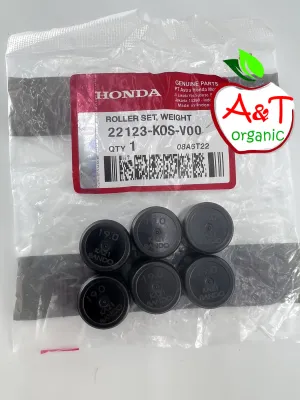
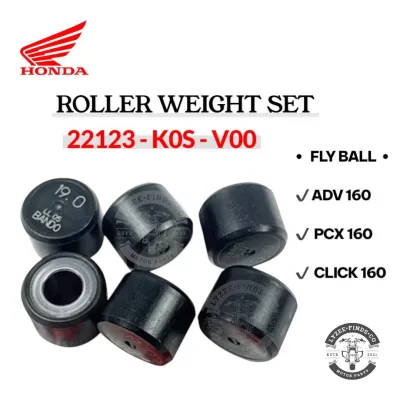
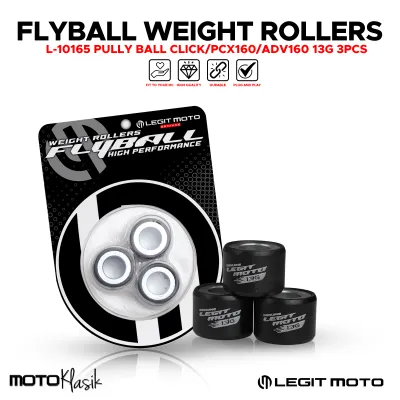
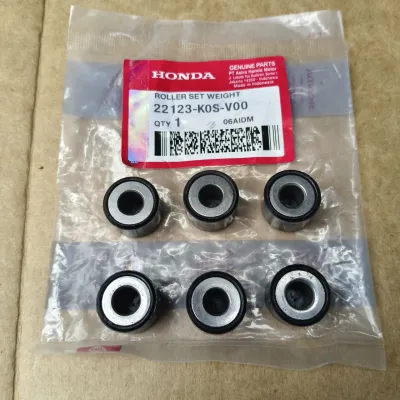
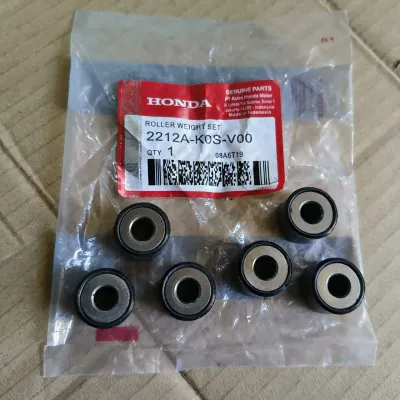
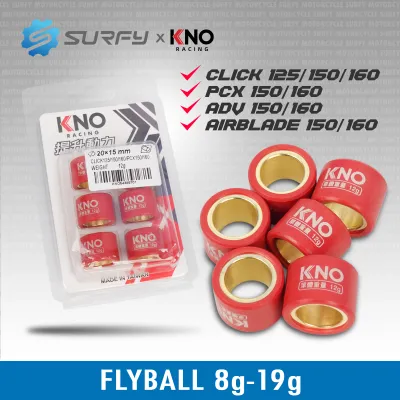
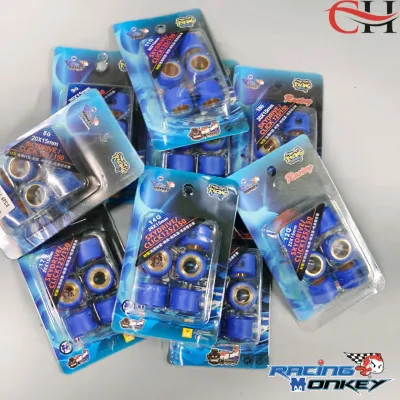
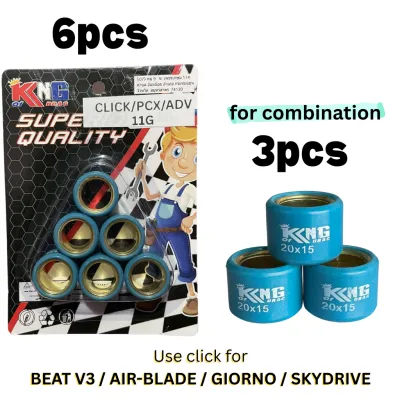
Prices are valid at publication and may change. Please refer to the product page for the latest price.
Conversely, heavier flyball rollers slide outward at lower engine speeds. This forces the CVT to shift into a higher gear ratio much earlier in the acceleration curve. While this reduces the engine’s RPM and can improve fuel economy during steady-state cruising, it can make the scooter feel sluggish or unresponsive when you need a sudden burst of speed to overtake another vehicle.
Identifying Your Riding Style and Performance Goals
To select the ideal flyball weight, you must first analyze your primary riding environment and typical payload. If your daily route consists of dense urban commuting with constant stop-and-go traffic, a lighter roller setup is generally preferred. The increased low-end responsiveness helps you maneuver through tight spaces and regain speed quickly after braking, making your daily commute less taxing on the engine’s acceleration lag.

For riders who frequently travel on long-distance highways or bypass roads, a heavier roller configuration offers distinct advantages. By keeping the engine RPM lower at cruising speeds, heavier rollers reduce engine vibration, lower operating temperatures, and optimize fuel consumption over long distances. This setup provides a smoother, more relaxed riding experience when maintaining a steady speed is the priority.
You must also account for the total weight your scooter carries. If you regularly ride with a passenger (pillion) or carry heavy delivery cargo, your engine requires more torque to move the extra mass. In these scenarios, slightly lighter rollers can prevent the engine from bogging down under load, ensuring you have sufficient climbing power when tackling steep inclines or elevated flyovers.
Checking OEM Specifications and Aftermarket Options
Before purchasing aftermarket flyball rollers, you must verify the original equipment manufacturer (OEM) specifications for your specific Honda PCX 160 model year. These specifications, including the factory roller dimensions and baseline weight, can be found in your official Honda service manual or by consulting an authorized dealer. Using the OEM baseline as your starting point is critical because even minor deviations can drastically alter your scooter’s performance.
When evaluating aftermarket options, physical compatibility is paramount. You must verify the exact outer diameter and width of the rollers to ensure they fit perfectly within your variator’s pockets. Installing rollers with incorrect dimensions can cause them to bind, flip, or wear unevenly, which can lead to severe variator damage, belt slippage, or sudden transmission failure while riding.
Always read product labels, manufacturer documentation, and compatibility charts carefully before making a purchase. Avoid unverified or generic components that do not explicitly state their dimensions and weight tolerances. High-quality aftermarket rollers are manufactured with precise weight tolerances and durable outer sleeves designed to withstand the high temperatures and friction generated inside the CVT casing.
Step-by-Step Guide to Selecting and Testing Your New Rollers
Modifying your CVT requires a systematic approach to ensure safety and achieve the desired performance outcomes.
First, establish your baseline by identifying the exact weight of your stock rollers. If you want quicker acceleration, plan to test rollers that are slightly lighter than stock. If you want lower cruising RPMs, look for rollers that are slightly heavier.
When selecting test weights, make changes in small, consistent increments—typically no more than one to two grams difference from the OEM specification. Drastic changes in weight can throw the CVT out of its functional operating range, leading to excessive engine revving without forward motion or a severe loss of acceleration.
Because CVT modification involves disassembling critical drivetrain components, safety is the highest priority. Accessing the variator requires removing the CVT casing and securing the pulley with specialized holding tools to safely loosen the variator nut. Improper torque during reassembly can cause the pulley to come loose, resulting in catastrophic engine damage or rear-wheel lockup. If you do not possess the proper tools, original-vehicle service instructions, or mechanical experience, you should have the new rollers installed by a qualified motorcycle mechanic.
Once installed, conduct structured road tests in a safe, controlled environment. Pay close attention to the smoothness of the acceleration, top-speed consistency, and engine acoustics. The transition from a stop to cruising speed should feel seamless, without sudden jumps or flat spots in power delivery.
You must establish clear stop conditions during your testing phase. If you experience belt slippage, abnormal vibrations, high-pitched whining noises, or a sudden loss of power, immediately stop riding. Revert the transmission to its stock settings and consult a professional technician to diagnose the issue before attempting further modifications.
Maintenance and Inspection Tips for CVT Rollers
Regular maintenance of your CVT system is essential to preserve performance and prevent premature wear of surrounding components. Over time, the constant sliding action of the flyball rollers against the variator ramps causes them to develop flat spots. These flat spots prevent the rollers from rolling smoothly, which leads to erratic shifting, jerky acceleration, and a noticeable drop in top speed.
During your routine inspections, carefully examine each roller for visual signs of wear, such as flat spots, outer sleeve deformation, or material chipping. You should also inspect the variator face, ramp plates, slide pieces, and the drive belt for corresponding wear patterns. A worn roller can cause the belt to ride unevenly, leading to premature belt wear or cracking.
In tropical climates characterized by high humidity and ambient temperatures, CVT components are subjected to increased thermal stress. Therefore, you should establish condition-based replacement criteria rather than relying solely on fixed mileage intervals. Inspecting your CVT system during regular oil changes or scheduled maintenance allows you to catch roller wear early, ensuring your Honda PCX 160 remains reliable and efficient.
Frequently Asked Questions (FAQ)
Can I mix different flyball weights in my PCX 160?
Mixing different flyball weights in a single variator is a common tuning practice, but it must be done with extreme caution. If you choose to mix weights, you must use only two different weights and install them in an alternating, symmetrical pattern to maintain the rotational balance of the variator. Failing to balance the weights properly will cause severe variator imbalance, uneven belt wear, and erratic shifting behavior. For most riders, using a uniform set of identical weights is the safest and most reliable method to achieve consistent performance.
Will changing the roller weight void my Honda warranty?
Modifying your scooter’s transmission with aftermarket flyball rollers can affect your manufacturer’s warranty, particularly concerning drivetrain and engine components. Warranty policies vary by region and dealership, and unauthorized modifications to the CVT system are often grounds for denying warranty claims related to transmission failures. Before performing any modifications, it is highly recommended to consult your local authorized Honda dealer to understand how aftermarket parts might impact your coverage.
How often should I replace the CVT rollers on my scooter?
There is no single mileage interval that applies to every rider, as roller lifespan depends heavily on riding style, payload, and environmental conditions. Instead of relying on a rigid schedule, perform visual inspections of your CVT components at regular service intervals. If you notice flat spots, cracking, or exposed metal cores on the rollers during an inspection, they should be replaced immediately to maintain optimal transmission performance and prevent damage to the variator.
Community discussion
Share your experience or ask a question. Comments are reviewed before publication.