
Selecting the correct hydraulic jack capacity is a critical safety decision that depends entirely on your vehicle’s weight and the specific lifting task. Rather than guessing or relying on general vehicle classes, you must calculate the required tonnage based on manufacturer specifications and apply a standard safety margin. This guide will help you diagnose your vehicle’s true weight, match it to the appropriate INGCO hydraulic jack rating, and establish safe operational boundaries for your garage or roadside maintenance.
Identify Your Vehicle's True Weight and Lifting Needs
To choose a safe lifting tool, you must first establish a reliable baseline of what your vehicle actually weighs. Many car owners make the mistake of looking up a generic curb weight online, which only accounts for an empty vehicle with standard equipment and a full tank of fuel. To find the most accurate figures for your specific machine, locate the safety compliance certification label, typically found on the driver’s side door jamb, or consult your vehicle’s official owner’s manual. This label lists the Gross Vehicle Weight Rating (GVWR), which represents the maximum operating weight of the vehicle, including passengers, cargo, and any accessories.
Understanding how weight is distributed during a lift is equally vital. When you use a hydraulic jack, you are rarely lifting the entire vehicle off the ground at once; instead, you are typically raising one corner or one axle to change a tire or perform under-car maintenance. However, weight does not split evenly down the middle. Front-engine vehicles carry significantly more weight over the front axle, meaning a jack positioned at the front bumper or front crossmember will experience a much higher load than one positioned at the rear.
Products mentioned in this guide
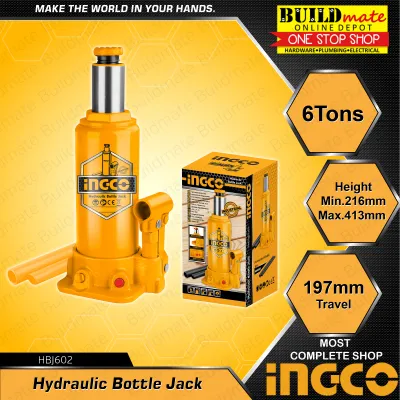
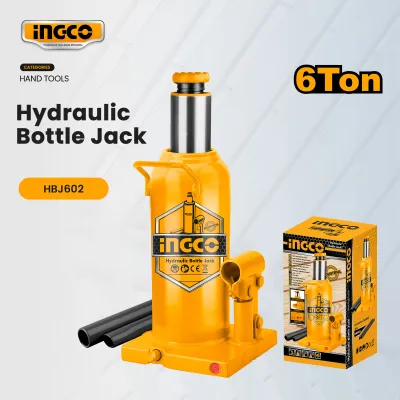
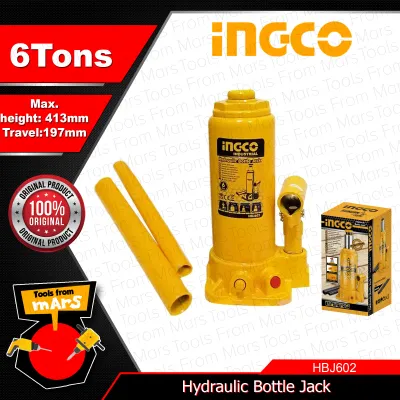
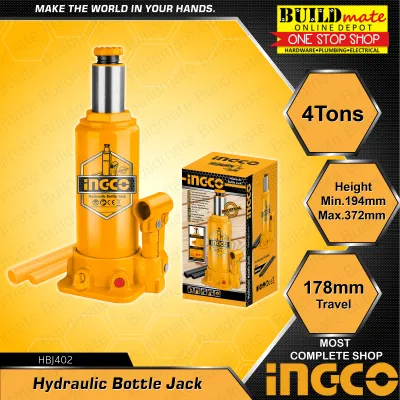
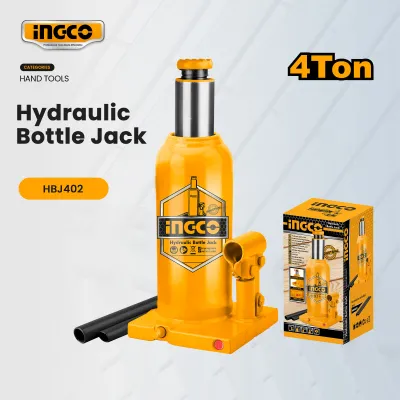
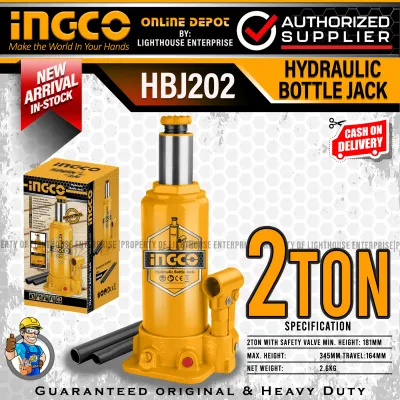
Prices are valid at publication and may change. Please refer to the product page for the latest price.
Furthermore, you must account for real-world variables that increase your vehicle’s operational weight beyond its factory specifications. In tropical climates where heavy rains, sudden downpours, and waterlogged roads are common, vehicles often carry extra emergency gear, recovery tools, or heavy aftermarket modifications like steel bull bars, roof racks, and off-road tires. If you frequently travel with a full load of passengers or transport heavy cargo in the trunk or truck bed, these items add substantial weight that your lifting equipment must be prepared to handle. Always calculate your lifting requirements based on the vehicle’s fully loaded state rather than its dry curb weight.
Calculate the Right INGCO Jack Tonnage for Your Vehicle
Once you have identified your vehicle’s Gross Vehicle Weight Rating, you can apply industry-standard safety margins to determine the minimum required jack capacity. A universal rule of thumb among automotive professionals is to select a hydraulic jack rated for at least 75% of your vehicle’s total GVWR. For example, if your vehicle has a GVWR of 2,000 kilograms, your jack should have a rated capacity of at least 1.5 tons (1,500 kilograms). Alternatively, if you are lifting a specific end of the vehicle, the jack must be rated to support 100% of the weight concentrated on the heaviest axle, which is typically the front axle on front-wheel-drive cars and mid-size SUVs.

When shopping for an INGCO hydraulic jack, you must carefully read the product labels and specification sheets attached to the tool or its packaging. Verify the rated capacity, which is usually clearly marked in tons (such as 2-ton, 3-ton, or 5-ton models). In addition to the weight rating, check the minimum saddle height and the maximum lift height. The minimum height must be low enough to slide under your vehicle’s designated jacking points even if a tire is completely flat, while the maximum lift height must be sufficient to raise the tires off the ground and allow for the placement of support stands.
Exceeding the manufacturer’s stated weight limit on any hydraulic jack is an incredibly dangerous practice that can lead to catastrophic failure. When a jack is overloaded, the extreme pressure can blow out the internal hydraulic seals, causing the fluid to bypass the piston and resulting in a sudden, uncontrolled drop of the vehicle. Overloading can also cause structural bending of the lifting arm, frame, or saddle, creating severe crush hazards for anyone nearby. Never attempt to lift a load that exceeds the certified capacity printed on your jack’s label.
Perform Essential Safety Checks Before Lifting
Before you position any hydraulic jack under your vehicle, performing a thorough pre-use inspection is non-negotiable for personal safety. Begin by examining the hydraulic cylinder and pump assembly for any signs of fluid leaks, wet residue, or damaged seals. Check that the release valve operates smoothly and seals tightly when turned clockwise, and test the pump action to ensure the lifting arm rises and lowers without catching or stuttering. If you notice any hydraulic fluid pooling on your garage floor or observe a spongy feel when pumping, do not use the tool; instead, consult the manufacturer’s maintenance instructions or seek professional repair.
The environment in which you perform the lift is just as critical as the tool itself. Always position your vehicle on stable, level ground, preferably a solid concrete slab. In hot and humid tropical regions, asphalt can soften significantly under intense sun, and soft soil or gravel can easily give way under the concentrated pressure of a jack’s small wheels or base plate. If the ground shifts or sinks even slightly while the vehicle is raised, the jack can tilt, slip off the designated lifting point, and drop the vehicle instantly.
It is vital to remember that a hydraulic jack is strictly a lifting device, not a holding device. Hydraulic pressure is maintained by rubber seals and valves that can fail without warning at any moment. You must never place any part of your body under a vehicle that is supported solely by a hydraulic jack. Once the vehicle is raised to the desired height, immediately place properly rated jack stands under the vehicle’s designated structural support points, lower the jack slowly until the vehicle’s weight rests securely on the stands, and leave the jack in place only as a secondary backup.
Recognize When Your Current Jack is Undersized
As your vehicle fleet changes or you add modifications, your existing garage tools may no longer provide an adequate safety margin. You can recognize that a hydraulic jack is undersized or struggling by observing its physical behavior during operation. If the jack requires excessive physical effort to pump, fails to reach its maximum rated height under load, or exhibits a slow, jerky descent even when the release valve is closed, the load is likely too heavy for the internal hydraulic system. Any visible flexing, creaking, or bending in the lifting arm or chassis is an immediate signal to stop the operation, lower the vehicle safely, and upgrade to a higher-capacity tool.
Changes in vehicle suspension and tire sizes also dictate when a new jack is required. For instance, low-slung sports cars or sedans often require specialized low-profile floor jacks with a very low minimum saddle height to clear the side skirts without causing body damage. Conversely, lifted pickup trucks, off-road SUVs, and utility vehicles common on provincial roads require jacks with extended lift heights or specialized bottle jacks with adjustable screw extensions to reach the frame and lift the tires clear of the ground.
In some scenarios, standard portable floor jacks and bottle jacks are simply insufficient for the task at hand. If you are working on heavy commercial vehicles, fully loaded delivery vans, or agricultural equipment, standard consumer-grade garage jacks cannot safely manage the weight or physical dimensions of the load. In these cases, you must step away from DIY portable tools and utilize professional-grade two-post lifts, heavy-duty commercial shop equipment, or seek the services of a professional automotive workshop equipped with the proper industrial lifting machinery.
Frequently Asked Questions (FAQ)
Can I use a standard 2-ton hydraulic jack for a mid-size SUV?
While a mid-size SUV might have a curb weight of around 1.8 tons, its Gross Vehicle Weight Rating (GVWR) when fully loaded with passengers, fuel, and cargo often exceeds 2.2 tons. Applying the 75% safety rule, a 2-ton jack is right at the limit and may not provide a comfortable safety margin, especially if you are lifting the heavier front end of the vehicle. For mid-size SUVs and larger family crossovers, investing a few extra pesos (₱) to upgrade to a 3-ton hydraulic jack is highly recommended to ensure you always operate well within safe mechanical limits.
What should I do if the jack fails to lift the vehicle completely?
If your hydraulic jack stops lifting before reaching its full height, immediately stop pumping and check if the vehicle’s weight exceeds the jack’s rated capacity. If the weight is within limits, the issue is often a low hydraulic fluid level or air trapped inside the hydraulic cylinder. Refer to your product manual to check the fluid level, top it up with approved hydraulic jack oil if necessary, and follow the manufacturer’s instructions to bleed any trapped air from the system before attempting to lift a load again.
Is it safe to place the jack saddle directly on the vehicle's pinch welds?
Placing a bare metal jack saddle directly on a vehicle’s thin pinch welds can bend the metal, damage the protective undercoating, and lead to rust or structural weakness. Always consult your vehicle’s owner’s manual to locate the designated structural jacking points, which are reinforced to handle the concentrated load. To protect the pinch welds from bending or slipping, use a rubber jack pad adapter that fits over the weld and distributes the lifting force evenly across the reinforced frame area.
Community discussion
Share your experience or ask a question. Comments are reviewed before publication.