
Selecting the right magnet plate for your GPS device is not just a matter of choosing the largest piece of metal you can find. The ideal specifications depend entirely on your specific use case—whether you are navigating heavy city traffic with a large dashboard screen, riding through rough provincial roads on a motorcycle, or tracking an asset covertly. A plate that is too small will cause your device to slip at the first pothole, while an oversized plate adds unnecessary weight and can block vital antennas. Matching the plate’s size, thickness, and adhesive backing to your specific vehicle type and environmental conditions ensures your navigation system remains secure and readable.
Understanding Magnet Plate Size, Strength, and Holding Power
To make an informed choice, you must first understand how a magnet plate functions within a mounting system. The plate itself is typically a passive piece of ferromagnetic metal, such as high-carbon steel, designed to be attracted to a magnetic base. The actual holding power is determined by the interaction between this plate and the active magnets in the mount. Two primary physical forces dictate this hold: raw pull force and shear force resistance.
Raw pull force measures the effort required to pull the plate directly away from the magnet at a 90-degree angle. Shear force, or sliding resistance, is the force required to slide the plate along the surface of the magnet. On a vertical dashboard or a vibrating handlebar, shear force is the more common point of failure, causing your GPS to slide downward.
Products mentioned in this guide
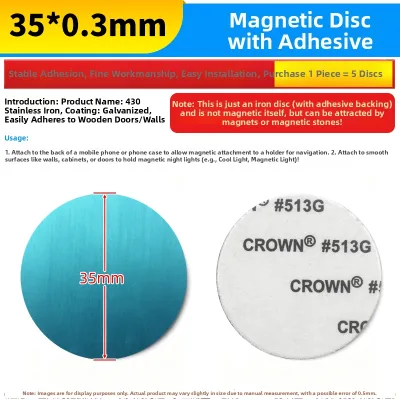
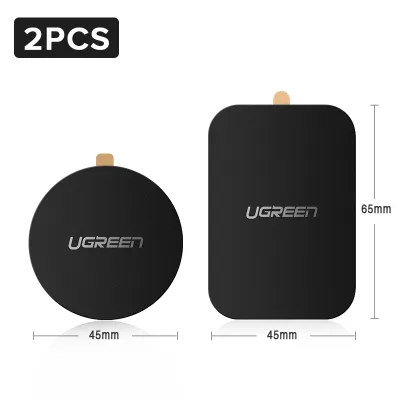
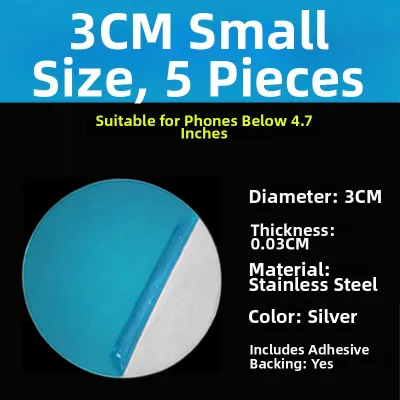

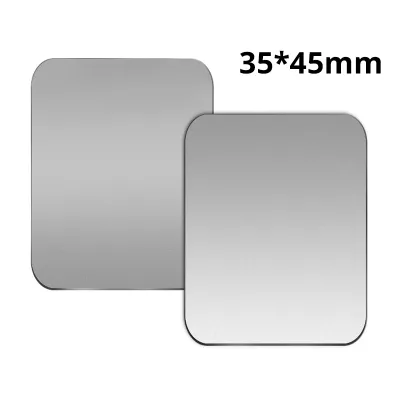

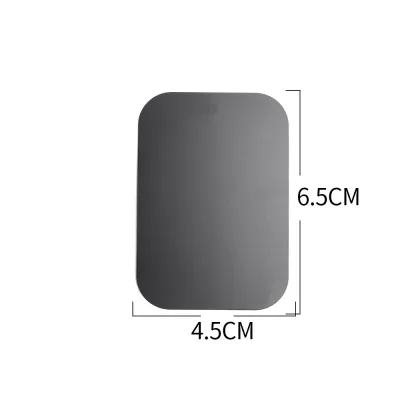
Prices are valid at publication and may change. Please refer to the product page for the latest price.
Size and surface area play a critical role in resisting these forces. A larger magnet plate distributes the magnetic attraction across a wider area, which significantly reduces the risk of the device tilting, pivoting, or sliding when subjected to sudden movements. Even if a smaller plate is made of thicker steel, it may still allow a wide GPS screen to wobble because the outer edges lack physical support.
Before purchasing, always check your GPS device’s exact weight and compare it against the mount manufacturer’s rated weight capacity. Remember that the plate’s thickness also matters; ultra-thin plates (under 0.5 mm) may not allow the magnetic field to saturate fully, reducing the effective holding power of even the strongest magnetic bases. Standard replacement plates are highly affordable, typically ranging from ₱100 to ₱300 in local automotive accessory shops, making it easy to find the correct size for your setup.
Car Dashboard Mounts: Supporting Heavy Screens in Hot Cabins
Car dashboard GPS units, which often feature screens ranging from 5 to 10 inches, present unique mounting challenges due to their physical profile and the harsh environments inside a vehicle cabin. Because these screens are relatively heavy and wide, they are highly susceptible to rotational force. When you press a corner of a large screen to input a route or when you hit the brakes suddenly, a small, centralized magnet plate will allow the device to twist or tilt forward.

To prevent this, you should opt for wider rectangular plates or even a multi-plate configuration. Placing two smaller plates on the outer edges of the device’s back, paired with a dual-magnet mount, distributes the weight evenly and keeps the screen stable during sudden maneuvers.
In tropical climates like the Philippines, where cabin temperatures can easily exceed 50°C when parked under the sun, the primary point of failure is rarely the magnet itself, but rather the adhesive backing holding the plate to your device or dashboard. High heat and humidity degrade standard double-sided tape rapidly, causing the plate to peel off. It is highly recommended to use plates pre-applied with heavy-duty, high-temperature acrylic foam adhesives, such as 3M VHB (Very High Bond). To protect the integrity of the adhesive, try to park in shaded areas or use a windshield sunshade to prevent direct, prolonged sunlight from baking the mounting point.
Safety must remain your top priority when positioning a dashboard mount. Always ensure the magnet plate and mount are positioned well away from any airbag deployment zones, which are typically marked on the steering wheel and passenger-side dashboard. Furthermore, the mounted GPS must not obstruct your line of sight through the windshield or interfere with your physical access to the steering wheel, gear shifter, or critical dashboard controls.
Motorcycle Mounts: Vibration Limits and Safety Boundaries
Motorcycle handlebars represent one of the most demanding environments for any electronic mount. Unlike cars, motorcycles expose your GPS or smartphone to severe high-frequency engine vibration, wind resistance at highway speeds, and abrupt vertical shocks from uneven road surfaces, potholes, or speed bumps. Under these intense conditions, standard, purely magnetic plates are highly likely to fail. The constant vibration can cause the plate to micro-slip against the magnetic base, eventually breaking the magnetic bond entirely and sending your expensive navigation device bouncing onto the asphalt.
For this reason, relying solely on a basic magnetic plate for motorcycle use is a significant safety hazard. Before mounting any device to a motorcycle, check the mount manufacturer’s documentation for explicit ratings regarding high-vibration or powersports use. If you choose to use a magnetic system, it must be specifically engineered for motorcycles, utilizing high-strength, multi-pole magnetic arrays (such as Neodymium N52 magnets) that offer exceptional shear force resistance.
Even with a premium magnetic setup, you must implement a redundant physical backup. Always pair the magnet plate with a mechanical tether, a silicone safety strap, or a secondary locking mechanism that physically secures the device to the handlebars. This ensures that if a severe shock breaks the magnetic connection, the device remains attached to the bike. If your current mount does not support a secure physical backup, stop using it immediately and seek professional advice or transition to a fully mechanical, clamp-based mounting alternative.
Outdoor Trackers: Compact Plates for Lightweight, Hidden Placement
Outdoor GPS trackers, used for monitoring assets, luggage, or pets, operate on a different set of requirements. These devices are generally compact and lightweight, meaning they do not require massive magnet plates with extreme pull force. Instead, the focus shifts to low-profile, highly discreet plates that do not add bulk or compromise the tracker’s portability.
The primary challenge with outdoor trackers is securing the plate to non-standard, often uneven surfaces. While a car GPS has a flat, hard plastic back, a pet collar is flexible fabric, a suitcase might be textured nylon, and a vehicle’s undercarriage is curved, dusty steel. Standard adhesives perform poorly on porous, flexible, or dirty surfaces.
Before applying an adhesive magnet plate, evaluate the target material carefully. If the surface is flexible or highly textured, an adhesive plate will eventually peel off. In these scenarios, look for alternative mounting plates that feature built-in slots for straps, screw holes for mechanical fastening, or sewn-in pockets.
Additionally, concealed vehicle trackers require careful placement to avoid signal degradation. A large metal magnet plate placed directly over the tracker’s internal GPS or cellular antenna can shield the signals, leading to inaccurate tracking or complete loss of connection. Always consult your tracker’s user manual to identify the antenna location, and ensure the magnet plate is positioned on the opposite side or designated mounting area.
Cross-Scenario Compatibility and Safe Installation Steps
While it might be tempting to buy a single type of magnet plate for all your devices, cross-scenario compatibility is highly limited. A heavy-duty, thick metal plate optimized for a large car dashboard screen is far too heavy and bulky for a small pet tracker or a slim smartphone. Conversely, a tiny, lightweight plate designed for an asset tracker will fail immediately if used to support a heavy car GPS, leading to a dropped device and potential damage. For the best results, select scenario-specific plates designed for the exact weight and environmental exposure of each application.
To ensure a reliable, long-lasting hold, follow this strict installation checklist:
- Clean the surface: Thoroughly clean the mounting area on the device or case using isopropyl alcohol to remove oil, dust, and fingerprint residue. Avoid using household glass cleaners, which can leave a slippery film.
- Dry completely: Allow the surface to air-dry completely for a few minutes.
- Apply pressure: Peel the protective backing from the plate's adhesive, align it carefully, and press it firmly onto the surface. Apply even, heavy pressure across the entire plate for at least 30 seconds to activate the pressure-sensitive adhesive.
- Allow to cure: Do not attach the device to the magnetic mount immediately. The adhesive requires time to flow into the microscopic pores of the surface and reach its maximum bond strength. Allow it to cure undisturbed for 24 to 72 hours. In highly humid tropical environments, waiting the full 72 hours is highly recommended to ensure the bond is fully secure.
Warning: Never test the hold strength immediately after application, as the adhesive needs time to reach maximum bond strength.
Frequently Asked Questions (FAQ)
Will a strong magnet plate interfere with my GPS signal or vehicle electronics?
Modern consumer GPS devices, smartphones, and vehicle electronics are generally shielded against the static magnetic fields produced by standard mounting plates and magnetic bases. The satellite-based GPS receiver itself will not experience signal degradation from a magnet.
However, there are minor exceptions to keep in mind. Extremely strong magnets can temporarily interfere with your device’s internal digital compass (magnetometer), which is used to determine orientation when you are standing still. Additionally, some smartphone cameras equipped with Optical Image Stabilization (OIS) or closed-loop autofocus can experience temporary jitter if placed directly against a very powerful magnetic field. If you notice orientation glitches, rely on active satellite GPS data while moving, or position the plate slightly further away from the camera module.
Can I stack multiple magnet plates to increase holding strength on a motorcycle?
No, you should never stack multiple magnet plates to try and increase holding power. Stacking plates does not multiply the magnetic attraction; instead, it introduces several safety risks. The adhesive layers between stacked plates create a thick, flexible sandwich that actually amplifies vibrations, making the mount less stable.
Furthermore, stacking increases the distance between the magnetic base and the primary plate attached to your device, which can weaken the magnetic flux and reduce the overall hold. If your current magnetic mount does not offer sufficient holding power for a motorcycle, do not attempt to modify it with stacked plates. The only safe solution is to upgrade to a high-strength, multi-pole magnetic mount designed for powersports, or switch to a mechanically locked handlebar clamp.
Community discussion
Share your experience or ask a question. Comments are reviewed before publication.