
Choosing the right pulley set for your Honda Beat FI V2 is one of the most effective ways to customize how your scooter delivers power to the ground. The continuously variable transmission (CVT) in this popular automatic motorcycle relies on a delicate balance of centrifugal force, spring tension, and friction to constantly adjust the gear ratio as you ride. Because the Beat FI V2 is widely used for daily commuting, delivery services, and weekend travel in varying road conditions, finding the ideal balance between acceleration and fuel economy requires a clear understanding of how these components interact.
In tropical environments where high ambient temperatures and heavy stop-and-go traffic are common, the CVT system is subjected to significant thermal and mechanical stress. An improperly matched or poorly manufactured pulley set can lead to excessive heat buildup, accelerated belt wear, and a noticeable drop in performance. By taking a systematic approach to selecting your replacement or upgrade components, you can ensure your scooter remains reliable, efficient, and enjoyable to ride. This guide will walk you through the essential steps of identifying your specific riding needs, understanding the physics of pulley dynamics, verifying physical compatibility, and ensuring a safe installation process.
Identify Your Riding Needs: Commuting vs. Performance
Before browsing online marketplaces or visiting local motorcycle shops, you must clearly define what you want to achieve with your new pulley set. Every modification to a scooter’s CVT involves a direct trade-off between low-end acceleration and high-end top speed. There is no single configuration that excels at both, so your choice must align with your primary daily riding environment and habits.
Products mentioned in this guide
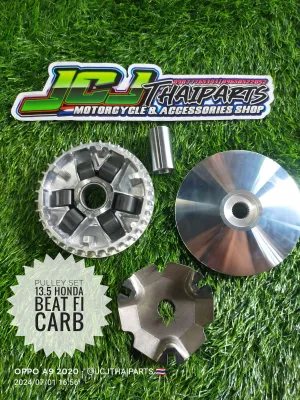
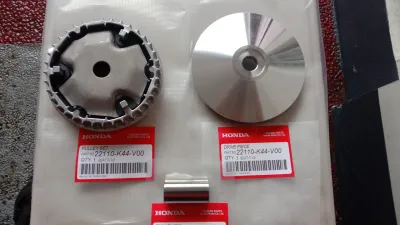
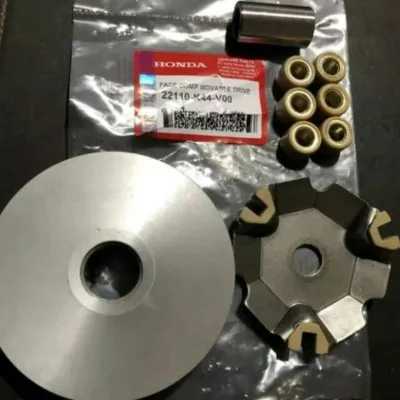
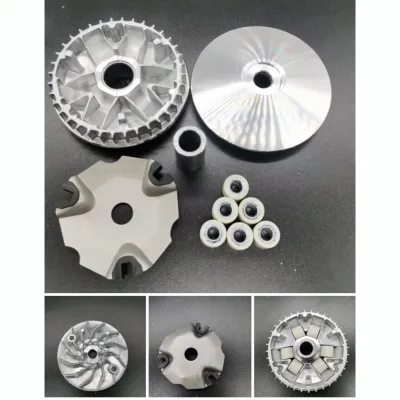
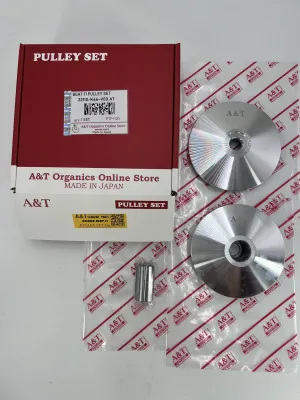

Prices are valid at publication and may change. Please refer to the product page for the latest price.
If your daily routine consists of navigating congested urban streets, your priority should be smooth power delivery and fuel efficiency. A standard or mildly optimized pulley set that maintains a predictable throttle response is highly beneficial here. This setup ensures that the engine does not rev excessively at low speeds, which helps conserve fuel and prevents the clutch from overheating during constant stop-and-start riding.
For riders who frequently carry heavy loads, travel with a pillion passenger, or traverse steep, hilly terrains, low-end torque is the primary concern. In these scenarios, you need a pulley configuration that allows the engine to reach its power band quickly and stay there longer. This prevents the scooter from bogging down or losing momentum when climbing inclines, giving you the necessary pulling power to navigate challenging roads safely.
Conversely, if your commute involves long stretches of open highway or bypass roads where you can maintain higher speeds, you may want to focus on extending your scooter’s top-speed potential. A pulley set designed for this purpose allows the drive belt to travel higher up the pulley face, effectively creating a taller gear ratio. This lowers the engine’s operating RPM at cruising speeds, which reduces engine vibration, lowers fuel consumption during long runs, and minimizes long-term wear on internal engine components.
Understand Pulley and Roller Weight Dynamics
To make an informed decision, it is crucial to understand the mechanical relationship between the pulley faces, the roller weights, and the rest of the CVT system. The front pulley assembly consists of a fixed drive face and a movable drive face, which slide together or apart to change the diameter of the path the drive belt travels. This movement is controlled by centrifugal roller weights housed inside the movable pulley.

As engine speed increases, centrifugal force pushes the roller weights outward along the ramp tracks of the pulley. This outward movement forces the movable pulley face closer to the fixed face, squeezing the drive belt and forcing it to ride higher up the pulley, which shifts the transmission into a higher gear ratio. The weight of these rollers dictates how quickly this shift occurs.
Lighter roller weights require higher engine RPMs to generate enough centrifugal force to slide outward. This keeps the transmission in a lower gear ratio longer, allowing the engine to rev higher and deliver rapid initial acceleration. However, if the rollers are too light, they may never generate enough force to fully push the pulley faces together, resulting in a loss of top speed and causing the engine to scream at high RPMs without a corresponding increase in road speed.
Heavier roller weights, on the other hand, slide outward at lower engine RPMs. This causes the transmission to shift into a higher gear ratio much earlier in the acceleration curve. While this keeps the engine quiet and improves fuel economy by keeping RPMs low, it can make the scooter feel sluggish and unresponsive when accelerating from a complete stop or when attempting to overtake another vehicle.
Furthermore, the ramp angles machined into the pulley itself dictate the rate of this transition. Steeper ramp angles can provide a more aggressive shift profile, while shallower angles offer a smoother, more linear acceleration curve. These dynamics must be carefully matched to the condition of your drive belt and the tension of your rear clutch spring to ensure the entire transmission operates in harmony.
Verify Compatibility and Specifications for the Beat FI V2
One of the most common mistakes riders make when purchasing a new pulley set is assuming that all Honda 110cc CVT components are identical. The Honda Beat has undergone several design iterations, and the Beat FI V2 has specific dimensional requirements that differ from earlier carburetor models or the newer Genio-derived engines. Installing an incompatible part can lead to immediate mechanical failure or severe engine damage.
When sourcing a pulley set, always cross-reference the manufacturer’s part numbers with your scooter’s exact model year and variant. Do not rely solely on generic product titles on ecommerce platforms. Instead, look for explicit compatibility listings for the Beat FI V2. The crankshaft diameter, spline count, and the overall depth of the pulley assembly must match your original equipment manufacturer (OEM) specifications precisely.
Before beginning the installation, it is highly recommended to use a vernier caliper to measure and compare the new components against the stock parts you are replacing. Pay close attention to the length and outer diameter of the pulley boss (the metal sleeve that the pulley slides on). A boss that is even slightly too long or too short will misalign the drive belt with the rear clutch pulley, causing rapid belt wear, excessive vibration, and potential belt breakage while riding.
Additionally, verify that the slide pieces (the plastic guides on the ramp plate) fit snugly within the pulley channels without binding. Loose slide pieces can cause the ramp plate to rattle and wear out prematurely, while excessively tight slide pieces will prevent the pulley from moving smoothly, leading to erratic shifting and unpredictable throttle response.
Evaluate Aftermarket Options and Material Quality
The market is flooded with aftermarket pulley sets, ranging from budget-friendly replacements to high-end performance kits. Evaluating the material quality and completeness of these kits is essential to ensure you are making a durable investment. A high-quality pulley set should be treated as a complete system rather than a collection of individual parts.
Ensure that the kit you select includes all the necessary components: the movable drive face, the ramp plate, a fresh set of slide pieces, the pulley boss, and compatible roller weights. Mixing a new aftermarket movable drive face with a worn, grooved stock fixed drive face is highly discouraged. The uneven surfaces will cause the drive belt to wear rapidly and slip, reducing power transfer efficiency and potentially leaving you stranded on the road.
Inspect the machining quality of the pulley faces carefully. The surface where the belt rides must be perfectly smooth and free of any casting defects, pits, or sharp ridges. Any imperfections on this surface will act like sandpaper against the sides of your drive belt, drastically shortening its lifespan. The roller tracks inside the pulley should also be smooth and uniform to prevent the roller weights from wearing down unevenly or developing flat spots.
Finally, review the manufacturer’s documentation regarding maintenance and lubrication. Some aftermarket pulleys feature self-lubricating coatings and are designed to run completely dry, while others require a specific type of high-temperature CVT grease applied sparingly inside the boss sleeve. Following the manufacturer’s exact instructions is critical, as using the wrong type of grease—or applying too much—can cause grease to fling onto the pulley faces and drive belt, resulting in severe belt slippage and loss of drive.
Installation Safety and Professional Tuning
Working on your scooter’s CVT system requires a high level of precision and the use of proper tools. Attempting to disassemble or reassemble the pulley assembly without the correct equipment poses a significant risk of personal injury and severe damage to your motorcycle. If you do not have access to the necessary tools or do not feel confident in your mechanical skills, you should always have the work performed by a qualified professional mechanic.
Never use makeshift methods to hold the pulley or clutch bell in place during disassembly. Jamming screwdrivers, chisels, or pliers into the pulley fins can easily chip the aluminum, bend the crankshaft, or crack the engine crankcase. Instead, always use a dedicated universal clutch holder or a variator holding tool designed to secure the components safely. An impact wrench can be highly effective for removing stubborn nuts, but it should be used with extreme caution to avoid stripping threads.
During reassembly, adhering to the factory torque specifications for the variator nut is absolutely critical. This nut secures the entire front pulley assembly to the spinning crankshaft. If the nut is under-tightened, it can back off while the engine is running, causing the pulley to spin free, strip the crankshaft splines, and destroy the engine casing—a catastrophic failure that can cost thousands of pesos (₱) to repair. Conversely, over-tightening can stretch the crankshaft threads or strip the nut, leading to similarly expensive repairs.
Once the installation is complete, perform a thorough visual inspection. Spin the pulley assembly by hand to ensure that the belt moves freely and that there is no binding or unusual friction. Conduct your initial test ride in a safe, low-traffic area at low speeds. Listen carefully for any unusual rattling, whining, or slipping noises. If you notice any abnormal behavior, stop riding immediately, turn off the engine, and inspect the assembly. When in doubt, consult a professional mechanic to verify that your CVT is tuned and installed correctly.
Frequently Asked Questions (FAQ)
Will changing the pulley set void my motorcycle's warranty?
Modifying your scooter’s transmission with aftermarket components generally voids the manufacturer’s warranty on the CVT system, drive belt, clutch, and associated engine components. If a failure occurs and the dealership determines that an aftermarket pulley set or improper installation caused or contributed to the damage, they will likely deny the warranty claim. Always consult your local authorized dealer and carefully read your warranty booklet before making any modifications to a motorcycle that is still under warranty.
How often should I replace the rollers and pulley set?
The lifespan of CVT components varies significantly based on your riding style, payload, and environmental conditions, such as operating in dusty or highly humid tropical areas. Roller weights should be inspected during regular preventive maintenance, typically every 8,000 to 10,000 kilometers, and replaced immediately if they show flat spots or uneven wear. The pulley faces themselves should be checked for deep grooves, pitting, or wear ridges whenever you replace the drive belt; a worn pulley face will rapidly degrade new belts and should be replaced to maintain smooth transmission operation.

Community discussion
Share your experience or ask a question. Comments are reviewed before publication.