
Selecting the correct pulley set for your Yamaha Mio i 125 requires matching the component specifications to your specific riding goals, whether that means improving initial acceleration for city traffic or optimizing top speed for highway cruising. Because the pulley set is the core of the Continuously Variable Transmission (CVT) system, choosing the right setup involves verifying physical compatibility, understanding how roller weights and pulley angles affect power delivery, and ensuring the entire drive system is balanced. This guide outlines the critical decision-making steps to help you identify the right specifications and evaluate your options safely.
Understanding the CVT System and Pulley Set Function
The CVT system in your Yamaha Mio i 125 operates as an automatic gear-shifting mechanism that continuously adjusts the gear ratio based on engine speed and load. Unlike manual transmissions with fixed gear steps, the CVT relies on a continuous belt running between two variable-diameter pulleys: the drive pulley (or variator) mounted on the engine crankshaft, and the driven pulley connected to the rear wheel via the clutch assembly.
As the engine accelerates, centrifugal force pushes the roller weights inside the drive pulley outward along their ramps. This outward movement forces the movable pulley face closer to the fixed pulley face, squeezing the drive belt and forcing it to ride higher in the pulley groove. Simultaneously, the belt pulls deeper into the driven pulley at the rear, shifting the scooter into a higher gear ratio for faster speeds.
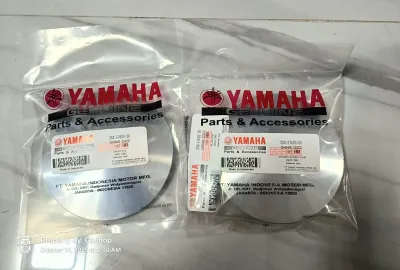
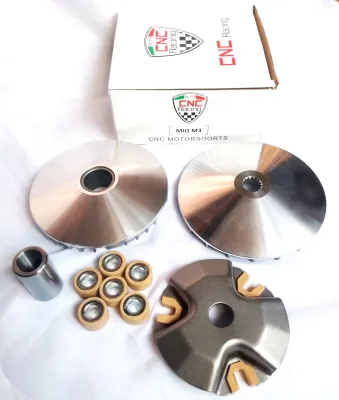
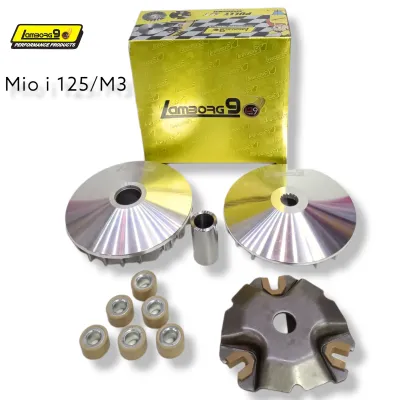
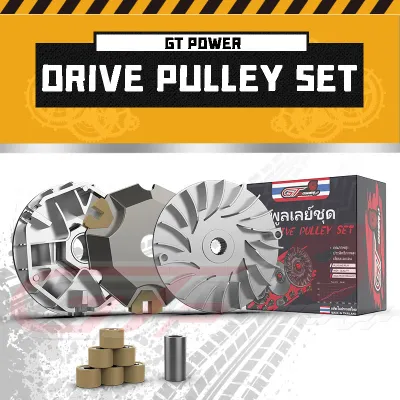
Products mentioned in this guide
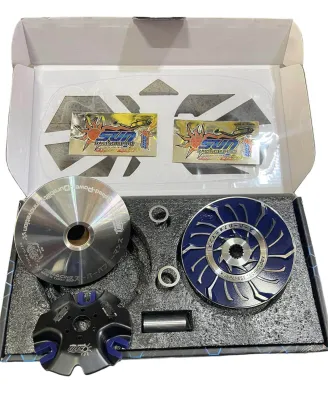
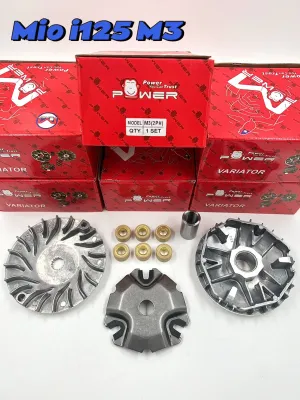
![[Spot +24hours delivery]Motorcycle Pulley Set Mio Sporty Pully Set For Mio sporty Pulley set Mio i 125(MIO/MIO I 125)](https://img.lazcdn.com/g/p/48d21204e194f1d8916df84098750dfb.jpg_400x400q80.jpg_.webp)

Prices are valid at publication and may change. Please refer to the product page for the latest price.
The angle of the pulley faces and the mass of the roller weights directly dictate how quickly or slowly this transition occurs. A steeper pulley angle or lighter roller weights will keep the engine in a higher RPM range before shifting, which can improve low-end acceleration. Conversely, a shallower angle or heavier rollers will force the system to shift earlier, keeping engine RPMs lower for a smoother, more fuel-efficient ride.
Over time, the components within this system experience wear from friction, heat, and accumulated debris. You may notice observable signs that your current pulley set needs inspection or replacement. These signs include a noticeable slipping of the drive belt during acceleration, a sudden loss of top-end speed, sluggish throttle response, or unusual metallic rattling and squealing noises coming from the transmission case. Ignoring these symptoms can lead to premature belt failure or damage to the crankshaft.
Essential Specifications to Verify for the Mio i 125
When shopping for a replacement or upgraded pulley set, physical compatibility is your first and most critical boundary. The Yamaha Mio i 125 has specific engine case dimensions and crankshaft designs that vary by model year and regional production runs. You must verify the exact bore size of the pulley boss and the spline count of the crankshaft interface before making a purchase. Attempting to force a pulley with an incorrect spline count or bore diameter onto the crankshaft can strip the splines, damage the engine casing, or cause catastrophic transmission failure while riding. Always consult your vehicle’s official documentation or measure the components with a digital caliper to confirm these dimensions.

The pulley face angle is another vital specification to evaluate. Standard factory pulleys typically feature a face angle optimized by the manufacturer for balanced fuel economy, durability, and moderate acceleration. Modified aftermarket pulleys often feature slightly altered face angles, such as 13.5 or 13.8 degrees, compared to the standard angle. A smaller angle changes the rate at which the belt climbs the pulley face, altering the power band delivery. You must check the manufacturer’s product label to verify the exact angle and ensure it aligns with your performance expectations.
Material composition plays a significant role in how well the pulley set handles heat and friction, especially in tropical climates like the Philippines, where high ambient temperatures and humidity place extra stress on the CVT system. Standard OEM pulleys are generally made of cast aluminum, which offers reliable daily performance and excellent thermal conductivity. Some aftermarket options utilize forged aluminum or specialized low-friction coatings. These materials are designed to resist surface wear and reduce belt slippage, but you must verify these claims by checking the manufacturer’s technical specifications and material disclosures rather than relying on marketing claims.
Finally, you must consider the relationship between the pulley set, the drive belt, and the roller weights. The width and length of your drive belt must match the specifications of the new pulley set. A belt that is too wide will not sit deeply enough in the pulley groove at idle, leading to poor initial acceleration, while a belt that is too narrow will slip under load. Additionally, the roller weights must be selected to complement the pulley’s ramp profile. Changing one component without adjusting the others can result in an unbalanced CVT system that performs poorly and wears out prematurely.
Aligning Pulley Configurations With Your Riding Goals
Your daily riding environment and personal performance preferences should dictate the specific pulley configuration you choose. For riders who primarily navigate dense city commuting and stop-and-go traffic, the priority is usually quick initial acceleration and responsive low-speed throttle control. In this scenario, a configuration utilizing lighter roller weights and standard pulley angles is highly effective. Lighter rollers require higher engine RPMs to move outward, keeping the transmission in a lower gear ratio longer. This provides the necessary torque to pull away from traffic lights quickly and maneuver safely through urban congestion.
If your daily route consists of long highway cruising and high-speed travel, your configuration needs will be different. For these journeys, you want to optimize top speed, reduce engine vibration, and improve fuel efficiency. This is achieved by selecting heavier roller weights paired with modified pulley face angles. The heavier weights slide outward at lower engine speeds, forcing the pulley faces together earlier and shifting the CVT into a higher gear ratio sooner. This keeps the engine RPMs lower at cruising speeds, reducing wear on the engine and providing a quieter, more comfortable ride.
Riders who frequently tackle hilly terrains, steep inclines, or carry heavy loads—such as riding with a passenger or transporting cargo—must balance torque delivery with belt grip. On steep inclines, a CVT system can easily overheat if the belt slips. For these demanding conditions, you need a pulley set that maintains a stable gear ratio without shifting too quickly. A balanced setup with medium-weight rollers and a pulley face designed for maximum belt surface contact helps prevent slipping, ensuring that engine power is efficiently transferred to the rear wheel without generating excessive heat.
To find the right balance, carefully read aftermarket product descriptions and labels. Reputable manufacturers clearly state the intended use case and performance bias of their pulley kits, labeling them for either “touring,” “sport,” or “urban” applications. Avoid kits that claim to maximize both low-end torque and high-end speed simultaneously without any trade-offs, as CVT tuning always involves a compromise between acceleration and top speed.
Evaluating OEM vs. Aftermarket Options
When deciding between Original Equipment Manufacturer (OEM) parts and aftermarket alternatives, you must weigh reliability, performance goals, and budget. OEM replacement kits from Yamaha offer guaranteed physical compatibility, factory-tested durability, and the assurance that the components meet the exact engineering standards of your Mio i 125. Choosing OEM parts is the safest option if you want to maintain the scooter’s original performance characteristics, preserve any remaining warranty, and ensure long-term reliability for daily commuting.
Aftermarket pulley sets, on the other hand, are designed for riders looking to alter their scooter’s power delivery. When evaluating aftermarket brands, look for manufacturers that provide comprehensive technical specifications, clear material disclosures, and verifiable user feedback. High-quality aftermarket kits often include the complete assembly—the drive pulley face, movable drive face, ramp plate, slide pieces, pulley boss, and a selection of roller weights. Purchasing a complete, pre-matched kit is generally safer and more cost-effective than buying individual components from different brands, as it ensures all parts are designed to work together harmoniously.
Budgeting for a pulley replacement requires looking beyond the initial purchase price. While unbranded or suspiciously cheap pulley sets found on online marketplaces may seem appealing, they often carry significant risks. These low-cost options frequently suffer from poor manufacturing tolerances, inferior metal alloys, and a lack of quality control. Red flags to watch out for include missing specification labels, unclear fitment guides, and a lack of manufacturer contact information. Investing in a reputable, well-documented brand prevents premature component failure, which could otherwise lead to costly repairs of the crankshaft or engine casing.
Installation Checks, Belt Matching, and Safety Limits
Working on your scooter’s transmission carries inherent safety risks, as improper assembly can lead to sudden loss of control or severe mechanical damage while riding. Before beginning any installation or modification of the CVT system, you must establish a clear safety boundary. Always refer to the official Yamaha Mio i 125 service manual for specific torque values, assembly sequences, and safety warnings. If you do not have the proper tools, mechanical experience, or a clean working environment, it is highly recommended to have the pulley set installed by a qualified motorcycle mechanic.
When installing a new pulley set, always inspect the condition of the drive belt. Even if the belt appears intact, installing a new pulley face against a worn, glazed, or cracked belt will lead to poor performance and accelerated wear. If the belt shows any signs of cracking, fraying, or a reduction in width below the service limit specified in the manual, replace it immediately. Ensure the new belt is clean and free of grease or oil before fitting it onto the pulleys.
Additionally, you must check the condition of the driven pulley assembly at the rear of the CVT case. This includes inspecting the clutch bell for heat discoloration, checking the clutch shoes for adequate thickness, and ensuring the torque drive moves smoothly without binding. An unbalanced or worn rear pulley assembly can cause vibrations that will quickly damage your new front pulley set and crankshaft bearings.
Proper installation requires specialized tools. Never use an impact wrench to tighten the pulley nut without verifying the final torque with a calibrated torque wrench, as over-tightening can strip the crankshaft threads, while under-tightening can cause the pulley to come loose during operation. Use a dedicated pulley holder tool to secure the assembly while tightening the nut to the exact torque specification listed in the service manual.
Finally, know when to stop. If you encounter mismatched splines, if the pulley boss does not slide smoothly onto the crankshaft, or if you notice abnormal wear patterns on the crankshaft itself, halt the installation immediately. Do not attempt to modify the parts or force them to fit. Consult a professional mechanic to diagnose the issue and ensure your scooter remains safe to operate on public roads.
Frequently Asked Questions (FAQ)
Can I use a pulley set from another Yamaha scooter model on my Mio i 125?
No, you should not assume that a pulley set from another Yamaha model will fit your Mio i 125, even if the engines share a similar displacement. Different scooter models often feature variations in crankshaft diameters, spline counts, pulley boss lengths, and engine case clearances. Using an incompatible pulley can strip the crankshaft splines or cause severe transmission damage. Always verify the exact part numbers and physical dimensions to ensure the component is explicitly rated for the Mio i 125.
Do I need to change the drive belt when upgrading the pulley set?
While it is not always mandatory to change the drive belt, it is highly recommended to inspect it thoroughly. A new pulley set has flat, unworn faces, and pairing it with a worn or unevenly shaped belt will cause slipping and reduce the efficiency of your new setup. If your current belt has significant mileage, shows signs of cracking, or has worn thin, replacing it alongside the pulley set ensures optimal grip, proper gear ratio transitions, and long-term reliability.
How often should I clean and maintain the CVT pulley system?
You should inspect and clean your CVT system during your regular motorcycle service intervals, typically every 4,000 to 8,000 kilometers, or more frequently if you regularly ride in dusty, wet, or highly humid environments. Over time, wear from the drive belt and clutch shoes creates fine dust that accumulates inside the transmission case. Cleaning this dust out with a dry cloth or a cleaner approved for CVT components, and checking the roller weights for flat spots, prevents belt slippage and maintains smooth pulley operation.

Community discussion
Share your experience or ask a question. Comments are reviewed before publication.