
Upgrading a motorcycle’s ignition system can be a frustrating process of trial and error, especially when trying to match aftermarket electronics to a specific engine configuration without causing electrical damage. Choosing the right racing CDI requires matching your motorcycle’s electrical system (AC versus DC power), verifying the physical connector pinouts, and selecting an ignition curve that aligns with your engine’s mechanical limits and tuning goals. By understanding these critical technical parameters, you can avoid common installation pitfalls and safely unlock your engine’s true performance potential.
What Does a Racing CDI Actually Do for Your Motorcycle?
A racing Capacitor Discharge Ignition (CDI) alters the timing of the spark sent to your spark plug and typically removes or raises the factory-set engine revolution limit. By advancing or optimizing this ignition timing relative to the piston’s position, the unit allows the engine to burn its fuel-air mixture more efficiently at higher engine speeds. To understand this process, it helps to look at how a standard ignition system operates under normal riding conditions.
In a stock motorcycle, the CDI acts as the electronic brain of the ignition system. It stores electrical energy in an internal capacitor and releases it to the ignition coil when triggered by a signal from the flywheel’s pickup coil. The stock CDI is programmed with a conservative ignition timing curve designed by the manufacturer to prioritize fuel economy, low emissions, and engine longevity across a wide range of operating conditions. This conservative curve often retards the timing at high revolutions per minute (RPM) to prevent engine strain.
Products mentioned in this guide
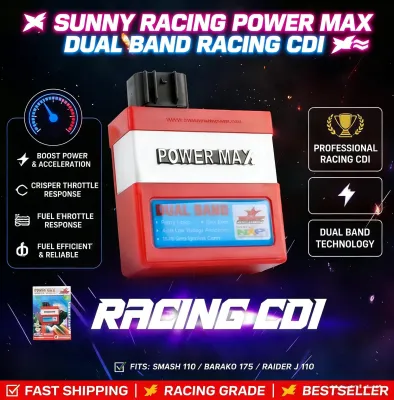
15 Lazada user ratings
🛠️Durability:okaay Perfect 🔌Compatibility:okay Versatility 🏅Performance:okay Compatibility
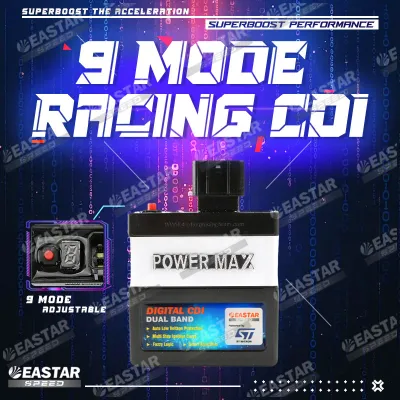
38 Lazada user ratings
the item is good at first but after a few test, engine starts but there's a delay and struggle in maintaining good engine sound. Consistent …Read full reviewShow less
the item is good at first but after a few test, engine starts but there's a delay and struggle in maintaining good engine sound. Consistent backfire is present.
Improved acceleration and throttle response, Durable construction, built to last,
Impressive 9-mode options for customization,
ang ganda bossing...madali na LNG ikabet
sayang pera,hindi gumagana
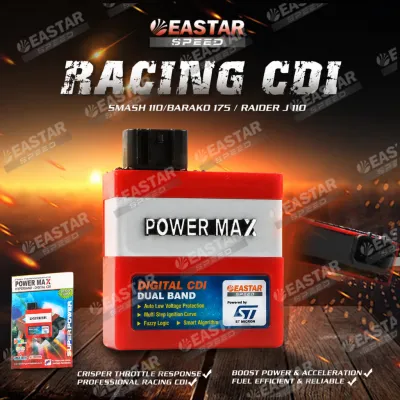
322 Lazada user ratings
🛠️Durability:mukang matibay naman 🔌Compatibility:okay lng 🏅Performance:goods na goods sa uulitin dito ulit ako bibili maayos double balot per…Read full reviewShow less
🛠️Durability:mukang matibay naman 🔌Compatibility:okay lng 🏅Performance:goods na goods sa uulitin dito ulit ako bibili maayos double balot pero wala ngalng bubble wrap
Sabi ko pang barako 175 ung dumating pang smash.chinat konpa ung seller oo daw pang barako daw Ang darating.
Improved ignition system, Durable and reliable design, Supports multiple models, Compatible with Barako 175,
Durable and reliable design, 🛠️Durability: diko pa sure pag na nakabit na 🏅Performance: sana gumanda
salamat seller at rider .. gumagana po sya
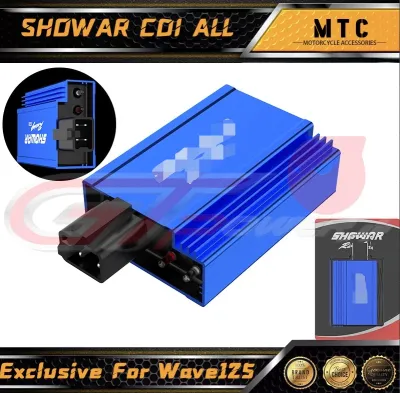
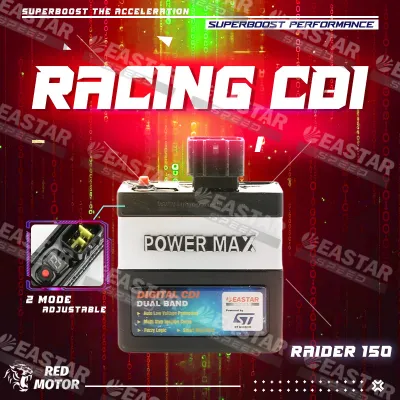
18 Lazada user ratings
Durability:Plug and play installation!,
Hindi gumagana palpak
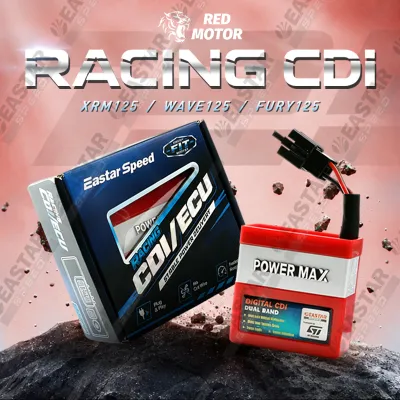
10 Lazada user ratings
Maganda at wala nang babaguhin kapag sa fury flug and play na talaga 10/10
🔨Durability:goods 🔌Compatibility:goods 🏅Performance:goods
salamat sa lagat😂
🏅Performance:good
🏅Performance:
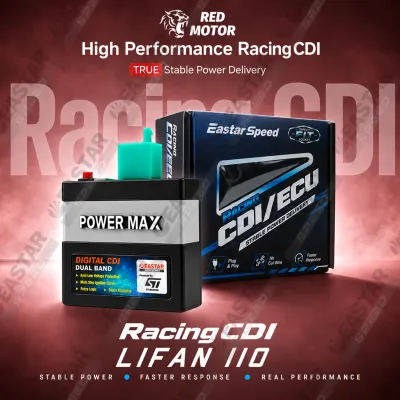
7 Lazada user ratings
Perfect fit, Easy installation,
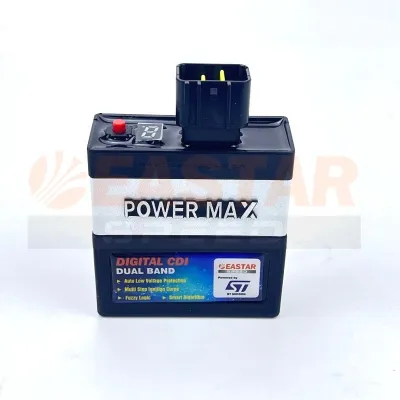
Prices are valid at publication and may change. Please refer to the product page for the latest price.
A common misconception among riders is that installing a racing CDI will instantly add massive horsepower to a completely stock motorcycle. In reality, a CDI optimizes existing potential rather than creating power out of thin air. If your engine has not been modified to draw in more air and fuel, the performance gains from a racing CDI alone will be minimal, often limited to slightly crisper throttle response.
The true value of a racing CDI becomes apparent when you pair it with supporting engine modifications, such as high-flow exhaust systems, larger carburetors, or upgraded camshafts. These modifications alter the speed and volume of the fuel-air mixture entering the combustion chamber. An optimized ignition curve ensures that the spark occurs at the precise millisecond needed to ignite this larger mixture, resulting in smoother throttle response, a higher rev ceiling, and better overall timing.
How Do You Verify CDI Compatibility With Your Specific Motorcycle?
Verifying compatibility requires identifying whether your motorcycle uses an Alternating Current (AC) or Direct Current (DC) ignition system and matching the physical plug configuration to your stock wiring harness. Installing an incorrect electrical type will immediately damage the CDI or blow your motorcycle’s main fuses. Because motorcycle manufacturers use different electrical designs even within the same model family, you must perform several hands-on checks before purchasing an aftermarket unit.

The first and most critical check is determining the ignition power source. An AC CDI receives its power directly from the exciter coil located inside the stator assembly. This means the ignition system operates independently of the motorcycle’s battery, allowing the engine to start and run even if the battery is completely dead or removed. Many smaller-displacement underbone motorcycles and scooters popular in the Philippines utilize this AC configuration due to its simplicity and reliability.
In contrast, a DC CDI is powered directly by the motorcycle’s 12-volt battery and charging system. These units require a stable, clean DC voltage to operate and are generally larger than AC units because they contain internal voltage step-up transformers. To check which system your motorcycle uses, turn the ignition key to the “on” position without starting the engine. If your instrument panel, tail lights, or headlights illuminate immediately, or if the bike cannot produce a spark without a functional battery, your motorcycle likely uses a DC system. Always cross-reference this observation with your vehicle’s official wiring schematic.
Once you have established the electrical current type, you must examine the physical connector pinout and wiring harness configuration. Do not assume that because a CDI plug physically fits into your motorcycle’s wiring harness, the electrical connections are compatible. A standard six-pin plug, for example, can have entirely different wiring configurations depending on the manufacturer and model year. Connecting a CDI with mismatched pinouts can route high voltage directly to ground or send a power signal to the trigger input, instantly destroying the unit’s internal circuitry.
Finally, you must verify the trigger mechanism and pickup coil specifications. The CDI relies on an electrical pulse sent by the pickup coil (or pulser) as it passes a metal tab on the spinning flywheel. The length of this metal tab determines the duration of the trigger signal. Some advanced racing CDIs are designed specifically for short-tab or long-tab flywheels; using the wrong combination will cause erratic ignition timing, misfires, or a complete failure to start.
Which Type of Racing CDI Matches Your Tuning and Riding Goals?
Selecting the right type of racing CDI depends on whether you need a simple, plug-and-play timing adjustment or a fully customizable ignition map for a highly modified engine. Daily commuters benefit most from fixed-timing units, while competitive track racers require programmable CDIs to fine-tune performance. Matching the CDI type to your specific modification stage prevents you from overpaying for features you do not need or buying a unit that is too complex to tune safely.
Fixed-timing racing CDIs are the most common aftermarket option and are designed for plug-and-play installation. These units feature a pre-programmed ignition curve that typically advances the timing across the entire RPM range and removes the factory rev limiter. They are highly suitable for daily riders or mild builds seeking a higher rev limit and a pre-set optimized curve. Before purchasing a fixed-timing unit, verify that the pre-set map is designed for your specific engine displacement and modification level, as excessive timing advance on a stock engine can cause destructive engine knocking.
Some advanced fixed-timing units are classified as multi-map CDIs. These feature a small physical dial or a set of micro-switches on the casing that allow you to select from several pre-programmed ignition curves. This design offers a middle ground, letting you adjust the timing curve as you add minor upgrades, such as an aftermarket exhaust or a high-flow air filter, without needing a computer to program the unit.
Programmable CDIs represent the pinnacle of ignition tuning and are designed for track use or heavily modified engines. These units allow you to connect a laptop, tablet, or smartphone via a data cable or wireless connection to map the exact ignition timing at specific RPM intervals. While programmable CDIs offer unparalleled control, they require access to specialized tuning software and proper diagnostic equipment, such as a dynamometer and an exhaust gas temperature sensor, to map the ignition safely.
When dealing with any racing CDI, rev limit considerations must be managed with extreme caution. Stock CDIs feature a rev limiter to protect the engine’s valve train from “valve float”—a dangerous condition where the valve springs cannot close the valves quickly enough at high RPMs, leading to catastrophic contact between the piston and the valves. When selecting an adjustable or higher fixed rev limit, base your decision on the mechanical strength of your engine’s valve train rather than simply choosing the highest number available. If your engine has stock valve springs, retaining a conservative rev limit is essential to prevent catastrophic mechanical failure.
What Installation and Safety Boundaries Must You Follow?
Safe installation requires following the manufacturer’s specific wiring schematic and ensuring your motorcycle’s entire electrical charging system is in peak condition. Because aftermarket ignition components alter high-voltage circuits, incorrect installation poses a severe risk of electrical fires, stator damage, or permanent engine failure. Prioritizing safety and methodical preparation will ensure your upgrade improves performance without compromising reliability.
The most critical rule of CDI installation is to consult the specific manufacturer’s wiring diagram rather than relying on generic or assumed wire color codes. Wire colors are not standardized across the motorcycle industry; a wire color that represents ground on one brand’s harness might carry 12-volt positive power on another. Always map each wire back to its source—such as the stator, battery, ignition coil, or kill switch—before making any permanent connections.
Before plugging in your new racing CDI, check the condition of all related electrical components. An advanced ignition curve and higher rev ceiling place significantly higher demands on your spark plug, ignition coil, and stator. Inspect your spark plug for wear and ensure the gap is set to the CDI manufacturer’s recommended specification. Additionally, check your ignition coil and high-tension wire for any cracks or insulation leaks that could cause the stronger spark to arc to the motorcycle’s frame.
You must also evaluate the health of your motorcycle’s battery and charging system. A weak battery or a failing voltage regulator-rectifier can cause voltage fluctuations that disrupt the CDI’s microprocessor, leading to erratic engine performance or sudden stalling. Use a multimeter to verify that your charging system is delivering a stable voltage within the factory-specified range while the engine is running.
Finally, know when to stop and consult a qualified professional. If your motorcycle’s wiring harness shows signs of previous damage, amateur splicing, or corrosion, these issues must be professionally resolved before installing high-performance electronics. Complex modifications, such as converting an AC ignition system to a DC system, rewiring the stator, or integrating custom position sensors, carry high risks of electrical short-circuits. If you are unsure of your ability to read wiring schematics or use diagnostic tools, having a qualified motorcycle mechanic perform the installation is the safest path to ensure road legality and personal safety.
Community discussion
Share your experience or ask a question. Comments are reviewed before publication.