
Finding the right top box for your motorcycle is a balancing act between utility and safety. While a spacious top box provides secure, weather-resistant storage for your helmet and rain gear, choosing an oversized model can severely compromise your motorcycle’s handling. The key to maintaining stability lies in matching the physical dimensions and weight of the box to your specific motorcycle class, rear rack capacity, and overall payload limits. By understanding how rear-mounted cargo alters your machine’s center of gravity, you can make an informed decision that keeps your daily commute safe and comfortable.
Check Your Motorcycle's Rear Rack and Payload Limits
Before browsing online marketplaces, you must determine how much weight your motorcycle’s rear structure can safely support. Every motorcycle has a maximum weight limit specified by the manufacturer, which is typically detailed in the owner’s manual. This limit represents the structural boundary of the subframe, grab rails, and mounting points. Exceeding this capacity can lead to metal fatigue, cracked frames, or sudden structural failure while riding over uneven roads.
It is crucial to differentiate between the motorcycle’s overall payload capacity and the specific limit of the rear rack. The overall payload capacity represents the maximum allowable weight of the rider, passenger, riding gear, and all accessories combined. The rear rack limit, however, is a much smaller subset of this total. For instance, a lightweight commuter scooter might have a total payload capacity of 150 kilograms, but its rear carrier rack might only be rated to carry 5 to 7 kilograms.
Products mentioned in this guide
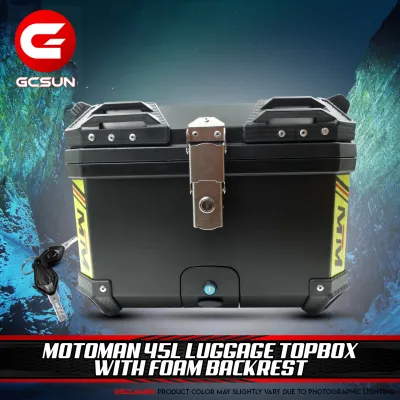
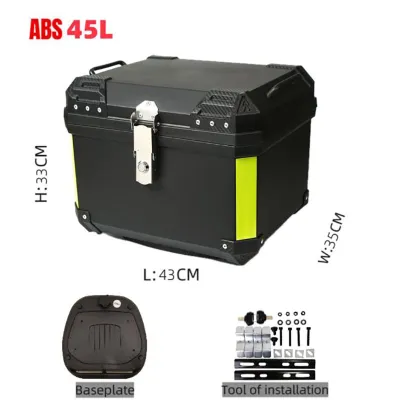
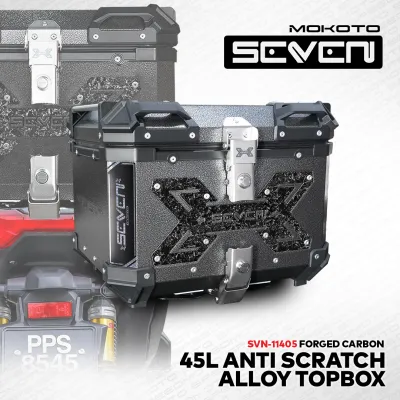
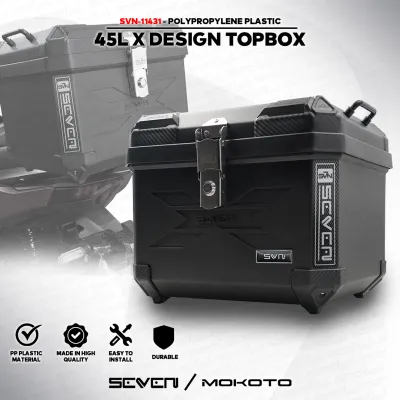
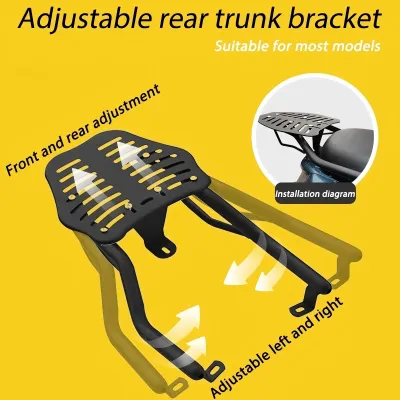
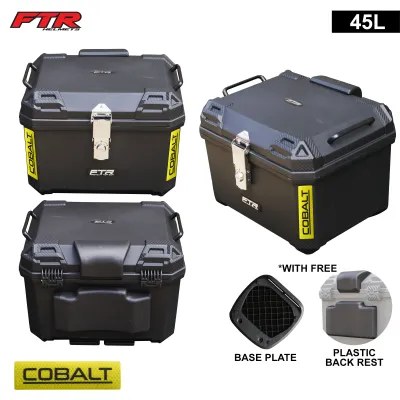
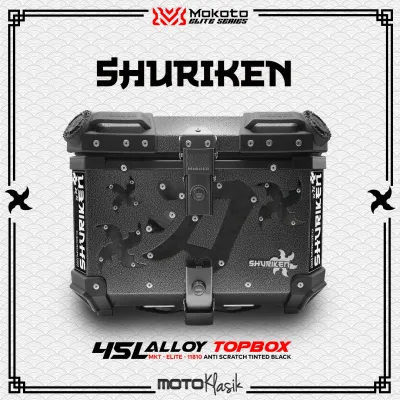
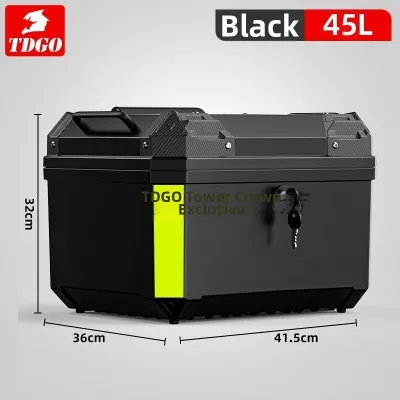
Prices are valid at publication and may change. Please refer to the product page for the latest price.
Original equipment manufacturer (OEM) racks are engineered specifically for the bike’s frame but often feature conservative weight ratings. Aftermarket racks must be verified against the manufacturer’s official specifications; never assume an aftermarket rack can support unlimited weight simply because it feels solid to the touch.
When calculating your cargo allowance, you must subtract the static weight of the empty top box and its mounting plate from the rack’s maximum capacity. A heavy aluminum top box can weigh 5 kilograms or more before you even place a single item inside. If your rear rack has a limit of 8 kilograms, a heavy empty box leaves you with very little remaining capacity for actual cargo, making lightweight plastic alternatives a more practical choice for smaller bikes.
Match Top Box Capacity to Your Motorcycle Class
To maintain both visual proportion and physical stability, the size of your top box should correspond directly to the class of your motorcycle. Lightweight underbones and standard commuter scooters, such as a 125cc scooter, are best paired with small-capacity top boxes ranging from 25 to 35 liters. These compact boxes provide enough space for a single helmet and a set of raincoats without overwhelming the bike’s narrow chassis or short wheelbase.

Mid-weight scooters and standard commuter motorcycles, including popular 150cc to 160cc models, can comfortably accommodate mid-capacity top boxes between 35 and 45 liters. These motorcycles feature stiffer frames and wider tires that handle the slightly wider profile of a mid-sized box. A box in this range is highly versatile, allowing you to store a full-face helmet alongside smaller personal items while keeping the motorcycle’s profile relatively streamlined.
Large-capacity top boxes, typically 45 liters and above, should be reserved for heavy-duty maxi-scooters, touring motorcycles, or adventure bikes. These larger machines possess the physical footprint, wider track, and heavy-duty subframes required to counteract the leverage exerted by a massive rear-mounted load. Installing a 45-liter or 50-liter aluminum box on a small scooter creates a sail-like effect that can make the front wheel feel dangerously light.
When selecting a box, use your motorcycle’s overall length and seat width as visual guides. A top box should never extend significantly wider than your handlebars or rear turn signals. Keeping the box’s width within the natural silhouette of the motorcycle minimizes aerodynamic drag and ensures you can still safely navigate through tight traffic lanes without clipping side mirrors.
Anticipate Handling Changes From Size and Placement
Adding a top box alters how your motorcycle behaves on the road, particularly when navigating tight corners. Because a top box is mounted high up and far behind the rear axle, it shifts the motorcycle’s center of gravity upward and rearward. This shift makes the front end feel lighter, which can reduce front-tire traction and alter the steering input required to initiate a turn. You will notice this change most during low-speed maneuvers, such as filtering through traffic.
Aerodynamic drag is another critical factor to consider, especially during the monsoon season when strong crosswinds are common. A large, boxy top box acts as a sail, catching lateral wind gusts and transferring that force directly to your rear subframe. This can cause the motorcycle to drift or feel unstable when passing large vehicles or riding on open highways. Choosing a top box with a rounded, aerodynamic profile can help mitigate this effect.
A heavily loaded rear rack can also induce high-speed instability, commonly referred to as a speed wobble or steering weave. When too much weight is concentrated behind the rear axle, it acts as a lever that unloads the front suspension. If you experience any lightness or oscillation in the handlebars at speed, you must reduce your speed immediately and redistribute your cargo more evenly.
Finally, you must prepare for adjusted braking distances and rear suspension behavior. The extra weight over the rear wheel increases the effectiveness of the rear brake but requires more overall stopping distance. If your motorcycle features adjustable rear suspension, you may need to increase the spring preload to prevent the rear end from sagging excessively under the weight of the loaded box.
Measure and Verify Physical Clearances Before Buying
Before finalizing your purchase, take precise physical measurements of your motorcycle’s rear section to ensure a secure and legal fit. Start by measuring the flat surface area of your rear rack to confirm that the top box’s mounting plate can sit completely flat. The mounting plate must be fully supported by the rack; any significant overhang can cause the plate to flex, crack, or vibrate loose over time.
Next, check the clearance for your passenger if you frequently ride with a pillion. The top box must be positioned far enough back to allow the passenger to sit comfortably without being pushed forward, yet close enough to prevent excessive rearward leverage. Ensure there is sufficient space for the passenger to hold the grab rails and that the box does not block their helmet or shoulders when they lean back.
You must also verify that the top box does not obstruct critical safety components. The box and its mounting hardware must not block the visibility of your taillight, brake light, or rear turn signals from any angle. If you plan to install a top box with integrated auxiliary brake lights, consult your vehicle’s documentation and seek qualified professional installation to avoid damaging the motorcycle’s electrical system.
Lastly, check the clearance for the box lid itself. Ensure that the lid can open fully without striking the rider’s backrest, the passenger grab bar, or any rear-mounted accessories. If the lid cannot open completely, loading and unloading your gear will become a constant source of frustration during daily use.
Avoid Common Sizing and Loading Mistakes
One of the most frequent mistakes riders make is ignoring the cumulative weight of their setup. It is easy to forget that the top box itself, along with the heavy steel mounting plate and brackets, counts toward your rear rack’s weight limit. Always calculate this baseline weight before adding your cargo to ensure you do not inadvertently overload the subframe.
Another common error is choosing a top box based solely on its internal volume without considering its external footprint. A box that can hold two full-face helmets might seem convenient, but if it extends far beyond the sides of your motorcycle, it will create severe aerodynamic drag and make lane filtering highly hazardous. Prioritize a balanced shape that aligns with your motorcycle’s natural proportions.
Avoid the temptation to pack dense, heavy items—such as tools, spare parts, or heavy security chains—inside your top box. Because the box is positioned high and rearward, heavy items should always be placed in a tank bag or center console area to keep the center of gravity low. Reserve the top box for lighter, bulky items like raincoats, jackets, and helmets.
Finally, never neglect regular maintenance of your mounting hardware. The vibrations from daily riding, especially on rough or unpaved roads, can gradually loosen the bolts securing your rack and mounting plate. Make it a habit to inspect and re-torque all mounting bolts and check the locking mechanism after the first few rides and during regular vehicle maintenance.
Frequently Asked Questions (FAQ)
Can I Install a Large Top Box on a Small Underbone Motorcycle?
While it is physically possible to mount a large top box on a small underbone motorcycle using aftermarket brackets, doing so is generally not recommended for safety reasons. Small underbones are designed with lightweight frames and suspension systems that can easily become overloaded by a heavy, high-mounted rear load. A large box significantly alters the bike’s center of gravity, making steering light and unpredictable, while also increasing the risk of subframe cracking. If you must install a box on an underbone, stick to a compact model under 35 liters and verify the weight limits of both the bike and the rack.
Does Adding a Top Box Affect Fuel Consumption?
Yes, adding a top box will generally increase fuel consumption, particularly at higher speeds where aerodynamic drag becomes the dominant force resisting your motorcycle’s forward motion. The boxy shape of most top boxes disrupts the airflow behind the rider, creating a low-pressure pocket that pulls the motorcycle backward. While the impact is minimal during low-speed city commuting, you may notice a slight decrease in fuel efficiency on open highways. To minimize this effect, choose a top box with a rounded, aerodynamic design, and consider removing the box when you do not need it for cargo.
Community discussion
Share your experience or ask a question. Comments are reviewed before publication.