
To choose the right wiper blade size and type for your Ford Ranger, you must verify the exact driver and passenger side lengths and identify the specific wiper arm attachment mechanism used for your truck’s model year. Because the Ford Ranger has spanned multiple generations with varying specifications, relying on a generic fitment guide can lead to poor windshield contact or loose blades. Checking your owner’s manual or physically measuring your current blades ensures a perfect match for clear visibility during heavy tropical downpours.
Selecting the wrong size can cause the blades to collide with each other or extend past the edge of the windshield frame, leading to mechanical damage. Conversely, blades that are too short will leave large, unwiped areas that compromise your field of vision. Taking a few minutes to verify your truck’s specific requirements prevents these issues and keeps your drives safe.
Identify the Correct Wiper Blade Sizes for Your Model Year
Determining the exact wiper blade lengths required for your specific Ford Ranger production year is the first step toward a successful replacement. Because the Ranger has undergone several major redesigns over the decades, the factory specifications vary significantly between older compact models, the mid-size T6 generation, and the next-generation platforms.
Products mentioned in this guide
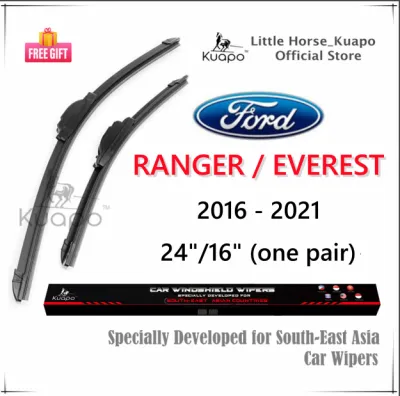
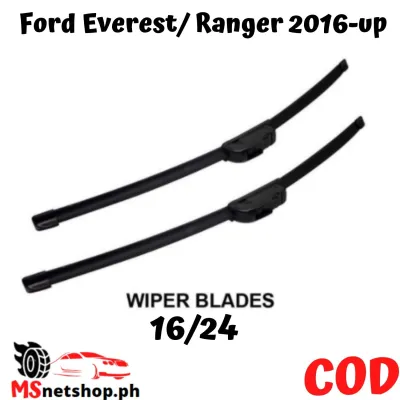
Prices are valid at publication and may change. Please refer to the product page for the latest price.
To find the correct measurements, consult your vehicle’s owner’s manual or look for the manufacturer’s specification label, which is often located on the driver-side door jamb or under the hood. These official documents provide the precise dimensions recommended by the manufacturer for the driver and passenger sides.
If the documentation is unavailable, you can physically measure the existing wiper blades. Use a tape measure to measure the entire blade assembly or the rubber element from end to end in inches or millimeters. Make sure the blade is lying flat against the glass while measuring to get an accurate reading.
When measuring, account for asymmetrical sizing. The driver-side blade on modern Ford Ranger models is typically longer than the passenger-side blade. This design maximizes the cleared windshield area directly in front of the driver while allowing the passenger blade to sweep the lower portion of the glass without hitting the frame.
Determine the Wiper Arm Attachment Type
Identifying the physical connection mechanism is just as critical as finding the correct length. Wiper blades do not use a universal mounting system, and forcing an incompatible attachment onto your Ford Ranger’s wiper arm can cause the blade to detach at highway speeds, creating a severe safety hazard and potentially scratching your windshield.

Inspect the current wiper blade connection to identify the hook or clip style. Depending on the model year of your Ford Ranger, you may find a traditional J-hook, a pinch tab, a push-button system, or a bayonet fitting. Older models commonly use the J-hook style, while newer generations often feature specialized clip mechanisms that require specific adapters.
Once you have identified the arm type, cross-reference it with the adapter compatibility list provided on the new wiper blade packaging or product specifications. Many aftermarket wiper blades come with a selection of plastic adapters designed to fit multiple arm styles, but you must verify that your specific connector is included before starting the installation.
Never attempt to modify a wiper arm or use makeshift fasteners to secure a blade that does not fit properly. If the connection does not click or lock firmly into place with a reassuring snap, the blade is not secure.
Select the Right Wiper Blade Material and Design
Choosing the appropriate blade structure and rubber compound is essential for maintaining clear visibility in the challenging driving environments of the Philippines. The intense tropical sun, high humidity, and sudden torrential rains require a durable blade design that can withstand extreme weather exposure without degrading rapidly.
When shopping, compare the structural differences between conventional bracket, beam, and hybrid wiper blades. Conventional bracket blades use a metal frame with multiple pressure points to hold the rubber against the glass. While cost-effective, these frames can wear out over time and may lift off the glass at higher speeds due to wind resistance.
Beam blades, also known as flat blades, feature a curved, tensioned steel strip embedded within the rubber housing. This design distributes pressure evenly across the entire length of the blade, resists wind lift, and prevents debris buildup. Hybrid blades combine the aerodynamic shell of a beam blade with the robust internal structure of a conventional frame, offering a balance of durability and performance.
Evaluate the rubber compounds carefully. Synthetic rubber blends or silicone-coated elements generally offer superior resistance to high UV exposure and extreme heat compared to standard natural rubber. In the Philippines, intense sunlight can quickly dry out and crack natural rubber, leading to premature tearing and poor wiping performance. Silicone blades also leave a water-repellent film on the glass over time, helping water bead up and slide off easily.
Installation and Maintenance Best Practices
Replacing your wiper blades is a straightforward task, but following a few safety precautions can prevent costly damage to your vehicle. Before you begin, always place a thick towel or protective pad over the windshield glass directly beneath the wiper arms.
When you remove the old wiper blade, the bare metal wiper arm is held under strong spring tension. If the arm accidentally slips from your hand and snaps back against the glass without the rubber blade to cushion the impact, it can easily crack or shatter the windshield, resulting in an expensive repair.
Once the new blades are securely installed, take a moment to clean the windshield surface thoroughly. Use a high-quality glass cleaner to remove road grime, tree sap, and oily residues. Additionally, wipe the new rubber elements gently with a damp microfiber cloth to remove any manufacturing residues or shipping protectants that could cause immediate streaking.
Monitor your wiper blades for immediate replacement signals rather than relying solely on a fixed calendar schedule. If you notice skipping, squeaking, or visible tearing of the rubber edge, it is time for a replacement. Regular inspections ensure your Ford Ranger is always prepared for sudden tropical downpours.
Frequently Asked Questions (FAQ)
Can I use different wiper blade brands on my Ford Ranger?
Yes, you can use different wiper blade brands on your Ford Ranger, as brand matching is not required for proper operation. The most important factors are ensuring that the physical dimensions and the attachment mechanisms are strictly compatible with your specific model year. However, it is highly recommended to replace both front blades at the same time using the same brand and model to ensure consistent wiping performance and even wear across your windshield.
How often should I replace the wiper blades on my truck?
Instead of following a rigid time-based schedule, you should replace your wiper blades based on observable performance and physical degradation. In the Philippines, the combination of intense tropical heat, UV exposure, and heavy seasonal rains can accelerate the wear of rubber compounds. Inspect your blades regularly and replace them immediately if you notice streaking, skipping, squeaking, or visible splitting along the rubber edge to maintain optimal driving safety.
Community discussion
Share your experience or ask a question. Comments are reviewed before publication.