
To determine whether your vehicle requires Automatic Transmission Fluid (ATF) or Continuously Variable Transmission (CVT) fluid, you must consult your vehicle’s technical documentation, perform a physical inspection under the hood, or decode the Vehicle Identification Number (VIN). Using the correct hyundai transmission fluid is critical because these two fluid types are chemically incompatible and engineered for entirely different mechanical operations. Misidentifying your transmission type can lead to severe operational issues, especially under the demanding, high-temperature driving conditions common in the Philippines.
Modern Hyundai vehicles utilize highly specific gearboxes that rely on precise fluid formulations to function. Substituting one fluid for another can destroy the internal components of your transmission within a few kilometers. Taking the time to verify your vehicle’s requirements before purchasing replacement consumables is the most effective way to prevent catastrophic mechanical failure.
Why Guessing Your Transmission Fluid Type Is Risky
Modern vehicle transmissions are highly sensitive, tightly calibrated instruments. Automatic Transmission Fluid (ATF) and Continuously Variable Transmission (CVT) fluid are formulated with completely different chemical profiles, friction modifiers, viscosity indexes, and anti-wear additive packages. ATF is designed to facilitate controlled friction for internal wet clutch packs to engage smoothly in traditional stepped gearboxes. Conversely, CVT fluid is engineered to prevent metal-on-metal slippage between a steel belt or chain and variable-diameter pulleys while maintaining high shear stability under extreme pressure.
Products mentioned in this guide
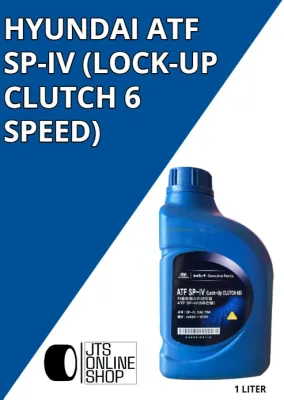
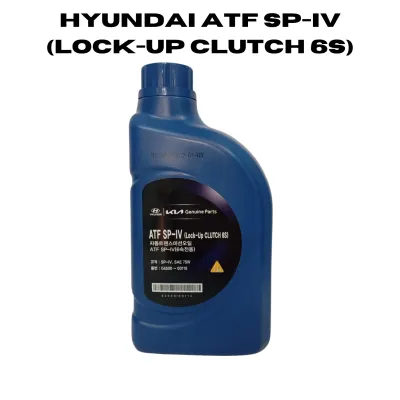
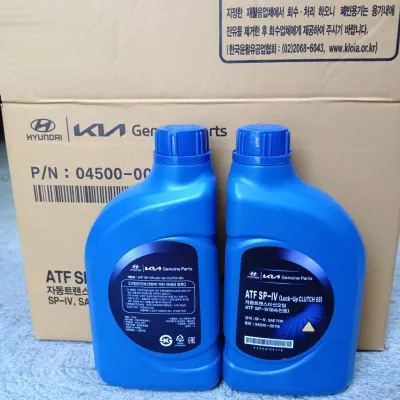

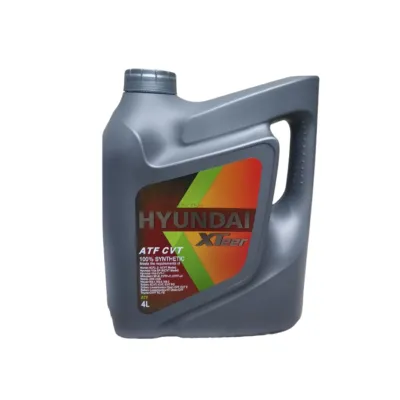
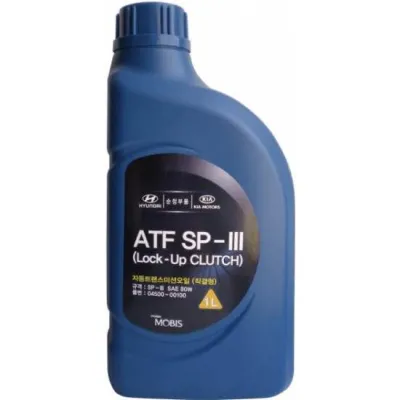
Prices are valid at publication and may change. Please refer to the product page for the latest price.
If you introduce CVT fluid into a traditional automatic transmission, or vice versa, the friction characteristics will be completely incorrect. This mismatch causes immediate belt slippage in a CVT or clutch degradation in an automatic, leading to severe overheating, physical scoring of components, and eventual transmission failure. The cost of rebuilding or replacing a ruined transmission far outweighs the minor effort required to verify the correct fluid specification.
Furthermore, “universal” or “multi-vehicle” fluids marketed as compatible with all transmission types are highly risky for modern Hyundai vehicles. These products often rely on compromise formulations that do not precisely meet Hyundai’s proprietary engineering standards, such as SP-IV or SP-CVT 1. Relying on these generic alternatives can compromise shift quality, void your vehicle’s manufacturer warranty, and accelerate internal wear, making exact identification of the manufacturer-approved fluid mandatory before any purchase or service.
4 Reliable Ways to Identify Your Required Hyundai Transmission Fluid
Finding the exact specification for your vehicle does not have to be a guessing game. By utilizing the following four reliable diagnostic methods, you can confidently identify the correct fluid type and protect your transmission from costly damage.

Consult the Owner’s Manual and Maintenance Guide
The most authoritative source for your vehicle’s specifications is always the physical or digital owner’s manual provided by the manufacturer. To find the correct fluid type, open the manual and navigate to the “Specifications,” “Capacities and Recommended Fluids,” or “Maintenance” section near the back of the book.
Within these tables, look specifically for the transmission fluid entry. Instead of generic terms like “gear oil” or “transmission oil,” Hyundai lists precise proprietary standards. For traditional automatic transmissions, you will typically see specifications such as Hyundai Genuine ATF SP-III, SP-IV, or SP-IV-RR. For CVT-equipped models, which Hyundai often refers to as Intelligent Variable Transmission (IVT), the manual will specify Hyundai Genuine CVTF, such as SP-CVT 1. Always write down this exact alphanumeric code, as it is the key to verifying compatibility when purchasing aftermarket or OEM fluids.
Inspect the Transmission Dipstick or Fill Plug
If you do not have access to the owner’s manual, a physical inspection of the vehicle can often provide the answer. On older Hyundai models or those equipped with a serviceable transmission, locate the transmission dipstick in the engine bay. This is usually distinct from the engine oil dipstick and is often color-coded, frequently appearing in red or yellow. Carefully pull the dipstick out and read the text stamped directly onto the plastic handle or the metal blade itself, which commonly prints the required fluid specification to prevent service errors.
However, many newer Hyundai models feature “sealed” transmissions that do not have a traditional dipstick. In these vehicles, you must locate the transmission’s fill plug or inspection port, which is typically accessed from underneath the car or through the front wheel well. These plugs or the surrounding transmission casing often feature a stamped label, colored tag, or embossed text indicating the required fluid standard. Because accessing these components requires raising the vehicle safely, always prioritize safety by using secure jack stands or consulting a professional technician if you lack the proper equipment.
Check the Under-Hood Fluid Specification Label
Another quick visual reference point is the vehicle’s under-hood specification label. Open your vehicle’s hood and inspect the underside of the hood panel, the radiator support shroud, or the strut towers. Hyundai often places a durable, heat-resistant sticker in this area containing critical vehicle emissions, belt routing, and fluid capacities.
While this label primarily focuses on engine oil viscosity, refrigerant types, and coolant specifications, some model years also list the transmission type and its corresponding OEM fluid standard. If your label contains this information, it will display the specific Hyundai standard alongside the volume capacity. Take a clear photograph of this label with your smartphone to keep as a handy reference when shopping for replacement fluids.
Decode Your VIN at a Dealership or Parts Store
When physical labels are missing, unreadable, or the owner’s manual is lost, decoding your vehicle’s 17-digit Vehicle Identification Number (VIN) is the most foolproof fallback method. Your VIN is a unique alphanumeric code that can be found on your vehicle registration documents, the lower driver’s side corner of the windshield, or the driver-side door jamb sticker.
By providing this 17-digit number to an authorized Hyundai dealership service department or a reputable automotive parts supplier in the Philippines, they can access the manufacturer’s database. This database pulls the exact factory build sheet for your specific vehicle, showing the precise transmission model installed during assembly. This method completely eliminates the risk of human error, ensuring you receive the exact OEM-approved fluid formulated for your specific model year and trim level.
Understanding Hyundai Transmission Systems: ATF vs. CVT
To understand why these fluids are not interchangeable, it helps to look at the mechanical differences between traditional automatic transmissions and continuously variable transmissions. Each system relies on a completely different set of physical principles to transfer power from the engine to the wheels.
Traditional Automatic Transmissions (ATF)
Traditional automatic transmissions use a complex network of planetary gear sets, hydraulic valves, and wet clutch packs to shift between fixed gear ratios, such as 6-speed or 8-speed systems. A torque converter acts as a fluid coupling between the engine and the transmission, allowing the vehicle to come to a complete stop without stalling the engine.
Because of this design, Automatic Transmission Fluid (ATF) must perform multiple demanding roles. It acts as a hydraulic fluid to actuate gear shifts, a coolant to dissipate intense heat, and a lubricant for the gears and bearings. Most importantly, ATF must possess highly specific friction-modifier additives that allow the internal clutch packs to slip slightly during engagement for smooth shifts, and then lock up tightly without slipping under load. Using a fluid with incorrect friction characteristics will cause erratic shifting, clutch slippage, and rapid wear of the friction plates.
Continuously Variable Transmissions (CVT)
Continuously Variable Transmissions, which are often marketed by Hyundai as Intelligent Variable Transmissions (IVTs), do not use fixed gears. Instead, they rely on a high-strength steel belt or chain wrapped around two variable-diameter pulleys. By constantly adjusting the width of these pulleys, the system provides an infinite range of gear ratios, optimizing fuel efficiency and engine performance.
The physical demands on CVT fluid are entirely different from those on ATF. Instead of facilitating controlled slippage for clutch plates, CVT fluid must provide an extremely high steel-on-metal friction coefficient to prevent the heavy steel belt from slipping against the smooth metal pulleys. If the belt slips even slightly under load, it can score the pulley faces and destroy the belt, leading to immediate transmission failure. At the same time, the fluid must provide excellent wear protection for the bearings and maintain low viscosity in cold temperatures while resisting thermal breakdown under intense heat.
What to Do If the Fluid Type Remains Unclear
If you have gone through these diagnostic steps and still cannot confidently determine whether your Hyundai requires ATF or CVT fluid, do not guess. Never assume compatibility based on general online forums, model years, or advice from non-professional sources.
First, check the applied product’s label and the treated item’s manufacturer instructions. If instructions conflict, the item is unidentified, or the use is not covered, stop and consult the manufacturer or a qualified professional. Draining, flushing, or topping off a transmission with an unverified fluid can lead to instant mechanical damage and void your vehicle’s warranty.
If you are performing a DIY service, stop the purchase process immediately. Contact a certified Hyundai technician or visit an official dealership service center. They have specialized diagnostic tools and direct access to Hyundai’s technical service bulletins (TSBs), which list any updated fluid recommendations or superseding part numbers for your specific vehicle.
Purchasing the Correct Hyundai Transmission Fluid in the Philippines
Once you have identified the exact fluid specification, sourcing high-quality, authentic products is the next critical step. In the Philippines, the automotive market is flooded with various aftermarket brands, making it essential to purchase from authorized Hyundai dealerships, established auto supply stores, or official brand flagship stores on major online marketplaces.
When shopping, ignore generic marketing terms on the front of the bottle like “universal transmission fluid” or “multi-vehicle formula.” Instead, turn the bottle over and carefully read the technical specifications on the back label. Verify that the product explicitly states compatibility with your required Hyundai specification code, such as Hyundai Genuine ATF SP-IV or Hyundai Genuine CVTF SP-CVT 1.
Additionally, keep in mind the local driving environment. The Philippines’ tropical climate, high humidity, and dense stop-and-go traffic in metropolitan areas subject transmissions to severe operating conditions. These factors accelerate fluid degradation, making it even more vital to use high-quality fluids that meet or exceed OEM specifications to prevent oxidation and maintain optimal thermal protection. Expect to pay broad price bands ranging from approximately ₱500 to ₱1,500 per liter, depending on whether you choose OEM Hyundai genuine fluids or premium fully synthetic aftermarket alternatives that carry certified compatibility.
Frequently Asked Questions (FAQ)
Can I mix ATF and CVT fluid in an emergency?
No, you should never mix ATF and CVT fluid under any circumstances, even in an emergency. These fluids have fundamentally different chemical structures and opposing friction characteristics. Mixing them will instantly compromise the fluid’s viscosity and friction properties, leading to immediate belt slippage in a CVT or clutch failure in a traditional automatic. If you suspect the wrong fluid has been added, do not drive the vehicle; have it towed to a professional service center to undergo a complete transmission flush.
Does my Hyundai use DCT fluid instead of ATF or CVT?
Yes, certain Hyundai models—particularly those equipped with turbocharged engines or performance trims—utilize a Dual-Clutch Transmission (DCT). A DCT is essentially an automated manual transmission that uses two separate clutches instead of a torque converter or a CVT belt. These systems require highly specialized DCT fluid, which can vary between dry-clutch and wet-clutch formulations. DCT fluid is completely different from both standard ATF and CVT fluid, which reinforces why you must always verify your specific vehicle’s requirements using the owner’s manual or VIN before purchasing any fluid.
Community discussion
Share your experience or ask a question. Comments are reviewed before publication.