
To select the correct engine stand weight capacity, you must determine the total weight of your fully dressed engine block and apply a safety margin of at least 20% to 50%. This buffer accounts for dynamic forces, such as the leverage exerted when rotating the block or the torque applied when loosening stubborn bolts. For instance, a standard four-cylinder engine weighing 150 kg should be paired with a stand rated for at least 225 kg to 300 kg to ensure absolute stability in your workshop.
Choosing an inadequate stand poses severe safety risks, including structural failure, tipping, and catastrophic damage to your engine. In the Philippines, where cast-iron diesel engines are highly common in utility vehicles and family SUVs, understanding these weight dynamics is crucial. Before mounting any engine, you must verify both the dry weight of the block and the structural limits of your garage equipment.
Understanding Engine Stand Weight Ratings
The weight rating displayed on an engine stand represents the maximum static load capacity under ideal conditions. A static load refers to the weight of the engine when it is completely still, balanced, and untouched. However, real-world garage work is rarely static, as you will constantly apply physical force to the engine assembly.
Products mentioned in this guide
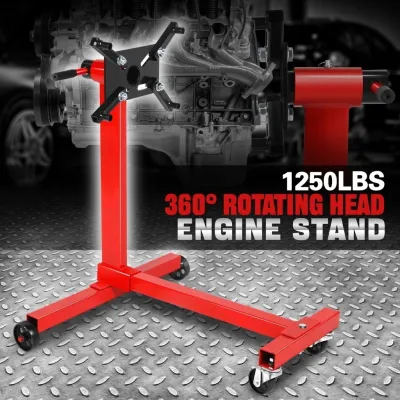
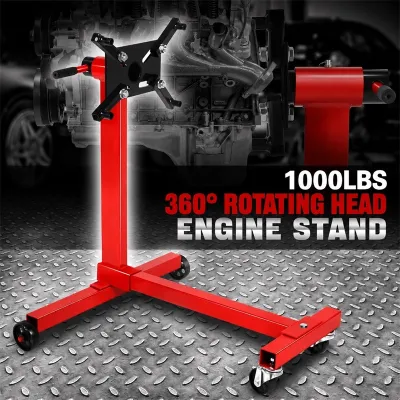
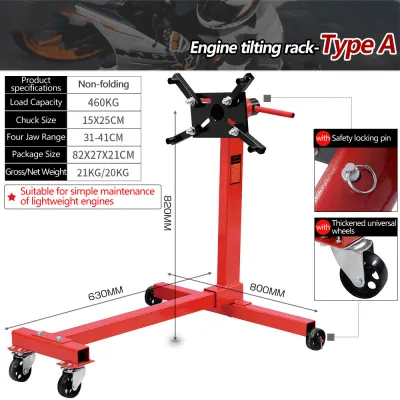
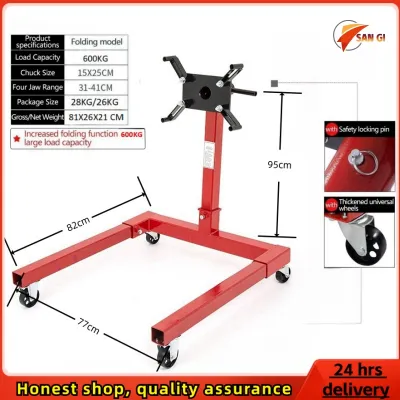
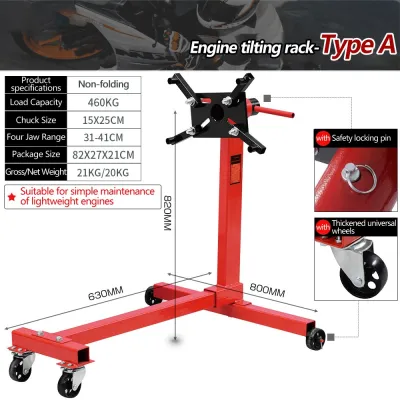
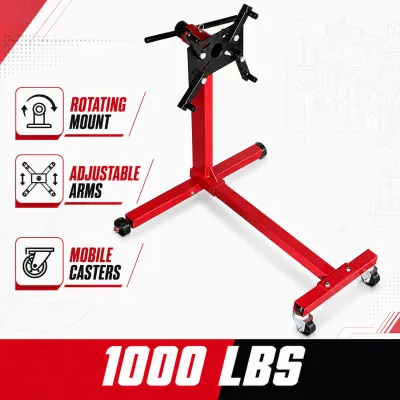
Prices are valid at publication and may change. Please refer to the product page for the latest price.
Dynamic loads occur whenever you rotate the engine on the stand, scrub away grease, or use a breaker bar to loosen tight bolts. These actions temporarily increase the downward and lateral forces acting on the stand’s frame. If your engine’s weight is too close to the stand’s maximum rating, these dynamic forces can easily exceed the structural limits of the metal.
Before purchasing or using any stand, always locate and inspect the physical safety label on the tool. This label should clearly state the Working Load Limit (WLL) or maximum capacity. If the label is missing, peeling, or illegible due to garage wear and tear, do not guess its capacity; instead, verify the specifications using the manufacturer’s official documentation.
How to Determine Your Engine's Actual Weight
To find the precise weight of your engine, your first and most reliable source of information is the vehicle’s official factory service manual. This document lists the dry weight of the bare engine block as designed by the manufacturer. Keep in mind that “dry weight” typically excludes oil, coolant, and several external accessories.
You must account for all attached components that will remain on the block while it is mounted on the stand. Items such as the intake and exhaust manifolds, alternator, power steering pump, starter motor, flywheel, and clutch assembly add significant weight. If you plan to keep these parts attached during the teardown or rebuild, estimate their combined weight and add it to the bare block’s weight.
If you are working on a modified engine or cannot find official documentation, do not rely on online forum guesses. You can consult a professional automotive machine shop, as they regularly handle various engine blocks and possess accurate weight databases. Alternatively, you can use a commercial platform scale to weigh the engine assembly before attempting to mount it.
Calculating the Required Capacity Margin
Applying a safety margin is a non-negotiable step when selecting garage equipment. A safety multiplier of 1.2 to 1.5 times the engine’s total dressed weight is highly recommended to accommodate leverage and dynamic forces. This safety buffer ensures that the stand can easily handle the physical stress of active wrenching without bending or buckling.
As you rotate the engine to access the oil pan or crankshaft, the assembly’s center of gravity shifts away from the stand’s central axis. This shift creates a powerful leverage effect, multiplying the stress placed on the mounting plate, the adjustable arms, and the upright support post. A generous capacity margin prevents these shifting forces from warping the mounting hardware.
Operating an engine stand at or near its absolute maximum limit accelerates structural fatigue in the steel and welds. Over time, repeated exposure to near-limit loads can cause microscopic cracks in the joints, especially in humid tropical environments where rust can silently compromise metal integrity. Keeping your engine’s weight well below the maximum limit preserves the tool’s structural lifespan.
Matching Stand Ratings to Common Engine Configurations
Compact four-cylinder gasoline engines, commonly found in subcompact sedans and hatchbacks, generally weigh between 100 kg and 180 kg. For these lighter blocks, a standard entry-level engine stand rated for 1,000 lbs (approximately 450 kg) provides an excellent safety margin. This setup allows you to work comfortably without worrying about structural deflection.
Standard V6 and small-block V8 engines, typical in larger passenger cars and mid-size SUVs, usually range from 180 kg to 280 kg. For these configurations, a mid-range stand rated for 1,250 lbs to 1,500 lbs (approximately 560 kg to 680 kg) is highly recommended. The extra capacity ensures the stand remains rigid when you apply high torque to head bolts or harmonic balancers.
Heavy-duty diesel engines, which are incredibly popular in the Philippines for utility vehicles, pickups, and vans, present a unique challenge. Due to their heavy cast-iron blocks and robust internal components, engines like the Toyota 2KD-FTV or Mitsubishi 4D56 can easily exceed 250 kg to 350 kg when fully dressed. These heavy blocks demand a heavy-duty stand rated for at least 2,000 lbs (approximately 900 kg) to guarantee safe operation.
Please remember that these weight ranges are general estimates for reference only. Engine weights vary wildly depending on whether the block and cylinder heads are made of cast iron or aluminum. Always verify the exact specifications of your specific engine model before mounting it to any stand.
Key Features to Check Beyond Weight Capacity
While weight capacity is the most critical safety metric, the physical design of the stand’s base plays a massive role in preventing tip-overs. Stands with an “H-shaped” or four-wheel base offer significantly better lateral stability compared to simpler “T-shaped” three-wheel designs. A wider base prevents the stand from tipping sideways when you are rotating a heavy engine block.
The quality of the wheels and casters is equally important, especially on rough or uneven garage floors. Look for heavy-duty steel or high-density polyurethane wheels equipped with reliable locking casters. Locking the wheels prevents the stand from rolling or shifting unexpectedly while you are applying heavy force with a wrench.
Examine the rotating head mechanism and the locking pin system to ensure they are robust and easy to operate. The mounting plate should feature heavy-duty, adjustable arms that can securely bolt to your engine’s specific bellhousing pattern. Always verify your engine’s specific mounting dimensions, bolt patterns, and thread pitches from the vehicle’s official documentation rather than assuming compatibility based on general engine size.
Before attempting to lift or mount the engine, ensure you are using a properly rated engine hoist and high-tensile mounting bolts. Always follow the original vehicle manufacturer’s instructions for engine removal and disassembly, and consult a qualified mechanic if you are unsure about handling heavy structural components.
Frequently Asked Questions (FAQ)
Is it safe to use an engine stand at its maximum rated capacity?
No, it is not safe to operate an engine stand at its absolute maximum rated capacity during active rebuild work. The maximum rating is a static limit calculated under perfect laboratory conditions, leaving no margin for the dynamic forces of wrenching, hammering, or rotating. Always maintain a safety margin of at least 20% to 50% between your engine’s weight and the stand’s rated limit.
Does the engine stand capacity need to include the transmission?
No, because you should never mount an engine and a transmission together on a standard engine stand. Standard stands are designed to support the engine block alone by bolting directly to the bellhousing face. Attempting to keep the transmission attached shifts the center of gravity too far forward, creating an extreme tipping hazard and putting dangerous leverage stress on the mounting arms. Always separate the transmission from the engine before mounting the block.
Community discussion
Share your experience or ask a question. Comments are reviewed before publication.