
When your engine begins to sputter, hesitate during acceleration, or struggle to start on a damp morning, the ignition system is almost certainly the culprit. Pinpointing the exact component responsible can save you both time and unnecessary expenses. The ignition process relies on a precise chain of events where the ignition coil transforms low-voltage battery power into high-voltage electricity, which the spark plug then uses to ignite the fuel-air mixture. When this chain breaks down, vehicle owners often face the dilemma of whether to replace the spark plugs or purchase a new component like an apido ignition coil universal. Understanding how to isolate the fault between these two critical parts is the key to an efficient, cost-effective repair.
Recognizing the Symptoms of Ignition System Failure
An ignition system failure rarely occurs without warning, presenting several distinct driveability issues before complete breakdown. The most common symptom is an engine misfire, which feels like a sudden jerk, hesitation, or temporary loss of power while driving. You might also notice a rough idle, where the vehicle vibrates excessively or experiences fluctuating RPMs while stationary at a traffic light. Hard starting, particularly after the vehicle has been sitting overnight or during periods of high humidity, is another classic indicator that the spark is too weak to initiate combustion efficiently.
Monitoring your dashboard is crucial during these episodes. A solid Check Engine Light (CEL) often illuminates when the engine control unit detects a misfire pattern, storing a diagnostic trouble code (DTC) that identifies the affected cylinder. If the CEL begins to flash, this indicates a severe, active misfire that is dumping unburned fuel directly into the exhaust system. This scenario requires immediate attention, as raw fuel can quickly overheat and melt the catalytic converter, leading to incredibly costly repairs. While these symptoms strongly point to an ignition failure, they can occasionally overlap with fuel delivery or air intake issues, making a systematic diagnosis essential.
Products mentioned in this guide
Prices are valid at publication and may change. Please refer to the product page for the latest price.
Safety Boundaries Before You Start Diagnosing
Working on a vehicle’s ignition system involves high-voltage electrical currents and hot mechanical components, demanding strict adherence to safety protocols. Before attempting any physical inspection or electrical testing, always consult your vehicle’s specific service manual for exact manufacturer instructions, torque specifications, and electrical system warnings. If the instructions in this guide conflict with your vehicle’s manual, or if your vehicle uses a non-standard ignition configuration, stop immediately and consult a qualified professional.

To prevent accidental electrical shocks, short circuits, or damage to sensitive vehicle electronics, always disconnect the negative battery terminal before removing any ignition components. Never pull spark plug wires or disconnect coil-on-plug connectors while the engine is running. Doing so can cause severe high-voltage electrical arcs that can jump to your body or feed back into the wiring harness, potentially destroying the Engine Control Unit (ECU). Additionally, allow the engine to cool completely before starting work; exhaust manifolds, cylinder heads, and spark plug wells retain extreme heat that can cause severe burns upon contact.
Step-by-Step Diagnosis: Isolating the Fault
Isolating an ignition fault requires a logical, step-by-step approach that begins with the most accessible and cost-effective components before moving to more complex parts. By systematically ruling out variables, you can accurately identify whether a simple worn plug or a failing coil is causing your engine’s performance issues.
To perform this diagnosis safely and accurately, you will need a few basic automotive tools. Ensure you have a dedicated spark plug socket with a rubber insert to protect the ceramic insulator, a spark plug gap gauge or feeler gauge, and a digital multimeter capable of measuring electrical resistance (ohms). Having these tools on hand allows you to verify physical dimensions and electrical specifications against manufacturer standards.
Inspecting the Spark Plugs
Begin your diagnostic process by removing the spark plugs from the affected cylinders for a thorough physical inspection. Carefully blow away any dirt or debris from the spark plug wells before removal to prevent contaminants from falling directly into the combustion chambers. Once removed, inspect the ceramic insulator body of each plug. Look closely for hairline cracks, chips, or flashover tracking, which appears as thin, black carbon lines running down the ceramic surface where high voltage has escaped to the engine block instead of reaching the electrode.
Next, use a feeler gauge or wire gap tool to measure the distance between the center and ground electrodes. Compare this measurement directly to the exact gap specification listed in your vehicle’s service manual or on the under-hood emissions label. A gap that is too wide increases the electrical resistance the coil must overcome, while a gap that is too narrow can prevent a robust flame kernel from forming, leading to incomplete combustion.
The appearance of the spark plug tip provides valuable clues about the operating conditions inside the cylinder. A healthy spark plug typically features light tan or grayish-white deposits. If you observe dry, black soot, this indicates carbon fouling, which is often caused by a rich fuel mixture, weak ignition voltage, or excessive idling. Wet, oily deposits suggest that engine oil is entering the combustion chamber, pointing to worn piston rings or valve guide seals. If the spark plug is physically intact, correctly gapped, and free of heavy deposits, the root cause of your misfire likely lies further upstream in the ignition coil or its associated wiring.
Evaluating the Universal Ignition Coil
If the spark plugs pass physical inspection, focus your attention on the ignition coil. For vehicles equipped with individual coil-on-plug (COP) systems, the easiest way to isolate a faulty coil is the “swap test.” If your diagnostic scan tool identifies a misfire on a specific cylinder, swap that cylinder’s ignition coil with a known working coil from an adjacent cylinder. Clear the diagnostic trouble codes, start the engine, and monitor the scanner. If the misfire code migrates to the new cylinder, the ignition coil is definitely faulty; if the misfire remains on the original cylinder, the issue lies elsewhere, such as a faulty fuel injector or low mechanical compression. Note that this test is only valid if the physical connectors and mounting configurations of the swapped coils are identical.
To confirm an ignition coil failure when a swap test is not possible, or to test a coil-pack system, use a digital multimeter to measure electrical resistance. Refer to your vehicle’s service manual or the coil manufacturer’s technical specifications for the correct primary and secondary resistance ranges. Connect the multimeter leads to the primary terminals (usually the low-voltage connector pins) to check the primary winding resistance, which is typically a very low value (often under 2 ohms). Then, measure the secondary resistance between the high-voltage output tower and the primary ground. An open circuit reading (infinite resistance) or a reading of zero ohms indicates an internal short or break in the copper windings, confirming a dead coil that requires immediate replacement.
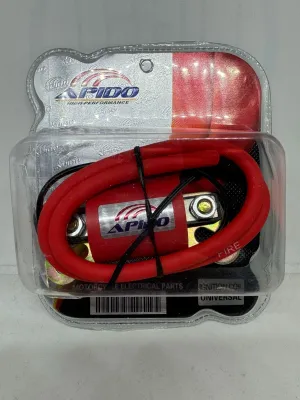
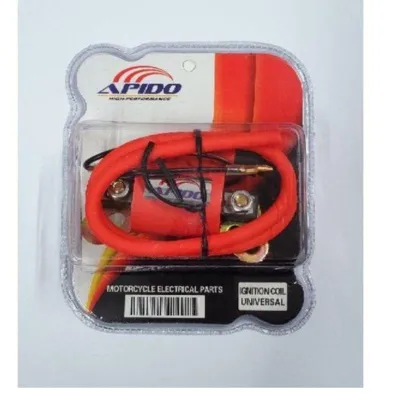
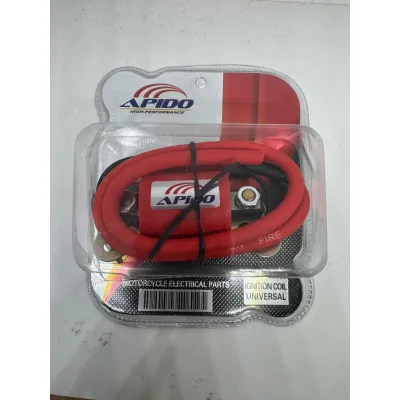
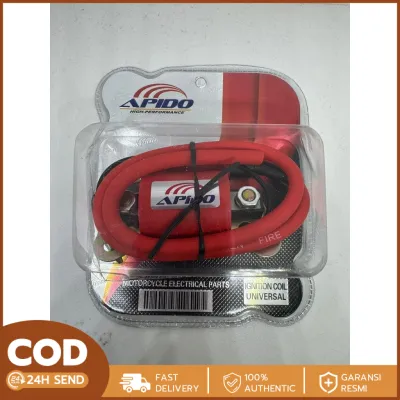
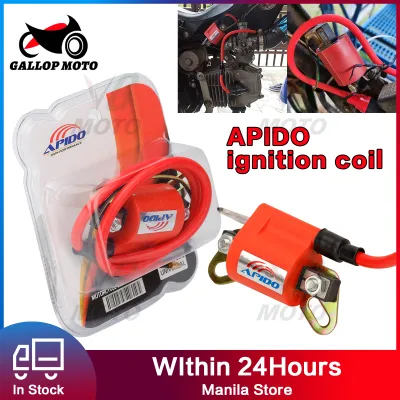
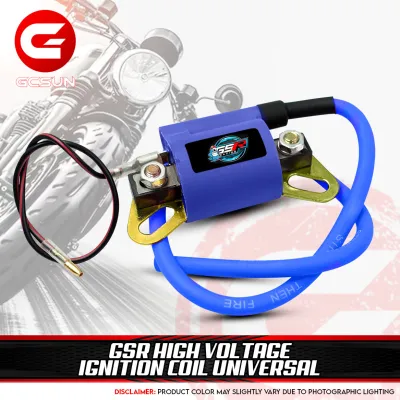
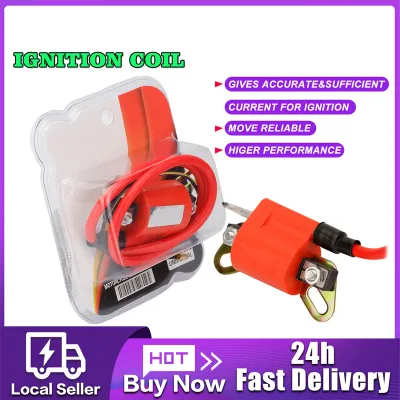
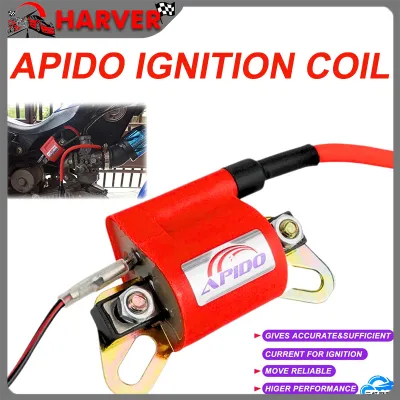
When replacing a faulty coil, many vehicle owners consider aftermarket options like an apido ignition coil universal. While universal ignition coils can be a highly cost-effective solution, you must verify that their electrical specifications—specifically primary and secondary resistance, voltage output, and physical mounting brackets—exactly match your vehicle’s original equipment (OE) requirements. Installing a universal coil with incorrect resistance values can overload the ignition drivers inside your vehicle’s ECU, leading to permanent computer damage or persistent secondary misfires. Always check the product label and manufacturer instructions to confirm compatibility before installation.
Quick Reference: Spark Plug vs. Ignition Coil Failure Signs
To help you quickly categorize your vehicle’s symptoms and determine the most logical diagnostic starting point, refer to the comparison guide below. This table outlines common driving scenarios, the most likely culprit behind them, and the recommended step to verify the fault.
| Symptom / Scenario | More Likely Culprit | Quick Verification Step |
|---|---|---|
| Misfire occurs only under heavy acceleration or uphill loads | Worn spark plug gap or weak coil insulation | Inspect and adjust the spark plug gap to manufacturer specifications; check coil for physical cracks. |
| Consistent dead cylinder (misfire at all engine speeds and idle) | Dead ignition coil or severely fouled/damaged spark plug | Perform a coil swap test or check the coil's primary and secondary resistance with a multimeter. |
| Random, intermittent misfires across multiple cylinders | Worn spark plugs, failing main coil pack, or wiring harness damage | Inspect all spark plugs for wear; verify the main ground connections of the ignition wiring harness. |
| Hard starting or stalling only when the engine is hot | Failing ignition coil experiencing thermal breakdown | Measure coil resistance immediately after the engine stalls or while it is hot to detect internal resistance spikes. |
Please note that this reference table is designed as a diagnostic starting point. Because ignition symptoms can mimic other mechanical or electrical faults, you must perform physical inspections and electrical testing to confirm the root cause before purchasing replacement components.
When to Stop and Consult a Professional Mechanic
While many ignition system diagnostics and component replacements are straightforward DIY tasks, there are specific scenarios where you should stop and seek professional assistance to avoid causing severe damage to your vehicle. If you attempt to remove a spark plug and find that it is seized in the cylinder head, do not force it. Applying excessive torque to a stuck plug can strip the aluminum threads in the cylinder head or snap the spark plug body in half, requiring highly complex and expensive engine repairs.
Similarly, if you discover that an ignition coil boot has melted and fused itself to the spark plug ceramic inside the deep spark plug well, do not attempt to pry it out with sharp tools. A professional mechanic has specialized extraction tools to remove the fused rubber without damaging the valve cover, plug well, or cylinder head. Additionally, if your multimeter testing reveals that both the spark plugs and ignition coils fall within normal manufacturer specifications, but your vehicle continues to misfire or struggle to start, the issue may stem from deeper electrical or mechanical problems.
Diagnosing complex issues such as an intermittent break in the wiring harness, a failing ECU ignition driver, or mechanical engine faults like low compression or a leaking head gasket requires specialized diagnostic equipment. Professional technicians utilize advanced oscilloscopes to monitor ignition waveforms in real-time and high-end scan tools to perform active component testing. If your basic DIY diagnostic steps do not yield a clear answer, consulting a qualified mechanic is the safest and most cost-effective path forward.
Preventive Maintenance in Humid Climates
Operating a vehicle in tropical climates, such as the high-humidity environment of the Philippines, presents unique challenges for the ignition system. High ambient humidity, combined with heavy seasonal rains and road spray, can lead to moisture accumulation inside the engine bay. This moisture can settle on the exterior ceramic of the spark plugs or inside the ignition coil boots, creating an alternative, low-resistance path for electrical current. Instead of traveling down the electrode to create a spark inside the combustion chamber, the high-voltage current arcs across the wet surface to the engine block, resulting in persistent misfires and hard starts.
To combat moisture-induced voltage leaks, always apply a thin layer of high-quality dielectric grease to the inside of the ignition coil boot or spark plug wire boot during installation. Dielectric grease is a non-conductive, silicone-based compound that seals out moisture, prevents electrical tracking, and stops the rubber boot from fusing to the ceramic insulator of the spark plug over time. Ensure you only apply a thin film inside the boot, avoiding the metal electrical terminals themselves, and follow the product label instructions carefully.
Additionally, strictly adhere to your vehicle manufacturer’s recommended spark plug replacement intervals. As spark plugs age, their electrodes gradually erode, widening the gap and increasing the electrical resistance. To jump this larger gap, the ignition coil must generate a significantly higher voltage, which produces excessive internal heat. Over time, this heat breaks down the thin insulation around the coil’s internal copper windings, causing premature coil failure. Keeping the engine bay clean, ensuring all weather seals on the ignition coil electrical connectors are fully seated, and replacing worn plugs promptly will significantly extend the lifespan of your entire ignition system.
Frequently Asked Questions (FAQ)
Can a failing ignition coil ruin new spark plugs?
Yes, a failing ignition coil can indirectly ruin a set of brand-new spark plugs. When an ignition coil begins to fail, it may produce a weak spark or fail to fire entirely, leading to incomplete combustion within that cylinder. The unburned fuel-air mixture cannot escape completely and will coat the tip of the new spark plug in wet fuel or black carbon deposits, a condition known as fuel or carbon fouling. While this does not physically destroy the structural integrity of the spark plug, the carbon coating creates an electrical short that prevents the plug from sparking. The plug will remain unusable until the underlying faulty coil is replaced and the fouled plug is thoroughly cleaned or replaced.
Is a universal ignition coil as reliable as an OEM part?
A high-quality universal option, such as a properly specified Apido ignition coil universal, can be highly reliable if its electrical output, primary and secondary resistance, and physical dimensions perfectly match your vehicle’s original equipment manufacturer (OEM) specifications. Universal coils are often designed to fit a wide range of engine configurations, making them a versatile and cost-effective replacement choice. However, using a low-quality, unverified universal coil that does not match the electrical resistance requirements of your vehicle’s ignition system can lead to weak spark, premature thermal breakdown, or even damage to the ignition drivers in your engine control unit. Always verify the technical specifications and compatibility before purchasing and installing any universal ignition component.
Community discussion
Share your experience or ask a question. Comments are reviewed before publication.