
To find the correct cabin air filter for your Toyota Innova, you must match the filter’s physical dimensions and part number to your vehicle’s specific production year and generation. Because the Innova has undergone major design updates across its generations, a filter designed for an older model will not fit a newer model. Checking your vehicle’s documentation is the most reliable way to ensure a clean, dust-free cabin and maintain the efficiency of your air conditioning system in hot, humid tropical climates.
Identify Your Exact Toyota Innova Variant and Production Year
In the Philippines, the Toyota Innova is a highly popular family vehicle spanning multiple generations. To begin your search, you must know the exact production year and trim level of your vehicle, such as the J, E, G, or V variants. This information is typically found on your official vehicle registration documents or within the introductory pages of your owner’s manual.
Another reliable method is locating the Vehicle Identification Number (VIN). This unique 17-character code is often stamped on a metal plate visible through the driver-side windshield dashboard area or printed on a sticker inside the driver-side door jamb. Having this number ready allows parts suppliers to look up the exact factory specifications for your specific build, eliminating any guesswork.
Products mentioned in this guide
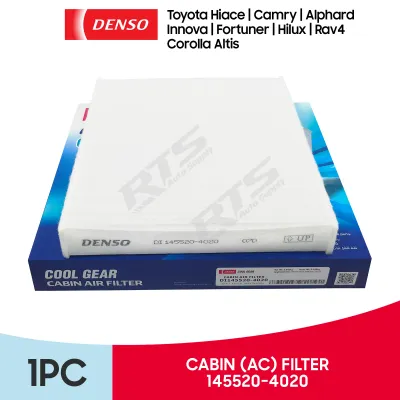
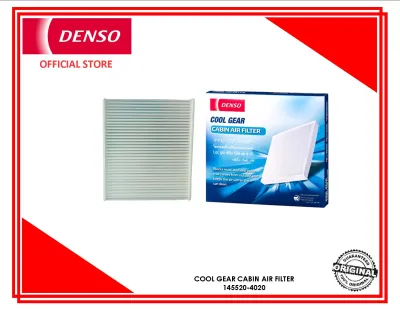
Prices are valid at publication and may change. Please refer to the product page for the latest price.
Locate the Correct Cabin Filter Part Number and Specifications
To find the exact part number, start by consulting the maintenance or specifications section of your Toyota Innova owner’s manual. The manual lists the original equipment manufacturer (OEM) part number recommended for your vehicle’s heating, ventilation, and air conditioning (HVAC) system.

If the manual is unavailable, you can physically inspect the existing cabin filter. Accessing the filter housing—usually located behind the glove compartment—allows you to slide out the current filter tray. Check the plastic frame or the edge of the filter media itself, as manufacturers often print the part number, brand logo, and directional airflow indicators directly on the side.
When purchasing aftermarket alternatives, always cross-reference your VIN or OEM part number with an authorized dealer’s parts database or a reputable automotive parts catalog. This step ensures that the replacement filter matches the exact height, width, and depth required for your housing, preventing unfiltered air from bypassing the element.
Understand Cabin Filter Types and Material Options
Once you know the correct size, you can choose between different filter materials based on your driving environment. Standard particulate filters are typically made of pleated paper or non-woven synthetic fibers. These are highly effective at trapping common road dust, pollen, and airborne debris, making them a reliable and cost-effective choice for daily commuting.
For drivers frequently navigating heavy urban traffic, congested highways, or areas with strong odors, activated carbon filters offer an upgraded solution. These filters feature an extra layer of charcoal that chemically traps harmful gases, exhaust fumes, and unpleasant odors, significantly improving cabin air quality.
Regardless of the material upgrade you select, the physical dimensions, thickness, and mounting interfaces must match the original factory specifications exactly. An upgraded material will not function correctly if it does not seal perfectly within the filter tray, as gaps will allow unfiltered air to circulate through your cabin.
Verify Fitment Before Purchasing and Installing
Before finalizing your purchase, double-check the compatibility list printed on the product packaging or listed in the online product description. Ensure your specific Innova model year and engine variant are explicitly supported. If you are buying from an online marketplace, verify that the seller’s part cross-reference matches your OEM number.
When the new filter arrives, inspect its physical construction before attempting installation. Check that the edge seals or foam gaskets are intact and flexible. These seals are crucial for creating a tight, gap-free fit within the HVAC housing, ensuring all incoming air is forced through the filtration media rather than leaking around the sides.
During installation, pay close attention to the directional markings on the filter. Most filters feature an arrow labeled “Air Flow” or “Up.” Installing the filter upside down can restrict airflow, reduce the cooling efficiency of your air conditioning system, and cause premature wear on the blower motor. Always align the arrow according to the instructions in your owner’s manual or the markings on the filter cover.
Frequently Asked Questions (FAQ)
How often should I replace the cabin air filter in my Innova?
Under normal driving conditions, cabin air filters are generally replaced every 10,000 to 15,000 kilometers, or at least once a year. However, if you frequently drive in highly congested urban areas, dusty provincial roads, or during heavy construction seasons, you should inspect the filter more frequently. A clogged filter restricts airflow, reducing the cooling performance of your air conditioner—a critical issue in hot, humid tropical climates. Always prioritize the specific maintenance intervals outlined in your Toyota Innova owner’s manual.
Can I wash and reuse my Innova's cabin air filter?
No, standard pleated paper or non-woven synthetic cabin air filters are designed strictly for single-use and should not be washed or vacuumed. The microscopic fibers in these filters are engineered to trap fine particles, and exposing them to water or high-pressure air destroys their physical structure and filtration efficiency. Furthermore, washing a paper-based filter can trap moisture within the fibers, leading to mold and bacteria growth inside your HVAC system, which creates musty odors and compromises your health. Always replace a dirty filter with a brand-new unit.

Community discussion
Share your experience or ask a question. Comments are reviewed before publication.