
Finding the right fit for a plus-size riding raincoat—specifically a raincoat XXXL size for men—demands a careful balance between generous coverage and aerodynamic efficiency. Unlike standard outerwear, a motorcycle rain jacket must slip easily over bulky protective armor without ballooning at highway speeds or restricting your reach to the handlebars. The ideal fit is snug enough to prevent wind-induced flapping yet spacious enough to allow a full range of motion. By taking gear-inclusive measurements and understanding how to interpret manufacturer size charts, you can secure a raincoat that keeps you dry and safe on the road.
Why Standard XXXL Raincoats Fail for Motorcycle Riders
Standard casual raincoats are designed for upright, stationary, or slow-walking activities. When you transition to a motorcycle, your physical posture changes dramatically. Your arms stretch forward, your shoulders broaden, and your spine arches. A standard casual XXXL raincoat lacks the pre-curved sleeves and expanded back panel required for this active stance. Consequently, when worn over a protective riding jacket with elbow and shoulder armor, a casual raincoat will pull tight across the upper back and shoulders, restricting your ability to steer quickly in an emergency.
Furthermore, standard raincoats lack wind-management features. At typical riding speeds, any excess fabric catches the wind, creating a violent “parachute effect.” This constant flapping does more than just generate distracting noise; it creates significant aerodynamic drag that pulls at your shoulders, leading to rapid rider fatigue during long wet-weather commutes. More importantly, loose, billowing fabric is a safety hazard. Excess material can easily snag on handlebar controls, footpegs, or even the rear wheel assembly, potentially causing a loss of control. Specialized motorcycle rain gear is engineered to address these specific forces with tailored cuts and adjustable tension straps.
Products mentioned in this guide
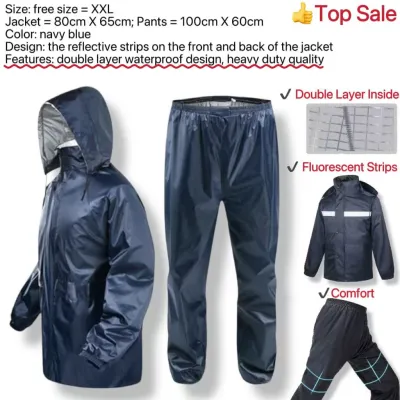
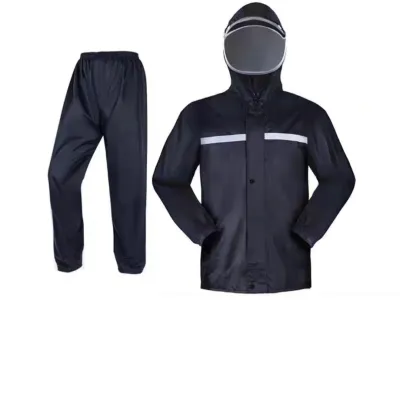
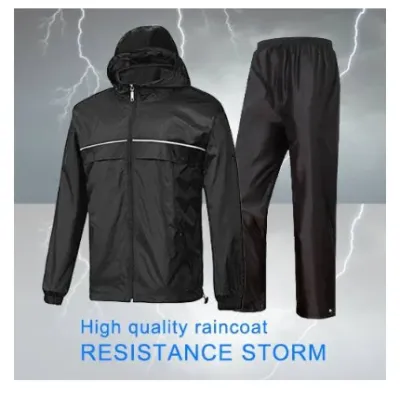
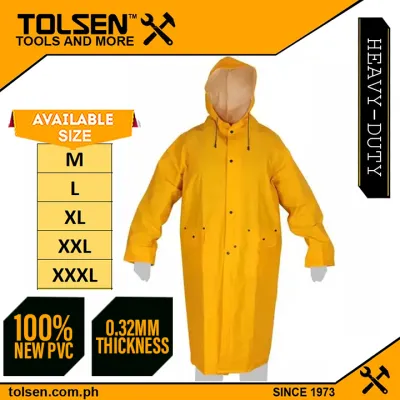
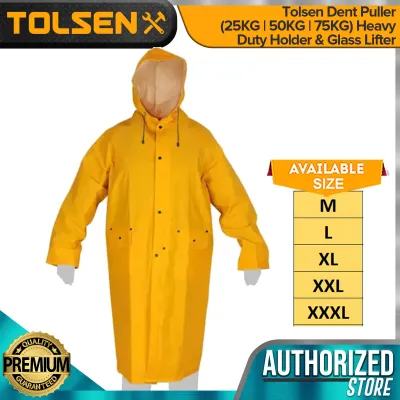
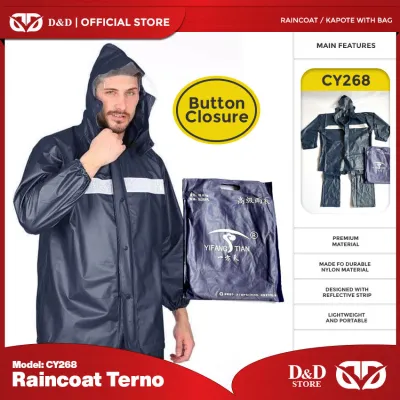
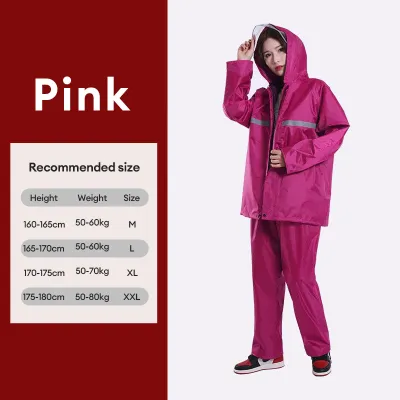
Prices are valid at publication and may change. Please refer to the product page for the latest price.
How to Prepare for Accurate Gear-Inclusive Measurements
To find a raincoat that fits perfectly, you must measure yourself while wearing your complete riding outfit. Do not take measurements while wearing only a t-shirt or light casual wear. In the tropical climate of the Philippines, wet-season riding often involves layering over mesh jackets or light armor to stay cool while remaining protected. Put on your typical riding jacket, complete with all its integrated shoulder, elbow, and back protectors, along with any chest armor you regularly use.

To complete this process, you will need a flexible vinyl measuring tape, a full-length mirror to check your posture, and ideally a helper to take the measurements while you maintain a natural riding stance. Attempting to measure yourself alone often leads to twisting your torso, which skews the numbers and results in an inaccurate fit. Ensure you stand naturally without holding your breath or pulling in your stomach, as you need the raincoat to accommodate your body comfortably throughout long rides.
Step-by-Step Guide to Measuring and Selecting Your Raincoat
Selecting the correct size requires translating your gear-inclusive dimensions into the specific sizing systems used by motorcycle gear manufacturers. This process goes beyond looking at a simple tag and involves matching your physical limits to the garment’s actual cut.
Taking Body and Gear Measurements
To get an accurate measurement, focus on three critical areas of your body while wearing your full riding gear:
- Chest and Belly: Wrap the flexible measuring tape around the fullest part of your chest and torso, directly over your riding jacket and armor. Keep the tape parallel to the floor. Do not pull the tape so tight that it compresses the armor or padding; it should rest flat against the outermost fabric. If you have a prominent belly, take a second measurement around the widest part of your midsection, as some riding jackets feature a tapered cut that may be too tight at the waist.
- Sleeve Length: Stand with your arm slightly bent at the elbow, mimicking the natural angle of your arms when holding your motorcycle's handlebars. Have your helper place the start of the tape at the prominent bone at the base of your neck (the center back). Run the tape over the top of your shoulder, down the outside of your arm, over the elbow armor, and terminate at the wrist bone. This ensures the sleeves will not ride up your forearms and expose your wrists when you reach for the grips.
- Back Length: Sit on your motorcycle or a chair, leaning slightly forward into your typical riding position. Measure from the base of your neck down your spine to your tailbone. A proper riding raincoat must feature an extended tail to prevent the jacket from riding up and exposing your lower back to water spraying off the rear tire.
Interpreting Size Charts for Riding Posture
Once you have these measurements, compare them to the manufacturer’s size chart. It is vital to determine whether the chart lists “body measurements” or “garment measurements.” If the chart represents actual body measurements, the manufacturer has already factored in extra room for layering. However, if the chart lists the flat dimensions of the raincoat itself, you must select a size that is at least two to three inches larger than your gear-inclusive measurements to ensure a comfortable fit.
Never assume that an “XXXL” from one brand matches an “XXXL” from another, particularly when browsing online marketplaces. Sizing standards vary widely between Asian and European manufacturers. An Asian-fit XXXL is often comparable to a Western XL or XXL. Always rely on the detailed centimeter or inch measurements provided on the product page rather than the letter size on the label. If your measurements fall between two sizes, prioritize the larger size to ensure your armor is not compressed, provided the jacket has adequate adjustment straps to pull in the excess fabric.
How to Test the Fit and Adjustability Before Hitting the Road
Before heading out into a heavy downpour, you must verify how the raincoat performs dynamically. A static fit test in front of a mirror is not enough to guarantee safety and comfort on the road.
The Riding Posture Test
Once your raincoat arrives, put it on over your full riding gear and sit on your motorcycle. Extend your hands to the handlebars and turn them fully from lock to lock. Feel for any tightness across your shoulders or under your armpits. If the fabric pulls taut or restricts your reach, the jacket is too small and will cause muscle strain during extended rides. The material should drape naturally over your arms and torso without binding at any joint.
Collar and Hem Check
Fasten the collar completely. Turn your head fully to the left and right to simulate checking your blind spots. The collar must seal out water without pinching your neck or restricting your head rotation. Next, check the lower hem of the jacket. It should cover your hips and the top of your thighs without bunching up around your waist or catching on the seat or fuel tank. Ensure the lower hem does not hang so low that it risks contacting any moving parts of the motorcycle, such as the chain or rear wheel.
Testing Adjustability
A high-quality plus-size riding raincoat features multiple adjustment points to customize the fit. Locate the waist drawstrings, Velcro sleeve cuffs, and snap buttons along the arms. Cinch these adjusters to pull in any excess fabric. This customization is critical for eliminating the parachute effect and keeping the material flat against your body at speed. The cuffs should seal tightly around your gloves, preventing wind and water from driving up your sleeves.
Storm Flaps and Seals
Inspect the main zipper. It should be covered by a wide storm flap secured by Velcro or snaps. While seated on your bike, ensure this flap lies completely flat without buckling or gapping. Any gaps in the storm flap will allow wind-driven rainwater to penetrate the zipper, rendering the raincoat ineffective. If the jacket features a double-flap system, ensure both layers are properly aligned and fastened.
Essential Design Features for Tropical Riding Conditions
Riding in the Philippines during the monsoon season presents a unique challenge: keeping water out while managing intense tropical heat and humidity. A completely sealed, non-breathable plastic raincoat will quickly create a sauna-like environment inside, leaving you soaked in sweat. Look for raincoats equipped with underarm ventilation zippers (pit zips), zippered back vents covered by protective flaps, or a breathable mesh inner lining that prevents the outer shell from sticking to your skin.
Heavy tropical downpours dramatically reduce road visibility for all motorists. Your raincoat must feature prominent high-visibility elements. Look for wide retroreflective strips across the chest, upper back, and sleeves. These elements ensure you remain visible to other drivers in low-light, high-spray conditions. Bright fluorescent colors like neon yellow or orange are highly recommended for daytime visibility in heavy rain.
Finally, do not assume a fabric is fully waterproof based on its name alone. Check the product specifications for fully taped or heat-sealed seams on the interior. Water easily penetrates stitch holes under the pressure of riding speeds, so sealed seams are mandatory. Verify these details on the manufacturer’s product tag or documentation before trusting the gear in a heavy downpour.
Frequently Asked Questions (FAQ)
Should I size up to a 4XL if my measurements are at the top of the XXXL chart?
Only size up if your gear-inclusive measurements exceed the maximum limits of the XXXL chart, or if you plan to wear exceptionally thick winter armor. Sizing up unnecessarily to a 4XL can introduce excessive loose fabric that flaps violently at speed. If the XXXL jacket features robust waist, arm, and cuff adjusters, it is generally better to stick with the XXXL to maintain a streamlined profile rather than dealing with the wind drag of an oversized 4XL.
Are two-piece rain suits better than ponchos for plus-size riders?
Yes, two-piece rain suits consisting of a separate jacket and pants are vastly superior and safer than ponchos for motorcycle riders. Ponchos are highly dangerous on a motorcycle; they catch the wind like a sail, severely compromising your stability, and the loose, draping fabric can easily tangle in the rear wheel, chain, or footpegs. A two-piece suit provides a secure, contoured fit that stays close to your body, ensuring maximum weather protection and safety at all riding speeds.

Community discussion
Share your experience or ask a question. Comments are reviewed before publication.