
Identifying genuine Honda Click fly balls, also known as roller weights, requires a close inspection of the packaging labels, physical build quality, and purchasing channels. Counterfeit parts are common in the local market, but you can protect your scooter by checking for crisp label printing, correct part numbers matching your official service manual, and clean, seamless plastic molding on the rollers themselves. Verifying these details before installation ensures your continuously variable transmission (CVT) operates reliably under demanding tropical riding conditions.
Why Authentic CVT Roller Weights Matter for Your Scooter
The continuously variable transmission in your scooter relies on a delicate balance of centrifugal force and friction. Genuine roller weights are engineered to slide and roll smoothly within the variator pulley to change gear ratios seamlessly as engine speed increases. When you install counterfeit parts, you risk disrupting this balance due to inconsistent weights or substandard materials that degrade rapidly under high heat.
Substandard fly balls can cause severe, accelerated wear on other critical CVT components. Rough or out-of-spec rollers can gouge the aluminum faces of the variator pulley, shred the drive belt prematurely, and lead to sudden loss of acceleration. In the worst-case scenario, a shattered roller weight can lock up the transmission system entirely while riding, posing a severe safety hazard on busy roads.
Products mentioned in this guide
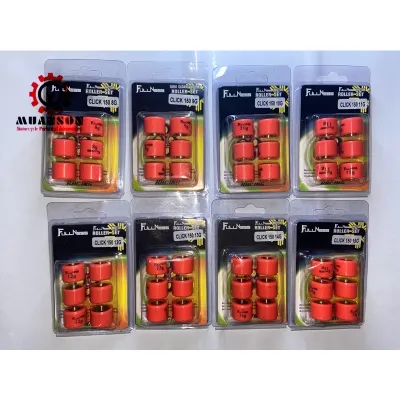
![[KV] Click 125/150 Genuine FLYBALL Set 14G (BLACK) 2212A-K36-T00 From Thailand](https://img.lazcdn.com/g/p/036611b45cedcb3393bfb9ce6179a98c.jpg_400x400q80.jpg_.webp)
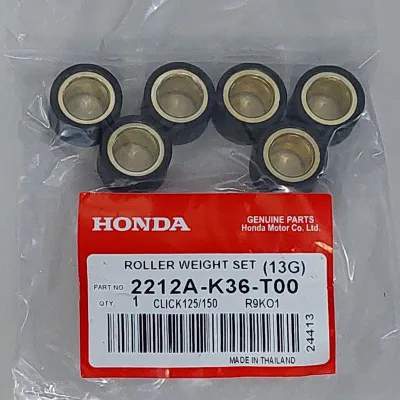
![[RCP]Honda Click 125/150 Genuine FLYBALL Set 9G (BLACK) 2212A-K36-T00 -Thailand](https://img.lazcdn.com/g/p/f4d7f4656d782cd847d02f57f44ec037.jpg_400x400q80.jpg_.webp)
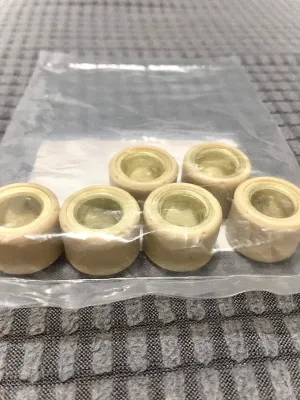
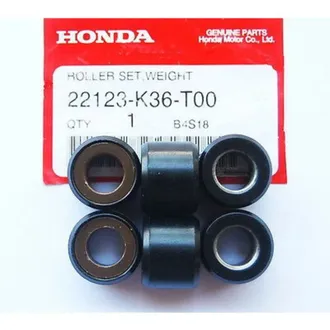
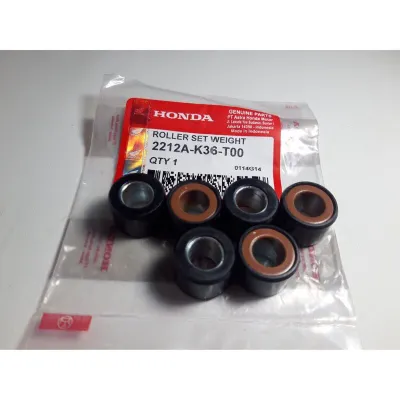
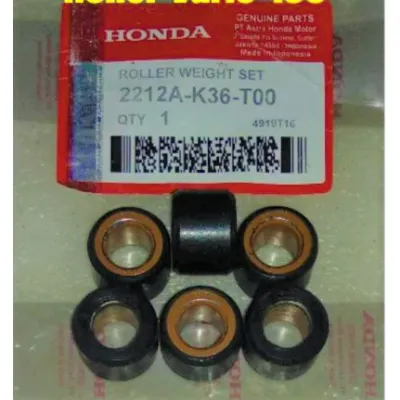
Prices are valid at publication and may change. Please refer to the product page for the latest price.
Furthermore, inconsistent weights directly impact your scooter’s daily performance and fuel economy. If the rollers are too light or unevenly manufactured, your engine may rev excessively without delivering power to the wheel, increasing fuel consumption during your daily commute. Ensuring every component meets original equipment manufacturer specifications is essential for maintaining the smooth, efficient ride your scooter was designed to provide.
Using genuine parts also preserves the longevity of your engine’s crankshaft and bearing assemblies. When roller weights are unbalanced, they create micro-vibrations at high revolutions per minute. Over time, these vibrations transfer directly to the crankshaft, potentially causing premature bearing wear and costly engine repairs that far exceed the savings of buying cheap, unverified parts.
Physical and Packaging Markers of Genuine Honda Fly Balls
Verifying the authenticity of your replacement parts is easiest when you have a known genuine benchmark to compare them against. Before purchasing or installing any new transmission components, consult your official Honda Click service manual to confirm the exact part numbers, dimensions, and weight specifications designated for your specific model year.

Because transmission work directly affects your motorcycle’s drive system and operational safety, always refer to the original vehicle manufacturer’s instructions. If you are not confident in performing CVT disassembly, inspection, or installation yourself, have the work completed by a qualified motorcycle technician.
When inspecting parts, it is highly recommended to bring an old, verified genuine roller weight with you to the shop. Having a physical reference allows you to perform side-by-side comparisons of the weight, texture, and dimensions. This hands-on approach is one of the most reliable ways to detect subtle differences that might otherwise go unnoticed.
Inspecting the Packaging and Labels
Genuine Honda spare parts are distributed in high-quality packaging featuring clear, high-resolution printing. Examine the red-and-white label on the plastic packaging or box, paying close attention to the clarity of the Honda logo, part description, and barcode. Counterfeit labels often exhibit blurry text, off-center alignment, or slight color variations that indicate cheap printing equipment.
Carefully read the text on the label to check for spelling mistakes, inconsistent fonts, or unusual language phrasing in the warning and instruction sections. Genuine labels use standardized, precise terminology and consistent typography across all printed fields. Any smudging, uneven ink distribution, or peeling adhesive on the label is a strong indicator of a counterfeit product.
Cross-reference the printed part number directly with your official service manual or an authorized dealer catalog. Counterfeiters frequently print generic part numbers on their labels that do not match the specific model year or engine displacement of your Honda Click. A quick online check of the part number on an official distributor database can help confirm if the label details are legitimate.
Additionally, look for security features such as holographic patterns or specific tamper-evident seals that are common on genuine packaging. Many counterfeiters attempt to replicate these seals, but their versions often lack the depth, color-shifting properties, or clean adhesion of the original. If the seal looks dull or peels off without leaving a pattern, exercise extreme caution.
Checking the Roller Weight Build and Markings
Once you open the packaging, inspect the physical construction of each individual roller weight. Genuine fly balls feature a highly precise outer plastic sleeve molded over a metallic core, with clean edges and no excess plastic flash or visible seams. Counterfeit rollers often show rough molding lines, uneven edges, or plastic debris left over from a cheap manufacturing process.
Look closely at the sides and inner core of the rollers for any molded or engraved specifications, such as weight markings or manufacturer codes. Genuine parts are manufactured to strict tolerances, meaning each roller in the set will have identical markings and a uniform surface finish. If the markings are faint, unevenly stamped, or entirely missing, the parts are likely counterfeit.
The material density and surface texture of genuine rollers are designed to minimize friction and resist flat-spotting over thousands of kilometers. Genuine sleeves feel smooth and slightly self-lubricating, whereas fake rollers often use cheap, hard plastics that feel rough or brittle to the touch. If you have access to a precise digital scale, you can verify that each roller matches the exact weight specified in your service manual.
Pay close attention to the inner brass or metallic core of the roller weight. In genuine parts, this core is perfectly centered and securely bonded to the outer plastic sleeve to prevent slippage during high-speed rotation. Counterfeit rollers often have off-center cores or visible gaps between the metal and plastic, which can cause the roller to wobble and wear unevenly inside the variator.
Red Flags: Common Signs of Counterfeit Fly Balls
One of the most immediate warning signs of counterfeit transmission parts is an unusually low price. If a seller offers a set of fly balls at a price that significantly undercuts authorized dealerships or official service centers, you should treat the item with extreme suspicion. High-quality, heat-resistant materials and precise manufacturing standards carry a baseline cost that counterfeiters simply cannot replicate at rock-bottom prices.
Flimsy, generic, or unsealed packaging is another major red flag to watch out for during your purchase. Genuine Honda parts are typically sealed securely to protect them from moisture and dust during storage and transit. If the parts arrive in a plain plastic bag, a poorly glued box, or packaging that lacks official security holograms or tamper-evident seals, they are highly likely to be fakes.
Finally, perform a physical assessment of the rollers before allowing them to be installed in your CVT. Rollers that feel unusually light, have inconsistent weights when held together, or show visible air bubbles in the plastic sleeve should be rejected immediately. Installing parts with these obvious physical defects will inevitably lead to poor transmission performance and premature component failure.
Be wary of sellers who use vague terms like “OEM grade,” “high-quality replacement,” or “genuine type” instead of explicitly stating that the product is an original Honda part. These terms are frequently used to bypass counterfeit detection algorithms on online platforms while misleading buyers into thinking they are purchasing original factory components.
Where to Buy Genuine Honda Click Transmission Parts
To minimize the risk of purchasing counterfeit goods, prioritize buying your transmission parts directly from authorized Honda dealerships and official service centers. These established channels source their inventory directly from the manufacturer, ensuring that every roller weight, drive belt, and pulley face meets strict quality control standards.
When navigating online marketplaces or ecommerce platforms, exercise caution and look for verified official store badges. Avoid buying from unverified third-party sellers who list parts using stock photos and generic descriptions. Read through customer reviews carefully, looking for detailed feedback and real photos uploaded by other riders who have successfully verified the parts.
If you must purchase from an independent local motorcycle shop, do not hesitate to ask the shop owner about their sourcing. Reputable shops are usually transparent about where they obtain their parts and can often show proof of purchase or authorization from official distributors. If a seller becomes evasive or refuses to verify the origin of their stock, it is best to take your business elsewhere.
Additionally, consider joining local scooter owner groups or forums where members share their experiences with specific parts suppliers. Fellow riders in your area can often recommend trusted local shops that have a proven track record of selling authentic components, helping you avoid known sources of counterfeit goods.
What to Do If You Suspect a Fake Part
If you suspect that the fly balls you purchased are counterfeit, halt the installation process immediately. Never compromise your safety or the integrity of your scooter’s CVT system by installing a part you do not trust. Running counterfeit rollers even for a short distance can cause irreversible damage to your variator and drive belt, leading to expensive repairs.
Take clear, high-resolution photographs of the suspicious parts, focusing on the packaging, the printed labels, the barcodes, and any physical flaws on the rollers themselves. Documenting these details provides concrete evidence that you can use to support your claim. Compare these photos side-by-side with images of verified genuine parts if possible.
Contact the seller immediately to request a return or refund, presenting your documented evidence of the counterfeit characteristics. If you purchased the item through an online marketplace or ecommerce platform, report the listing and the seller to the platform’s customer support team to help protect other riders from purchasing the same fake parts.
If the seller refuses to cooperate, you can escalate the issue by filing a formal complaint with local consumer protection agencies. Reporting counterfeit sellers helps curb the spread of dangerous, substandard automotive parts in the market, making the roads safer for all motorcycle riders.
Frequently Asked Questions (FAQ)
Can I mix original and aftermarket roller weights in my Honda Click?
Mixing original and aftermarket roller weights, or combining different weights in the same variator, is not recommended unless you are following a specific tuning guide with a matched set. Your CVT requires a balanced set of roller weights to ensure the variator pulley moves smoothly and evenly along its ramps. Mixing rollers with different wear rates, materials, or weights can cause uneven pulley movement, excessive vibration, rapid belt wear, and unpredictable acceleration. Always install a complete, matching set of six identical roller weights to maintain balanced operation and protect your transmission.
How often should I replace the fly balls on my Honda Click?
You should refer to your official Honda Click owner’s manual for the recommended maintenance and inspection intervals, which typically suggest checking the CVT system every 8,000 to 12,000 kilometers. However, riding in stop-and-go traffic, carrying heavy loads, or operating in dusty, tropical environments can accelerate wear. Signs that your fly balls need immediate replacement include flat spots on the rollers, a noticeable loss of top-end speed, sluggish acceleration, or an unusual rattling noise coming from the CVT casing during idling.
Community discussion
Share your experience or ask a question. Comments are reviewed before publication.