
Finding the correct tire size and rim specifications for your Bajaj RE requires checking three primary sources: the alphanumeric markings on your current tire’s sidewall, the stamped specifications on the metal wheel rim, and the manufacturer’s vehicle information placard. Because these three-wheeled utility vehicles carry significant passenger or cargo loads across varied road conditions, matching the exact specifications is critical for maintaining stability, braking efficiency, and overall road safety. Using incorrect tire or rim dimensions can lead to clearance issues, accelerated suspension wear, or sudden tire failure under heavy loads.
In tropical environments where high humidity, intense heat, and sudden downpours are common, tires and rims experience accelerated wear and thermal stress. Ensuring your replacement components match the original equipment manufacturer (OEM) standards helps maintain traction on wet asphalt and prevents premature bead separation. Before purchasing any replacement parts from an online marketplace or local dealership, you must verify your specific model year and configuration, as minor variations in production years can affect clearance and load requirements.
Prepare Your Bajaj RE for Safe Inspection
Before you begin inspecting your tires and rims, you must secure the vehicle on a flat, level concrete surface. Unlike standard two-wheeled motorcycles or four-wheeled passenger cars, a three-wheeled tricycle has a unique center of gravity that makes it susceptible to tipping if lifted incorrectly. Engage the parking brake firmly and place wheel chocks behind the wheels remaining on the ground to prevent any unexpected rolling during your inspection.
Products mentioned in this guide
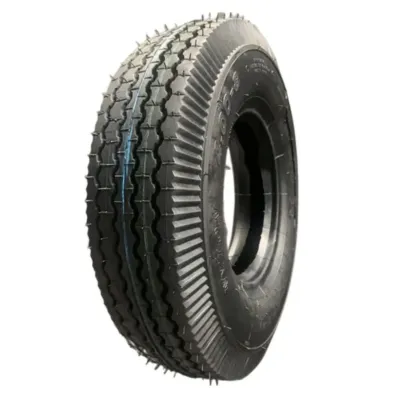
16 Lazada user ratings
Durable material, Compatibility:Fits perfectly, 🔨Durability:Great customer service,
Fast shipping, Perfect fit for Bajaj Re,
🛠️Durability:High quality tires,
High quality tires,
Fast shipping,
10 Lazada user ratings
Gud and durability
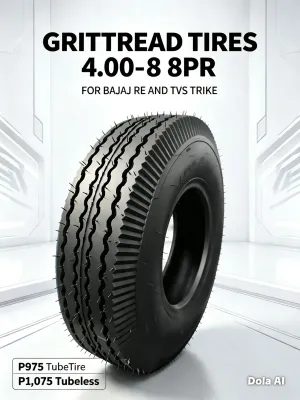
2 Lazada user ratings
subukan ko pa ang gulong na to mukhang matibat sana mag tagal
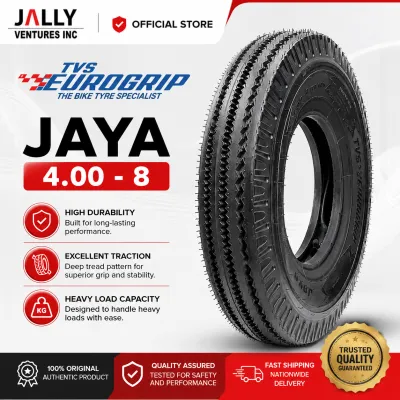
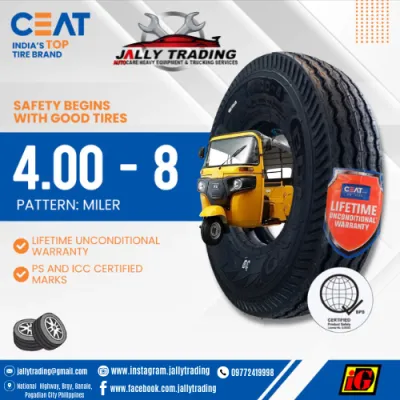
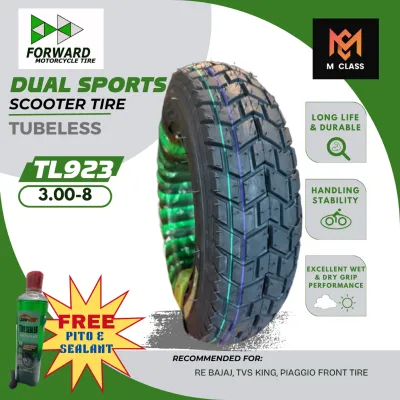
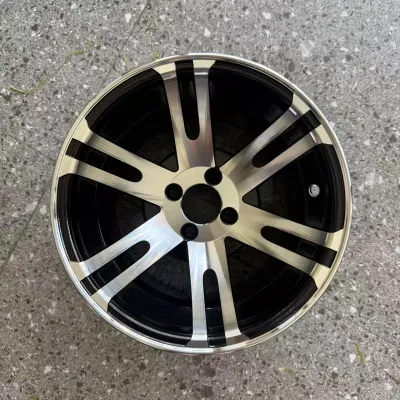
Prices are valid at publication and may change. Please refer to the product page for the latest price.
If you need to elevate a wheel to inspect the inner rim or rotate the tire, position a heavy-duty mechanical jack under the designated frame lift points specified in your owner’s manual. Never place a jack directly under the floorboards, thin body panels, or suspension arms, as this can bend the metal or cause the vehicle to slip off the jack. Once elevated, immediately support the frame with a rated jack stand rather than relying solely on the hydraulic or mechanical jack.
Gather a few basic tools to make the inspection process efficient and accurate. A bright flashlight is essential for reading faint markings stamped on the inner side of the wheel hub or behind dirt and road grime. Keep a stiff brush or cleaning cloth handy to wipe away mud, brake dust, and road debris from the tire sidewall and rim barrel. A reliable tire pressure gauge will also help you check current inflation levels, which can indicate uneven wear patterns or slow leaks.
During your preparation, perform a quick visual sweep of the surrounding suspension and axle components. If you observe severe structural damage, such as a cracked frame weld, a bent rear axle, or leaking shock absorbers, stop the inspection immediately. These structural issues must be addressed by a qualified mechanic before you attempt to fit new tires or rims, as compromised suspension geometry will cause rapid, uneven tire wear and unsafe handling.
Decode Your Current Tire Sidewall Markings
The sidewall of your tire contains a wealth of molded alphanumeric information that defines its physical dimensions and operating limits. For a Bajaj RE, these markings are typically presented in either a metric format or a standard metric profile. The first number in a traditional format represents the nominal section width of the tire in inches or millimeters, while the second number indicates the rim diameter in inches.

Understanding how to read these dimensions prevents the common mistake of purchasing a tire that is too wide for the rim or too tall for the fender clearance. For example, in a metric designation like 120/90-10, the “120” represents the tire width in millimeters from sidewall to sidewall, the “90” is the aspect ratio (meaning the height of the sidewall is 90 percent of the width), and the “10” indicates the required rim diameter in inches. Always check your existing tire sidewalls on both the front and rear wheels, as some configurations may use different sizes for different positions.
Beyond physical dimensions, you must locate the load index and speed rating, which are usually positioned immediately after the size dimensions. The load index is a numerical code that corresponds to the maximum weight capacity the tire can safely support when fully inflated. The speed rating is a letter code indicating the maximum safe operating speed under that load. Because three-wheelers frequently carry multiple passengers or heavy cargo, installing a tire with an insufficient load index can lead to overheating and sudden blowout.
Another critical marking is the Department of Transportation (DOT) safety code, which ends with a four-digit number indicating the week and year of manufacture. For instance, a code ending in “1225” means the tire was manufactured in the 12th week of 2025. In hot, humid climates, rubber degrades more rapidly due to UV exposure and thermal cycling, even if the tread depth looks acceptable. Inspecting this date code allows you to identify dry rot or structural aging, helping you decide if a tire needs replacement based on age rather than just physical wear.
Cross-Reference Rim Details and Manufacturer Placards
While tire markings provide a guide, you must cross-reference them with the physical specifications of the metal rims to ensure a safe match. Rims are stamped with their own set of measurements, usually located on the inner barrel, the wheel hub, or behind the mounting spokes. These markings typically display the rim width and diameter, such as “2.50×8” or “3.00×10”, which tells you the exact width of the bead seat where the tire rests.
Matching the rim width to the tire width is essential for maintaining a secure bead seal. If you mount a tire on a rim that is too narrow, the tread profile will balloon outward, reducing the contact patch and causing rapid center wear. Conversely, mounting a tire on a rim that is too wide stretches the sidewalls excessively, increasing the risk of the tire bead unseating during sharp turns or when hitting potholes.
To verify the original factory specifications, locate the vehicle identification placard, which is typically riveted to the frame under the driver’s seat, inside the glove box, or near the steering column. This metal plate lists the recommended OEM tire sizes, rim dimensions, and cold inflation pressures for both front and rear wheels. If the placard is missing or illegible due to age, consult the official Bajaj RE owner’s manual for your specific model year to confirm these values.
In cases where the rim markings have worn away, been painted over, or are obscured by corrosion, do not guess the dimensions. You can use a caliper to measure the distance between the inner flanges of the rim to determine the width, or consult a professional tire technician who can look up the exact part number. Using incorrect rim specifications can alter the wheel offset, causing the wheel to sit too close to the brake drum or suspension arm, leading to dangerous friction during operation.
Use a Pre-Purchase Checklist to Match Replacements
Before finalizing your purchase of a new tire and rim assembly, run through a systematic checklist to ensure compatibility and safety. First, verify that the load capacity of the replacement tire meets or exceeds the OEM specification. Bajaj RE vehicles are workhorses often subjected to heavy daily use; choosing a tire with a lower load rating to save money compromises the vehicle’s structural stability and increases braking distances under load.
Second, confirm that the tire bead profile matches the rim type. Tube-type (TT) tires require an inner tube and must be mounted on rims designed with a valve stem hole suitable for tubes, whereas tubeless (TL) tires require a specialized rim with a safety hump to keep the bead sealed under pressure. Never attempt to run a tubeless tire without a tube on a rim designed exclusively for tube-type tires, as the air will escape rapidly under lateral cornering forces.
Third, check the physical clearance limits of your vehicle’s wheel wells and suspension components. A tire that appears to fit while the vehicle is empty may rub against the inner fender, swingarm, or shock absorbers when the vehicle is loaded with passengers or cargo. Measure the clearance space around the current tire at its closest points to the frame, and ensure any slight variation in replacement tire height or width leaves at least a safe margin of clearance.
Finally, verify the bolt pattern and center bore of the replacement rim if you are replacing the wheel itself. The bolt circle diameter (BCD) and the number of lug holes must align perfectly with your vehicle’s hub studs. An incorrect center bore size will prevent the wheel from seating flat against the brake drum, leading to severe wheel wobble, vibration, and potential shearing of the lug studs while driving.
Recognize Installation Limits and When to Seek Help
While checking tire sizes and rim markings is a straightforward task, mounting and balancing the tires is a high-precision job that carries significant safety implications. Improperly seated tire beads can leak air slowly or fail catastrophically under load. Achieving the correct bead seat requires specialized tire mounting machines and high-pressure inflation systems that are rarely available in a home garage.
Furthermore, three-wheeled vehicles require precise wheel balancing to prevent high-speed vibrations that can fatigue the steering column and suspension components. Unbalanced wheels lead to uneven tire wear and can compromise steering control, which is particularly dangerous on a single-front-wheel vehicle configuration. Professional tire shops have the dynamic balancing equipment necessary to ensure smooth rotation across all operating speeds.
If you choose to install the wheel assembly back onto the vehicle yourself, you must adhere to strict safety protocols. Always use a calibrated torque wrench to tighten the lug nuts in a star pattern to the manufacturer’s specified torque values. Under-tightening can cause the wheel to work itself loose, while over-tightening can warp the brake drums or stretch and damage the wheel studs.
After mounting the new wheels, perform a thorough visual alignment check to ensure the wheel sits straight within the fork or rear swingarm. Conduct a low-speed test ride in a safe, traffic-free area to listen for any unusual rubbing noises, vibrations, or pulling sensations in the steering. If you detect any abnormalities, stop riding immediately and consult a qualified professional mechanic to inspect the installation before operating the vehicle on public roads.
Frequently Asked Questions (FAQ)
Can I install a wider tire on my Bajaj RE for better stability?
Installing a wider tire than the manufacturer recommends is generally not advised for a Bajaj RE. While it might seem like a wider tire would offer a larger contact patch and better stability, it often introduces severe mechanical issues. The tight clearances within the front fork and rear wheel wells mean a wider tire is highly likely to rub against the fenders, suspension components, or swingarm, especially when carrying heavy loads. Additionally, altering the tire width changes the steering geometry, which can make the steering feel heavy or unpredictable, and can cause inaccuracies in your speedometer readings.
What should I do if the rim is bent but the tire looks fine?
If your Bajaj RE rim is bent, cracked, or structurally compromised, you must replace it immediately, even if the tire appears undamaged. A bent rim prevents the tire bead from seating correctly, which can lead to sudden air loss or a blowout while driving. Even minor bends can cause noticeable wheel wobble and vibrations at speed, placing excessive stress on the wheel bearings, suspension, and steering components. Inspect the rim closely for hairline cracks, especially around the lug holes and rim lip; if any damage is found, discard the wheel and install a certified replacement to ensure safe operation.
Community discussion
Share your experience or ask a question. Comments are reviewed before publication.