
Modifying your motorcycle’s exhaust pipe in the Philippines is legal, provided the aftermarket system complies with the Land Transportation Office (LTO) noise limits, retains required emissions control components like catalytic converters, and is properly registered if it alters the vehicle’s original specifications. Riding in the Philippines presents unique environmental challenges, where intense tropical heat, high humidity, heavy monsoon rains, and coastal salt air can quickly degrade a stock exhaust system. Consequently, many riders look to upgrade their exhaust pipes to improve durability and heat dissipation. Navigating these modifications legally requires a clear understanding of local laws to ensure your motorcycle remains fully compliant and safe on public roads.
Understanding LTO Regulations for Motorcycle Exhausts
The Land Transportation Office (LTO) regulates vehicle modifications to maintain road safety and environmental standards. When it comes to aftermarket exhaust systems, the primary concern is noise pollution. LTO enforcers and deputized agents utilize sound level meters to conduct roadside inspections. These tests measure the sound output in decibels at a specific distance and angle from the exhaust tip while the engine is held at a designated RPM. To ensure compliance, you must verify the current official decibel limit set by the LTO, as operating a vehicle that exceeds this threshold can result in immediate citation.
Beyond noise control, environmental regulations under the Philippine Clean Air Act require motorcycles to meet strict emissions standards. The stock exhaust system of a modern motorcycle is equipped with a catalytic converter designed to reduce harmful exhaust gases. When choosing an aftermarket exhaust, it is vital to ensure the setup does not bypass or eliminate this emissions control device. Removing the catalytic converter not only increases your vehicle’s environmental footprint but also makes it highly unlikely to pass the mandatory emission tests required for annual registration renewal.
Products mentioned in this guide
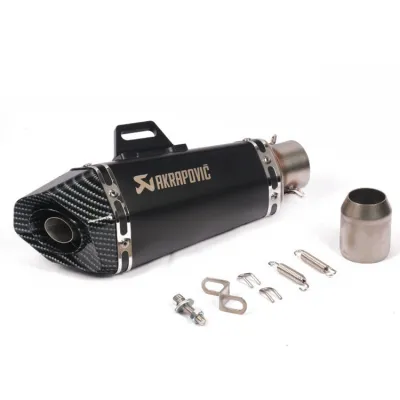
Prices are valid at publication and may change. Please refer to the product page for the latest price.
Riders must also distinguish between cosmetic slip-on mufflers and full-system replacements. A slip-on muffler typically replaces only the rear canister of the exhaust system, leaving the original header pipes and catalytic converter intact. This modification is generally easier to keep compliant because it does not alter the engine’s primary emissions control systems. In contrast, a full-system replacement swaps out the entire assembly from the engine exhaust port to the muffler tip. Because full systems significantly alter backpressure, exhaust flow, and emissions, they are subject to much stricter regulatory scrutiny and require careful selection to remain legal.
Choosing a Street-Legal Exhaust Pipe
Selecting a street-legal exhaust pipe requires looking beyond style and sound. Your first step should be verifying the presence of recognized certification marks on the product. Reputable manufacturers design exhaust systems that comply with international standards, such as the Department of Transportation (DOT) or Economic Commission for Europe (ECE) regulations. While these certifications are international, they serve as strong indicators of quality and compliance that LTO inspectors recognize. Always check the physical body of the exhaust or the manufacturer’s documentation for these official stamps before making a purchase.

Another critical feature to evaluate is the inclusion of a removable baffle or db-killer. Many aftermarket exhausts are designed with these inserts to restrict exhaust flow slightly and significantly dampen noise. While some riders are tempted to remove the baffle for a louder exhaust note, keeping the db-killer securely installed is often the only way to keep the exhaust sound within legal limits on public roads. Ensure that the baffle is securely bolted or welded in place, as loose baffles can vibrate, create unpleasant rattling noises, or even shoot out of the exhaust pipe while riding.
Finally, consider the material construction, heat shielding, and ground clearance of the aftermarket pipe. In the tropical climate of the Philippines, high-grade stainless steel, titanium, or carbon fiber are excellent choices to resist corrosion from rain and road salt. Additionally, the exhaust must feature robust heat shielding to prevent accidental burns to your legs or those of your passenger—a common hazard in dense, stop-and-go traffic. Ensure the pipe’s routing does not compromise the motorcycle’s ground clearance, as low-hanging pipes can easily strike speed bumps, potholes, or debris on uneven roads, leading to severe structural damage.
Step-by-Step Installation and Compliance Check
Altering your motorcycle’s exhaust system can affect engine performance, fuel-to-air ratios, and operating temperatures. Always consult your motorcycle’s original manufacturer manual to understand the specific mounting specifications, torque values, and sensor locations unique to your model. If you are unfamiliar with mechanical work, lack specialized tools like a torque wrench, or feel unsure about handling critical components, always have the installation performed by a qualified professional mechanic.
To begin the installation process, ensure the motorcycle is parked on a flat, stable surface using a center stand or paddock stand, and allow the engine to cool completely to prevent severe burns. Begin by carefully disconnecting any electronic sensors, such as the oxygen (O2) sensor, from the stock exhaust pipe. Use the correct size of wrenches to loosen the flange nuts at the engine cylinder head, followed by the mounting bolts along the frame. Carefully remove the stock exhaust system and store it safely, as you may need it for future reference or inspections.
Before mounting the new exhaust, clean the exhaust port thoroughly and inspect the exhaust port studs for any signs of damage or cross-threading. Always install a brand-new exhaust gasket; reusing an old, compressed gasket is a primary cause of exhaust leaks. Align the new header pipe with the exhaust port and hand-tighten the flange nuts to hold it in place. Next, position the mid-pipe and the muffler canister, aligning them with the motorcycle’s frame mounting points. Insert all mounting bolts, rubber grommets, and spacers loosely to allow for minor adjustments.
Once everything is aligned, begin tightening the fasteners in a sequence starting from the engine cylinder head and moving backward to the muffler bracket. Use a torque wrench to tighten all nuts and bolts to the exact specifications detailed in your motorcycle’s manual or the exhaust manufacturer’s instructions. Reinstall the oxygen sensor carefully, ensuring the wiring is routed away from hot exhaust surfaces and moving parts.
You must define clear stop conditions during this process. If you find that the exhaust brackets do not line up with your motorcycle’s frame without applying excessive force, stop immediately. Forcing the fitment can put immense stress on the engine studs, leading to cracked cylinder heads or broken bolts. Additionally, if you start the engine and hear a distinct ticking sound or feel air escaping from any of the joints, shut off the engine immediately. These are clear signs of an exhaust leak, which can cause engine damage and erratic performance. Do not ride the motorcycle with these issues; consult a professional mechanic to correct the alignment or seal.
Passing the LTO Inspection and Registration Update
To fully legitimize your motorcycle’s modified exhaust, you must navigate the official LTO inspection and documentation process. Whenever you purchase an aftermarket exhaust, ensure you obtain an official receipt (OR) that clearly states the brand, model, and serial number of the exhaust system. You should also request a certificate of compliance or technical specification sheet from the manufacturer or authorized dealer. These documents serve as your primary evidence that the exhaust was designed and manufactured to meet street-legal standards.
During your annual registration renewal or when voluntarily declaring a modification, your motorcycle will undergo a physical inspection at an LTO office or an accredited Motor Vehicle Inspection Center (MVIC). Inspectors will perform a visual check to ensure the exhaust is securely mounted, does not protrude excessively, and retains its heat shielding. They will also conduct an emissions test to verify that the vehicle complies with environmental standards. Finally, a decibel test will be performed using a calibrated sound level meter placed at a specific angle and distance from the exhaust outlet.
If the aftermarket exhaust significantly alters the vehicle’s specifications, you must update your motorcycle’s Certificate of Registration (CR). This involves submitting your official receipts, the manufacturer’s compliance certificates, and the physical inspection report to the LTO. The agency will then update their database and issue a revised registration document reflecting the modification. For minor, compliant slip-on mufflers that do not change the engine’s displacement or emissions profile, an official registration update may not be strictly required, but keeping the purchase receipts and compliance documents in your motorcycle’s utility box is highly recommended to resolve any questions during roadside inspections.
Common Mistakes That Lead to Fines and Impounding
One of the most common mistakes riders make is installing strictly illegal modifications, such as straight pipes or open headers. These systems lack any internal baffling or muffling material, resulting in extremely loud noise levels that easily exceed legal limits. Deliberately removing the db-killer or gutting the internal packing of a street-legal muffler to increase sound output is also illegal and highly visible to law enforcement. Additionally, bypassing emissions control systems by removing the catalytic converter will guarantee a failure during registration inspections.
Installation errors can also lead to severe penalties and mechanical failures. Failing to use a new exhaust gasket or improper torqueing of fasteners often results in exhaust leaks. These leaks not only cause a ticking noise that can mimic engine damage but also lead to sudden noise spikes during acceleration, drawing the attention of traffic enforcers. Furthermore, excessive vibration from loose mounts can cause the exhaust pipe to crack or detach entirely while riding, posing a severe safety hazard to you and other motorists.
Riders must also understand the interplay between national LTO regulations and local government unit (LGU) ordinances. Even if your aftermarket exhaust complies with national LTO decibel limits, certain cities and municipalities in the Philippines enforce their own strict anti-noise ordinances. Some local enforcers may apprehend riders based on subjective noise assessments or local rules that ban modified exhausts entirely. To avoid fines, confiscation of parts, or vehicle impounding, always research the specific ordinances of the areas where you plan to ride and maintain a conservative, quiet exhaust setup.
Frequently Asked Questions (FAQ)
Can I use a modified exhaust pipe just for track days?
Yes, high-performance or loud exhaust systems that do not meet street-legal standards are permissible for use in closed-circuit racing, track days, or off-road sporting events. However, you cannot legally ride the motorcycle on public roads to and from the venue. The motorcycle must be transported using a trailer, pickup truck, or dedicated carrier. Once on public roads, the vehicle must comply fully with standard LTO regulations.
Do I need to update my LTO registration if I only change the muffler?
If you are only replacing the stock muffler canister with a compliant, street-legal slip-on muffler that does not alter the engine’s displacement, emissions control devices, or core specifications, you generally do not need to update your Certificate of Registration (CR). However, you must ensure the setup complies with noise limits and carry the official purchase receipt and manufacturer compliance documents in your utility box as proof of legality.
What happens if I am caught with an illegal exhaust pipe on the road?
If you are apprehended with a non-compliant exhaust pipe, traffic enforcers or LTO officers will issue a Temporary Operator’s Permit (TOP) or a traffic violation ticket, which carries substantial fines. Depending on the specific violation and local LGU ordinances, enforcers may confiscate the illegal exhaust pipe on the spot or impound your motorcycle. To retrieve your vehicle, you will typically be required to pay the fines, present the stock exhaust system, and reinstall it under supervision to prove compliance.
Community discussion
Share your experience or ask a question. Comments are reviewed before publication.