
To find the Motowolf phone holder that fits your setup, you must match your phone’s total dimensions—including its protective case—with your motorcycle’s specific mounting point, such as an exposed handlebar or a rearview mirror stem. Because riding conditions in the Philippines involve high humidity, sudden tropical downpours, and uneven road surfaces, selecting an incompatible mount can lead to distracting vibrations, blocked controls, or even a dropped device.
Choosing the right model requires a systematic approach: measuring your handlebar diameter or mirror thread, calculating your phone’s exact outer dimensions with its case on, and selecting a clamping mechanism that preserves access to your buttons and ports. Taking these steps before purchasing ensures your navigation remains visible and your device stays securely attached throughout your daily commute or long-distance rides.
Identify Your Motorcycle Handlebar and Mounting Base
Before looking at phone sizes, you must determine where and how the holder will attach to your motorcycle. The two most common mounting options are tubular handlebar clamps and rearview mirror stem mounts. If your motorcycle has an exposed, tubular handlebar—common on street bikes, cruisers, and adventure motorcycles—you will need a handlebar clamp base. If you ride a scooter or an underbone motorcycle with enclosed plastic fairings around the handlebars, a rearview mirror stem mount is typically the correct choice.
Products mentioned in this guide
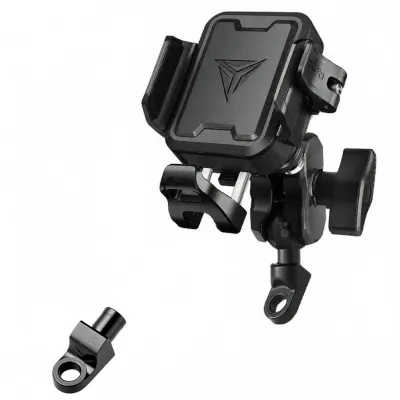
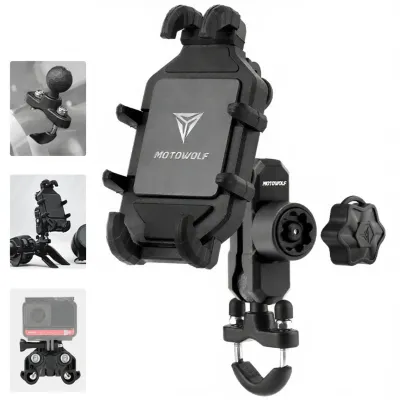
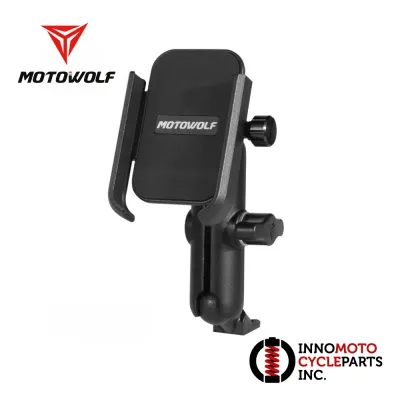
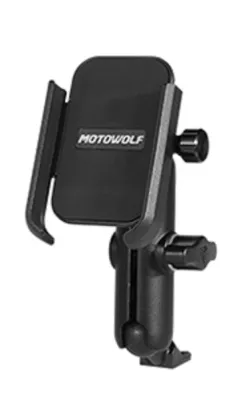
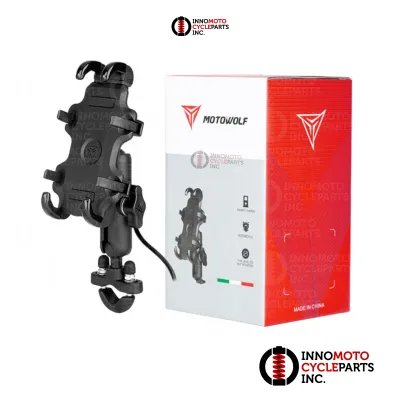
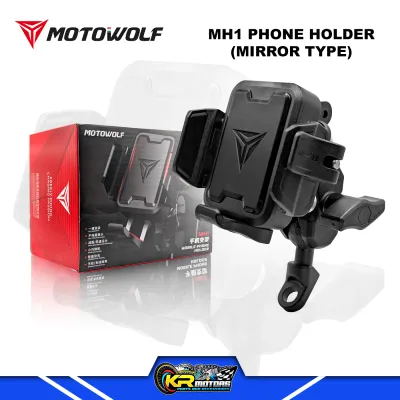
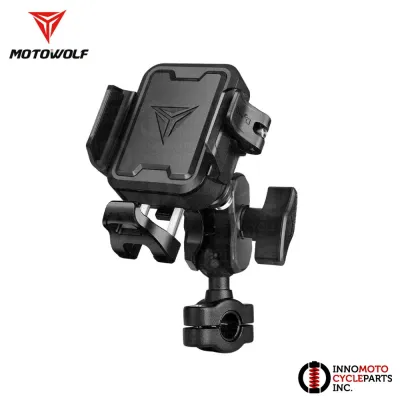
![[Original]MOTOWOLF CELLPHONE HOLDER FULL ALLOY / UNIVERSAL 360° ROTATABLE MOBILE PHONE HOLDER FOR MOTORCYCLE 1PC](https://img.lazcdn.com/g/p/3ffb81c7b3f0a60d6b62807ce3e2aa24.jpg_400x400q80.jpg_.webp)
Prices are valid at publication and may change. Please refer to the product page for the latest price.
To ensure a secure fit on a tubular handlebar, you must measure the tube’s outer diameter. Standard handlebars are typically 22 millimeters (approximately 7/8 inch) in diameter, while oversized or “fat” bars often measure 28 millimeters (approximately 1-1/8 inches) at the mounting point. You can measure this precisely using a vernier caliper, or wrap a flexible tape measure around the bar to find the circumference and divide by 3.14. Check the product specifications of the holder to confirm it includes the correct sizing inserts or spacers for your specific handlebar diameter.
For scooters and motorcycles with covered handlebars, the mount attaches directly to the threaded stem of your rearview mirror. This installation requires removing the mirror, placing the bracket over the mounting hole, and re-securing the mirror stem. Before purchasing, verify the thread size and direction of your mirror stem, which is commonly 8 millimeters or 10 millimeters. Ensure the bracket’s mounting hole matches this diameter to prevent unwanted movement or thread damage during installation.
Regardless of the mounting base you choose, you must check for physical clearance before finalizing your setup. Once installed, the phone holder must not obstruct your view of the speedometer, fuel gauge, or warning lights. It should also clear your ignition key path and allow you to turn the handlebars fully from left to right without pinching control cables, hitting the windshield, or striking the fuel tank. Always perform a stationary “lock-to-lock” steering test after installation to verify that your range of motion remains completely unobstructed.
Match the Holder to Your Phone Dimensions and Case
Many riders make the mistake of looking up their phone’s official dimensions online, only to find that the holder does not fit once their protective case is installed. To get an accurate measurement, you must use a ruler or caliper to measure your phone while it is inside the exact case you plan to use while riding. Measure the total width from edge to edge, the total height from top to bottom, and the overall thickness or depth of the encased device.

Once you have these measurements, cross-reference them with the minimum and maximum clamping limits printed on the manufacturer’s product label or specification sheet. A compatible holder must accommodate your phone’s width with a small margin of safety. If your phone is too narrow, the clamping arms will not apply enough pressure to hold it secure; if it is too wide or thick, you will struggle to force the device into the bracket, which can strain the locking mechanism and lead to premature wear.
Device thickness is particularly critical if you use a rugged, heavy-duty armor case or a case with an integrated ring holder or card slot on the back. Most standard phone holders are designed for slim profiles, so a thick case might prevent the clamping arms from fully wrapping around the front edges of your phone. If the claws cannot hook securely over the front bezel, the phone could slip out when you hit a pothole or speed bump.
Finally, consider the total weight of your phone and case combination. Larger flagship smartphones with heavy-duty cases can weigh over 250 grams. This weight acts as a lever against the holder’s ball joint or mounting bracket, especially when riding over rough terrain. Ensure the mount you select is rated for your device’s weight, and always tighten the adjustment collar or locking screws to the manufacturer’s recommended torque to prevent the holder from drooping or shifting during your ride.
Compare Clamping Mechanisms and Vibration Protection
Motowolf phone holders utilize different mechanical designs to secure your device, and choosing the right one depends on your riding style and how often you need to mount and remove your phone. The two primary designs are four-corner claw clamps and side-grip screw clamps. Four-corner clamps wrap around the top, bottom, and sides of the phone, providing excellent physical security on bumpy roads, but they can sometimes block corner-based screen gestures or cover your phone’s front-facing camera.
Side-grip clamps use a screw-tightened or spring-loaded mechanism to grip the phone from the left and right sides. This design leaves the top and bottom of the phone completely open, which is ideal for accessing charging ports and headphone jacks. However, you must carefully check the position of the side grips relative to your phone’s physical buttons. If the clamping pads align directly with your volume or power buttons, they can compress them continuously, causing your phone to restart or enter safe mode while you ride.
Another critical factor for modern smartphones is vibration protection. Single-cylinder motorcycle engines, which power the majority of scooters and underbones in the Philippines, produce high-frequency vibrations that travel up through the handlebars. Over time, these vibrations can damage the delicate Optical Image Stabilization (OIS) systems found in modern smartphone cameras, leading to blurry photos or permanent camera failure. To protect your device, look for holder models that feature integrated rubber dampeners or are compatible with aftermarket vibration-dampening modules.
For daily commuters who make frequent stops, a quick-release mechanism is highly convenient. This feature allows you to detach the phone or the entire holder assembly with a single click or twist, preventing theft when you leave your motorcycle parked in public areas. If you frequently ride on unpaved roads or expressways, consider using a secondary silicone safety tether that wraps around all four corners of your phone as an extra layer of protection against accidental release.
Execute Pre-Purchase Compatibility and Safety Checks
Before finalizing your purchase on any online marketplace, run through a final verification checklist to ensure a seamless installation. Start by cross-referencing the maximum load capacity of the specific mount model with the combined weight of your phone and case. If you plan to run a charging cable from your motorcycle’s USB port or battery to your phone, verify that the holder’s bottom bracket does not block your phone’s charging port.
Next, visualize the mounting position on your specific motorcycle model. If you have a scooter with limited space around the handlebar fairings, ensure the mounting bracket has a slim profile that will not interfere with your brake levers or master cylinder reservoir. For manual motorcycles, confirm that the clamp will not pinch or rub against your clutch cable or throttle assembly. If you are unsure about the mechanical installation or need to wire a USB-charging phone holder directly to your motorcycle’s electrical system, consult a qualified motorcycle mechanic to prevent short circuits or battery drain.
Because physical dimensions and handlebar configurations can vary slightly even within the same motorcycle model year, it is wise to verify the seller’s return and exchange policies before checking out. Look for sellers on reputable ecommerce platforms that offer clear return windows for compatibility issues. Keep the original packaging and accessories intact during your initial test fit so you can easily exchange the mount if you encounter unexpected clearance issues on your bike.
Frequently Asked Questions (FAQ)
Can I use a Motowolf phone holder on a scooter with a covered handlebar?
Yes, you can install a phone holder on a scooter with covered handlebars by selecting a model designed for rearview mirror mounting. Instead of clamping onto an exposed metal tube, this style of mount features a flat metal bracket with a pre-drilled hole that slips directly onto your rearview mirror’s threaded stem. To install it, you simply unscrew your mirror, place the bracket over the mounting hole on your scooter’s fairing, and screw the mirror back down to sandwich the bracket securely in place. Always verify whether your scooter uses standard 8mm or 10mm mirror threads, and check that the bracket’s hole matches this size to ensure a tight, wobble-free fit.
Do I need a vibration dampener for my smartphone?
If your smartphone features Optical Image Stabilization (OIS) in its camera system, using a vibration dampener is highly recommended. OIS systems rely on tiny gyroscopes and physical springs to keep the camera lens steady, which are highly vulnerable to the high-frequency engine vibrations produced by motorcycles—especially single-cylinder engines common in scooters and underbones. Continuous exposure to these vibrations can permanently damage the camera’s focusing mechanism. If you ride frequently or cover long distances, choosing a phone holder with built-in silicone dampening pads or adding a compatible aftermarket vibration-dampening module will help absorb these harmful frequencies and protect your phone’s camera hardware.

Community discussion
Share your experience or ask a question. Comments are reviewed before publication.