
A universal motorcycle canopy roof can provide much-needed shelter from sudden tropical downpours and intense midday sun. However, the term “universal” is often a marketing generalization rather than a guarantee of seamless physical compatibility. Because motorcycles vary drastically in their frame geometry, handlebar configurations, and structural strength, finding a canopy that fits securely requires matching the canopy’s specific mounting design to your bike’s physical layout.
To ensure a safe and stable installation, you must evaluate how the canopy anchors to your vehicle, how it affects steering clearance, and whether your bike’s frame can handle the aerodynamic forces. This guide breaks down the compatibility factors for scooters, underbones, and big bikes so you can make an informed decision before purchasing.
Quick Guide: Matching Universal Canopy Designs to Your Motorcycle Type
Before browsing online marketplaces, it is essential to understand that universal canopies generally fall into three mounting categories: mirror-mount, handlebar-clamp, and rear-rack integrated systems. Each design interacts differently with the structural points of your motorcycle. Choosing the wrong combination can lead to loose fittings, excessive vibration, or restricted control.
Products mentioned in this guide
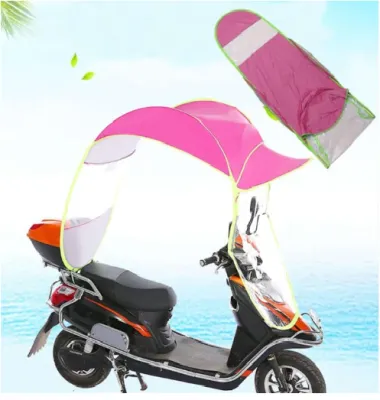
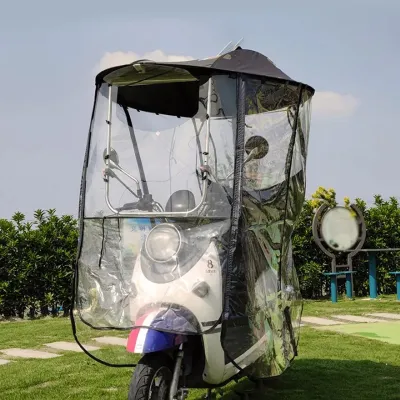
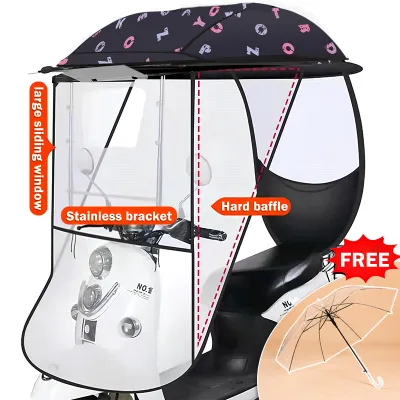
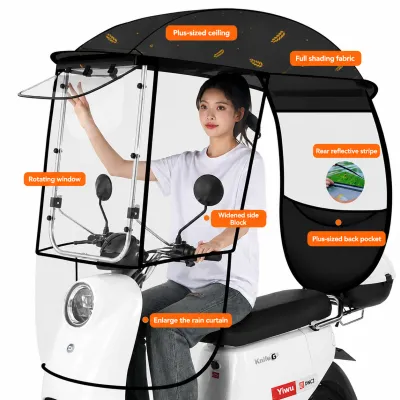
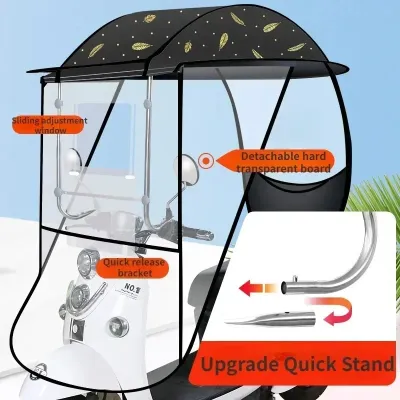
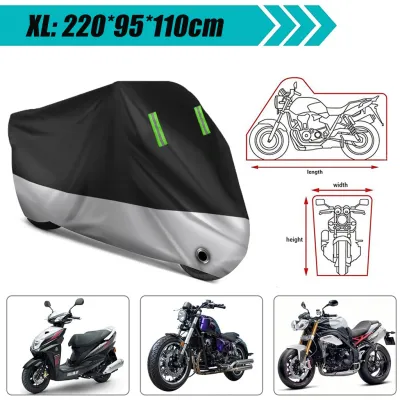
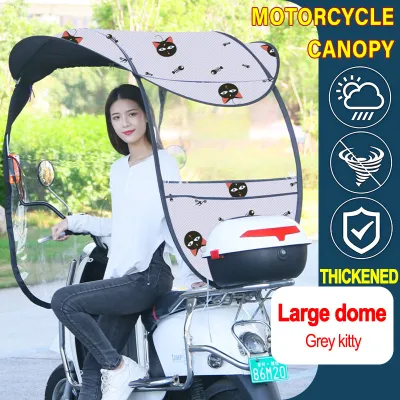
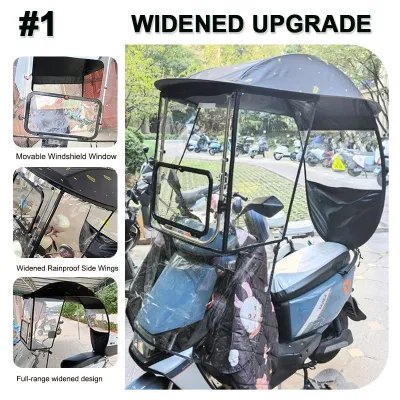
Prices are valid at publication and may change. Please refer to the product page for the latest price.
| Motorcycle Type | Typical Canopy Mounting Style | Primary Physical Constraints to Measure | Compatibility Rating |
|---|---|---|---|
| Scooter (e.g., 110cc–160cc step-throughs) | Mirror-mount front, rear-rack strap or clamp | Mirror thread diameter, front cowl clearance, rear grab rail width | High (with standard mirrors) |
| Underbone (e.g., 110cc–150cc sport/commuter) | Mirror-mount front, rear-carrier bolt-on | Handlebar clearance, rear luggage rack dimensions, seat clearance | Moderate (requires rear rack) |
| Big Bike (400cc and above, cruisers, adventure) | Heavy-duty frame-clamp, reinforced rack-mount | Handlebar diameter, windshield height, structural frame points | Low (not recommended for high speeds) |
To verify actual geometric compatibility, do not rely solely on product descriptions. You must physically measure your motorcycle’s key dimensions. First, check your rearview mirror thread size and pitch; most standard Asian-market motorcycles use 8mm or 10mm threads, but some brands use left-hand threads on one side. Second, measure the distance from your handlebars to the rear grab rail or luggage rack to ensure the canopy fabric and support poles are long enough to span the distance without stretching or sagging.
Finally, understand that “universal fit” simply means the mounting brackets have adjustable slots or flexible joints. It does not guarantee that the canopy will clear your front fairings, instrument panel, or aftermarket accessories. Always compare your physical measurements against the manufacturer’s detailed product schematic before finalizing your purchase.
Evaluating Universal Canopy Mounting Mechanisms and Trade-offs
Every universal canopy relies on a combination of front and rear anchor points to stay secured against wind resistance. The front anchor points typically utilize the rearview mirror mounts or clamp directly onto the handlebars. While mirror-mount systems are highly popular due to their straightforward installation, they transfer all wind-drag forces directly to your steering assembly. This can result in heavier steering feel and increased susceptibility to sudden crosswinds.

Rear mounting systems generally attach to the rear grab handle or an aftermarket luggage carrier. If your motorcycle lacks a flat rear rack, you may have to rely on strap-based systems that wrap around the rear bodywork. While strap systems are highly adjustable, they offer less structural rigidity and are prone to shifting during transit. Furthermore, they can trap road grit underneath the straps, leading to severe paint abrasion and scuffs on your plastic fairings.
Frame-strap and bracket systems that clamp directly to the chassis offer the highest level of security, but they require open access to the motorcycle’s frame tubes. On modern motorcycles covered in plastic body panels, this often means you must temporarily remove or permanently modify fairings to achieve a secure metal-on-metal connection. Clamping brackets over plastic panels is highly discouraged, as the clamping pressure combined with road vibrations will inevitably crack the plastic.
Before purchasing any canopy, you must verify the load-bearing capacity of your motorcycle’s mounting points. Consult your vehicle owner’s manual to find the maximum weight limit for the rear grab rail or luggage rack—often limited to 5 kilograms to 10 kilograms on smaller commuter bikes. Remember that the canopy’s static weight is only part of the load; at speed, aerodynamic drag multiplies the downward and backward force exerted on these mounting points exponentially.
Selecting a Canopy for Scooters: Clearance and Steering Checks
Scooters are among the most common candidates for universal canopy installations due to their daily commuter role. However, their unique step-through design and extensive plastic bodywork present specific installation challenges. When selecting a canopy for a scooter, your primary focus must be maintaining unrestricted steering movement and clear visibility of your instrument cluster.
Start by measuring the clearance between your handlebar grips and the canopy’s front support poles at full steering lock. Turn your handlebars completely to the left and right; the support poles must not contact your hands, brake levers, or front cowl. If the canopy frame scrapes against the leg shield or front fairing during tight maneuvers, it can restrict your turning radius and cause a low-speed fall.
Weight distribution is another critical safety factor for scooters. Because scooters naturally carry their engine and fuel tank over the rear wheel, their front ends are relatively light. Adding a canopy with heavy front support poles and a large plastic windshield shifts the center of gravity upward and forward. This alteration can induce a dangerous front-wheel wobble or steering oscillation, especially when traveling over uneven road surfaces or encountering wind gusts.
Additionally, ensure that the canopy’s front transparent shield does not interfere with your headlight beam or front turn signals. If the shield covers these safety components, it can refract the light, reducing your nighttime visibility and making your indicators invisible to oncoming traffic. If your scooter has an aftermarket tall windscreen installed, you will likely need to remove it to accommodate the canopy’s front mounting brackets.
Selecting a Canopy for Underbones: Frame and Passenger Fit
Underbone motorcycles feature a distinct central frame spine and a sportier, more forward-leaning riding position compared to step-through scooters. This geometry requires careful placement of the front mounting brackets. Because underbone handlebars are often narrower and lower, finding a canopy that provides adequate headroom without interfering with your helmet or riding posture is a primary concern.
When positioning the front brackets, ensure they do not block access to your ignition key port, fuel tank cap (if located under the front seat area), or instrument cluster. The support poles must run clear of your knees and shins when you are in the active riding position. If the poles are positioned too close to the center spine, they can restrict your ability to quickly mount or dismount the motorcycle in an emergency.
For the rear support, underbones almost always require a sturdy, frame-mounted rear luggage rack. Attempting to secure the rear support poles solely to the plastic rear fender or the passenger grab rail can lead to structural failure. If you frequently carry a pillion passenger, measure the vertical and horizontal clearance carefully. The rear support poles must not crowd the passenger seat or force the passenger into an awkward, unsafe seating posture.
Furthermore, the passenger’s helmet must have sufficient clearance from the canopy roof to prevent constant bumping during sudden braking. Because underbones are lightweight and narrow, they are highly sensitive to the “sail effect” created by a canopy. When riding with a passenger, the increased surface area makes the bike even more vulnerable to crosswinds, requiring the rider to maintain a firm grip and lower operating speeds.
Selecting a Canopy for Big Bikes: Aerodynamics and Heavy-Duty Mounts
Installing a universal canopy on a big bike (typically 400cc and above) involves severe safety risks that must not be overlooked. These motorcycles are designed for high-speed stability, highway cruising, and dynamic handling—all of which are fundamentally compromised by the addition of a large, flexible overhead structure. If you are considering a canopy for a larger displacement motorcycle, standard lightweight plastic models are entirely unsuitable.
At highway speeds, the aerodynamic lift generated by a canopy can act like an airplane wing, lifting weight off the front tire and drastically reducing steering traction and braking efficiency. The drag force can also pull the motorcycle backward, straining the mounting hardware to the point of catastrophic failure. For this reason, any canopy used on a larger motorcycle must feature a heavy-duty, aerodynamically optimized frame made of reinforced steel or structural-grade aluminum.
Accommodating wide handlebars, clip-on bars, and complex electronic instrument clusters on big bikes requires highly specialized mounting hardware. Standard universal clamps rarely fit the thicker handlebar diameters (such as 28.6mm fat bars) or the cramped space around the triple clamp. You must verify that the canopy brackets do not pinch control cables, brake lines, or electrical wiring harnesses, as this can lead to sudden mechanical or electrical failure while riding.
Crosswind instability is magnified on larger, heavier bikes due to the higher speeds at which they travel. A sudden lateral gust on an open highway can easily push a big bike out of its lane if it is equipped with a rigid canopy. If you must use a canopy, prioritize designs that feature quick-release folding mechanisms or easily removable fabric panels. This allows you to quickly collapse or detach the roof structure before entering high-speed expressways or riding in turbulent weather conditions.
Critical Safety, Legal, and Installation Checks Before You Buy
Before purchasing a universal motorcycle canopy, you must evaluate the legal and safety implications of modifying your vehicle’s profile. In the Philippines, the Land Transportation Office (LTO) maintains strict regulations regarding unauthorized vehicle modifications. Adding a rigid, semi-permanent roof structure can be classified as an illegal modification if it alters the registered dimensions, height, or structural safety of the motorcycle. Always consult your local LTO district office or review current transport guidelines to ensure you do not face heavy fines or registration rejection.
Additionally, pay close attention to the manufacturer’s stated operating limits. Most universal canopies are designed solely for low-speed urban commuting and carry strict maximum safe operating wind speeds—often limited to 40 km/h or 50 km/h. Exceeding these limits, especially during heavy monsoon winds or when passing large commercial trucks, can cause the canopy frame to bend, snap, or detach entirely, posing an immediate hazard to you and other road users.
- Verify Emergency Detachment: Ensure the canopy features quick-release pins or easily accessible bolts so you can dismantle it quickly if weather conditions deteriorate or if you need to transport the bike.
- Check for Blind Spots: The vertical support poles can create significant blind spots in your forward and peripheral vision. Sit on your bike after a temporary mock-up installation to ensure your view of intersections and pedestrians is not obstructed.
- Adjust Rearview Mirrors: Because front mounts often attach to mirror threads, your rearview mirrors may be repositioned or angled differently. Ensure you can still adjust them to achieve a clear, unobstructed view of the lanes behind you.
- Inspect Weld Quality: Prior to installation, inspect all welded joints on the canopy frame for pinholes, cracks, or uneven beads, which indicate weak points prone to vibration failure.
Frequently Asked Questions (FAQ)
Can I install a universal motorcycle canopy by myself?
Yes, most universal canopy kits are designed for DIY installation using basic hand tools such as open-ended wrenches, hex keys, and screwdrivers. However, you must strictly follow the manufacturer’s assembly instructions and torque specifications to avoid stripping threads or cracking your bike’s plastic fairings. If your specific motorcycle model lacks standard mounting points and requires custom bracket fabrication, frame drilling, or welding, you should seek the assistance of a qualified professional mechanic to ensure structural safety.
Will a universal canopy damage my motorcycle's paint or frame?
Without proper precautions, a universal canopy can cause cosmetic and structural damage to your motorcycle. The metal brackets, clamps, and support poles are subject to constant engine and road vibrations, which can cause them to rub against painted metal or plastic fairings. To prevent paint chips, deep scratches, and stress cracks, always install heavy-duty rubber gaskets, silicone spacers, or protective adhesive tape at every contact point. Regularly check these mounting points and tighten any loose hardware to minimize friction-induced wear.
Are universal motorcycle canopies legal for daily commuting?
The legality of motorcycle canopies in the Philippines is subject to strict regulatory oversight. While some local authorities may tolerate them during extreme weather, the Land Transportation Office (LTO) generally discourages modifications that alter a motorcycle’s original manufacturer specifications, height, or aerodynamic profile. A canopy can be flagged for obstructing the rider’s line of sight, creating wind-resistance hazards, or exceeding allowable vehicle dimensions. Before purchasing, check the latest LTO guidelines or consult local traffic enforcement offices to avoid penalties.
Community discussion
Share your experience or ask a question. Comments are reviewed before publication.