
Measuring your car’s existing wheels is the most critical step before upgrading to a new mags wheel for car. Accurately determining the diameter, width, offset, and bolt pattern ensures the new wheels will fit perfectly over your brake calipers, clear the suspension components, and maintain safe handling characteristics without rubbing against the fenders. In the Philippines, where vehicles frequently navigate uneven asphalt, deep potholes, and sudden monsoon floods, ensuring a correct wheel fitment is not just about aesthetics—it is a fundamental safety requirement.
When you decide to customize your vehicle, relying on guesswork can lead to expensive mistakes. A wheel that is too wide or has the wrong offset can damage your suspension, accelerate tire wear, or even cause a dangerous blowout if the tire rubs against a sharp metal fender edge. By taking the time to physically measure your current setup, you can confidently shop for aftermarket alloy wheels, avoiding costly mistakes that could set you back ₱15,000 or more in suspension repairs.
Understanding Wheel Dimensions and Why They Matter
To make an informed decision, you must first understand the core physical dimensions of a wheel and how they directly impact your vehicle’s fitment, safety, and handling. A wheel is not a simple metal disc; it is a highly engineered component with specific tolerances designed to work in harmony with your car’s steering and suspension systems.
Products mentioned in this guide
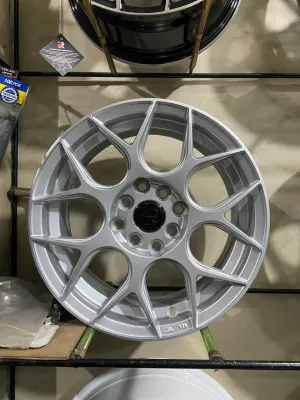
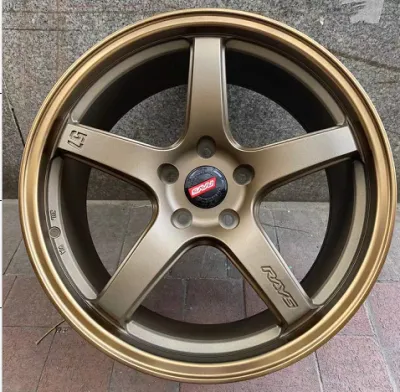
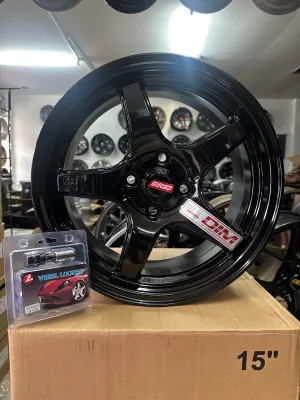
![[Must Order 4 Units]Performance Alloy Wheels 15–18” | Multiple PCD | Civic Camry Altis Hilux Ranger](https://img.lazcdn.com/g/p/508c48a4537f6a40268b302e28c6f4e0.jpg_400x400q80.jpg_.webp)
2 Lazada user ratings
Rays engineering makes it good, elegant and glossy and sporty look. Hopefully it's durable to sustain even on off-road and rugged terrain.
🎨Design:I like the design it's elegant and sporty look with the glossy finish can really eye catching. Thanks for RAYS Wheels original..
11 Lazada user ratings
Highly Recommend Seller.. Very Responsive.. Also the packing is secure naka double insulation yung box .. thanks seller.Enhance your car's p…Read full reviewShow less
Highly Recommend Seller.. Very Responsive.. Also the packing is secure naka double insulation yung box .. thanks seller.Enhance your car's performance with these wheels.
Enhance your car's performance with these wheels, Excellent customer service from the seller, Easy installation and perfect fit,
Ok naman may scratch kunti, oks lang pero di pa nakabit size ng gulong ko 14 lang hayysss sana makabot to..
Excellent customer service from the seller, Enhance your car's performance with these wheels,
Quality:10 Appearance:10 Performance:10 thanks po... mas gwapo na po Mirage ko... 🥰
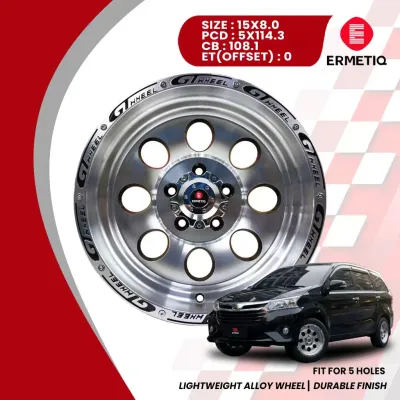
1 Lazada user ratings
Quality:ok naman arrived good condition
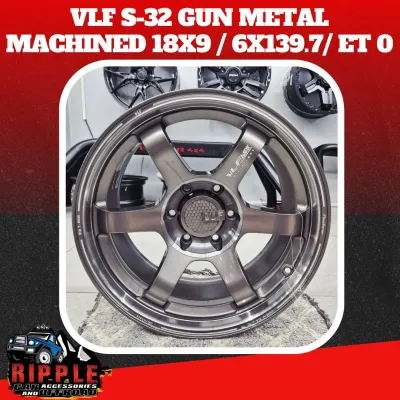

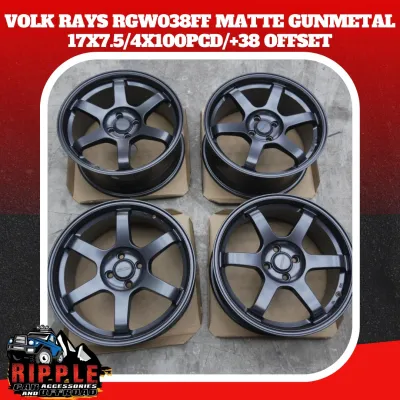
Prices are valid at publication and may change. Please refer to the product page for the latest price.
The two most obvious dimensions are diameter and width. The diameter is the distance across the wheel face, while the width is the distance between the inner flanges where the tire beads seat. Together, these two measurements dictate the compatible tire sizes you can safely mount. Changing the wheel diameter significantly without adjusting the tire profile will alter the overall rolling circumference of the tire. This discrepancy can throw off your speedometer readings, disrupt your anti-lock braking system (ABS), and alter your transmission’s shift points.
Beyond diameter and width, the offset is perhaps the most critical specification for proper clearance. Offset, often stamped as “ET” on the wheel, is the distance between the wheel’s mounting surface (where it bolts to the brake rotor) and its true centerline. Offset determines how far inward or outward the wheel sits within the wheel well. A positive offset pushes the mounting surface toward the front of the wheel, pulling the wheel inward toward the suspension. A negative offset pushes the mounting surface toward the back, pushing the wheel outward toward the fender.
Choosing the incorrect offset carries severe risks. If the offset is too positive, the inner edge of the wheel or tire can rub against suspension struts, brake calipers, or steering linkages, leading to mechanical failure. Conversely, if the offset is too negative, the tire can rub against the outer fender lip, especially when the vehicle is fully loaded with passengers or navigating steep driveways. Furthermore, incorrect offset alters the scrub radius, which can cause heavy steering, premature wheel bearing wear, and unpredictable handling during sudden braking.
Tools and Safety Prep for Measuring Your Wheels
Before you begin measuring, you must gather the correct instruments and set up a safe working environment. Precision is key when dealing with millimeter-level specifications, so relying on a standard school ruler or visual estimates will not suffice.

For accurate measurements, you will need a flexible measuring tape, a long straightedge (such as a metal ruler or a perfectly flat piece of wood), and preferably a digital or vernier caliper to measure bolt holes and center bores. You will also need a notebook to record your findings.
Because you must remove at least one wheel to take accurate measurements, you must prioritize safety. Park your vehicle on a flat, level concrete surface—never on an incline, gravel, or soft soil. Engage the handbrake fully and place heavy wheel chocks behind the tires on the opposite end of the vehicle to prevent any accidental rolling.
To lift the vehicle, use a hydraulic floor jack rated for your car’s weight. Once the vehicle is raised, immediately place properly rated jack stands under the designated chassis lift points. Never rely solely on a hydraulic jack to support the vehicle while you work or remove a wheel; hydraulic seals can fail without warning, leading to catastrophic injury or vehicle damage. Keep the jack stands securely in place throughout the entire measurement process, and only remove the wheel once you have verified the vehicle’s stability.
Step-by-Step Guide to Measuring Wheel Diameter and Width
To obtain precise physical measurements of your wheel’s diameter and width, you must measure the wheel without a tire mounted. Measuring a wheel with the tire still installed is highly inaccurate because the tire covers the critical mounting flanges and bead seats.
To measure the wheel diameter, lay the bare wheel flat on a clean, soft surface, such as a rubber mat or a thick piece of cardboard, to protect the finish from scratches. Place your measuring tape across the center of the wheel. Measure the distance from the inner bead seat to the opposite inner bead seat. The bead seat is the flat shelf where the tire’s inner edge sits and seals against the wheel. It is crucial to avoid measuring the outer lip-to-lip distance of the wheel. Measuring from the very outer edges will make your measurement roughly one inch larger than the actual wheel diameter, leading you to purchase the wrong tire size.
To measure the wheel width, keep the wheel flat and measure the distance between the inner flanges where the tire beads seat. This is the internal width of the wheel barrel. Just like the diameter measurement, you must exclude the thickness of the outer decorative lips or flanges. A wheel that is physically eight inches wide from outer edge to outer edge is actually a seven-inch wide wheel when measured correctly at the bead seats.
Once you have these physical measurements, you can cross-reference them with your tire’s sidewall code as a secondary verification method. For example, if your tire sidewall reads “205/55R16,” the “R16” indicates a 16-inch wheel diameter. While this confirms the diameter, keep in mind that it does not give you the exact wheel width. A single tire width can often fit a range of wheel widths; a 205mm tire can typically be mounted on wheels ranging from 5.5 to 7.5 inches wide. Therefore, physical measurement of the wheel itself remains the only way to know your exact width.
How to Determine Wheel Offset and Bolt Pattern
Identifying the offset and bolt pattern requires a bit more technical attention, but these specifications are vital to ensuring your new mags wheel for car fits your vehicle’s hub perfectly.
Before performing manual calculations, inspect the back of your wheel. Manufacturers usually stamp the wheel specifications on the back of the mounting pad, on the inner barrel, or behind one of the spokes. Look for a code like “16x7J ET40.” This tells you the wheel is 16 inches in diameter, 7 inches wide, and has a positive offset of 40mm. If you see this stamp and the wheel is original, you have your starting point.
If the stamp is corroded, painted over, or missing, you can calculate the offset manually. First, lay the bare wheel flat on the floor with the back side facing up. Place a straightedge flat across the rear flange of the wheel. Measure the distance from the bottom of the straightedge down to the mounting pad (the surface that touches the car’s brake hub). This measurement is known as the “backspacing.” Next, measure the total overall width of the wheel from outer lip to outer lip, and divide this number by two to find the centerline. Finally, subtract the centerline value from your backspacing measurement. The resulting number is your offset in millimeters. If the backspacing is greater than the centerline, the offset is positive; if it is less, the offset is negative.
The bolt pattern, or Pitch Circle Diameter (PCD), is the diameter of the imaginary circle drawn through the center of all the wheel’s lug holes. It is expressed as the number of bolts multiplied by the circle’s diameter (for example, 4×100 or 5×114.3).
For a 4-lug wheel, measuring the PCD is straightforward: use your caliper or tape measure to measure from the center of one lug hole directly across to the center of the opposite lug hole.
For a 5-lug wheel, the process is more complex because the holes are not directly opposite each other. To estimate a 5-lug pattern, measure from the back edge of one lug hole to the center of the second hole away from it. Because geometric variations can make DIY 5-lug measurements difficult to pin down to the exact millimeter, it is highly recommended to cross-reference your physical measurements with your vehicle’s official technical specifications to ensure absolute accuracy before purchasing new wheels.
Verifying Fitment and Clearances Before You Buy
Once you have gathered your measurements, you must validate your data against manufacturer specifications and physical vehicle clearances before finalizing your purchase. This step prevents you from buying wheels that look great but cause mechanical issues once installed.
Start by cross-checking your measurements with the vehicle’s owner’s manual or the tire information placard located on the driver’s door jamb. These documents list the approved factory wheel sizes, widths, and offsets for your specific vehicle model and year. If your measured dimensions deviate significantly from these factory recommendations, you must carefully evaluate how the changes will affect your vehicle’s suspension geometry and road legality.
Next, check the physical clearances on your vehicle. Turn the front wheels fully to the left and right to inspect the clearance between the tire and the inner fender liner, suspension struts, and steering components. Ensure there is at least a 15mm to 20mm gap to account for tire deflection and suspension movement when driving over bumps or carrying heavy loads. Also, check the clearance around your brake calipers; some aftermarket mag wheels have thicker spokes or different inner barrel profiles that can scrape against the calipers, even if the diameter and offset match on paper.
If your physical measurements conflict with the vehicle’s manual, or if you are unsure about the clearance around upgraded brake kits or modified suspension systems, stop the DIY process. Do not guess or force a fitment. Consult a professional tire and wheel specialist or refer to the wheel manufacturer’s official fitment database. A professional can perform a test fitment to guarantee the new wheels are road-legal and safe.
Frequently Asked Questions (FAQ)
Can I use my current tire size to determine my exact wheel width?
No, you cannot rely solely on the tire size to find the exact wheel width. While the tire sidewall indicates the recommended wheel diameter (such as 15, 16, or 17 inches), tires are flexible and designed to fit a range of wheel widths. For example, a tire with a width of 215mm can safely mount on wheels ranging from 6.0 inches to 7.5 inches wide. To find the exact width of your current wheel, you must either locate the stamped width on the wheel itself or measure the distance between the inner bead seats.
What happens if my new mag wheels have a different offset?
Altering the offset changes how the wheel sits in the wheel well and affects your car’s steering geometry. A minor change of 3mm to 5mm is usually acceptable, but a drastic change can cause serious issues. If the new offset is too low (pushing the wheel outward), the tires may rub against the fender lips, and the steering may feel heavier due to an altered scrub radius. If the offset is too high (pulling the wheel inward), the wheel or tire may rub against the suspension struts or brake components, potentially causing catastrophic tire failure or suspension damage.
Do I need to measure the center bore of my current wheels?
Yes, the center bore is a critical dimension for ensuring a hub-centric fit. The center bore is the machined opening in the middle of the wheel that fits precisely over the car’s wheel hub. If the center bore of your new mag wheels is smaller than your car’s hub, the wheels will not mount at all. If the center bore is larger, the wheel will rely solely on the lug nuts to center it (lug-centric), which can cause severe vibrations at highway speeds. In the latter case, you must install hub-centric rings to fill the gap and ensure a safe, smooth ride.

Community discussion
Share your experience or ask a question. Comments are reviewed before publication.