
Finding the correct wheel hub cap cover for your vehicle is more than just an aesthetic upgrade; it is a crucial step in protecting your wheel’s central components from road debris, moisture, and dust. In the tropical climate of the Philippines, where heavy rains, muddy roads, and high humidity are common, a secure hub cap prevents water and road salt from accelerating rust on your wheel bearings and lug nuts. However, many car owners purchase these covers only to find they do not fit, slip off during drives, or fail to snap into place. This issue usually stems from a misunderstanding of how wheel hubs are measured and how different retention mechanisms function.
To get a secure fit, you must measure the precise dimensions of your wheel’s center bore rather than relying on the general size of your tires or rims. While tire sidewalls display clear numbers like 14, 15, or 16 inches, these figures represent the overall outer diameter of the wheel rim, not the small opening at the very center of the wheel. Measuring the center hub requires a systematic approach using the right tools to capture the inner diameter, outer diameter, and depth of the mounting area. By taking a few minutes to measure your wheel hub accurately, you can avoid the hassle of returning incorrect parts and help ensure your new covers remain securely attached through every pothole and highway journey.
Understanding Wheel Hub and Hub Cap Compatibility
To select a compatible wheel hub cap cover, you must first understand the relationship between the wheel’s center bore and the cap itself. The center bore is the machined opening in the middle of the wheel that fits over the vehicle’s hub assembly. A hub cap or center cap is designed to plug or cover this specific opening. Because wheel manufacturers use different center bore dimensions even for wheels of the exact same outer diameter, there is no single universal size that fits all vehicles.
Products mentioned in this guide
16 Lazada user ratings
Hirap na talaga ang buhay ngayon. Dati tuwing naggogrocery ako yung 500 pesos ko meron na kong sampung kilong bigas, isang kilong asukal, da…Read full reviewShow less
Hirap na talaga ang buhay ngayon. Dati tuwing naggogrocery ako yung 500 pesos ko meron na kong sampung kilong bigas, isang kilong asukal, dalawang lata ng gatas at chocolate drink tapos may kape pa. May kasama pang tig aapat na lata ng corned beef, beef loaf at sardinas tsaka may pahabol pang isang kilo na spaghetti pasta at may kasama pang sauce. Ngayon hindi na pwede. Dami nang CCTV.🤣🤣🤣
nice. with few little scratches.
I want to return my item
nice and very useful
3 Lazada user ratings
🛠️Durability:good and quality 🎨Design:nice
akala ko 4pcs isang peraso lng pla to
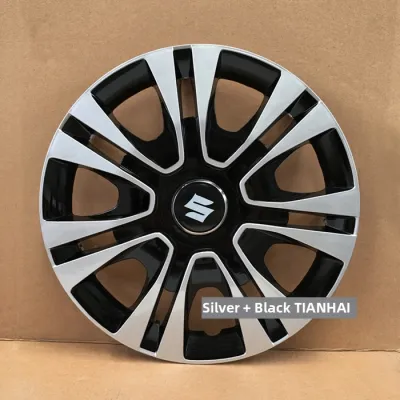
40 Lazada user ratings
nice na install na fit na fit ciasa suzuki ertiga 2017 tnks saler.
i order 15 inch but arrived 16inch hayyyysssss seller
Easy to install,
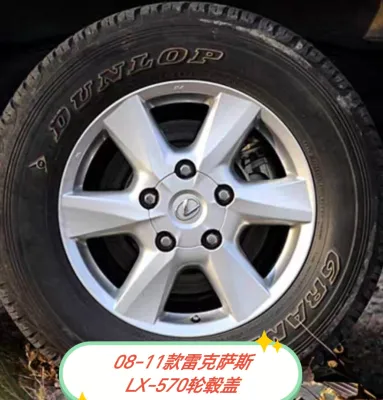
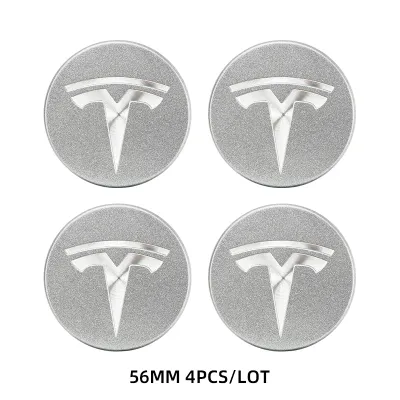
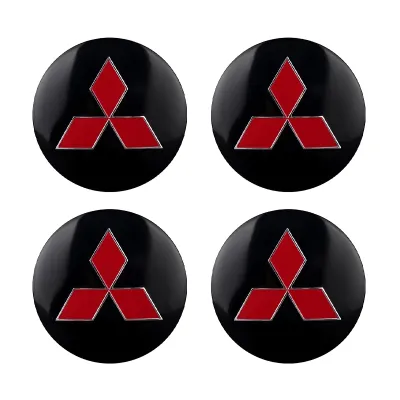
413 Lazada user ratings
Great value for money, highly recommended!, Easy to install, love the rim stickers!, Excellent product, exceeded my expectations!, Great des…Read full reviewShow less
Great value for money, highly recommended!, Easy to install, love the rim stickers!, Excellent product, exceeded my expectations!, Great design, adds a stylish touch!, Perfect fit for my Mitsubishi car!,
Great design, adds a stylish touch!, Perfect fit for my Mitsubishi car!, Easy to install, love the rim stickers!, High-quality materials use…Read full reviewShow less
Great design, adds a stylish touch!, Perfect fit for my Mitsubishi car!, Easy to install, love the rim stickers!, High-quality materials used, very durable!,
High-quality materials used, very durable!, Excellent product, exceeded my expectations!, Great value for money, highly recommended!,
Great value for money, highly recommended!, Excellent product, exceeded my expectations!, Performance:maganda dikit at quality
Easy to install, love the rim stickers!, High-quality materials used, very durable!,
Prices are valid at publication and may change. Please refer to the product page for the latest price.
Guessing your hub cap size based on your tire or wheel rim size is one of the most common reasons for purchasing errors. For example, two different vehicles might both ride on 15-inch steel wheels, but one may have a center bore of 54.1 millimeters while the other has a center bore of 60.1 millimeters. A hub cap designed for one will either be too loose to stay on or too large to fit into the opening. The center bore plays a critical role in securing the cover safely, as the retention clips or tension rings must press firmly against the inner walls of this bore to resist centrifugal forces while the wheel rotates at high speeds.
Furthermore, aftermarket wheels often feature different center bore dimensions compared to original equipment manufacturer (OEM) wheels. If your vehicle has been upgraded with aftermarket alloy rims, the standard hub caps listed for your vehicle model and year in retail catalogs will likely not fit. You must treat the wheel currently installed on your vehicle as the sole source of truth, measuring its physical dimensions directly rather than relying on standard vehicle databases.
Tools Required for Accurate Measurement
Before you begin measuring, gathering the correct instruments is essential for obtaining precise readings. While a flexible sewing tape measure or a standard household tape measure can give you a rough, preliminary estimate, they are generally not accurate enough for the millimeter-level precision required for hub caps. A slight error of just one or two millimeters can mean the difference between a snug fit and a cap that flies off on the road.

For highly reliable results, a digital caliper is the preferred tool. A caliper allows you to place its external jaws inside the center bore to measure the inner diameter directly, or use its internal jaws to measure the backing of an existing cap. If a digital caliper is not available, a rigid steel ruler with clear millimeter markings can serve as a suitable alternative, provided you align it directly across the widest point of the opening.
Because you will be working closely with your vehicle’s wheels, safety must be your top priority. If you need to remove a wheel to access the back of the center bore or to work more comfortably, always park the vehicle on a flat, level surface, engage the parking brake, and use rated jack stands alongside your hydraulic jack. Never rely solely on a jack to support the vehicle’s weight while working. If you are uncomfortable with lifting your vehicle or removing wheels, consult a qualified professional at a local service center to assist you with the measurements or installation.
Step-by-Step Guide to Measuring the Wheel Hub Diameter
To begin the measurement process, park your vehicle safely and ensure the wheels are cool to the touch. If your wheels are currently fitted with old, damaged, or faded hub caps, gently pry them off using a plastic trim removal tool to avoid scratching the wheel surface. Once the center bore is exposed, you will likely find an accumulation of road grime, brake dust, and surface rust. Use a wire brush or a clean microfiber cloth paired with an authorized wheel cleaner to thoroughly clean the inner lip of the center bore, as even a thin layer of debris can distort your measurements.
Next, prepare to measure the inner diameter of the center bore. If you are using a digital caliper, insert the upper slide-measuring jaws into the circular opening. Expand the jaws until they make firm, flat contact with the opposite inner walls of the bore. Ensure the caliper is positioned across the absolute widest part of the circle, which represents the true diameter. Read the digital display and record the measurement in millimeters, as almost all automotive wheel specifications are standardized in metric units.
If you are using a rigid steel ruler, place the zero mark on one inner edge of the bore and stretch the ruler straight across the center to the opposite edge. Look directly down at the ruler to avoid parallax error, which occurs when viewing the markings from an angle. Take this measurement at least three times at different angles—such as vertically, horizontally, and diagonally—to confirm the opening is round and to verify your consistency.
In addition to the inner diameter, pay close attention to any lip, ridge, or bevel variations inside the seating area. Some wheels feature a small recessed groove just inside the bore where the retention clips of the hub cap are meant to snap into place. Use the depth gauge of your caliper or your ruler to measure the distance from the outer face of the wheel to this inner groove. Recording both the diameter and this depth profile will ensure the replacement wheel hub cap cover sits flush against the wheel face without protruding or leaving a gap.
Identifying the Retention Mechanism
Beyond the physical diameter of the center bore, you must identify how the hub cap attaches to the wheel. Hub caps and center caps use several distinct retention mechanisms, and choosing the wrong type will prevent installation even if the diameter measurements are correct. The most common type for full-face covers on steel wheels is the clip-on retention ring system, which features plastic clips reinforced by a circular metal tension ring that expands outward against the wheel rim.
For smaller center caps on alloy wheels, the caps typically feature plastic clips molded directly onto the back of the cap face. You must count the number of clip slots or tabs on your old cap or examine the inner bore to see if there are specific slots designed to receive these clips. Some aftermarket wheels use push-through center caps, which are installed from the back of the wheel before the wheel is bolted onto the vehicle hub. These caps feature a flared flange that prevents them from passing through the front of the center bore.
Another common style is the bolt-on or lug-nut secured cover. These covers are held in place by the vehicle’s actual lug nuts or by small decorative hex bolts that screw directly into threaded holes on the wheel face. If your vehicle uses this system, you will need to measure the bolt circle diameter (BCD) or the spacing between the lug nuts to ensure the new cover aligns accurately with your wheel’s bolt pattern. Always check your vehicle’s original documentation to verify the torque specifications for your lug nuts if you must loosen or remove them during this process.
Matching Measurements to Hub Cap Cover Specifications
Once you have recorded your center bore diameter, depth, and retention type, you can begin matching these specifications to available products on online marketplaces or at local auto parts stores. When browsing for a wheel hub cap cover, you will notice that manufacturers list several key dimensions. The most critical dimensions for snap-in center caps are the outer diameter (the total width of the cap face), the clip diameter (the width across the outermost edges of the retention clips), and the clip length (the depth of the clips).
Compare your measured inner bore diameter directly to the manufacturer’s specified clip diameter. The clip diameter of the hub cap must be slightly larger than the inner bore diameter of the wheel to ensure the clips compress and create a tight, high-tension friction fit. Most manufacturers provide detailed sizing charts that outline these specific tolerances. For example, a cap with an outer diameter of 60 millimeters might have a clip diameter of 56 millimeters, designed to fit a wheel center bore of exactly 55.5 to 56.5 millimeters.
Always verify that the retention style of the product matches your wheel’s design. If your wheel requires a push-through cap, a snap-in cap will not work because it lacks the necessary rear flange. Carefully read the product labels, descriptions, and technical drawings provided by the seller. If the specifications are listed only in inches, convert your millimeter measurements by dividing them by 25.4, but always prioritize metric specifications when available to ensure the highest level of accuracy.
Common Measuring Mistakes to Avoid
One of the most frequent errors car owners make is measuring the outer wheel rim instead of the center hub bore. When a product description calls for a “56mm wheel hub cap cover,” this refers to the tiny center opening, not the overall size of the wheel. Measuring the entire wheel face and ordering a cap based on that number will result in receiving a part that is far too large.
Another common mistake is ignoring the depth or the internal lip of the center bore. If your wheel has a shallow bore or if the axle nut protrudes slightly past the wheel face, a flat hub cap may press against the axle nut and fail to snap into place. You must measure the clearance depth from the outer face of the wheel to the obstruction inside the hub to ensure the cap has enough internal clearance.
Finally, never assume that all wheels of the same vehicle model, year, or trim level use identical hub caps. Car manufacturers frequently change wheel suppliers or offer different wheel packages within the same model year. A base model with steel wheels will have completely different hub dimensions than a premium trim equipped with factory alloy wheels. Always perform physical measurements on your specific wheels rather than relying on generalized online compatibility finders or vehicle forums.
Frequently Asked Questions (FAQ)
Can I use a universal hub cap cover on alloy wheels?
Universal full-face hub caps are generally designed for standard steel wheels and may not fit or function correctly on alloy wheels. Steel wheels have a uniform outer lip designed to grip the metal tension rings of universal covers, whereas alloy wheels feature thicker, more complex spoke designs and lack this specific mounting lip. Attempting to force a universal clip-on cover onto an alloy wheel can scratch the delicate painted or polished finish of the alloy and often results in the cover falling off while driving. For alloy wheels, it is highly recommended to use dedicated center caps that fit directly into the machined center bore.
What if my measurement falls between two standard sizes?
If your measured center bore diameter falls between two standard hub cap sizes, you should rely on the manufacturer’s specified tolerance ranges rather than guessing. Many hub cap clips have a small amount of flexibility, but they must remain within the specified limits to hold securely. If the measurement is borderline, do not attempt to modify the clips or use adhesive tape to force a fit, as this compromises road safety. Instead, consult your vehicle or wheel manufacturer to obtain the exact OEM part number, or seek assistance from a qualified tire and wheel specialist who can verify the precise fitment using professional sizing gauges.
Community discussion
Share your experience or ask a question. Comments are reviewed before publication.