
Spotting a counterfeit 260mm brake disc for your Honda Click requires a systematic inspection of its physical metallurgy, machining precision, packaging typography, and digital verification codes. Because counterfeiters have grown increasingly sophisticated, relying on a single visual check is no longer sufficient. You must compare physical dimensions, weight, and edge finishes against manufacturer specifications to ensure your motorcycle remains safe on the road.
Upgrading a Honda Click (whether the 125i or 150i/160 models) to a larger 260mm disc is a popular modification in the Philippines to improve stopping power on steep terrain or in heavy city traffic. However, installing a fake rotor compromises your safety. Before purchasing or attempting to install any aftermarket brake components, always consult your Honda Click’s owner’s manual for original-vehicle specifications. Because braking is a critical safety system, any installation or modification must be performed by a qualified motorcycle mechanic to ensure correct caliper bracket alignment and bolt torque settings.
Why Counterfeit Brake Discs Are a Critical Safety Risk
Braking components are life-safety items. A failure at high speeds on busy roads or during a sudden tropical downpour can be catastrophic. Counterfeit discs often utilize cheap, low-grade cast iron or substandard scrap metals instead of high-carbon steel alloys or certified stainless steel. These inferior materials lack the structural integrity to withstand the intense friction and heat generated during heavy braking.
Products mentioned in this guide
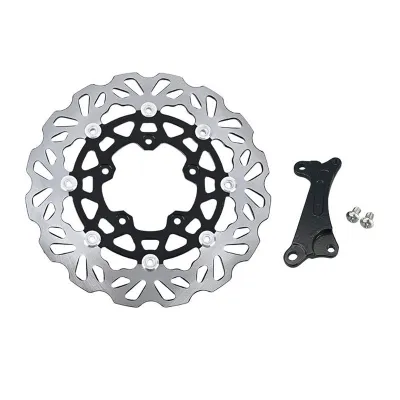
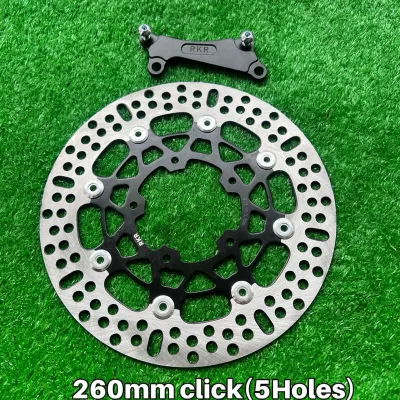
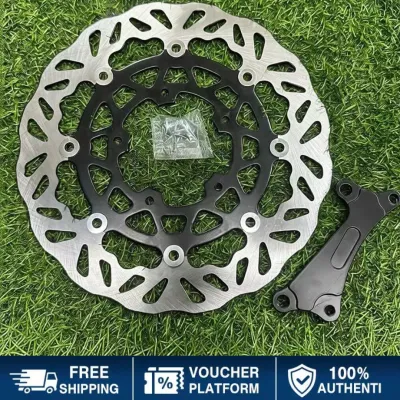
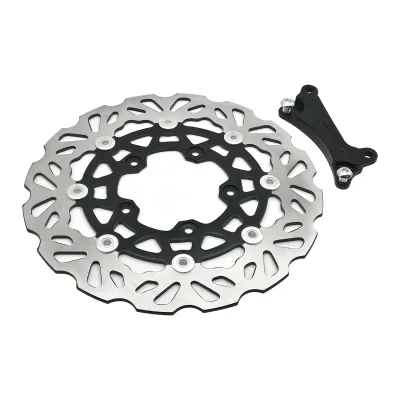
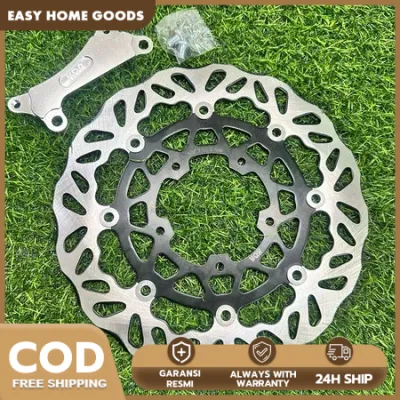
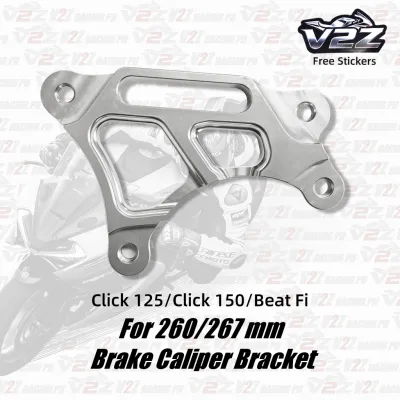
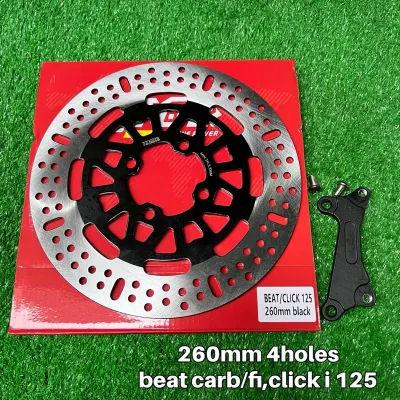
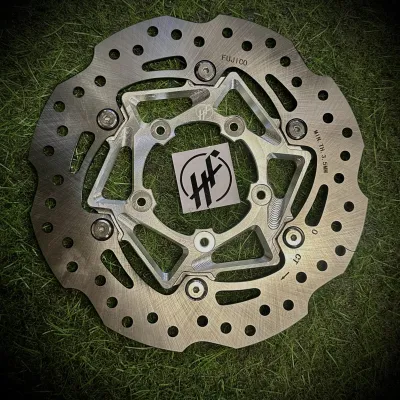
Prices are valid at publication and may change. Please refer to the product page for the latest price.
In the tropical climate of the Philippines, where high ambient temperatures are paired with stop-and-go traffic, brake components experience extreme thermal cycles. Genuine rotors are engineered to dissipate heat rapidly. Counterfeit rotors, however, suffer from severe brake fade, warping, or even catastrophic cracking under thermal stress.
Warping causes the brake lever to pulsate violently, reducing braking efficiency and potentially locking up the front wheel. Safety must always dictate your decision. If a 260mm disc shows any signs of questionable authenticity, it must be rejected immediately. Saving a few hundred pesos is never worth risking a high-speed mechanical failure.
Physical Markers: Comparing Genuine vs. Fake 260mm Discs
A thorough physical inspection is your primary line of defense. While counterfeiters can easily copy cardboard boxes, replicating high-precision machining and complex metallurgy is extremely expensive. To perform an accurate inspection, it is highly recommended to compare the suspect 260mm disc directly against a known genuine OEM or reputable aftermarket reference.

Look closely at the overall construction. Genuine manufacturers use computer-numerical control (CNC) machining to achieve tight tolerances, whereas counterfeiters often rely on worn-out machinery or manual finishing to cut costs. Focus on the weight, dimensional accuracy, and edge finishing during your inspection.
Weight, Material, and Surface Finish
- Weight consistency: Genuine 260mm brake discs have a consistent, specific weight determined by their precise metallurgical composition. Counterfeit discs often deviate significantly; they may feel unusually light due to porous, low-density casting, or excessively heavy because cheap, unrefined iron was used to mimic solid metal.
- Surface texture: Run your fingers carefully across the braking surface. A genuine rotor features a highly uniform, smooth, and micro-grooved surface finish designed to assist pad bed-in. Fake discs often exhibit rough casting lines, uneven grinding marks, or a dull, dry texture.
- Corrosion resistance: Genuine rotors are treated with anti-rust coatings or made from high-grade stainless steel that resists oxidation. Counterfeit discs frequently show signs of rust or discoloration right out of the box, especially when exposed to high humidity.
Dimensional Accuracy and Mounting Holes
- Outer diameter check: Use a digital vernier caliper to measure the exact outer diameter of the disc. A genuine 260mm disc will measure precisely 260mm within a fraction of a millimeter. Counterfeit discs often have discrepancies, measuring slightly under or over, which affects caliper alignment.
- Thickness measurements: Check the thickness of the rotor at multiple points. Genuine discs maintain a perfectly uniform thickness (typically around 3.0mm to 4.0mm depending on the brand) with zero deviation. Fakes often vary in thickness across the rotor plane, leading to immediate brake pulsation.
- Mounting hole alignment: Examine the mounting holes that bolt the disc to your Honda Click's wheel hub. Genuine discs have perfectly centered, countersunk holes that align seamlessly with the hub. Counterfeiters often produce off-center or poorly spaced holes, forcing you to stretch or cross-thread the bolts during installation, which creates dangerous structural stress.
Rotor Design and Edge Chamfering
- Edge smoothness: Inspect the outer and inner edges of the rotor. Genuine parts feature clean, deburred, and professionally chamfered edges that prevent stress concentration. Counterfeit discs often have sharp, unfinished metal burrs that can easily cut your fingers or damage your brake pads.
- Drilled and slotted patterns: If the 260mm disc features a drilled or slotted design for heat dissipation, look inside the holes. Genuine rotors have chamfered holes to prevent cracking under thermal stress. Fake discs often feature straight-drilled holes with sharp interior edges, which act as stress risers and lead to cracks spreading across the braking surface.
- Inner carrier finish: For floating discs, inspect the rivets connecting the inner aluminum carrier to the outer steel rotor. Genuine floating discs have tightly pressed, high-strength rivets with no play. Fakes may have loose, poorly stamped rivets that allow dangerous axial movement.
Packaging and Labeling: Inspecting the Box and Part Numbers
Packaging is often the first indicator of a counterfeit product. Genuine manufacturers invest heavily in high-quality packaging to protect their products during transit and maintain brand integrity. Counterfeiters, on the other hand, often cut corners on printing and materials.
Examine the box closely. Genuine packaging uses sturdy, high-density cardboard with crisp, high-resolution printing, vibrant colors, and clear logos. Counterfeit packaging is often made of flimsy, low-grade cardboard that bends easily, featuring blurry text, faded colors, or low-resolution graphics with visible pixelation.
Read every word on the box, including the fine print. Counterfeiters frequently make spelling mistakes, use incorrect grammar, or employ inconsistent fonts. Look for errors like “Honda” spelled incorrectly, or weird spacing in the technical specifications.
Locate the part number printed on the packaging label and compare it to the part number stamped or laser-etched onto the brake disc itself. These numbers must match perfectly. Cross-reference this part number with the official manufacturer catalog or website for your specific Honda Click model year. If the part number does not exist in the official database, or if it corresponds to a completely different motorcycle model, the disc is a fake.
Remember that a pristine, convincing box does not guarantee a genuine part inside. Scammers sometimes place counterfeit discs inside genuine boxes acquired from repair shops. Always combine packaging checks with a rigorous physical inspection of the disc itself.
Verification Methods and Safe Purchasing Channels
Modern manufacturers employ advanced security features to help riders verify their products. When buying a 260mm disc, look for security elements like holographic stickers, unique serial numbers, or scratch-off QR codes.
If the box has a scratch-off QR code, scan it using your smartphone. However, be extremely cautious. Sophisticated counterfeiters can easily print QR codes that direct your phone to a spoofed, fake website designed to look exactly like the official brand page. Always look at the URL in your browser’s address bar. Ensure the domain matches the official, verified website of the manufacturer and does not use a slightly altered spelling or a generic free-hosting domain.
To eliminate the risk of buying a fake, purchase your brake components only from authorized sources. For OEM parts, visit an authorized motorcycle brand dealership. If shopping on major online marketplaces, only buy from stores with the official brand tag or mall designation, which guarantees direct brand distribution. Alternatively, purchase from well-established, physical motorcycle parts shops in your local area that are known authorized dealers for aftermarket brands.
Be highly suspicious of deals that seem too good to be true. If a premium 260mm brake disc is listed on an online marketplace for a fraction of its standard retail price (often around ₱1,500 to ₱3,000 for genuine aftermarket brands), it is highly likely to be a counterfeit. Always check seller ratings, read buyer reviews, and ensure the seller offers a robust return policy and buyer protection guarantee.
What to Do If You Suspect You Received a Counterfeit
If you receive a 260mm brake disc and suspect it is counterfeit, never install it on your motorcycle. Mounting a compromised braking component puts your life at risk, and once the disc shows signs of road use or installation marks, you will likely void your ability to claim a refund from the seller.
Start by documenting everything immediately. Take clear, well-lit photographs and videos of the entire package. Capture the shipping label, the outer box from all angles, the labels, the barcodes, and any specific physical defects on the disc itself, such as rough edges, uneven machining, or misaligned mounting holes.
Log into your e-commerce platform account and file a formal return and refund request. Select “Counterfeit item” or “Product not as described” as the reason for the return. Upload your photo and video evidence, clearly explaining why the item is fake, such as mismatched part numbers, poor machining, or failed verification scans.
Do not simply accept the refund and move on. File a formal report against the seller’s shop on the platform to alert customer support. Reporting these fraudulent listings helps protect the wider motorcycle community from purchasing dangerous, low-quality parts that could lead to severe road accidents.
Frequently Asked Questions (FAQ)
Here are answers to common questions regarding the testing, physical properties, and fitment of 260mm brake discs for the Honda Click.
Can I use a magnet to test if a brake disc is genuine?
No, a magnet test is not a reliable standalone method to spot a counterfeit brake disc. While some high-end racing rotors utilize specific stainless steel alloys that are weakly magnetic or non-magnetic, many standard OEM and high-quality aftermarket discs are constructed from magnetic cast iron or high-carbon steel alloys. Because both genuine and fake discs can react to a magnet, you should rely on precise dimensional measurements, weight checks, and surface finish inspections instead.
Are heavier brake discs always better quality?
No, weight alone does not dictate the quality or authenticity of a brake disc. While an extremely light disc can indicate a porous, structurally weak casting, a heavier disc is not automatically genuine. Counterfeiters often use cheap, dense, and unrefined iron that makes the disc heavy but lacks the necessary thermal dissipation, structural integrity, and friction consistency. Genuine discs are engineered with an optimal balance of weight and metallurgy to ensure safety.
Will a fake 260mm disc fit my Honda Click perfectly?
No, even if a counterfeit disc physically bolts onto your wheel hub, it is highly unlikely to fit perfectly. Minor deviations in thickness, offset, or mounting hole alignment—often measuring less than a millimeter—can cause the disc to rub against the brake pads, create severe wheel vibrations, or misalign the caliper bracket. These hidden fitment issues can lead to rapid pad wear, brake overheating, and sudden braking failure under hard stopping conditions.
Community discussion
Share your experience or ask a question. Comments are reviewed before publication.