
The KYT Striker has become one of the most popular full-face helmets in the Philippines, prized for its aerodynamic design, comfortable fit, and accessible pricing. However, this high demand has also made it a prime target for counterfeiters who flood online marketplaces with cheap, dangerous imitations. Spotting a fake KYT Striker requires a systematic approach, combining a physical inspection of the shell, liner, and visor with a verification of official safety markers like the Import Commodity Clearance (ICC) sticker.
Purchasing a counterfeit helmet to save a few pesos is a compromise that can have fatal consequences. A genuine helmet is a highly engineered safety device designed to manage extreme impact energies, whereas a counterfeit is merely a plastic shell styled to look the part. To protect yourself on the road, you must know how to distinguish a genuine KYT Striker from a deceptive imitation before you hand over your hard-earned money.
The Safety Risks of Counterfeit KYT Striker Helmets
A motorcycle helmet is your primary line of defense against severe head injuries, and its structural integrity cannot be compromised. Genuine KYT Striker helmets undergo rigorous testing to meet strict international safety standards, such as the European ECE 22.05 or ECE 22.06 regulations, alongside local Philippine standards. These tests ensure the outer shell can withstand piercing impacts and that the internal energy-absorbing liner can cushion your brain during a crash.
Products mentioned in this guide
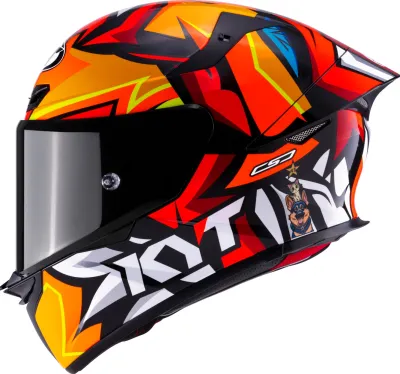
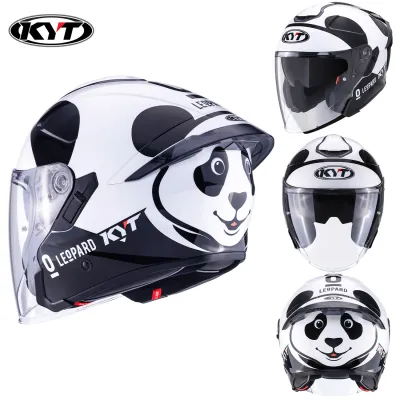
Prices are valid at publication and may change. Please refer to the product page for the latest price.
Counterfeit helmets bypass every safety test and certification process. To maximize profit margins, manufacturers of fake helmets use substandard materials like cheap, brittle ABS plastic for the outer shell instead of advanced thermoplastic resins. In a collision, a fake shell can shatter upon impact, allowing sharp road debris to penetrate directly. Furthermore, the lack of a proper impact-absorbing liner means the kinetic energy of a crash is transferred directly to your skull, dramatically increasing the risk of traumatic brain injury.
Because the KYT Striker is incredibly popular among local riders, counterfeiters have become highly skilled at replicating its external graphics and paint schemes. A helmet that looks stunning on a screen or a store shelf might offer zero actual protection. Relying on a single visual cue is a dangerous gamble; verifying authenticity requires a comprehensive, multi-point inspection of the packaging, physical build, and official certification markings.
Physical Inspection: Genuine vs. Counterfeit KYT Striker Traits
When evaluating a KYT Striker, a close physical inspection will almost always reveal the shortcuts taken by counterfeiters. Genuine helmets are manufactured under strict quality control protocols, resulting in a clean, precise finish. Fake helmets, on the other hand, consistently exhibit minor flaws in construction, assembly, and material quality due to cheap manufacturing processes.

Packaging, Labels, and Documentation
The verification process begins before you even touch the helmet itself. A genuine KYT Striker is always supplied in a high-quality, sturdy cardboard box featuring sharp, high-resolution printing, accurate brand logos, and correct spelling. Look closely at the external text; counterfeit boxes often feature slightly blurry graphics, pixelated logos, or grammatical errors. Additionally, genuine boxes feature a clear barcode sticker that specifies the exact model name, colorway, size, and production batch of the helmet inside.
Inside the box, a genuine helmet is protected by a premium, thick drawstring bag, typically made of soft microfiber or fleece, bearing a cleanly printed KYT logo with no loose threads or misaligned stitching. You should also find a detailed user manual, a warranty registration card, and any model-specific accessories, such as a clear visor protector or pinlock inserts, depending on the specific variant. Counterfeit units often arrive in flimsy, generic brown boxes, wrapped in thin plastic bags, and completely lack official documentation or include poorly photocopied manuals with obvious spelling mistakes.
Shell, EPS Liner, and Interior Build
The core structure of the helmet provides the clearest indicators of authenticity. Start by examining the outer shell. A genuine KYT Striker features a flawless paint finish with a thick, smooth clear coat that protects the underlying graphics. The water-decal graphics are perfectly aligned, with no bubbles, wrinkles, or overlapping edges. Inspect the ventilation ports; the sliders should operate with a crisp, tactile click, and the plastic surrounds should be flush with the shell. Fakes often have rough, unfinished edges around the vents, sloppy glue residue, and thin paint that scratches easily.
Next, remove the comfort padding to inspect the Expanded Polystyrene (EPS) liner. The EPS is the thick, foam-like layer responsible for absorbing impact energy. In a genuine KYT Striker, this liner is made of dense, uniform, dark grey or black EPS that does not compress easily when pressed firmly with your thumb. Counterfeit helmets often use cheap, white, low-density packaging styrofoam that crumbles, squeaks, or dents under light finger pressure. Always refer to the manufacturer’s care instructions before removing any internal components to avoid damaging the mounting clips.
Finally, evaluate the interior comfort padding. Genuine KYT padding is constructed from premium, moisture-wicking, hypoallergenic fabrics designed to handle the hot and humid Philippine climate. The stitching is straight and double-reinforced, and the cheek pads are firm yet supportive. Look for the sewn-in fabric tags inside the liner; they must clearly state the helmet size, model name, and washing instructions. Counterfeit padding feels thin, rough, and uses cheap foam that bottoms out immediately, often emitting a strong chemical adhesive smell.
Visor, Mechanism, and Hardware
The optical and mechanical components of a helmet require precise engineering, making them difficult and expensive for counterfeiters to replicate accurately. Start by testing the visor ratchet mechanism. Open and close the visor several times; on a genuine KYT Striker, the visor should move smoothly and lock securely into several distinct detents, holding its position even against strong wind resistance. Counterfeit mechanisms often feel loose, squeak loudly, or fail to hold the visor open.
Look closely through the visor itself. Genuine KYT visors are made of high-grade, optically correct polycarbonate that provides distortion-free vision. If you look through a counterfeit visor, you will often notice a wavy or distorted view, especially near the edges, which can cause eye strain and distort your perception of distance while riding. Additionally, genuine visors feature clean, molded-in branding and safety markings near the hinge points.
Inspect the chin strap and its fastening hardware. Depending on the specific regional release, the KYT Striker will feature either a robust double D-ring system or a high-quality micrometric quick-release buckle. The metal components must be heavy, smoothly finished, and free of sharp edges or rust. The strap itself should be made of thick, tightly woven nylon with heavy-duty stitching securing it directly to the helmet shell. Fakes often use thin, flimsy straps, weak metal buckles that bend easily, and sloppy, single-line stitching that can fail under tension.
Official Verification and Philippine Compliance Markers
Beyond physical inspection, you must verify the official regulatory and brand-specific markers that prove the helmet is legally imported and certified for road use in the Philippines. These markers are highly regulated, and their absence or poor quality is a definitive warning sign.
First, locate the Import Commodity Clearance (ICC) sticker. In the Philippines, the Department of Trade and Industry (DTI) requires all imported protective helmets to carry an official ICC sticker, while locally manufactured ones carry the Philippine Standard (PS) mark. A genuine, legally imported KYT Striker will have an ICC sticker affixed to the rear or side of the shell. This sticker features a unique serial number, a clear barcode, and a holographic layer that shifts colors and displays security patterns when tilted under light. You can verify the validity of the serial number through official DTI verification portals or mobile apps.
Second, check the back of the helmet for international safety certification markings, such as ECE 22.05 or ECE 22.06, and DOT. On a genuine KYT Striker, these certifications are printed directly onto the shell or integrated seamlessly under the protective clear coat. Counterfeiters often apply these markings as cheap, vinyl stickers that can be easily peeled off with a fingernail.
Third, inspect the internal sewn-in labels on the chin strap. A genuine helmet will have a durable fabric tag stitched securely to the strap, listing the manufacturer’s details, the helmet’s weight in grams, the manufacturing date, the model name, and the specific shell size. If these internal labels are missing, blank, or printed on cheap paper-like material, the helmet is almost certainly a counterfeit. A missing ICC sticker on a unit advertised as “brand new” in the local market is a massive red flag; always prioritize units that carry verified local compliance markers to ensure you are protected legally and physically.
How to Choose Safe Retail Channels and Avoid Scams
The most effective way to avoid purchasing a counterfeit KYT Striker is to buy exclusively from authorized and reputable retail channels. While online marketplaces offer convenience, they are also the primary distribution networks for counterfeit goods.
To guarantee authenticity, purchase your helmet directly from authorized KYT dealers, official brand flagship stores on major e-commerce platforms, or established physical motorcycle gear shops with a proven track record in the Philippines. Authorized dealers receive their inventory directly from the official distributor, ensuring that every helmet is genuine, certified, and covered by the manufacturer’s warranty.
If you choose to purchase from a third-party seller on an e-commerce platform, you must exercise extreme caution. Thoroughly evaluate the seller’s profile before making a decision:
- Check the Seller Rating: Look for stores with high positive feedback ratings (ideally 95% or higher) and a long history of operation.
- Read the Reviews Carefully: Do not just look at the overall star rating. Filter the reviews to read the 1-star and 2-star feedback. Specifically search for keywords like "fake," "counterfeit," "poor quality," "different from photos," or "no ICC sticker."
- Verify Business Credentials: Reputable online sellers often display business permits or official dealer badges on their store pages.
Be highly skeptical of prices that seem too good to be true. In the Philippines, a genuine KYT Striker typically retails between ₱3,500 and ₱4,800, depending on the graphic design and specific edition. If an online listing offers a “brand new” KYT Striker for ₱1,500 to ₱2,500, it is a counterfeit. Counterfeiters frequently use deceptive terms in their listings to mislead buyers without explicitly lying. Avoid any listings that contain terms such as “OEM” (Original Equipment Manufacturer), “Class A Copy,” “1:1 Copy,” “Factory Excess,” or “Overrun.” These terms are industry euphemisms for counterfeit products. A genuine KYT helmet is never sold under these labels.
Steps to Take If You Receive a Suspected Fake Helmet
If you have already purchased a helmet and suspect it is a counterfeit after performing your inspection, you must act quickly to protect your safety and your financial interests.
First and foremost, stop using the helmet immediately. Do not ride with it, even for a short commute. A counterfeit helmet offers virtually no protection in an accident, and wearing it exposes you to extreme safety risks. Your life is worth far more than the cost of a replacement helmet.
Next, document the discrepancies thoroughly. Take clear, high-resolution photographs and videos of the helmet, focusing on the specific areas that indicate it is a fake. Document the flimsy packaging, blurry logos, low-quality paint, rough EPS liner, missing or suspicious ICC stickers, and any spelling errors on the box or documentation. Keep your original receipt, invoice, or online order confirmation as proof of purchase.
Once you have compiled your evidence, initiate a return and refund request. If you purchased the helmet through an online marketplace, use the platform’s official buyer protection program to open a dispute. Submit your documented photos and videos as evidence of receiving a counterfeit item. Do not agree to settle the dispute outside the platform, as this deprives you of the platform’s financial protection. If you purchased the helmet from a physical store, return to the shop with your receipt and evidence, and politely but firmly request a full refund from the management.
Finally, report the fraudulent seller. File a formal complaint against the store or listing on the e-commerce platform to help get their account suspended and prevent other riders from falling victim to the same scam. You can also escalate the matter by filing a report with the Department of Trade and Industry (DTI) Fair Trade Enforcement Bureau (FTEB) in the Philippines, as selling counterfeit safety gear is a serious violation of consumer protection laws.
Frequently Asked Questions (FAQ)
Can I verify a KYT Striker helmet's authenticity using only its weight?
No, weight alone is not a reliable or definitive indicator of authenticity. While counterfeit helmets often feel unusually light because they use thin, cheap plastic shells and low-density styrofoam, some counterfeiters intentionally add heavy metal plates, thick non-impact-absorbing plastics, or heavy rubber trims to mimic the weight of a genuine helmet. Always cross-reference the helmet’s weight with its overall build quality, internal EPS density, sewn-in labels, and official safety compliance markers.
Are KYT Striker helmets sold without an ICC sticker always fake?
Not necessarily, but it represents a significant risk. A missing ICC sticker does not automatically mean the helmet is counterfeit; it could indicate that the helmet was imported through the gray market (parallel import) or purchased directly from abroad by an individual. However, legally imported and officially distributed helmets in the Philippines are required by law to carry a valid ICC or PS sticker. To guarantee that you are purchasing a genuine product that meets local safety standards and is backed by official warranty support, it is always safest to buy units that carry a verified ICC sticker.
Community discussion
Share your experience or ask a question. Comments are reviewed before publication.