
To tell if a Mugen shift knob is genuine, you must inspect the precision of its logo engraving, verify its weight against official M-TEC specifications, examine the quality of the internal threading, and check the packaging for authentic manufacturing labels and batch codes. Counterfeit Mugen knobs are highly prevalent in the aftermarket, often featuring misaligned carbon fiber weaves, sloppy or painted logo stampings, and rough, low-grade internal threads that can strip easily.
Verifying authenticity before installation is crucial for both aesthetic satisfaction and driving safety. A poorly manufactured replica can slip, spin, or detach entirely during gear changes, posing a severe hazard on the road. By systematically checking the physical characteristics of the knob and sourcing it from verified distributors, you can ensure your Honda is equipped with a genuine, high-quality performance component.
Why the Aftermarket Is Flooded With Fake Mugen Shift Knobs
Mugen Motorsports (M-TEC) holds a legendary status among Honda enthusiasts worldwide, particularly in the active car culture of the Philippines. Because the brand is synonymous with high-performance Honda tuning, demand for Mugen accessories remains consistently high. This prestige makes Mugen interior components prime targets for counterfeiters who produce cheap replicas to cash in on the brand’s reputation.
Products mentioned in this guide
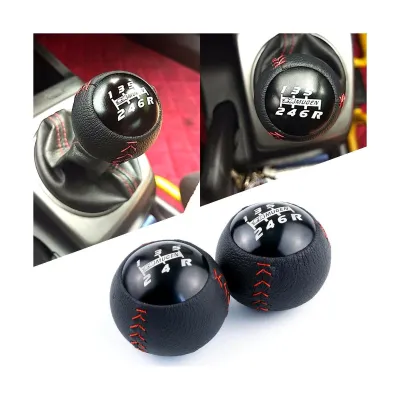
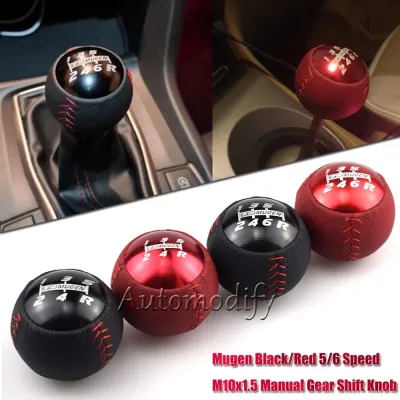
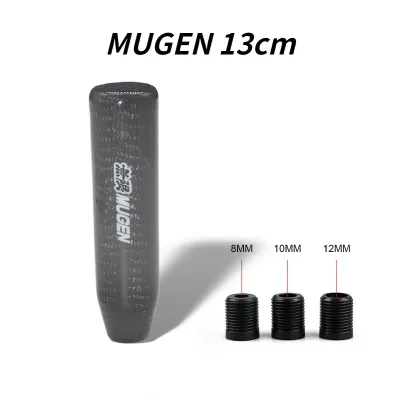
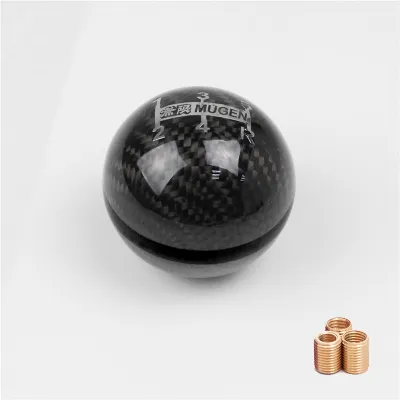
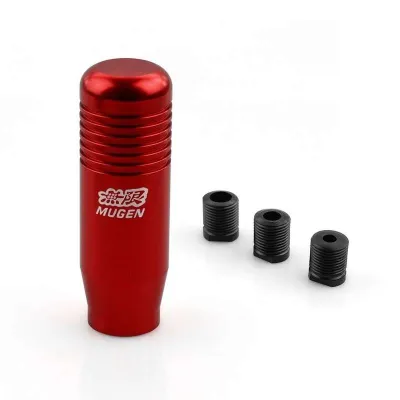
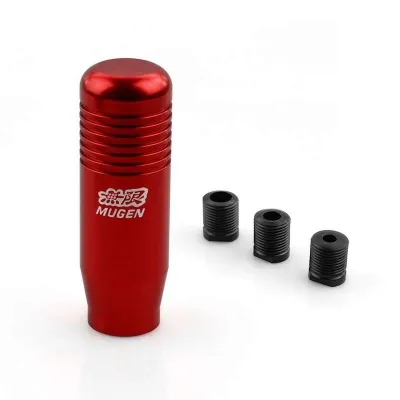
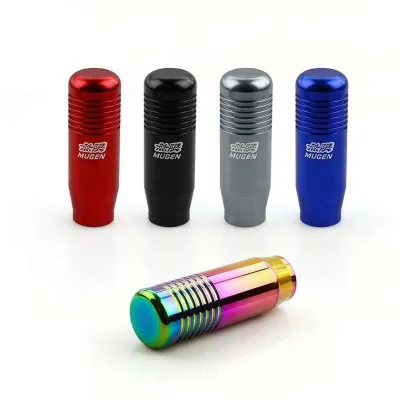
Prices are valid at publication and may change. Please refer to the product page for the latest price.
Online marketplaces and social media classifieds are filled with listings offering these accessories at a fraction of their actual retail value. Relying solely on online listing photos is highly risky, as sellers frequently use stock images of genuine products or high-quality promotional materials while shipping low-grade replicas. Counterfeiters have become highly sophisticated, replicating the general shape and color schemes of popular models, which makes a hands-on physical inspection necessary to separate genuine products from cheap imitations.
How to Inspect a Mugen Shift Knob for Authenticity
Determining whether a shift knob is a genuine M-TEC product requires a methodical physical examination. Because these knobs serve as a direct interface between the driver and the transmission, Mugen manufactures them to strict tolerances. Replicas, on the other hand, prioritize low production costs over structural integrity and precision.

Packaging, Holograms, and Documentation
The packaging is your first line of defense when verifying a purchase. Genuine Mugen shift knobs are shipped in high-quality, sturdy cardboard boxes with crisp, clear, and perfectly aligned printing. The box should feature official M-TEC Co., Ltd. branding, correct Japanese text without spelling errors, and a dedicated product label containing the correct part number, bar code, and batch information.
Many genuine packages include specific holographic security labels or high-quality warning documentation printed on premium paper. While sophisticated counterfeiters can replicate cardboard boxes, they often fail to match the sharpness of the font, the exact color matching of the Mugen logo, or the clean adhesion of the product label. If the box arrives flimsy, faded, or lacks official manufacturing labels, treat the product inside with high suspicion.
Logo Engraving and Surface Finish
Once the product is out of the box, closely examine the Mugen logo and the overall surface finish of the knob. Authentic Mugen knobs feature deep, incredibly precise laser engraving or high-quality, flawless enamel filling. The edges of the characters in the logo must be sharp and perfectly legible under close inspection, with no bleeding, overlapping, or rough paint lines.
For carbon fiber models, the weave pattern should be completely uniform, straight, and free of distortion. Genuine carbon fiber is finished with a smooth, crystal-clear, UV-resistant resin coat that shows no bubbles, cloudy patches, or uneven thickness. On metal models—such as those made from aluminum or titanium—the finish should be perfectly smooth, with consistent anodizing or polishing and absolutely no rough edges, machining marks, or tool scratches.
Material Quality, Weight, and Threading
The weight and tactile feel of the shift knob are major indicators of its authenticity. Genuine Mugen knobs are engineered with specific weight distributions to improve shifting feel, and their weights correspond to official catalog specifications. Replicas are often made of cheaper, lighter pot metals or plastics, or they may feel artificially heavy due to loose, poorly secured internal weights.
Crucially, inspect the internal threading of the knob. Genuine Mugen shift knobs feature clean, precise, and burr-free threads—often utilizing high-grade brass inserts or direct-cut threads matching standard Honda manual transmission specifications (typically M10x1.5). The threads should look perfectly cut and clean, allowing the knob to thread onto a compatible shifter smoothly without binding, wobbling, or feeling gritty.
Red Flags: Spotting the Flaws in Counterfeit Knobs
Counterfeit shift knobs almost always exhibit manufacturing shortcuts that become obvious under close scrutiny. Recognizing these common defects will help you quickly reject a fake product before attempting to install it on your vehicle’s shifter.
- Sloppy Logo Application: Look for printed or poorly stamped logos that look fuzzy or chip off easily when lightly scraped with a fingernail.
- Defective Carbon Fiber Weaves: Replicas often feature misaligned, wavy, or broken carbon fiber patterns, covered by an artificially thick, wavy clear coat that can yellow quickly under the intense heat and humidity of the tropical Philippine climate.
- Incorrect Weight: A genuine carbon fiber or leather-wrapped Mugen knob has a distinct, solid feel, whereas fakes are often surprisingly light or have internal weights that rattle when shaken.
- Rough or Soft Threads: Counterfeit knobs often use cheap aluminum or plastic threads that feel gritty when screwed onto a test lever and are highly prone to cross-threading or stripping.
- Suspiciously Low Prices: If a seller offers a "genuine" Mugen shift knob for a few hundred Philippine Pesos, it is almost certainly a fake. Authentic Mugen shift knobs generally retail from approximately ₱4,000 to over ₱12,000, depending on the material, production run, and specific model.
Beyond Visuals: Official Verification and Authentication
If visual and tactile checks leave you uncertain, you can pursue more definitive verification steps. Genuine Mugen products are tracked via internal manufacturing records, and utilizing these channels can provide peace of mind before you finalize a purchase.
Look for official M-TEC authenticity seals, batch codes, or QR codes on the packaging. Some production runs feature unique serial numbers that can be cross-referenced. You can contact authorized Mugen distributors or reach out directly to Mugen customer support with high-resolution photos of the product, its packaging, and any serial numbers or batch codes present.
Remember that no single visual trick is a 100% guarantee of authenticity on its own. A sophisticated replica might copy a genuine box design perfectly but fail the weight and threading checks, or it might look correct but use inferior internal metals. A complete, multi-point inspection combined with verification of the seller’s credentials is the only way to ensure the product’s legitimacy.
Where to Safely Buy Authentic Mugen Parts in the Philippines
The most effective way to avoid counterfeit automotive parts is to purchase exclusively from established, reputable sources. Buying from unverified sellers to save money often results in receiving a substandard product that compromises your driving experience.
To guarantee authenticity, buy directly from authorized Mugen dealers or highly reputable specialized Honda tuning shops in the Philippines. Established physical speed shops and verified online specialty stores that import directly from Japan are your safest options. Be extremely cautious of third-party sellers on general e-commerce platforms or social media marketplaces who use deceptive buzzwords such as “OEM,” “factory direct,” “high-quality replica,” or “customs seized” to justify heavily discounted prices.
Steps to Take If You Suspect a Counterfeit Purchase
If you have purchased a shift knob and suspect it is a counterfeit, stop immediately and do not attempt to install it on your vehicle. Taking the correct steps post-purchase can help you secure a refund and keep your vehicle safe.
First, document all discrepancies by taking clear, well-lit photos of the packaging, the logo, the internal threading, and any surface defects. Compare these images with verified photos of genuine products. Next, contact the seller to request a return, or initiate a dispute through your e-commerce platform’s buyer protection program, submitting your photo documentation as evidence.
Safety Warning: Never install or drive with a suspected counterfeit shift knob. A shift knob is a critical control interface; if the internal threads strip or the knob detaches while you are driving, it can cause a missed gear, severe transmission damage, or a sudden loss of vehicle control, putting you and others on the road in direct danger.
Frequently Asked Questions (FAQ)
Is it safe to drive with a counterfeit shift knob?
No, driving with a counterfeit shift knob is not safe. Replicas are typically made from inferior materials, and their internal threads are highly prone to stripping or cracking under the stress of daily gear changes. If the knob suddenly slips, spins, or detaches from the shifter lever during a critical maneuver or quick gear change, it can cause a missed shift, distract you, or lead to a loss of vehicle control. For safety-critical control points like shifters, steering wheels, and pedals, always use verified, authentic parts.
Do all genuine Mugen shift knobs come with a certificate of authenticity?
No, not all genuine Mugen shift knobs come with a formal certificate of authenticity. While premium, limited-edition, or high-end titanium JDM-market Mugen parts sometimes include dedicated certificates, holographic seals, or serialized cards, standard production shift knobs often rely solely on high-quality packaging, M-TEC branding labels, and batch stickers. Rather than relying on the presence of a certificate—which counterfeiters can easily print—you should focus on verifying the physical build quality, weight, thread precision, and the reputation of the seller.
Community discussion
Share your experience or ask a question. Comments are reviewed before publication.