
Finding a genuine helmet is a critical decision for every motorcycle rider in the Philippines, where daily commutes expose you to unpredictable road conditions and chaotic traffic. To spot an original EVO helmet, you must look beyond the surface design and inspect the physical construction, safety certification markings, and official serial numbers. A genuine EVO helmet is distinguished by its dense, high-quality EPS liner, robust visor ratchet mechanism, valid safety certification stickers (such as the Import Commodity Clearance or ICC sticker), and verifiable serial numbers. Purchasing exclusively from the brand’s official flagship stores or authorized physical dealers remains the most reliable way to guarantee you are getting a genuine product that offers real protection.
Why Authenticity Matters for EVO Helmets
Riding on Philippine roads, whether navigating the congested streets of Metro Manila or cruising along provincial highways, requires reliable safety gear. A helmet is your primary line of defense against severe head injuries. Original EVO helmets undergo rigorous impact testing, structural analysis, and quality control to meet safety standards. In contrast, counterfeit helmets are manufactured using cheap, brittle plastics and low-grade foam that fail to absorb impact energy during an accident.
Using a counterfeit helmet puts your life at risk. In the event of a crash, a fake helmet can easily shatter, exposing your head and neck to severe trauma. Furthermore, the intense tropical heat and humidity in the Philippines can cause the low-grade adhesives and cheap materials used in counterfeit helmets to degrade rapidly. This degradation can cause the inner padding to detach and the outer shell to weaken over time. Investing in a genuine helmet is not about brand status; it is a direct investment in your survival on the road.
Products mentioned in this guide
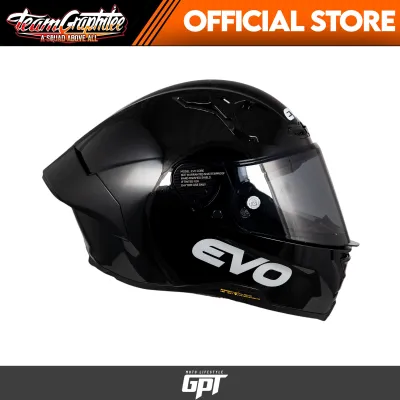
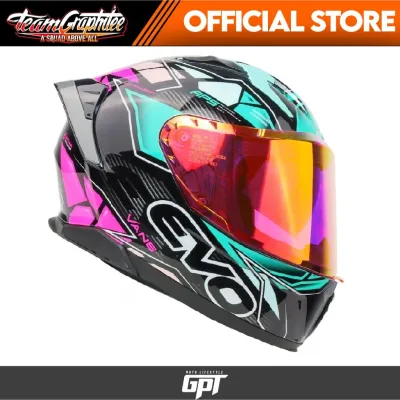
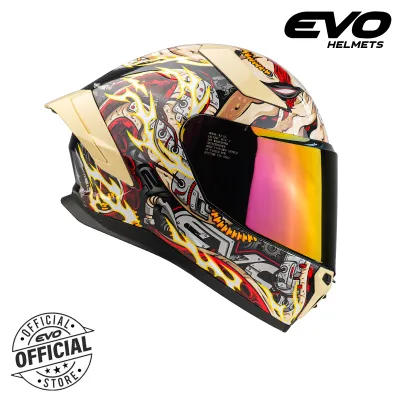
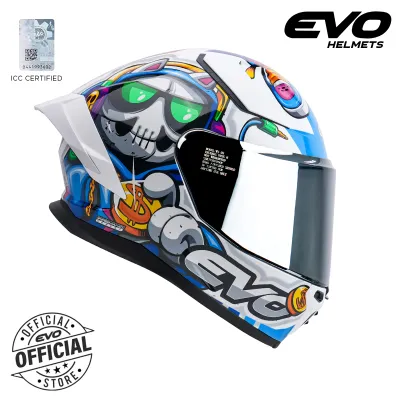
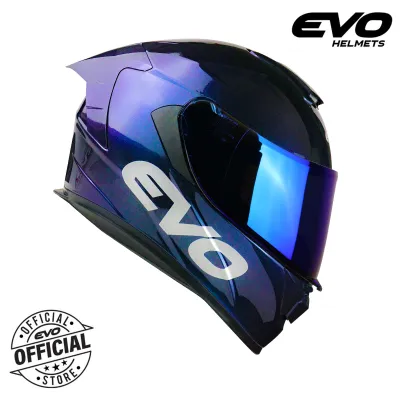
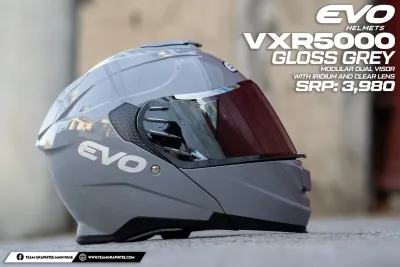
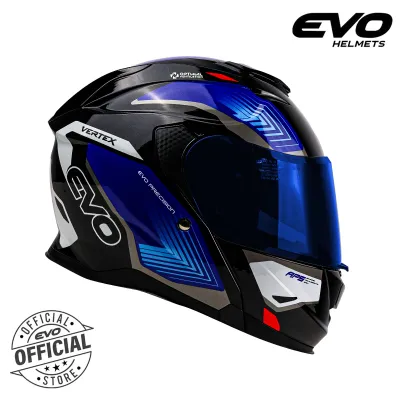
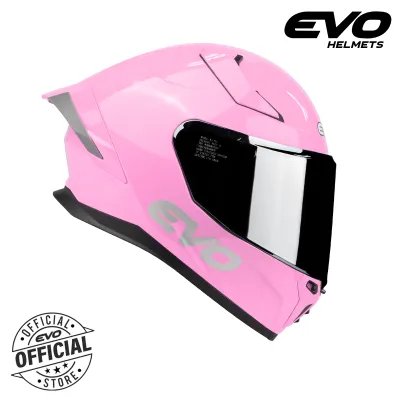
Prices are valid at publication and may change. Please refer to the product page for the latest price.
Physical Markers: Inspecting the Helmet Shell and Visor
To identify a genuine EVO helmet, start with a thorough physical inspection. Authentic manufacturing processes utilize high-pressure molding and premium materials, resulting in a flawless finish that cheap replicas cannot easily duplicate.

Shell Finish and EPS Liner Quality Run your hands along the outer shell of the helmet. A genuine helmet features a smooth, uniform paint finish with a high-quality clear coat that resists fading under the intense sun. Look closely at the seams and mold lines; they should be perfectly flush and smooth. Counterfeit helmets often exhibit rough, raised mold lines, uneven paint applications, and bubbling in the graphics. Next, inspect the inner EPS (expanded polystyrene) foam liner. Press your thumb firmly against the black or gray foam liner beneath the comfort padding. In an original helmet, this foam is dense, tightly packed, and highly resistant to pressure. If the foam feels soft, crumbles easily, or emits a strong, pungent chemical odor—a common byproduct of low-grade resins and cheap adhesives—you are likely holding a counterfeit.
Visor and Ratchet Mechanism Test the visor by opening and closing it multiple times. Genuine EVO visors feature a smooth, multi-step ratchet mechanism that locks securely into place. Look through the visor from various angles; the view should be perfectly clear without any warping or distortion. Counterfeit visors are often thin, flexible, and prone to severe optical distortion, which can cause eye strain or impair your vision during night rides. Authentic visors also come with scratch-resistant and UV-resistant coatings, whereas fake visors scratch easily and offer no protection against sun glare.
Padding and Straps Remove the comfort liner if the helmet design allows it. Authentic EVO padding is made of thick, moisture-wicking, breathable fabric designed to keep you cool in hot and humid weather. The stitching on the padding should be perfectly straight, tight, and free of loose threads. Examine the chin strap and its buckle system. Genuine helmets use heavy-duty nylon webbing and secure micrometric quick-release buckles or double D-ring systems. Test the buckle by inserting the metal tab and pulling hard; it must lock instantly and show no signs of slipping or releasing under tension.
Packaging, Labels, and Certification Tags
The packaging and labels accompanying a helmet provide vital clues about its origin. Authentic brands maintain high quality control standards across all aspects of their product presentation, including the box and accessories.
Retail Box and Included Accessories An original EVO helmet is shipped in a sturdy, thick cardboard box featuring high-definition graphics, crisp text, and accurate brand logos. Inside the box, the helmet should be protected by a soft, custom-branded fabric helmet bag. You should also find a detailed user manual, care instructions, and accessories like a breath guard or clear visor instructions. Counterfeit helmets are often packed in flimsy, generic boxes with blurry printing, pixelated logos, or spelling errors. In many cases, fake helmets are sold without a box or wrapped only in bubble wrap.
Safety Certification Stickers In the Philippines, all motorcycle helmets must comply with local safety regulations. Look for the official Import Commodity Clearance (ICC) sticker or the Philippine Standard (PS) mark, which are typically applied to the rear of the helmet. On a genuine helmet, these stickers are professionally printed, feature distinct security markings or holographic elements, and are firmly adhered to the shell. Counterfeiters frequently replicate these stickers, but their copies are usually poorly printed, lack reflective or holographic details, and can be easily peeled off with a fingernail. Always check the official guidelines from the Department of Trade and Industry (DTI) or the Bureau of Philippine Standards (BPS) to verify what a legitimate, current-year safety sticker should look like.
Serial Numbers and Official Verification Methods
One of the most reliable ways to verify authenticity is by checking the unique identifiers assigned to each helmet during production.
Locating the Identifiers Authentic EVO helmets feature a unique serial number, production batch code, and size label. These are typically found on a small tag stitched directly onto the chin strap, on a sticker inside the EPS liner (visible when you remove the comfort padding), or on the barcode label on the exterior of the retail box. Ensure that the serial number on the helmet matches the one printed on the box.
Using Official Brand Channels Once you locate the serial number, use the manufacturer’s official verification channels to confirm its validity. This can be done by visiting the official EVO website, contacting their verified customer support email, or reaching out through their official, verified social media accounts. Avoid relying solely on QR codes printed on the box or the helmet shell. Sophisticated counterfeiters often print QR codes that, when scanned, redirect users to fake, cloned verification websites designed to look identical to the official brand page. To prevent this, always manually type the official website URL of the manufacturer into your web browser to access their authentic verification tool.
Where to Buy: Official Stores vs. Online Marketplaces
Choosing the right purchasing channel is your best defense against counterfeit riding gear.
Official Flagship Stores and Authorized Physical Dealers Whenever possible, purchase your helmet from authorized physical dealers or official brand-concept stores. Buying in person allows you to inspect the physical markers firsthand, try on the helmet for a proper fit, and receive professional advice from trained staff. If you prefer to shop online, stick to the brand’s official flagship stores on leading e-commerce platforms. Look for platform-verified badges such as “Mall,” “Official,” or “Preferred” to ensure you are buying from an authorized source.
Vetting Third-Party Sellers When browsing third-party sellers on online marketplaces, perform thorough due diligence. Check the seller’s overall rating, read recent customer reviews, and pay close attention to user-uploaded photos of the actual products received. Be highly skeptical of listings that use stock photos instead of real product images. Beware of deals that seem too good to be true. Genuine EVO helmets have standardized pricing across authorized retailers; if a seller offers a brand-new helmet at a massive discount or labels it as an “overrun,” “factory excess,” or “premium copy,” it is almost certainly a counterfeit. Avoid buying from unverified social media pages, temporary physical stalls, or sellers who refuse to provide clear, high-resolution photos of the actual helmet and its serial numbers before shipping.
What to Do If You Suspect a Counterfeit
If you have already purchased a helmet and suspect it is a counterfeit, take immediate action to protect your safety and your money.
Document the Evidence Stop using the helmet immediately; your safety is too important to risk on unverified gear. Keep the helmet in its original condition, along with all packaging, tags, manuals, and accessories. Gather your proof of purchase, sales receipts, and any chat logs with the seller. If you recorded an unboxing video when the package arrived, keep the unedited file as it serves as powerful evidence in disputes.
File a Dispute and Report the Seller Contact the customer support of the e-commerce platform where you made the purchase and initiate a formal return or refund request under their buyer protection program. Present your documented evidence, highlighting the physical discrepancies and verification failures. Additionally, report the fraudulent listing to the platform to help prevent other riders from falling victim to the scam. You can also file a formal complaint with local consumer protection agencies, such as the Department of Trade and Industry (DTI) in the Philippines, to report the sale of counterfeit and unsafe goods. Never attempt to confront the seller aggressively or engage in independent disputes outside the platform’s official resolution channels.
Frequently Asked Questions (FAQ)
Can I trust a helmet just because it has a safety certification sticker?
No, you cannot rely solely on a safety certification sticker. While a genuine ICC or PS sticker is legally required for helmets sold in the Philippines, counterfeiters frequently print replica stickers to make fake helmets look legitimate. A safety sticker must always be verified in combination with a physical build quality inspection, packaging checks, and serial number verification through the manufacturer’s official channels.
Do original EVO helmets come with a warranty card?
Yes, original EVO helmets typically come with official documentation inside the box, which includes a warranty card, user manual, and registration instructions. This documentation allows you to register your purchase and access official after-sales support. Unauthorized sellers and counterfeiters rarely provide valid warranty cards or support, so the absence of these documents is a strong indicator of a fake product.
Community discussion
Share your experience or ask a question. Comments are reviewed before publication.