
Your vehicle’s braking system relies on a complex network of hydraulic components to bring you to a safe stop. At the heart of this system is the brake hose, which transmits pressurized brake fluid from the master cylinder to the brake calipers or wheel cylinders. When you press the brake pedal, the fluid inside the hose experiences immense hydraulic pressure, often exceeding 1,000 PSI under hard braking conditions. In the tropical climate of the Philippines, where stop-and-go traffic in Metro Manila is common and steep descents down mountain passes like Kennon Road demand continuous braking, these hoses are subjected to extreme heat, moisture, and mechanical stress.
Installing a counterfeit switz brake hose poses a severe and immediate threat to your safety on the road. Counterfeit automotive parts are often manufactured using substandard rubber compounds, weak reinforcement fibers, and poorly crimped metal fittings. Under the intense hydraulic pressure of emergency braking, a fake hose can bulge, leak, or burst entirely. A sudden loss of brake fluid leads to a rapid drop in hydraulic pressure, resulting in a spongy brake pedal or complete brake failure. Because counterfeit brake components are common in both online marketplaces and physical stores, avoiding these risks requires a proactive approach to verifying every part before it is installed on your vehicle.
While visual inspections and physical checks are highly useful for identifying obvious fakes, no single check can guarantee absolute authenticity. For this reason, you should always treat physical verification as a preliminary step and rely on professional installation and inspection. A certified mechanic can verify that the hose meets the exact specifications of your vehicle’s make, model, and year before mounting it.
Products mentioned in this guide
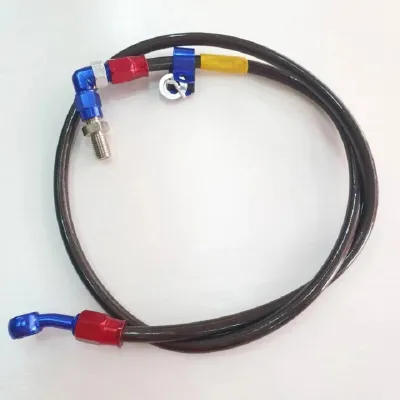
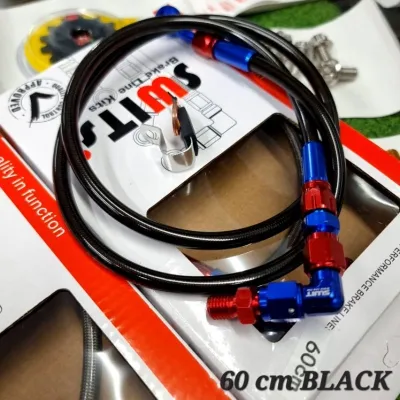
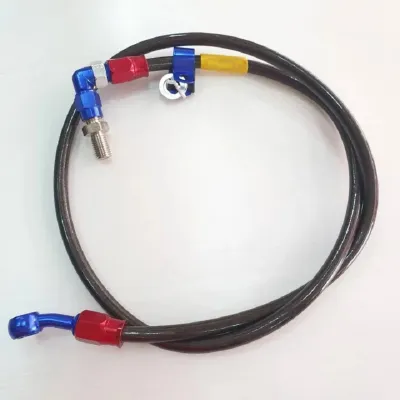
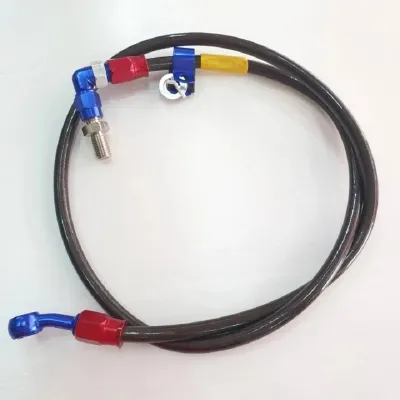
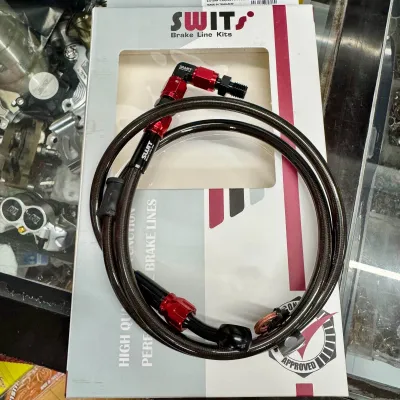
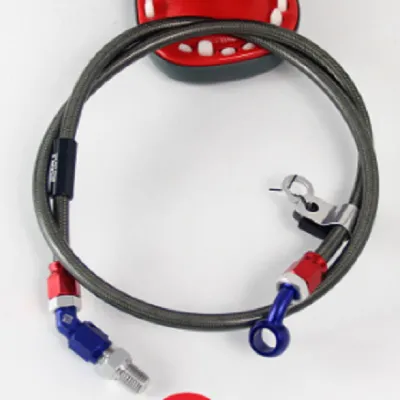
Prices are valid at publication and may change. Please refer to the product page for the latest price.
The Safety Risks of Counterfeit Brake Hoses
Brake hoses are safety-critical components that must withstand extreme pressure, high temperatures, and constant flexing as your suspension moves. Genuine hoses are engineered with multiple layers of reinforced synthetic fibers and specialized rubber compounds designed to prevent expansion under pressure. When a counterfeit hose is used, these layers are often thin, poorly bonded, or entirely missing, which drastically reduces the hose’s burst pressure rating.
A sudden failure of a brake hose is one of the most dangerous mechanical failures a driver can experience. Because hydraulic systems require a sealed environment to transmit force, even a pinhole leak in a fake hose can cause your brakes to fail completely without warning. In heavy traffic or at high speeds, this can lead to catastrophic accidents, property damage, and severe injury.
While the prevalence of counterfeit auto parts in the local market is widely acknowledged by industry experts, exact statistics on fake braking components are difficult to quantify due to unregulated supply chains. This makes personal vigilance and risk avoidance your primary line of defense. Never assume a part is genuine simply because it is sold in a professional-looking package or at a registered shop.
To ensure your safety and maintain the road legality of your vehicle, always prioritize professional inspection. Before any brake work is performed, verify the safety boundaries of your vehicle’s braking system and consult the original-vehicle instructions. If you lack the specialized tools or training required to handle brake lines, always have a qualified technician perform the installation.
Visual and Physical Markers of Genuine Switz Brake Hoses
Before you attempt to install any new switz brake hose, you must conduct a thorough physical inspection of the product. Genuine manufacturers maintain strict quality control standards, resulting in consistent dimensions, clean finishes, and precise markings. Counterfeiters, on the other hand, often cut corners during production, leaving behind distinct clues that reveal their low-quality origins. By comparing the packaging, labeling, and physical construction of the hose against official manufacturer standards, you can significantly reduce the risk of installing a dangerous imitation.

Packaging, Labels, and Security Features
The first line of defense against counterfeit auto parts is the packaging. Genuine Switz brake hoses are distributed in high-quality boxes or sealed plastic packaging designed to protect the component from moisture and physical damage during transit. Inspect the exterior of the packaging closely for print quality. Genuine packaging features sharp, high-contrast text, accurate brand logos, and consistent color schemes. If the cardboard feels flimsy, or if the brand logo looks slightly distorted, you should proceed with caution.
Look for specific security features integrated into the packaging, such as holographic stickers, QR codes, or tamper-evident seals. Genuine holographic stickers are difficult to replicate; they should display a clear, multi-layered visual depth and change colors smoothly when tilted under light. If a QR code is present, it should be cleanly printed without any ink bleeding or misalignment. Additionally, check the packaging labels for a manufacturing date, batch code, and country of origin. These details must be legible, printed in a consistent font, and perfectly aligned with the edges of the label.
Verify that the part number printed on the packaging matches the part number stamped or printed on the brake hose itself. Genuine manufacturers use specific part numbering systems to identify the exact vehicle compatibility, hose length, and fitting interfaces. If the numbers on the box do not match the markings on the hose, or if the label appears to have been pasted over an older sticker, the product is highly likely to be a counterfeit or an incorrect return.
Material Build and Fitting Quality
Once you remove the switz brake hose from its packaging, you must evaluate the physical materials and construction. Genuine hoses are constructed from high-grade synthetic rubber or braided stainless steel designed to resist volumetric expansion under pressure. Feel the hose material; it should have a uniform thickness along its entire length and offer a balanced level of flexibility. It should bend smoothly without kinking or showing surface cracks. Avoid hoses that emit a strong, pungent chemical odor, as this often indicates the use of cheap, untreated reclaimed rubber.
Examine the metal end fittings and the crimped collars that secure them to the hose body. Genuine Switz hoses feature precise, clean crimping around the collar, with no visible gaps, jagged edges, or metal burrs. The threads on the fittings must be sharp, clean, and free of flat spots or debris that could prevent a proper seal. Genuine fittings are also treated with high-quality anti-corrosion coatings, giving them a consistent, semi-matte or metallic finish. If you notice uneven plating, rust spots, or visible glue around the crimped joints, do not use the hose.
You should also compare the weight and overall finish of the hose against the component you are replacing or the specifications listed in the manufacturer catalog. Counterfeit hoses often feel noticeably lighter because they use thinner metal walls for the fittings and fewer reinforcement layers inside the rubber. Always refer to your vehicle’s original documentation to verify the required mounting position, bracket locations, and interface thread pitch before proceeding.
Common Red Flags in Fake Brake Hoses
Identifying a counterfeit switz brake hose requires you to look for common shortcuts taken by illicit manufacturers. Because these counterfeiters prioritize low production costs over safety, their products almost always exhibit visible defects. Being aware of these red flags can help you spot a fake before it ever reaches your vehicle’s braking system.
Packaging and Labeling Defects
- Blurry, faded, or pixelated text on the box or label, indicating that the packaging was scanned and reprinted.
- Misspelled brand names, such as "Switzz," "Swits," or other slight variations designed to trick casual buyers.
- Missing or generic part numbers that do not correspond to any official catalog listings.
- Flimsy, unbranded cardboard boxes or plain plastic bags that lack any protective inserts or brand identifiers.
Physical and Structural Flaws
- Stiff, rigid rubber that resists bending, or excessively soft rubber that easily collapses when squeezed, both of which indicate poor pressure resistance.
- Visible mold lines, rubber flashing, or uneven seams along the length of the hose.
- Uneven, crooked, or loose crimping on the metal collars, which can allow the hose to blow out under high hydraulic pressure.
- Loose, damaged, or poorly cut threads on the end fittings that can strip your vehicle's brake calipers or brake lines during installation.
- Visible glue residue, solder marks, or welding seams near the joint connections, suggesting manual assembly rather than automated factory precision.
Unrealistic Pricing and Universal Claims
- Suspiciously low prices, especially on online marketplaces. If a seller is offering a switz brake hose for a fraction of the standard retail price (for example, ₱300 instead of the typical ₱1,200 to ₱2,000 range), it is highly likely to be a counterfeit. Genuine braking components have fixed manufacturing and material costs that prevent extreme discounting.
- Claims of a "universal fit" for a branded hose. Genuine Switz brake hoses are engineered for specific vehicle makes, models, and model years to ensure proper routing, length, and steering clearance. A hose that is marketed as fitting "all models" is a major safety hazard and should be avoided entirely.
Verification Methods and Trusted Purchasing Channels
To protect yourself from purchasing counterfeit braking components, you should establish a reliable verification process and stick to authorized purchasing channels. Relying on verified sources is the most effective way to guarantee that the parts you install on your vehicle are genuine and road-legal.
Official Verification Steps
When you purchase a switz brake hose, use any official verification tools provided by the manufacturer. If the packaging features a security QR code, scan it using your smartphone’s camera or a dedicated verification app. A genuine QR code should direct you to an official, secure manufacturer domain that confirms the unique serial number of the product. Be cautious if the scan redirects you to a generic search engine, an unsecured website, or a page with broken links and grammatical errors.
Next, cross-reference the part number printed on the packaging and the hose with the official Switz product catalog or your vehicle’s parts manual. Verify that the hose length, fitting angles, and bracket configurations match your specific vehicle model and year. If the catalog indicates that the part number is meant for a different vehicle, do not attempt to force it to fit.
If the packaging lacks clear verification features, or if you remain uncertain about the product’s authenticity, contact Switz customer support or a local authorized distributor directly. Provide them with high-resolution photos of the packaging, labels, batch codes, and the physical hose. They can cross-reference their production databases to confirm whether the batch code is valid and whether the product is an authentic item.
Reliable Auto Parts Suppliers in the Philippines
The safest way to avoid counterfeit parts is to purchase exclusively from authorized Switz dealers, official brand stores on major e-commerce platforms, or reputable physical auto parts shops in the Philippines. Established physical stores in known automotive hubs, such as Banawe in Quezon City or Evangelista in Makati, often source their inventory directly from official distributors, reducing the risk of counterfeit stock.
When shopping online, look for sellers with official mall badges or verified distributor credentials. Always check the seller’s overall rating and read recent customer reviews. Pay close attention to reviews that include actual photos of the product and packaging, as these can help you inspect the labeling before making a purchase. Be skeptical of shops that have high ratings but very few transactions, or reviews that use repetitive, generic phrasing.
Avoid buying critical safety components like brake hoses from unverified social media sellers, classified ads, or unauthorized third-party vendors who offer deep discounts. These sellers often source their inventory from unregulated suppliers, making it difficult to trace the origin or quality of the parts. Saving a few hundred pesos on a cheap brake hose is never worth risking a complete brake failure on the highway.
Steps to Take If You Receive a Suspected Counterfeit
If you suspect that you have received a counterfeit switz brake hose, you must take immediate action to protect your safety and secure your consumer rights. Do not ignore the warning signs, as installing a fake component can lead to catastrophic consequences on the road.
First, immediately halt the installation process. Under no circumstances should you mount a suspected counterfeit hose onto your vehicle or attempt to drive with it installed. If a mechanic is performing the installation, instruct them to stop immediately and preserve the part in its original condition.
Next, document the product thoroughly. Take clear, high-resolution photos of the packaging from all angles, focusing on the brand logos, labels, barcodes, and any security seals. Take close-up photos of the physical hose, highlighting any defects such as uneven crimping, poor threads, or blurry stamps. This photographic evidence will be essential when filing a dispute or reporting the seller.
Once you have documented the evidence, initiate a return and refund request through the e-commerce platform’s buyer protection program or directly with the physical store’s management. Clearly state that you suspect the product is a counterfeit, and upload your photos as supporting evidence. Most major online shopping platforms have strict policies against counterfeit goods and will freeze the seller’s funds while investigating your claim.
To prevent other motorists from purchasing dangerous fake parts, report the seller to the platform’s administration or to local consumer protection authorities, such as the Department of Trade and Industry (DTI). Providing detailed information about the seller’s store name, listing details, and your transaction history helps authorities track down and remove counterfeit inventory from the market.
Finally, if you temporarily installed the suspected counterfeit hose or if you suspect that cheap materials have contaminated your braking system, consult a certified mechanic. Have them thoroughly inspect your vehicle’s braking system, replace the hose with a verified genuine part, and perform a complete brake fluid flush using fluid that meets your vehicle manufacturer’s specifications. This ensures that any debris, air bubbles, or moisture introduced during the process are completely removed from the hydraulic lines.
Frequently Asked Questions (FAQ)
Can I use a brake hose if it fits physically but has a different part number?
No, you should never use a brake hose with a different part number, even if it appears to fit physically. Brake hoses are engineered with precise lengths, specific bend radii, and unique mounting bracket locations to accommodate the movement of your vehicle’s steering and suspension systems. An incorrect hose may stretch, kink, or rub against moving suspension components or the tire during sharp turns, leading to rapid wear and sudden failure. Always match the part number exactly to your vehicle’s specific make, model, and year.
Are genuine Switz brake hoses always more expensive than alternatives?
Genuine Switz brake hoses carry a standard market price that reflects the high-quality materials, rigorous pressure testing, and manufacturing standards required for safety-critical components. While they may be more expensive than unbranded or counterfeit alternatives, they are priced competitively with other reputable OEM-equivalent brands. Extremely low prices are a primary indicator of a counterfeit product, as legitimate manufacturers cannot produce safe, high-pressure hydraulic hoses below basic material costs.
What should I do if the QR code on the box does not scan?
If the QR code on the packaging does not scan, first check your internet connection or try using a different scanning application. If the code still fails to scan, redirects you to an unrelated website, or displays an error message indicating an invalid serial number, you should treat the product as a suspected counterfeit. Do not install the brake hose on your vehicle. Instead, document the packaging and contact an authorized distributor or the manufacturer directly to verify the batch code printed on the label.
Community discussion
Share your experience or ask a question. Comments are reviewed before publication.