
Spotting a fake BOMX caliper requires a systematic inspection of the seller’s profile, the product’s physical characteristics, and its packaging before any installation begins. In the Philippines, where daily commutes involve navigating dense urban traffic, sudden tropical downpours, and unpredictable road surfaces, the reliability of your motorcycle’s braking system is paramount. Because brakes are a critical safety component, any modification or replacement must strictly adhere to original-vehicle instructions and be performed by a qualified professional to ensure road legality and rider safety.
Why Authentic Brake Calipers Are Critical for Safety
The brake caliper is the heart of your motorcycle’s stopping power. When you pull the brake lever, hydraulic fluid forces the caliper pistons outward, pressing the brake pads against the spinning disc to bring your vehicle to a safe stop.
Counterfeit calipers often compromise on material integrity to lower production costs. They are frequently made from low-grade aluminum alloys or poorly cast metals containing internal air pockets. Under the high hydraulic pressures of emergency braking, these substandard materials can flex, warp, or catastrophically crack, leading to an immediate loss of braking force.
Products mentioned in this guide
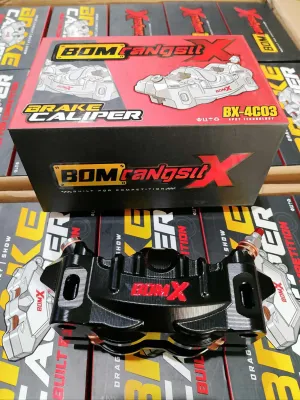
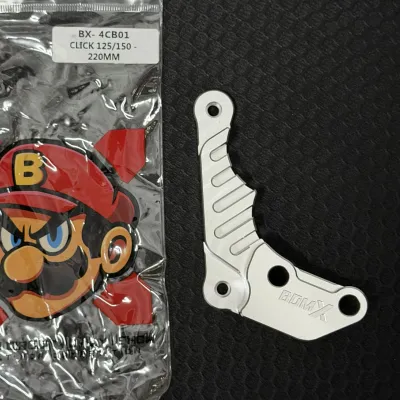
Prices are valid at publication and may change. Please refer to the product page for the latest price.
Furthermore, precision machining is vital for maintaining hydraulic seals. Genuine calipers feature microscopic tolerances to prevent brake fluid from escaping past the piston seals. Counterfeit units with uneven machining or low-quality rubber seals are highly prone to fluid leaks, which can contaminate your brake pads and render the entire system useless.
Relying on unverified brake components puts your life and the lives of other road users at extreme risk. To maintain road legality and ensure your motorcycle performs safely, always prioritize professional inspection and installation. A certified mechanic can verify that the caliper is compatible with your specific motorcycle model and year, ensuring that mounting brackets, brake lines, and master cylinders align perfectly.
Red Flags in Pricing and Seller Profiles
One of the most immediate indicators of a counterfeit BOMX caliper is an unrealistic price tag. If an online listing or a local retail shop offers a caliper at a fraction of the standard market rate—such as a few hundred ₱ when authorized dealers charge several thousand ₱—you should immediately suspect its authenticity. Genuine manufacturing processes, quality materials, and safety testing carry inherent costs that counterfeiters bypass.

When shopping on ecommerce platforms or visiting local motorcycle parts stores, evaluate the seller’s credentials. Look for authorized dealer certifications, verified business permits, and a history of positive, detailed customer feedback. Be highly suspicious of online storefronts that have generic names, lack a physical address, or display a sudden surge of repetitive, low-effort five-star reviews.
Analyze the product listing itself for common red flags. Legitimate sellers provide comprehensive product descriptions, including exact dimensions, compatible motorcycle models, and manufacturer part numbers. If a listing relies solely on low-resolution stock photos, lacks clear specifications, or uses vague language to describe the item’s origin, it is safer to look elsewhere.
Physical and Packaging Checks for BOMX Calipers
Upon receiving your caliper, conduct a thorough physical inspection starting with the packaging. Genuine manufacturers invest in high-quality packaging materials to protect their products during transit. Look for sturdy, well-constructed boxes with sharp, high-resolution printing, correct brand logos, and accurate spelling. Counterfeit packaging often features flimsy cardboard, blurry graphics, faded colors, or obvious typographical errors in the safety warnings.
Next, closely examine the caliper body itself. Authentic calipers undergo precise CNC machining, leaving clean, uniform tool marks and a smooth, consistent anodized or painted finish. Inspect the surface for casting flaws, rough edges, bubbling paint, or uneven coloration, which are common hallmarks of cheap manufacturing. The brand logo should be cleanly engraved or cast with sharp, well-defined edges, rather than being poorly printed, misaligned, or shallowly etched.
Cross-reference the physical product with official images and technical specifications available on the manufacturer’s website or through authorized local distributors. Pay close attention to the positioning of the bleed screws, the design of the banjo bolt threads, and the alignment of the mounting tabs. Even minor discrepancies in these dimensions can indicate a counterfeit product that will not fit your motorcycle safely.
Finally, inspect the included hardware and internal components. Genuine calipers come with high-grade, corrosion-resistant mounting bolts, slide pins, and perfectly fitted rubber dust boots. If the included hardware feels unusually light, shows signs of rust, or if the rubber seals are brittle, loose, or improperly seated, do not proceed. These substandard components are highly susceptible to the high humidity and wet conditions typical of the Philippine climate, accelerating wear and potential failure.
Verification Steps Before Installation
Before attempting to mount the new caliper to your motorcycle, take active steps to verify its authenticity. Locate any serial numbers, batch codes, or holographic security stickers on the caliper body or the packaging. You can contact the manufacturer’s official customer support channels or reach out to authorized local distributors in the Philippines to verify if these codes match their production records.
Consult a qualified motorcycle mechanic before making any modifications to your braking system. A professional technician has the experience and specialized tools to assess the caliper’s structural integrity, verify the mounting interface, and ensure compatibility with your motorcycle’s specific model, year, and master cylinder capacity. They can also check if the installation requires custom brackets or upgraded brake lines to maintain optimal hydraulic pressure.
Always adhere to a strict safety rule: if you detect any physical, packaging, or documentation anomaly during your inspection, do not install the component. Never attempt to mount, bleed, or road-test a brake system if you suspect any part of it is counterfeit. A minor defect that seems insignificant on a workbench can quickly escalate into a complete brake failure under the high-stress conditions of active riding.
What to Do If You Suspect a Counterfeit
If your inspection reveals that the caliper is likely a counterfeit, halt the installation process immediately. Do not attempt to modify or fit the part to your motorcycle. Keep the caliper, all included hardware, and the original packaging in their exact received condition. Document the discrepancies by taking clear, well-lit photos and videos of the red flags you identified.
Gather all supporting documentation, including purchase receipts, online transaction records, and any chat history with the seller. Initiate a formal return or dispute process through the ecommerce platform’s buyer protection program or directly with the local shop’s management. Clearly state that you are returning the item due to authenticity and safety concerns, providing the photographic evidence you collected to support your claim.
To protect the broader Philippine riding community, report the suspicious seller and listing to the platform’s administrators. You can also escalate the issue by filing a formal complaint with relevant consumer protection authorities, such as the Department of Trade and Industry (DTI). Reporting these fraudulent activities helps remove hazardous, unverified automotive parts from the market, keeping roads safer for everyone.
Frequently Asked Questions (FAQ)
Can I rely solely on the weight of the caliper to verify authenticity?
No, you cannot rely solely on weight to confirm if a caliper is genuine. While counterfeiters often use cheaper, less dense alloys that result in a different weight compared to the original, some advanced fakes can closely mimic the weight of an authentic unit by adjusting material thickness or using heavier, low-grade iron components. Weight should only be used as one of many indicators. A reliable verification requires a comprehensive check of the machining quality, packaging details, serial numbers, and seller credentials.
Are cheaper alternative brands safer than fake BOMX calipers?
Yes, purchasing a genuine, entry-level caliper from a reputable, legitimate brand is significantly safer than buying a counterfeit premium caliper. Legitimate manufacturers, even those producing budget-friendly components, must adhere to strict quality control standards, material certifications, and safety testing to maintain their business licenses and market reputation. Counterfeit products, on the other hand, are manufactured with zero regulatory oversight, using unverified materials that pose an immediate risk of sudden structural failure under hydraulic pressure.
Community discussion
Share your experience or ask a question. Comments are reviewed before publication.